


Search results
Search for "van der Waals forces" in Full Text gives 143 result(s) in Beilstein Journal of Nanotechnology.
Synthesis and applications of carbon nanomaterials for energy generation and storage
Beilstein J. Nanotechnol. 2016, 7, 149–196, doi:10.3762/bjnano.7.17
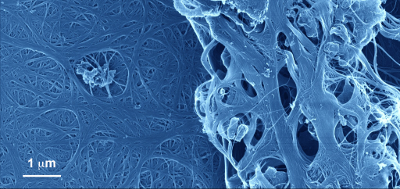
- acid [53]. In both the arc discharge and laser ablation methods, bundles of MWNTs and SWNTs held together by van der Waals forces are generated by the condensation of carbon atoms generated from the evaporation of solid carbon sources. The third method, chemical vapor deposition (CVD), involves the
- and can thus only be considered for research purposes. Chemical exfoliation. It is well known that the van der Waals forces that bond together the graphene sheets to form graphite are particularly weak and can be broken by external mechanical force. A common example of this can be seen with the usage















A simple and efficient quasi 3-dimensional viscoelastic model and software for simulation of tapping-mode atomic force microscopy
Beilstein J. Nanotechnol. 2015, 6, 2233–2241, doi:10.3762/bjnano.6.229
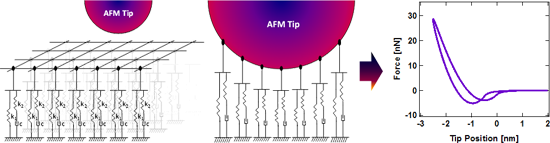
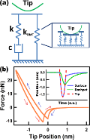
- amplitude. The total tip–sample force term Fts consists of the repulsive forces generated by the Q3D model (these are calculated numerically since there does not exist an analytical expression to calculate them [10]) plus attractive van der Waals forces, which are included for each area element in the Q3D
- model via an equation similar to the Hamaker equation [12]. Thus, the contribution to the van der Waals forces for area element j is where V is a van der Waals ‘strength’ parameter in the code (see c-file in Supporting Information File 1) that adjusts the magnitude of the van der Waals interaction
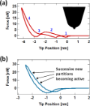
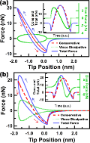
- of force curve for bimodal AFM, showing a double impact. The blue arrows indicate in each case the position where the tip first reaches the sample, and the red arrows indicate the position where the tip leaves the sample. Van der Waals forces have been included in the attractive (noncontact) region



Kelvin probe force microscopy for local characterisation of active nanoelectronic devices
Beilstein J. Nanotechnol. 2015, 6, 2193–2206, doi:10.3762/bjnano.6.225
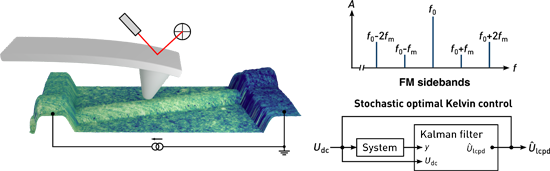
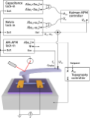
- subsequently to retrace the scanned line at a small distance, Δz, above the surface to perform KFM measurements. This enables tuning the ac modulation frequency for KFM to resonance to enhance the signal, and, at the same time, to reduce the contribution of van der Waals forces to the total force measured and


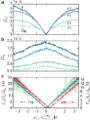
![[Graphic 33]](/bjnano/content/inline/2190-4286-6-225-i48.png?max-width=637&scale=1.18182) for different modulation amplitu...
for different modulation amplitu...




Atomic force microscopy as analytical tool to study physico-mechanical properties of intestinal cells
Beilstein J. Nanotechnol. 2015, 6, 1457–1466, doi:10.3762/bjnano.6.151
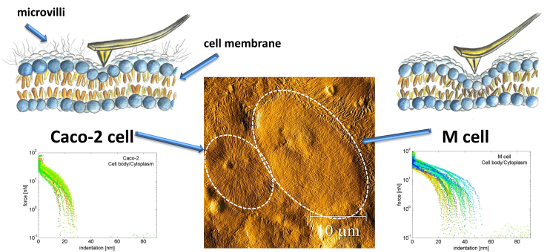
- the cantilever got in contact with the sample. Due to strong adhesion forces (van der Waals forces), the tip snapped in contact with the cell membrane. When retracting the tip, adhesion was maintained until the cantilever-force overcame the pull-off force (also referred as adhesion force) [51]. Lowest


Nano-contact microscopy of supracrystals
Beilstein J. Nanotechnol. 2015, 6, 1229–1236, doi:10.3762/bjnano.6.126
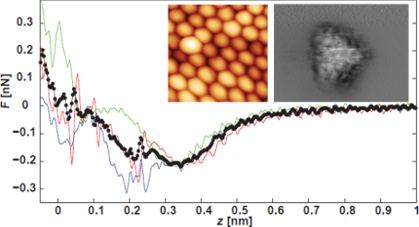
- strong forces applied to the sample, the supracrystal remains stable, most likely due to the high cohesive energy arising both from the integrated van der Waals forces and ligand interdigitation. The question of where to define the contact point is, of course, a notoriously vexed issue, as Smith et al

![[Graphic 1]](/bjnano/content/inline/2190-4286-6-126-i1.png?max-width=637&scale=1.18182) = 20 pA, ...
= 20 pA, ...


Synthesis of boron nitride nanotubes and their applications
Beilstein J. Nanotechnol. 2015, 6, 84–102, doi:10.3762/bjnano.6.9
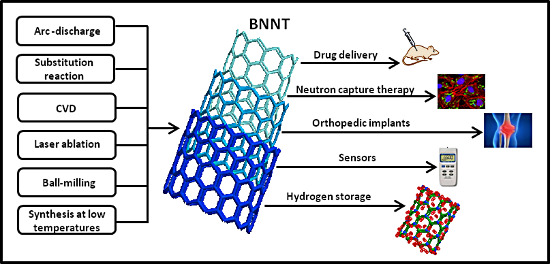
- the BNNTs via a targeting protein could generate smart and selective nanocarriers to be used in nanomedicine [67]. Physical modifications For these types of modifications, weak interactions such as π–π, hydrophobic, and van der Waals forces are utilized to coat the BNNTs with mostly a polymeric




Mammalian cell growth on gold nanoparticle-decorated substrates is influenced by the nanoparticle coating
Beilstein J. Nanotechnol. 2014, 5, 2479–2488, doi:10.3762/bjnano.5.257
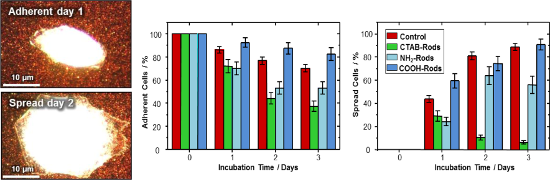
- adsorption of nanoparticles onto the substrate. Once the nanoparticles are near the glass surface, they remain attached by van der Waals forces even in the absence of salt. Optical dark field microscopy was used to quantify the nanoparticle density on the substrate. In this technique, only scattered light
- work, gold nanorods were purposely immobilized to the substrate using a salt solution, resulting in an attachment by van der Waals forces. This attachment could obviously not be reversed by the cells. We investigated three different stabilizing agents present on the particle surface regarding their
- substrate, it is assumed that the interaction between the cell membrane and the nanoparticles was not strong enough to overcome the van der Waals forces keeping the particles attached to the substrate. The other stabilizer investigated, PEG, is considered to be biocompatible [23]. This biocompatibility


Aquatic versus terrestrial attachment: Water makes a difference
Beilstein J. Nanotechnol. 2014, 5, 2424–2439, doi:10.3762/bjnano.5.252
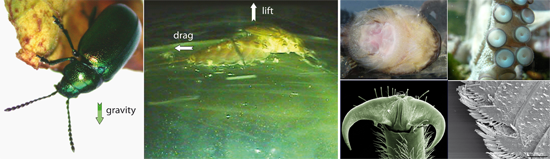
- , lock, clamp and spacer) significant differences have to be considered under water. For example, the main principles of dry adhesion, van der Waals forces and chemical bonding, which make a gecko stick to the ceiling, are weak under submerged conditions. Capillary forces are very important for wet
- ) diffusion, (iv) chemical bonding as ionic, covalent or hydrogen bonds, and (v) dispersive or van der Waals forces. While the first three mechanisms of adhesion presumably contribute just a minor part to general adhesion, the latter two are generally accepted as the primary mechanisms in many systems [19
- forces and chemical bonding van der Waals forces are the sum of attractive forces between molecules that have regions of slightly negative and slightly positive charges. These forces are only effective over a very small distance, less than one nanometer [41]. Therefore, these forces are considerably


Nanobioarchitectures based on chlorophyll photopigment, artificial lipid bilayers and carbon nanotubes
Beilstein J. Nanotechnol. 2014, 5, 2316–2325, doi:10.3762/bjnano.5.240
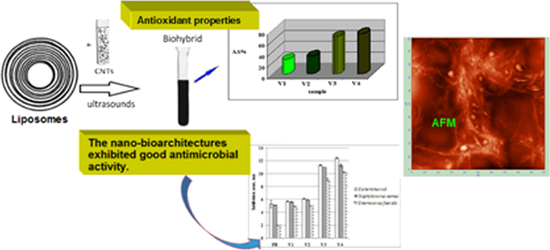
- biomedical field is complicated as they are completely insoluble in all solvents and are present as bundles. Thus, they have a tendency to aggregate due to van der Waals forces, π–π stacking and hydrophobic interactions among individual CNTs, making them difficult for characterization, handling, and


Spectroscopic mapping and selective electronic tuning of molecular orbitals in phosphorescent organometallic complexes – a new strategy for OLED materials
Beilstein J. Nanotechnol. 2014, 5, 2248–2258, doi:10.3762/bjnano.5.234
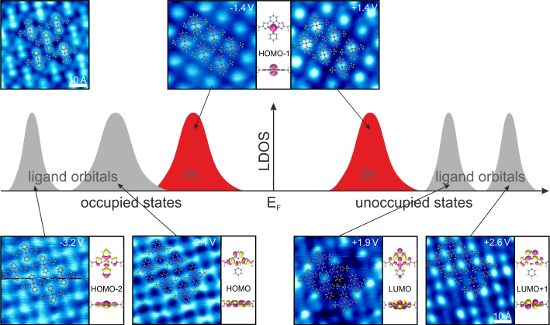
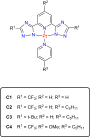
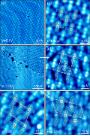
- . TLs of neighboring molecules as well as the pyridine AL of complex C1 seem to be packed in a steric fashion. However, we attribute the different patterns of C2 to additional van der Waals forces between the amyl chains [38][39]. We note that an additional molecular structure is evident in the third
- substituents do not show any influence on the measured structures. We suggest that only weak lateral interactions, most likely van der Waals forces (especially between neighboring amyl groups), and steric effects drive the self-assembly, similar to the situation of complex C2. For C3, one may think that
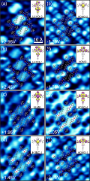
- additional role of van der Waals forces between neighboring R3 alkyl chains for the self-assembly. (a) Energy and LDOS of calculated orbitals for C1 in the gas phase. Here, a work function of 5.1 eV was assumed. This value results from minimizing the energy differences between calculated and measured



Two-dimensional and tubular structures of misfit compounds: Structural and electronic properties
Beilstein J. Nanotechnol. 2014, 5, 2171–2178, doi:10.3762/bjnano.5.226
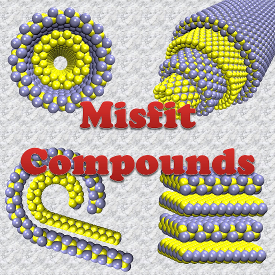
- shown in Figure 1b. In these cases, the TMX2 layers are held together by van der Waals forces, whereas the interaction between MX and TMX2 layers is based on van der Waals interaction and a charge transfer (CT) from MX to TMX2 [12]. Thus, misfit compounds do not only differ by stoichiometry, difference


Modeling viscoelasticity through spring–dashpot models in intermittent-contact atomic force microscopy
Beilstein J. Nanotechnol. 2014, 5, 2149–2163, doi:10.3762/bjnano.5.224
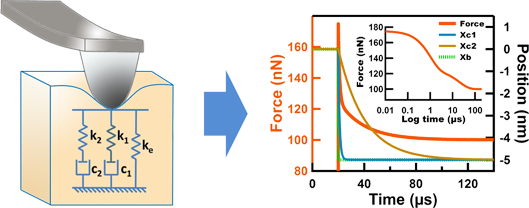
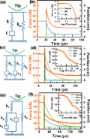
- SLS is the simplest model that is able to describe stress relaxation and creep, and the DMT is a widely used model in contact mechanics that is typically used in the context of AFM. We include both DMT contact forces and long-range van der Waals forces [6][32]. where H is the Hammaker constant, R is


Modification of a single-molecule AFM probe with highly defined surface functionality
Beilstein J. Nanotechnol. 2014, 5, 2122–2128, doi:10.3762/bjnano.5.221
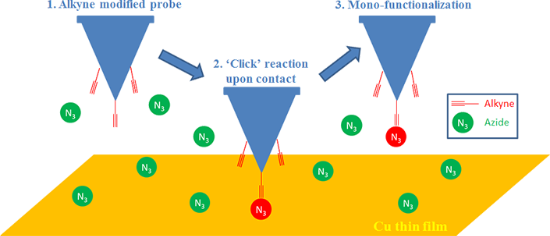
- , such as hydrogen bonds, and non-specific interactions, such as van der Waals forces, where Fav is the total average adhesion force, nav is the average number of specific interactions, which is hydrogen bonding in our case, Fi is the magnitude of the specific interaction, and F0 is non-specific


Carbon nano-onions (multi-layer fullerenes): chemistry and applications
Beilstein J. Nanotechnol. 2014, 5, 1980–1998, doi:10.3762/bjnano.5.207
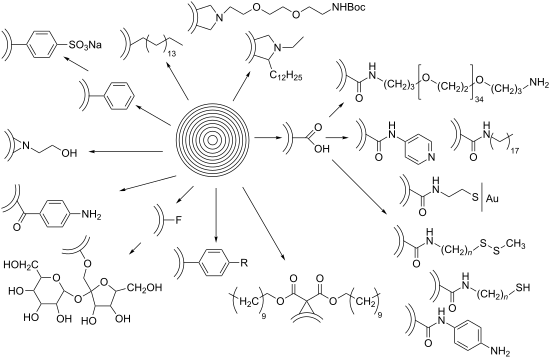
- . Analogous to carbon nanotubes, CNOs display poor solubility in both aqueous and organic solvents. This is due to aggregation, promoted by strong intermolecular interactions such as van-der-Waals forces. To overcome this tendency to aggregate, functionalization of the surface of the carbon materials is the


Carbon-based smart nanomaterials in biomedicine and neuroengineering
Beilstein J. Nanotechnol. 2014, 5, 1849–1863, doi:10.3762/bjnano.5.196
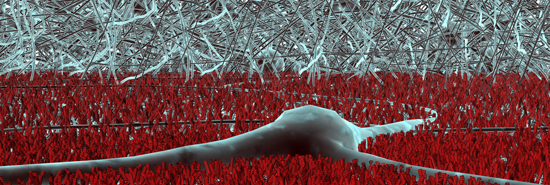
- integrate with biological systems is a consequence of their interactions with cells and membranes occurring at the subcellular level. However, due to their chemically inert surface and van der Waals forces occurring at the surface, carbon-based nanomaterials, particularly pristine CNTs, tend to agglomerate
- control conditions. The improved neuronal adhesion on graphene, compared to the bare plastic polymeric dish, was ascribed by the authors to van der Waals forces between cell membranes and graphene. Similarly to NDs [140], surface charges can influence adhesion and outgrowth of neuronal cells on graphene


Biocompatibility of cerium dioxide and silicon dioxide nanoparticles with endothelial cells
Beilstein J. Nanotechnol. 2014, 5, 1795–1807, doi:10.3762/bjnano.5.190
- -potentials were neither positively nor negatively charged enough to prevent agglomeration by van der Waals forces [29]. Interestingly, the smaller nanoparticles (sample #A) exhibited a tendency towards an increasing negative charge with increasing serum content, while the larger nanoparticles (sample #B


Experimental techniques for the characterization of carbon nanoparticles – a brief overview
Beilstein J. Nanotechnol. 2014, 5, 1760–1766, doi:10.3762/bjnano.5.186
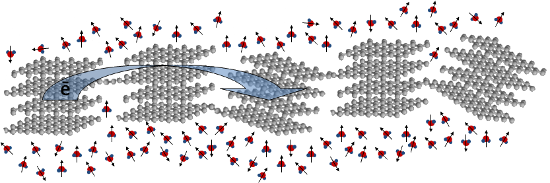
- signal of ACFs is the adsorption of molecules at the surface of CNs which comprise the pore walls. The adsorption in ACF pores is of a physical nature (van der Waals forces), without any covalent bond formation. Fully reversible physisorption has been observed with EPR (see Figure 5). The EPR spectrum of


Non-covalent and reversible functionalization of carbon nanotubes
Beilstein J. Nanotechnol. 2014, 5, 1675–1690, doi:10.3762/bjnano.5.178
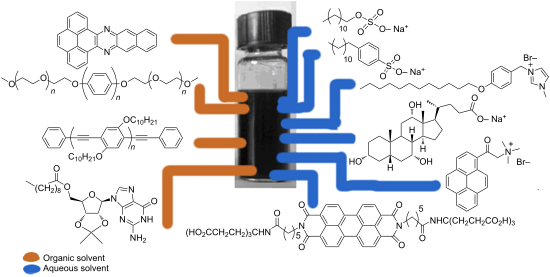
- strongly interact with each other through van der Waals forces reaching ~500 eV per μm of CNT’s length [18] and aggregate into bundles and ropes. In order to counteract these forces and favor CNTs manipulability and solubility mainly two strategies have been adopted: i) covalent functionalization through



Probing viscoelastic surfaces with bimodal tapping-mode atomic force microscopy: Underlying physics and observables for a standard linear solid model
Beilstein J. Nanotechnol. 2014, 5, 1649–1663, doi:10.3762/bjnano.5.176
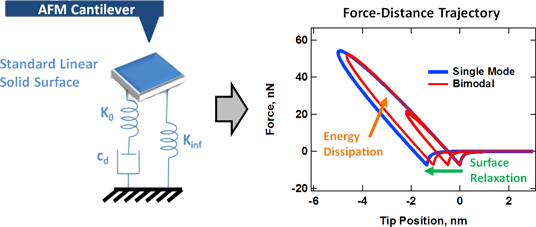
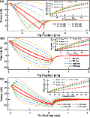
- challenging to carry out [43]. Non-viscoelatic dissipative interactions The present work studies an AFM tip that is interacting with a clean SLS surface, so no further interactions are included other than attractive van der Waals forces. However, in practice there can be a number of other interactions that


Hydrophobic interaction governs unspecific adhesion of staphylococci: a single cell force spectroscopy study
Beilstein J. Nanotechnol. 2014, 5, 1501–1512, doi:10.3762/bjnano.5.163
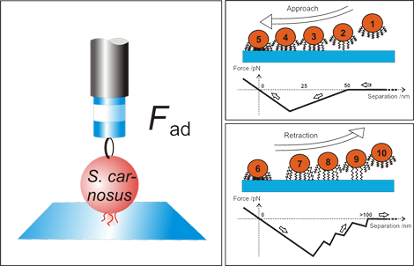
- bacterium, the surrounding medium, the surface chemistry, and the material composition reflecting the influence of the main interacting forces [12][13]: van der Waals forces, hydrophobic interaction and electrostatic forces. In addition, specific interactions amplify bacterial adhesion whenever
- involved [26]. Since hydrophilic and hydrophobic Si wafers differ in composition only by a 2.6 nm thin OTS-monolayer on the surface, the van der Waals forces are nearly identical [13][27]. Forces due to electrostatic interactions between the negatively charged bacterium and the two types of wafer surfaces
- electrostatic and van der Waals forces by at least an order of magnitude. The main observations are (i) the form of the force/distance curves is characteristic for each bacterium, (ii) this form is independent of the “adhesive history” and (iii) the retraction curves (including the adhesion forces) are


A sonochemical approach to the direct surface functionalization of superparamagnetic iron oxide nanoparticles with (3-aminopropyl)triethoxysilane
Beilstein J. Nanotechnol. 2014, 5, 1472–1476, doi:10.3762/bjnano.5.160
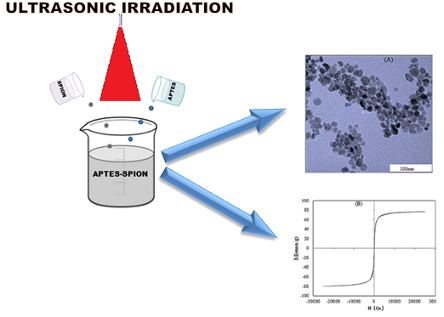
- ; superparamagnetic iron oxide nanoparticles (SPION); Findings Superparamagnetic iron oxide nanoparticles (SPION) have a wide range of applications in biomedical research and development. The main drawbacks of SPION are a high surface energy, van der Waals forces of attraction and dipole to dipole interactions that


Direct observation of microcavitation in underwater adhesion of mushroom-shaped adhesive microstructure
Beilstein J. Nanotechnol. 2014, 5, 903–909, doi:10.3762/bjnano.5.103
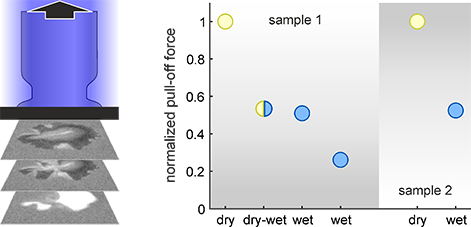
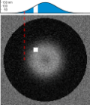
- vacuum [10][16][17][18], and underwater [19][20]). The origin of the high adhesion capability of the mushroom-shaped adhesive microstructures (MSAMSs) was attributed to the combination of intermolecular van der Waals forces and a particular failure mode at detachment, a consequence of an optimized
- forces [10][16][17][18]. In their recent work Varenberg and Gorb [19] have observed that the pull-off forces measured underwater were significantly higher (about 25%) compared to those measured under ambient conditions. This effect cannot be explained by intermolecular van der Waals forces. The authors


Hairy suckers: the surface microstructure and its possible functional significance in the Octopus vulgaris sucker
Beilstein J. Nanotechnol. 2014, 5, 561–565, doi:10.3762/bjnano.5.66
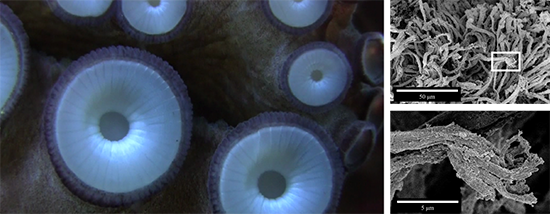
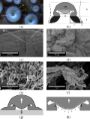
- termini contact elements as well as the presence of water and mucus between hairs and respective substrates suggest that biological structures operating underwater cannot exploit filament-like structures to generate van der Waals forces [3]. We completely agree with this idea and think that under wet
DNA origami deposition on native and passivated molybdenum disulfide substrates
Beilstein J. Nanotechnol. 2014, 5, 501–506, doi:10.3762/bjnano.5.58
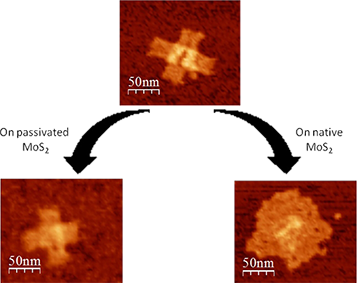
- to adsorb through van der Waals forces between the four nitrogenous nucleobases and the basal plane of MoS2 [18]. For example, in the report of Maddocks et al. [21], guanine, one of the four DNA bases, was observed, by using scanning tunneling microscopy (STM), to form a stable two-dimensional
- . This is readily understood in the context of a model, in which the pyrenyl group in 1-pyrenemethylamine is bound to the highly planar, polar, and polarizable MoS2 surface by van der Waals forces and forms an adhesion layer. Conversely, the amine group in 1-pyrenemethylamine interacts electrostatically


Morphological characterization of fullerene–androsterone conjugates
Beilstein J. Nanotechnol. 2014, 5, 374–379, doi:10.3762/bjnano.5.43
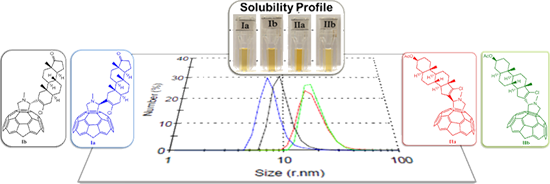
- representative analysis of each sample, several areas of the grids were observed. The two diastereomeric pairs (Ia,b and IIa,b) showed spherical self-assembly due to the non-covalent interactions present in these compounds, i.e., van der Waals forces, hydrogen bonding, hydrophilic/hydrophobic interactions, π–π





