Search results
Search for "Co" in Full Text gives 1218 result(s) in Beilstein Journal of Nanotechnology. Showing first 200.
Photocatalytic methane oxidation over a TiO2/SiNWs p–n junction catalyst at room temperature
Beilstein J. Nanotechnol. 2024, 15, 1132–1141, doi:10.3762/bjnano.15.92
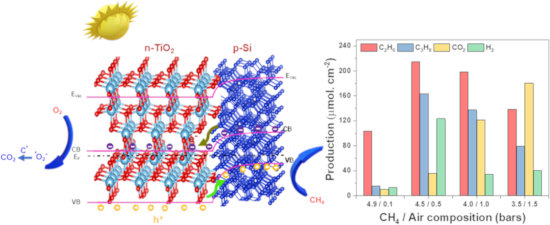
- configuration advantages [34][35][36]. However, the wetness impregnation synthesis of those powder co-catalysts faces the issues of low surface area, low reproducibility, and difficult control of large-scale production. Therefore, the development of novel catalysts with unique morphologies by using precise


Direct electron beam writing of silver using a β-diketonate precursor: first insights
Beilstein J. Nanotechnol. 2024, 15, 1117–1124, doi:10.3762/bjnano.15.90

- ligands instead of their further dissociation and co-deposition into the deposit. To further investigate the microstructure of the deposit, a thin lamella along the dashed white line in Figure 1a was prepared and studied by TEM. The TEM overview image is depicted in Figure 1c, its alignment and
- in scanning electron microscopes during deposition, a double layer of water is still present on hydrophilic surfaces. This turns water into a natural co-reactant of direct electron beam writing [7] and helps in the formation of neutral volatile reaction products from the ligands, such as CO, CO2, CH4
- ). As this growth rate was only about two times larger than that of the thermal emitter, a precursor-limited growth regime and, thus, enhanced co-dissociation of the ligands is expected. For later TEM investigations, the deposition was carried out directly on a TEM grid. The STEM image in Figure 3 shows


Recent updates in applications of nanomedicine for the treatment of hepatic fibrosis
Beilstein J. Nanotechnol. 2024, 15, 1105–1116, doi:10.3762/bjnano.15.89
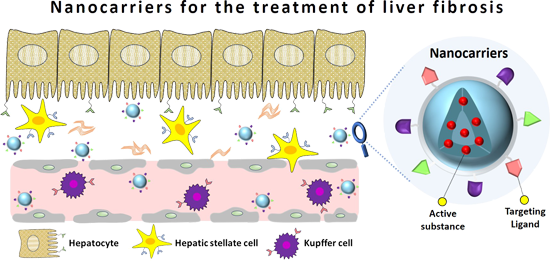
- treatment. The enhanced permeability and retention (EPR) effect, first described by Maeda and co-workers in 1986, allows for high accumulation of the drug nanocarriers via the leaky vasculature and the deficient lymphatic system around solid tumors, as illustrated in the right panel of Figure 1 [3][4][5
- hydrophilicity [25]. For instance, the passive liver targeting strategy highly depends on the size of nanocarriers as the endothelial fenestrations of liver sinusoids span approximately 50–200 nm in diameter (Figure 2a). In their study, Hirn and co-workers revealed that 50% of small gold NPs (around 1.4 nm) were
- , resulting in poor bioavailability. Regarding synthetic substances, Kurniawan and co-workers encapsulated the potent inhibitor R406 to inhibit spleen tyrosine kinase in inflammatory macrophages using poly(lactic-co-glycolic acid) (PLGA) NPs (R406-PLGA) [45]. PLGA was used as polymeric platform as it is an


Unveiling the potential of alginate-based nanomaterials in sensing technology and smart delivery applications
Beilstein J. Nanotechnol. 2024, 15, 1077–1104, doi:10.3762/bjnano.15.88


Effect of wavelength and liquid on formation of Ag, Au, Ag/Au nanoparticles via picosecond laser ablation and SERS-based detection of DMMP
Beilstein J. Nanotechnol. 2024, 15, 1054–1069, doi:10.3762/bjnano.15.86

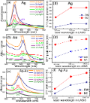
- a smartphone application to detect DMMP. They detected DMMP at a concentration of 1g/L (≈8 mM) using a Raman excitation of 532 nm. Wang and co-workers [73] developed a novel method using thin water film confinement to enhance Raman detection of weakly interacting nerve agent simulants, such as DMMP


Interface properties of nanostructured carbon-coated biological implants: an overview
Beilstein J. Nanotechnol. 2024, 15, 1041–1053, doi:10.3762/bjnano.15.85
- materials In 2008, Lee and co-workers [32] stated that neat graphene was the strongest material ever tested with a tensile strength of 131 GPa and a Young’s modulus close to 1 TPa. The reason for these properties of graphene is the stability of the π-bond network around the hexagonal structures of carbon
- quantum confinement as reported by Bolker and co-workers [77]. Authors reported that the bandgap of NDs is strongly correlated to the NDs’ size, and it increases with decreasing crystallite size. However, the ND properties can be altered by heteroatomic doping and through the introduction of surface
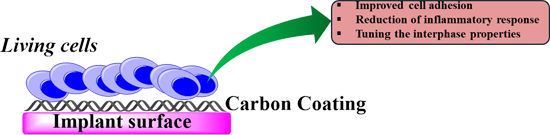
- , suggesting that the ND coating prevented the removal of wear debris from coated implants. The complex relation between NDs and macrophage activity can be further tuned by functionalization with short molecules as reported by Pentecost and co-workers [90], who used small amines to tune the inflammatory



Beyond biomimicry – next generation applications of bioinspired adhesives from microfluidics to composites
Beilstein J. Nanotechnol. 2024, 15, 965–976, doi:10.3762/bjnano.15.79
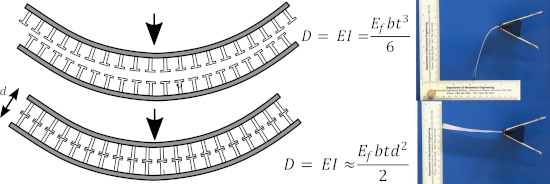
- . © 2017 WILEY-VCH Verlag GmbH & Co. KGaA, Weinheim. This content is not subject to CC BY 4.0. Non-vacuum jamming based stiffness-tunable prototypes developed for use in space applications. Figure 6a–d were republished from [39] (“Controllable biomimetic adhesion using embedded phase change material


Therapeutic effect of F127-folate@PLGA/CHL/IR780 nanoparticles on folate receptor-expressing cancer cells
Beilstein J. Nanotechnol. 2024, 15, 954–964, doi:10.3762/bjnano.15.78
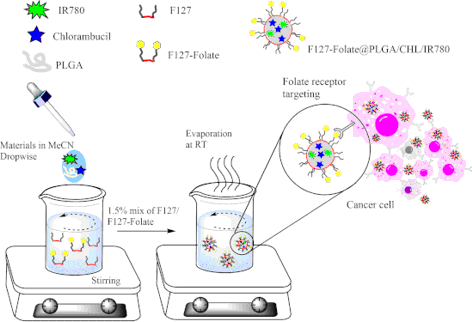
- therapeutic and diagnostic capabilities, have gained significant interest in drug research because of to their potential advantages. This study reports the development of a novel multifunctional nanoparticle carrier system based on poly(ᴅ,ʟ-lactic-co-glycolic acid) (PLGA) for the targeted delivery of the
- and diagnosis, leveraging the advantages of PLGA, folate targeting, and the integration of therapeutic and imaging agents. Keywords: cancer; chlorambucil; drug carrier; IR780; PLGA nanoparticle; theragnostic; Introduction Poly(ᴅ,ʟ-lactic-co-glycolic acid) (PLGA), a copolymer of poly(lactic acid
- ]. It has been found that PLGA may co-encapsulate a range of hydrophobic and hydrophilic compounds, which, because of the core–shell structures, boosts their therapeutic anti-tumor activity [1][2][3][11][26][27][28][29][30][31][32][33]. In this study, we would want to combine all of the advantages of



Electrospun nanofibers: building blocks for the repair of bone tissue
Beilstein J. Nanotechnol. 2024, 15, 941–953, doi:10.3762/bjnano.15.77
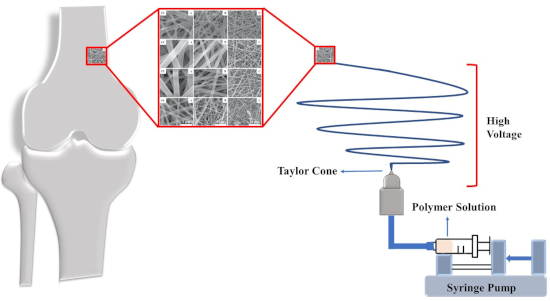
- Co. Ltd.)) [101]. The main polymeric nanofiber products on the market for bone regeneration are ReBOSSIS (Ortho Rebirth, Japan), a PLGA-based biomedical product for filling a synthetic bone cavity, poly-ʟ-lactic acid (PLLA) and collagen scaffolds (The Electrospinning Company, United Kingdom), and PCL


Effects of cutting tool geometry on material removal of a gradient nanograined CoCrNi medium entropy alloy
Beilstein J. Nanotechnol. 2024, 15, 925–940, doi:10.3762/bjnano.15.76
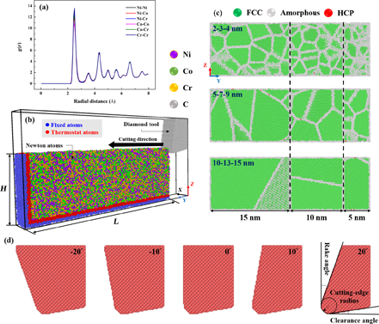
- MEA, as shown in Figure 1. FCC phase GNG CoCrNi MEA substrates with dimensions of 3 nm × 30 nm × 10 nm were used for all cases in this study. The polycrystalline samples consist of randomly oriented grains. The MEA substrates contain 25,952 Co atoms, 26,628 Cr, and 26,746 Ni atoms. Hence, the alloy








Facile synthesis of Fe-based metal–organic frameworks from Fe2O3 nanoparticles and their application for CO2/N2 separation
Beilstein J. Nanotechnol. 2024, 15, 897–908, doi:10.3762/bjnano.15.74
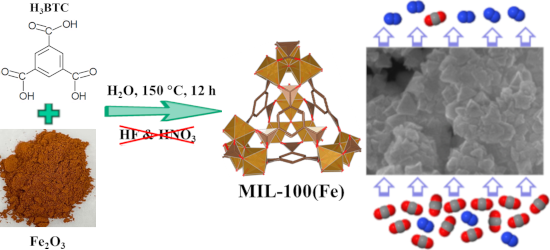
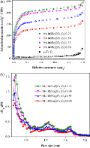
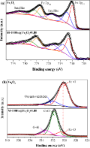
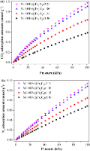
- manufacturing cost, environmental friendliness, and biodegradability. Because of the abovementioned advantages, MIL-100(Fe) has gained popularity as a candidate for gas separation of CO/CO2 [9][13], CO/N2 [14][15], CO2/CH4 [16], CH4/C2H6/C3H8 [17], and SF6/N2 [18]. In the early stage, MIL-100(Fe) was produced





Water-assisted purification during electron beam-induced deposition of platinum and gold
Beilstein J. Nanotechnol. 2024, 15, 884–896, doi:10.3762/bjnano.15.73
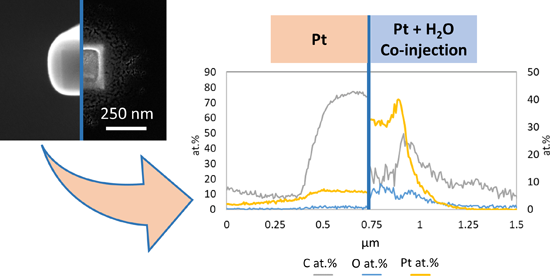
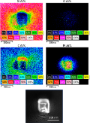
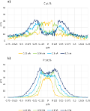
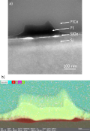
- beam-induced deposition (FEBID). It was recently achieved for gold deposits by the co-injection of a water precursor and the gold precursor Au(tfac)Me2. In this work results are reported, using the same approach, on a different gold precursor, Au(acac)Me2, as well as the frequently used platinum
- pure gold structures in a single process step using the co-injection of the precursor Au(tfac)Me2 and water. This inspired the present work, in which we aim for the direct deposition of high-purity Au and Pt nanostructures achieved through the co-injection of water and the precursors Au(acac)Me2 and
- MeCpPtMe3 respectively. Purification of FEBID materials with a reactant gas agent Purification of FEBID products by the use of a reactant gas has been performed either through a one-step procedure, with the co-injection of the FEBID precursor and the reactant gas (purification during deposition), or through





A review on the structural characterization of nanomaterials for nano-QSAR models
Beilstein J. Nanotechnol. 2024, 15, 854–866, doi:10.3762/bjnano.15.71
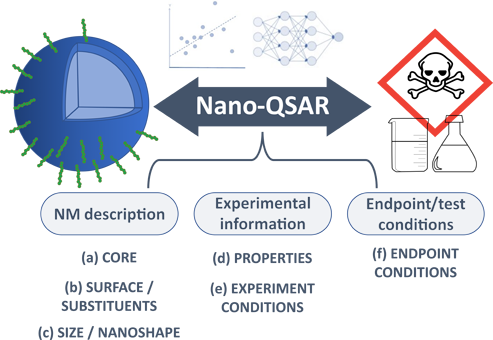
- approaches. Furthermore, when they are developed complying strictly with the rules established by the Organization for Economic Co-operation and Development (OECD) for their scientific validation, QSARs are accepted for regulatory purposes, thus ensuring their applicability at the regulatory level by


Intermixing of MoS2 and WS2 photocatalysts toward methylene blue photodegradation
Beilstein J. Nanotechnol. 2024, 15, 817–829, doi:10.3762/bjnano.15.68
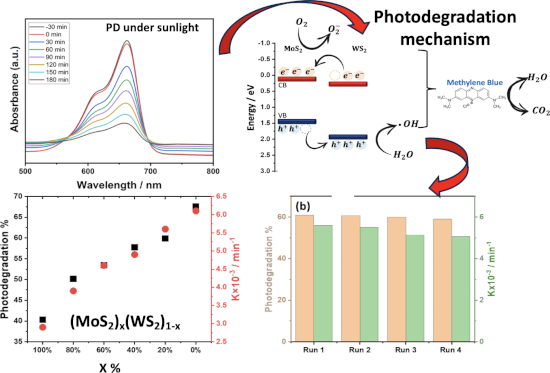
- Langmuir–Hinshelwood kinetics model, expressed by the following equation: The PD reaction rate constant, k, is the slope of Figure 7a. By plotting −ln(Ct/Co) as a function of t, it was observed that the oxidation of MB using the photocatalyst was well-fitted with the pseudo first-order reaction kinetics


Synthesis of silver–palladium Janus nanoparticles using co-sputtering of independent sources: experimental and theorical study
Beilstein J. Nanotechnol. 2024, 15, 808–816, doi:10.3762/bjnano.15.67




Electron-induced ligand loss from iron tetracarbonyl methyl acrylate
Beilstein J. Nanotechnol. 2024, 15, 797–807, doi:10.3762/bjnano.15.66
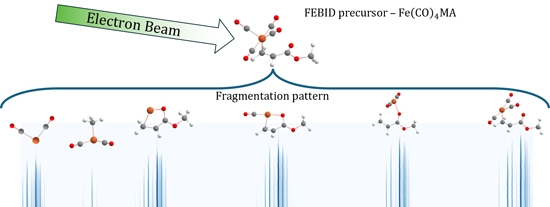
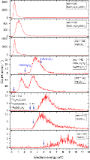
- and Technology, Technická 5, 16628 Prague, Czech Republic Department of Chemistry, University of Florida, Gainesville, Florida 32611-7200, United States 10.3762/bjnano.15.66 Abstract We probe the separation of ligands from iron tetracarbonyl methyl acrylate (Fe(CO)4(C4H6O2) or Fe(CO)4MA) induced by
- . Interesting differences also appear when this precursor is compared to structurally similar iron pentacarbonyl. The present findings shed light on the recent electron-induced chemistry of Fe(CO)4MA on a surface under ultrahigh vacuum. Keywords: electron collision; focused electron beam-induced deposition
- acrylate, Fe(CO)4(C4H6O2), further denoted as Fe(CO)4MA. The structure of Fe(CO)4MA is shown in Figure 1. This precursor is related to iron pentacarbonyl, Fe(CO)5, with one ligand replaced with an olefinic methyl acrylate ligand. Recently, Fe(CO)4MA has been utilized for electron-induced deposition under



Electrospun polysuccinimide scaffolds containing different salts as potential wound dressing material
Beilstein J. Nanotechnol. 2024, 15, 781–796, doi:10.3762/bjnano.15.65
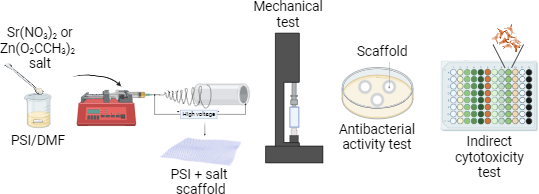
- syringe filters (Sarstedt AG & Co. KG, Germany). Both cell types were seeded onto a 96-well plate at a concentration of 5000 cells/cm2. The names of the samples and the treatment of the cells are shown in Table 2. Eight parallel measurements were made for each sample. After one day of incubation, the



Exploring surface charge dynamics: implications for AFM height measurements in 2D materials
Beilstein J. Nanotechnol. 2024, 15, 767–780, doi:10.3762/bjnano.15.64
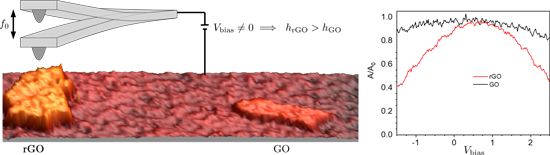
- , consequently, affect the measured height. To investigate this phenomenon, we conduct measurements on monolayer flakes of co-deposited graphene oxide and reduced graphene oxide. Subsequently, we introduce a general model that elucidates our observations. This approach offers valuable insights into the dynamics
- explain the measurements, suggesting that there may be additional interactions directly related to the 2D nature of these materials affecting the height measurements. To explore this issue, in this work, we conducted a study on single-layer flakes of graphene oxide (GO) and reduced graphene oxide (rGO) co
- equations for the system, including the presence of the tip, which we have subsequently particularized for 2D materials on insulating supports. Experimental Co-deposited samples of GO and rGO were prepared following the methodology outlined in [61]. In summary, ultradiluted (4 × 10⁻⁴ wt %) dispersions of GO


Level set simulation of focused ion beam sputtering of a multilayer substrate
Beilstein J. Nanotechnol. 2024, 15, 733–742, doi:10.3762/bjnano.15.61
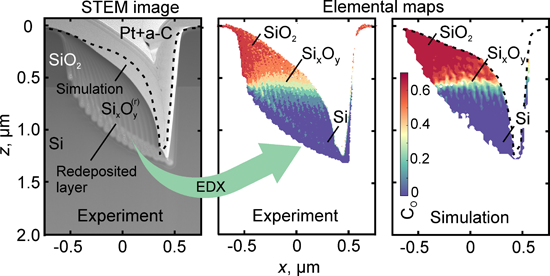
- cells with the redeposited oxygen and silicon atoms was employed in the following section where the simulation results were compared with the experimental data. The concentration of the oxygen atoms CO in the redeposited material stemming from the sputtering of the SiO2 layer was determined as . For
- -enriched region, and its results are shown in Figure 4a–c using maps for O. The presented color scale allows for estimating the concentration of oxygen atoms CO in the redeposited material, calculated without taking gallium atoms into account. The red color corresponds to the relation between silicon and

![[Graphic 55]](/bjnano/content/inline/2190-4286-15-61-i68.svg?max-width=637&scale=1.18182)


Simultaneous electrochemical determination of uric acid and hypoxanthine at a TiO2/graphene quantum dot-modified electrode
Beilstein J. Nanotechnol. 2024, 15, 719–732, doi:10.3762/bjnano.15.60
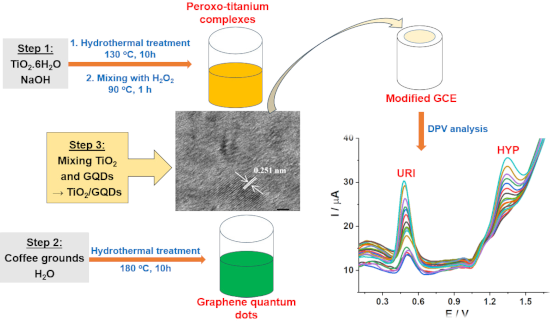
- stability of the (1:4)TiO2/QGDs-GCE (Figure 9d). In order to study the selectivity of the (1:4)TiO2/GQDs-modified electrode, common co-existing substances, namely, NH4Cl, KCl, Na2SO4, NH4NO3, CaCl2, ZnCl2, glucose (GLC), glutamic acid (GLA), urea (URE), ʟ-cysteine (LCY) and xanthine (XTE), have been added


Enhancing higher-order modal response in multifrequency atomic force microscopy with a coupled cantilever system
Beilstein J. Nanotechnol. 2024, 15, 694–703, doi:10.3762/bjnano.15.57

- , the piezoelectric transducer (PZT-5H) was driven by a signal generator (DG1022, Rigol Technologies Co., Ltd.) to apply the excitation force to different positions of the cantilever. 2 cm and 5 cm face excitations were applied with a piezoelectric transducer size of 20 × 14 × 0.2 mm and 50 × 14 × 0.2
- mm, respectively. All others excitations were applied with a transducer size of 14 × 2.5 × 0.2 mm with an excitation width of 2.5 mm. The modal response displacement of the free end of the cantilever was measured using a laser Doppler vibrometer (LV-S01, Yuyao Sunny Optical Intelligent Technology Co


Laser synthesis of nanoparticles in organic solvents – products, reactions, and perspectives
Beilstein J. Nanotechnol. 2024, 15, 638–663, doi:10.3762/bjnano.15.54
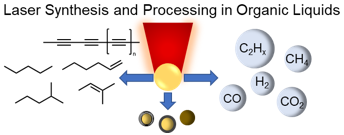
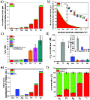
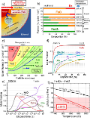
- certain controllability of the redox reactions occurring during reductive or oxidative laser processing in aqueous media at constant particle size. Furthermore, focusing laser pulses in CO2-saturated water leads to the reduction of CO2, which selectively yields CO [74] or oxocarbon-encapsulated
- of CO and CO2, along with CH4 and C2 hydrocarbons [106]. Further, almost no O2 is formed during the ablation of gold in ethylene glycol, resulting in a conversion of chemically bound oxygen to possible molecular non-volatile products and/or CO and CO2. Frias Batista et al. recently investigated the





Radiofrequency enhances drug release from responsive nanoflowers for hepatocellular carcinoma therapy
Beilstein J. Nanotechnol. 2024, 15, 569–579, doi:10.3762/bjnano.15.49
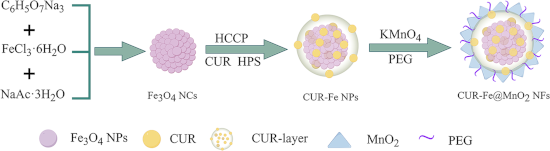
- permanganate (KMnO4), acetonitrile, ethylene glycol (EG), triethylamine (TEA), curcumin (CUR), bis(4-hydroxyphenyl) disulfide (HPS), hexachlorocyclotriphosphazene (HCCP), polyethylene glycol (PEG) and 2-(N-morpholino) taurine (MES) were obtained from Shanghai Rhawn Chemical Technology Co., Ltd. (Shanghai
- , China). Ultrapure water was obtained from a Laibopate purification system (Changchun Lab Partner Technology Development Co., Ltd., Changchun, China) and used in all experiments. Human hepatocellular carcinoma cells (Huh-7 cells) and Dulbecco’s modified Eagle’s medium (DMEM, ZQ-101) were purchased from
- Shanghai Zhongqiao Xinzhou Biotechnology Co., Ltd. (Shanghai, China). Preparation of Fe3O4 NCs Fe3O4 NCs were synthesized using a microwave hydrothermal synthesis method with a computer microwave ultrasonic synthesis/extraction instrument (XH-300A+, Beijing Xianghu Technology Development Co., Ltd., Beijing


On the additive artificial intelligence-based discovery of nanoparticle neurodegenerative disease drug delivery systems
Beilstein J. Nanotechnol. 2024, 15, 535–555, doi:10.3762/bjnano.15.47
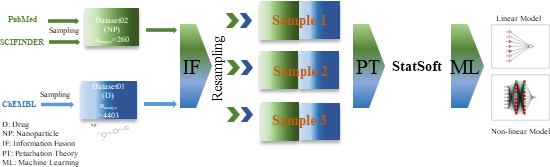
- similar systems to this research work such as NP systems, taking into account NP structure and coating agents, synthesis conditions of NPs and loaded drugs, cancer co-therapy drugs, or assay conditions [53][54][55][56][57]. Here we developed IFPTML models for the proposal of N2D3Ss containing NDD and NP



Cholesterol nanoarchaeosomes for alendronate targeted delivery as an anti-endothelial dysfunction agent
Beilstein J. Nanotechnol. 2024, 15, 517–534, doi:10.3762/bjnano.15.46
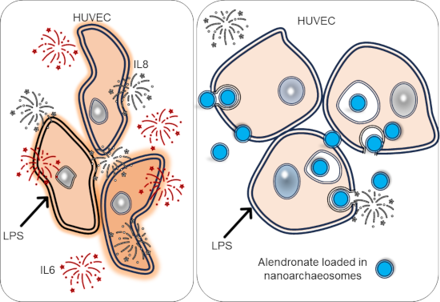
- /II. We observed here that nanoARC(ALN) was much less cytotoxic for THP-1 macrophages than for J774A1 cells, probably, because the expression of SRA1 in THP-1 macrophages (and subsequent internalization) is reported to be lower than in J774A1 macrophages [43]. Co-cultures Mild inflammation model The
- findings show that the co-culture of HUVECs with macrophages decreases the expression of eNOS [62], making them more likely to produce pro-inflammatory cytokines such as IL-6 and IL-8 and to express cell adhesion molecules, that is, making them more activated and pro-atherogenic [63]. Overall, the results
- oxidized LDL (ox-LDL) as described by Ledda and co-workers [80]. Briefly, 1.5 × 10⁴ THP-1 macrophages were incubated with 100 μg/mL of human oxLDL for 24 h at 37 °C and 5% CO2 atmosphere. FC induction was assessed by ORO staining. Briefly, cells were fixed to glass coverslips previously placed in 24-well