Search results
Search for "Rh" in Full Text gives 140 result(s) in Beilstein Journal of Nanotechnology.
Friction and durability of virgin and damaged skin with and without skin cream treatment using atomic force microscopy
Beilstein J. Nanotechnol. 2012, 3, 731–746, doi:10.3762/bjnano.3.83
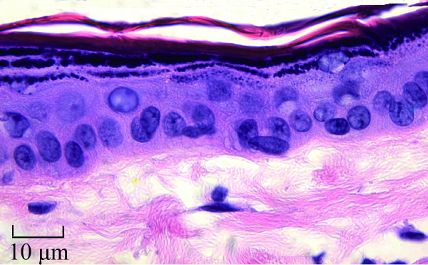
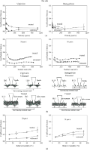
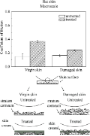
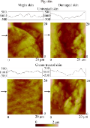
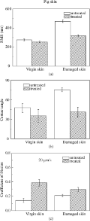
- scraped off with scissors, and the hair was shaved carefully with a razor. Then, the skin was gently cleaned with a 10% (v/v) soap solution (liquid hand soap, Kroger Co., Cincinnati, OH), rinsed with tap water for 30 s, and leveled on the table to dry under ambient conditions (22 °C, RH 25–35%). After





The memory effect of nanoscale memristors investigated by conducting scanning probe microscopy methods
Beilstein J. Nanotechnol. 2012, 3, 722–730, doi:10.3762/bjnano.3.82
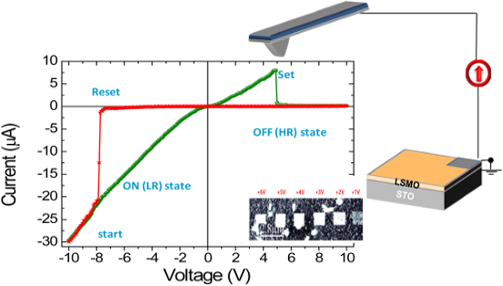
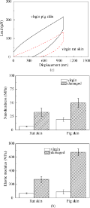
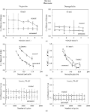
- force microscopy Scanning force microscopy (SFM) measurements were performed using a commercial head and software from Nanotec [14] under a N2 environment (RH < 5%) to diminish any possible humidity effects. For the conductivity measurements (C-SFM), we used either commercial conductive B-doped diamond


FTIR nanobiosensors for Escherichia coli detection
Beilstein J. Nanotechnol. 2012, 3, 485–492, doi:10.3762/bjnano.3.55
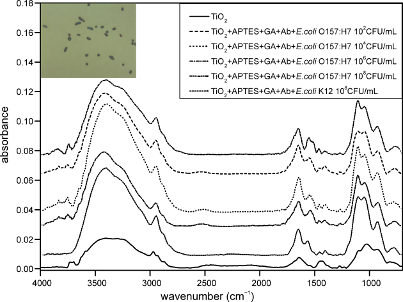
- ) oriented (one side polished and one side etched) were obtained from Jocam (Italy). Film preparation Titania (TiO2) thin films were prepared by dipping silicon wafers in a solution composed of TiCl4/Pluronic F127/H2O/EtOH (1:0.005:10:40) under controlled conditions of temperature and RH (relative humidity
- ). Films were deposited with a dip coater, aged at room temperature (RH 50% for 24 h) and, to increase the inorganic polycondensation and stabilize the mesophase, the films were submitted to different firing steps at 60, 120 and 200 °C for 24 h at each temperature in an oven at a heating rate of 10 °C·min


Conducting composite materials from the biopolymer kappa-carrageenan and carbon nanotubes
Beilstein J. Nanotechnol. 2012, 3, 415–427, doi:10.3762/bjnano.3.48
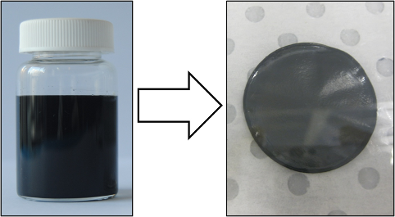
- stable for a period of at least 10 days. In addition, these dispersions appeared to be stable after two months of storage under controlled conditions (21 °C, RH = 45%, Figure 4b). The flow curves of KC–CNT dispersions and sonicated KC solutions are shown in Figure 4b and Figure 4c. It is clear that the
- = 55 mm), which were then dried under controlled conditions (35 °C, relative humidity, RH = 45%) in a temperature–humidity chamber (Thermoline Scientific) for 24 h. The resulting films were peeled off the substrate to yield uniform free-standing films (Figure 9b). Preparation of films by vacuum
- conditions (21 °C, RH = 45%) for 24 h. The films were then peeled off from the filtration membrane (Figure 9c). Characterization UV–visible–NIR absorption spectra of KC solutions and KC–CNTs dispersions were obtained with a UV–vis–NIR spectrophotometer (Cary 500) by using a quartz cuvette (path length = 5 mm


Functionalised zinc oxide nanowire gas sensors: Enhanced NO2 gas sensor response by chemical modification of nanowire surfaces
Beilstein J. Nanotechnol. 2012, 3, 368–377, doi:10.3762/bjnano.3.43
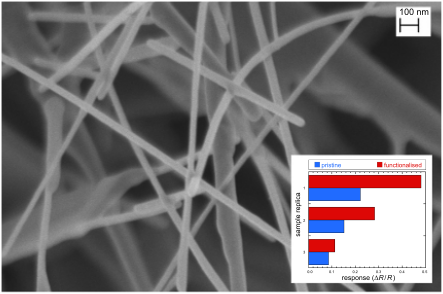
- V bias to the films and measuring the through current with a picoammeter. Gas-sensing measurements were carried out by the flow-through method, working at a constant flow of 300 sccm in a thermostatic sealed chamber at room pressure under constant-humidity conditions (RH = 30% @ 20 °C). Controlled


Parallel- and serial-contact electrochemical metallization of monolayer nanopatterns: A versatile synthetic tool en route to bottom-up assembly of electric nanocircuits
Beilstein J. Nanotechnol. 2012, 3, 134–143, doi:10.3762/bjnano.3.14
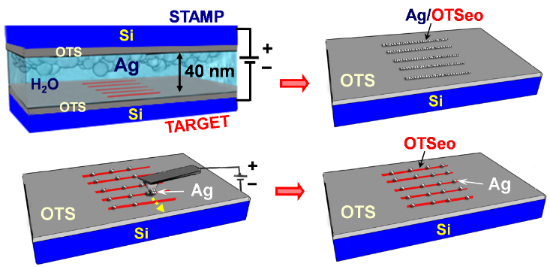
- specimens are pressed together with a force of about 100 N in a water-saturated atmosphere (RH 100%). Deposited silver dots were removed (Figure 2) by immersion in HNO3/H2O (20% v/v) for ~3 h followed by rinsing with pure water. All monolayer nanopatterning (CNL) and serial metallization (CET) operations
- were carried out in the contact mode (in a regime of minimal repulsive force), under controlled humidity at 55–65% RH. A SOLVER P47 SFM system (NT-MDT) was used in the fabrication of the OTSeo@OTS nanopatterns in Figure 2 and Figure 3. The patterns were written with doped-silicon contact probes (CSC-38


Octadecyltrichlorosilane (OTS)-coated ionic liquid drops: Micro-reactors for homogenous catalytic reactions at designated interfaces
Beilstein J. Nanotechnol. 2012, 3, 33–39, doi:10.3762/bjnano.3.4
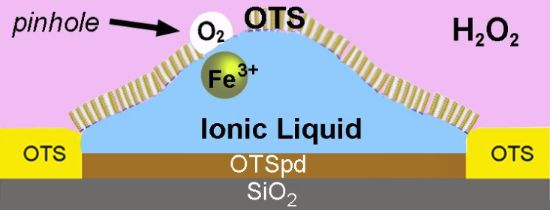
- . Next, the OTS-coated samples were rinsed in toluene and annealed in a sealed vial at 40 °C, 100% relative humidity (RH) for 12 h. Subsequently, the samples were incubated in a 5 mM OTS toluene solution again. The stabilization (rinsing-annealing-OTS solution incubating) process was repeated for three
- times in order to remove the pinholes inside the OTS film [17][19][20][21]. The final OTS film was an ultra-flat, pinhole-free, featureless film. The OTSpd patterns were fabricated by the scanning probe deep oxidation lithography. In a 100% RH environment (at 25 °C), a Pt–Ti coated conducting AFM tip


Size-dependent phase diagrams of metallic alloys: A Monte Carlo simulation study on order–disorder transitions in Pt–Rh nanoparticles
Beilstein J. Nanotechnol. 2012, 3, 1–11, doi:10.3762/bjnano.3.1
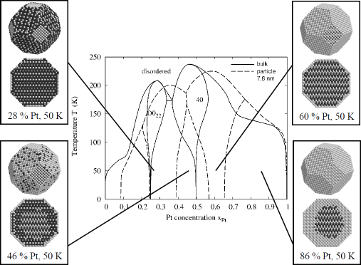
- Johan Pohl Christian Stahl Karsten Albe Institut für Materialwissenschaft, Technische Universität Darmstadt, Petersenstr. 32, D-64287 Darmstadt, Germany 10.3762/bjnano.3.1 Abstract Nanoparticles of Pt–Rh were studied by means of lattice-based Monte Carlo simulations with respect to the stability
- simulation; nanoparticles; nanothermodynamics; phase diagram; Pt-Rh; thermodynamics; Introduction Pt–Rh is an important alloy due to its catalytic activity in different reactions. In the past it was assumed that Pt–Rh is immiscible at low temperatures [1][2], but theoretical studies revealed that Pt–Rh
- were studied by means of lattice Monte Carlo simulations [25]. However, as far as we know, a complete size-dependent phase diagram of an ordering nanoalloy has not yet been studied. It is our intention to examine such a size-dependent phase diagram by using the model system of Pt–Rh particles and




![[Graphic 37]](/bjnano/content/inline/2190-4286-3-1-i43.png?max-width=637&scale=1.18182) up to 8th neighbors for a Pt...
up to 8th neighbors for a Pt...

![[Graphic 28]](/bjnano/content/inline/2190-4286-3-1-i34.png?max-width=637&scale=1.18182) (lower points) and
(lower points) and ![[Graphic 29]](/bjnano/content/inline/2190-4286-3-1-i35.png?max-width=637&scale=1.18182) (upper points) WC-order parameters versus temperature for di...
(upper points) WC-order parameters versus temperature for di...


![[Graphic 31]](/bjnano/content/inline/2190-4286-3-1-i37.png?max-width=637&scale=1.18182) (lower points) and
(lower points) and ![[Graphic 32]](/bjnano/content/inline/2190-4286-3-1-i38.png?max-width=637&scale=1.18182) (upper points). The Pt concentration is ...
(upper points). The Pt concentration is ...

![[Graphic 33]](/bjnano/content/inline/2190-4286-3-1-i39.png?max-width=637&scale=1.18182) (lower points) and
(lower points) and ![[Graphic 34]](/bjnano/content/inline/2190-4286-3-1-i40.png?max-width=637&scale=1.18182) (upper points) constrained to a core region...
(upper points) constrained to a core region...

![[Graphic 39]](/bjnano/content/inline/2190-4286-3-1-i45.png?max-width=637&scale=1.18182) and
and ![[Graphic 38]](/bjnano/content/inline/2190-4286-3-1-i44.png?max-width=637&scale=1.18182) of three different particle sizes and bulk material a...
of three different particle sizes and bulk material a...

Influence of water on the properties of an Au/Mpy/Pd metal/molecule/metal junction
Beilstein J. Nanotechnol. 2011, 2, 384–393, doi:10.3762/bjnano.2.44
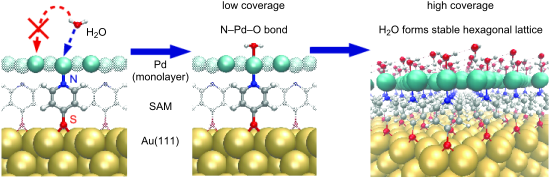
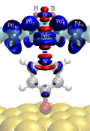
- -dicyanobenzene [4] molecules covered by monolayers of Pd [1], Pt [5], or Rh [6], respectively. In addition, further progress extended the limits of the method towards the preparation of a prototypical Au/Mpy/Pd/Mpy/Pt double decker junction [7]. These achievements can eventually open the way towards the rational

![[Graphic 1]](/bjnano/content/inline/2190-4286-2-44-i1.png?max-width=637&scale=0.945456) )R3...
)R3...


![[Graphic 2]](/bjnano/content/inline/2190-4286-2-44-i2.png?max-width=637&scale=1.18182) = 1/3 ML. Plott...
= 1/3 ML. Plott...
Characterization of protein adsorption onto FePt nanoparticles using dual-focus fluorescence correlation spectroscopy
Beilstein J. Nanotechnol. 2011, 2, 374–383, doi:10.3762/bjnano.2.43
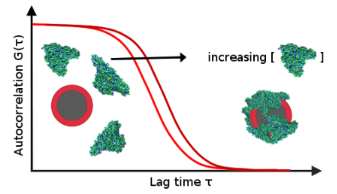
- scale of diffusion, τD. Based on the well-known spatial extension of the observation volume, the diffusion coefficient, D, and, by using the Stokes–Einstein equation (see Experimental), the hydrodynamic radius of the fluorescent particle, RH, can be calculated. Consequently, a NP size increase due to
- endowing the NPs with an overall negative charge and excellent colloidal stability [30]. To determine the affinity of the proteins to the NPs as well as the increase in RH, we took 2fFCS data on NPs freely diffusing in solutions, which contained the proteins at concentrations varying over several orders of
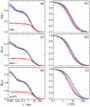
- foci and the cross-correlation curve. Note that FCS data and, therefore, also the derived RH values, are averages determined from a few thousand single-particle bursts. The autocorrelation curves in Figure 1 display two decay processes. The step on the millisecond time scale is due to NP diffusion and


Intermolecular vs molecule–substrate interactions: A combined STM and theoretical study of supramolecular phases on graphene/Ru(0001)
Beilstein J. Nanotechnol. 2011, 2, 365–373, doi:10.3762/bjnano.2.42
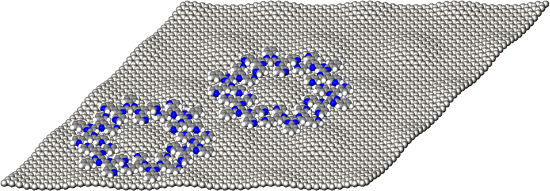
- favorable valley as compared to the formation of a 2D adlayer phase covering the entire surface, or islands of that phase covering part of the surface. Comparable structures were reported for graphene/Rh(111) [18]. Pronounced lateral variations in the adsorption potential on metal supported graphene
- limitation to specific adsorption sites in combination with the distinct positions of the hydrogen bond donors and acceptors within the molecule results in the formation of 1D chain structures (Figure 3b), similar to findings recently reported for the adsorption of PTCDI molecules on graphene/Rh(111) [18


Manipulation of gold colloidal nanoparticles with atomic force microscopy in dynamic mode: influence of particle–substrate chemistry and morphology, and of operating conditions
Beilstein J. Nanotechnol. 2011, 2, 85–98, doi:10.3762/bjnano.2.10
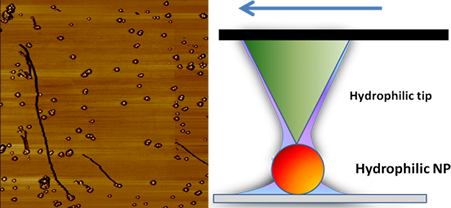
- RH%, are presented and discussed. The dependency of the energy dissipation during the manipulation was particularly studied as a function of size, coating of particles, substrate and temperature. Finally, interpretation of the physico-chemical mechanisms involved at both interfaces – tip–particle and
- the effect of functional (hydrophilic vs hydrophobic) molecules grafted on the Au nanoparticles on their mobility. In addition, we will address the important issue of environmental conditions (T, RH%), surface topography and tip scan velocities on the manipulation performance of gold nanoparticles
- ) substrate [41][42][43]. As we can see here, the eventual role of relative humidity (RH%) which is an environmental parameter, strongly depends on the chemistry of the NP–substrate interface. Another environmental parameter, namely temperature, also affects the mobility of the nanoparticles. The influence of


Single-pass Kelvin force microscopy and dC/dZ measurements in the intermittent contact: applications to polymer materials
Beilstein J. Nanotechnol. 2011, 2, 15–27, doi:10.3762/bjnano.2.2
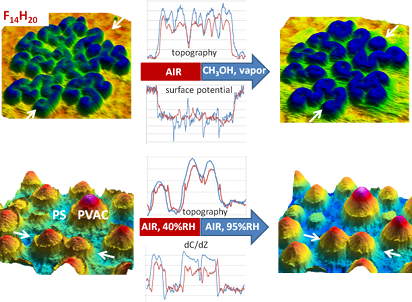
- measurements were made in air at 20–25% humidity. An environmental chamber of the microscope was used for studies in humid air (2% < RH < 95%, as measured by a humidity meter) and also for experiments in organic solvent vapors. One or two milliliters of water, methanol or toluene was injected into the
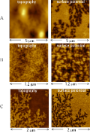
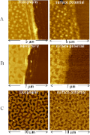
- the images of the 7M3S blend obtained after the sample was exposed to high humidity (RH > 95%) overnight (Figure 8C). The surface potential image was unchanged but multiple droplets appeared inside the dimples in the topography image. Most likely these are due to condensed water droplets on
- might suspect some environmental effects in our preliminary measurements at low humidity (3% RH) and in different gases (N2, Ar) as revealed by the the contrast variations. The humidity-induced changes are very noticeable and well as those caused by methanol and toluene vapors. These observations might





The description of friction of silicon MEMS with surface roughness: virtues and limitations of a stochastic Prandtl–Tomlinson model and the simulation of vibration-induced friction reduction
Beilstein J. Nanotechnol. 2010, 1, 163–171, doi:10.3762/bjnano.1.20
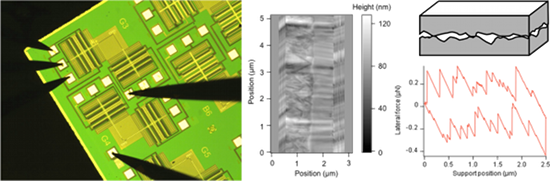
- normal force, while keeping the support position speed and environmental conditions constant. This resulted in a friction force that is more or less linear in the normal force, with a friction coefficient of 0.27 at a temperature of 27 °C and 25% RH (Figure 4). The fact that the friction force becomes
- .; Frenken, J. W. M. Tribol. Lett. 2007, 28, 149–156.] Typical 1000-cycle-average friction loops obtained with the tribometer of Figure 1 [19], at 27 °C and a relative humidity (RH) of 30%. The sliding speed was constant at 5 µm/s. Support position 0 μm is where the loop was started every cycle. This loop is


Ultrafine metallic Fe nanoparticles: synthesis, structure and magnetism
Beilstein J. Nanotechnol. 2010, 1, 108–118, doi:10.3762/bjnano.1.13
- ferromagnetic metals [1][2][3][4]. More surprisingly, the study of small Rh NPs revealed a paramagnetic to ferromagnetic phase transition induced by size reduction for clusters containing less than 40 atoms [5]. Band structure calculations have investigated the role of size reduction and demonstrated that it
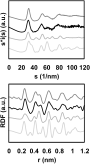
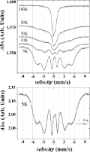
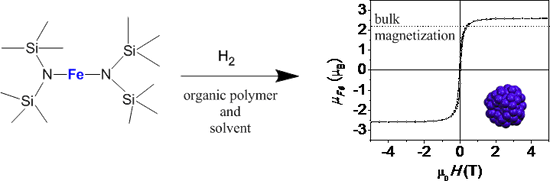
- various temperatures between 293 K and 5 K, are shown in Figure 4. The measurements were performed with a 57Co source in a Rh matrix and were calibrated against bulk α-Fe. Upon decreasing the temperature, the spectrum progressively splits but still remains broad, even at the lowest temperature. Such