Search results
Search for "absorption spectroscopy" in Full Text gives 143 result(s) in Beilstein Journal of Nanotechnology.
Cytotoxic and proinflammatory effects of PVP-coated silver nanoparticles after intratracheal instillation in rats
Beilstein J. Nanotechnol. 2013, 4, 933–940, doi:10.3762/bjnano.4.105
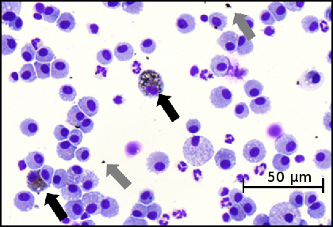
- dispersed in ultrapure, degassed water. The final silver concentration was determined by atomic absorption spectroscopy (AAS). The typical yield of Ag was about 5%. Unreacted silver and synthesis byproducts were removed by multiple ultracentrifugation, followed by redispersion under ultrasonication




Adsorption of the ionic liquid [BMP][TFSA] on Au(111) and Ag(111): substrate effects on the structure formation investigated by STM
Beilstein J. Nanotechnol. 2013, 4, 903–918, doi:10.3762/bjnano.4.102
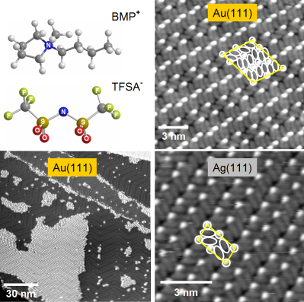
- ) [30][31], utilizing a combination of infrared reflection absorption spectroscopy (IRAS) and density functional theory (DFT) calculations. [OMIM][TFSA], which differs from [MMIM][TFSA] only by its longer alkyl chain, showed a coverage dependent adsorption geometry on Au(111): at coverages below 0.6 ML




Structural, optical and photocatalytic properties of flower-like ZnO nanostructures prepared by a facile wet chemical method
Beilstein J. Nanotechnol. 2013, 4, 763–770, doi:10.3762/bjnano.4.87
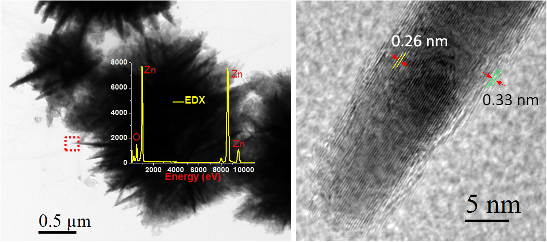
- UV–vis absorption spectroscopy. SEM and TEM studies revealed flower-like structures consisting of nanosheets, formed due to oriented attachment of ZnO nanoparticles. Flower-like ZnO structures showed enhanced photocatalytic activity towards sun-light driven photodegradation of methylene blue dye (MB
- spectra of the samples were recorded in the range from 400 to 4000 cm−1. The optical properties of the samples were studied by UV–vis absorption spectroscopy and photoluminescence (PL) spectroscopy at room temperature. The powder samples were dispersed in doubly distilled water by sonication and their
- optical properties were studied by UV–vis absorption spectroscopy in the wavelength range from 200 to 800 nm using a HITACHI U3900 spectrophotometer with doubly distilled water as the reference medium. Photocatalytic measurements The photocatalytic performance of the ZnO nanostructures were evaluated by


Optimization of solution-processed oligothiophene:fullerene based organic solar cells by using solvent additives
Beilstein J. Nanotechnol. 2013, 4, 680–689, doi:10.3762/bjnano.4.77
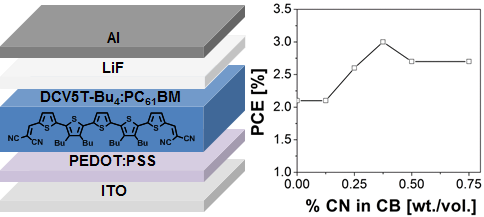
- (trans-2[3-4-tert-butylphenyl]-2-methyl-2-propenylidene)-malononitrile) as matrices. UV–vis absorption spectroscopy was carried out on a Perkin Elmer Lambda 19 using Merck Uvasol grade solvents. The maximum solubility of DCV5T-Bu4 was measured by using UV–vis absorption spectroscopy. After determination
- of the molar extinction coefficient, saturated solutions were made, stirred for 60 min at 60 °C then allowed to cool to room temperature. The saturated solution was then filtered and diluted for absorption spectroscopy, and the corresponding concentration could be determined. Cyclic voltammetry
- chromatography (HPLC) and differential scanning calorimetry (DSC), respectively (see Supporting Information File 1). The optical properties of DCV5T-Bu4 were investigated by using UV–vis absorption spectroscopy and are displayed in Figure 1a and summarized in Table 1. In dilute chloroform solutions, absorption


Characterization of electroforming-free titanium dioxide memristors
Beilstein J. Nanotechnol. 2013, 4, 467–473, doi:10.3762/bjnano.4.55
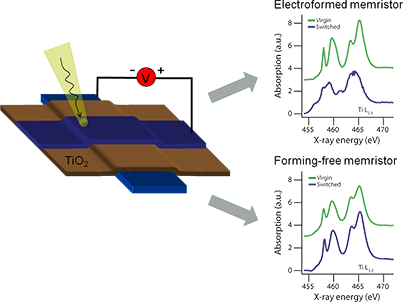
- performed using scanning transmission X-ray microscopy (STXM) at the Advanced Light Source in the Lawrence Berkeley National Laboratory. STXM allows spatially-resolved X-ray absorption spectroscopy (XAS) to be performed on a sample and is well-suited for chemical and structural characterization of the thin
- were observed. X-ray absorption spectroscopy was also performed for both types of devices. In this work the NEXAFS of the Ti L2,3 edges of the film were integrated within the junction area. Figure 3 shows the spectra for electroformed (a) and forming-free (b) devices, in both cases comparing the Virgin
- ). More detailed X-ray absorption spectroscopy for these junction regions are shown below in Figure 3. X-ray absorption spectroscopy within the junction region of an electroformed and forming-free device. The Ti L3 absorption edge is shown, which is sensitive to chemical composition and structure state




Ferromagnetic behaviour of Fe-doped ZnO nanograined films
Beilstein J. Nanotechnol. 2013, 4, 361–369, doi:10.3762/bjnano.4.42
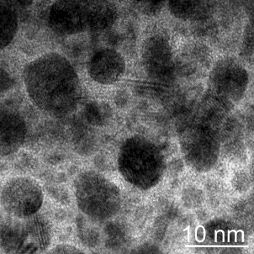
- deposited onto (102) single-crystalline sapphire substrates. Drying at 100 °C in air for about 30 min was followed by thermal pyrolysis in an electrical furnace in air at 550 °C. The Zn and Fe content in doped oxides was measured by atomic absorption spectroscopy in a Perkin-Elmer spectrometer and electron


Antiferromagnetic coupling of TbPc2 molecules to ultrathin Ni and Co films
Beilstein J. Nanotechnol. 2013, 4, 320–324, doi:10.3762/bjnano.4.36
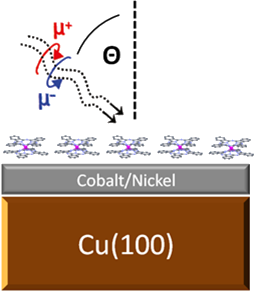
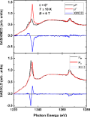
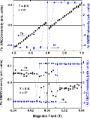
- , CNRS UMP 7504, 23 Rue du Loess, 67034 Strasbourg Cedex 2, France 10.3762/bjnano.4.36 Abstract The magnetic and electronic properties of single-molecule magnets are studied by X-ray absorption spectroscopy and X-ray magnetic circular dichroism. We study the magnetic coupling of ultrathin Co and Ni
- films that are epitaxially grown onto a Cu(100) substrate, to an in situ deposited submonolayer of TbPc2 molecules. Because of the element specificity of the X-ray absorption spectroscopy we are able to individually determine the field dependence of the magnetization of the Tb ions and the Ni or Co film
- absorption spectroscopy; Introduction Molecular spintronic devices as building blocks for future applications in information technology may be a big improvement and lead to higher efficiency [1][2][3][4][5][6][7][8][9]. Therefore several groups have studied the properties of potential organic molecules

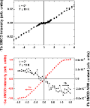
Towards atomic resolution in sodium titanate nanotubes using near-edge X-ray-absorption fine-structure spectromicroscopy combined with multichannel multiple-scattering calculations
Beilstein J. Nanotechnol. 2012, 3, 789–797, doi:10.3762/bjnano.3.88
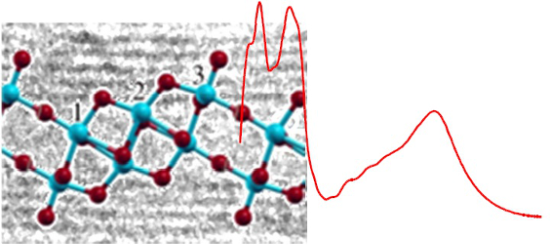
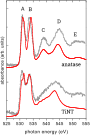
- transmission mode with a zone plate objective with an outermost zone width of 40 nm. This allows the study of selected areas of the samples and reduces the uncertainties due to the presence of impurities. Figure 2 shows a few X-ray images of the image stack used to record the NEXAFS spectra. For absorption
- spectroscopy it is necessary to measure two spectra: one spectrum I(E) of transmission through the specimen and another of the incident flux I0(E). The spectrum is obtained as an optical density OD(E) = −log [I(E)/I0(E)] [33]. A region containing a bundle with a few (Na,H)TiNTs was used to record the I(E



Influence of the diameter of single-walled carbon nanotube bundles on the optoelectronic performance of dry-deposited thin films
Beilstein J. Nanotechnol. 2012, 3, 692–702, doi:10.3762/bjnano.3.79
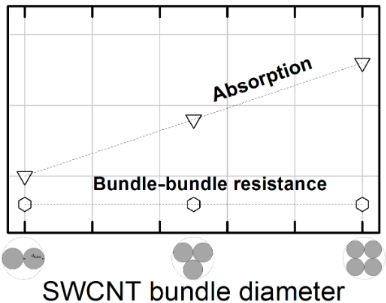
- transparent 1 mm thick quartz substrates (HQS300, Heraeus) for Raman spectroscopy (LabRAM, HORIBA JobinYvon, France) utilizing a HeNe laser source of 632.82 nm (1.96 eV), and for UV–vis–NIR absorption spectroscopy (Perkin-Elmer Lambda 950) used to determine the SWCNT diameters (dtube). For high-resolution
- distribution and diameters (dtube) can contribute both to conductivity and light-absorption properties [27][29]. UV–vis–NIR absorption spectroscopy is a versatile tool that can be used to define both dtube and, to a limited extent, metallicity [30]. The fitting of semiconducting (E11 and E22) and metallic (M11


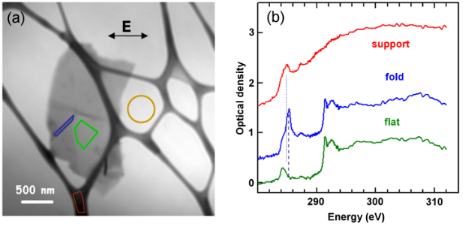
X-ray absorption spectroscopy by full-field X-ray microscopy of a thin graphite flake: Imaging and electronic structure via the carbon K-edge
Beilstein J. Nanotechnol. 2012, 3, 345–350, doi:10.3762/bjnano.3.39



Substrate-mediated effects in photothermal patterning of alkanethiol self-assembled monolayers with microfocused continuous-wave lasers
Beilstein J. Nanotechnol. 2012, 3, 65–74, doi:10.3762/bjnano.3.8
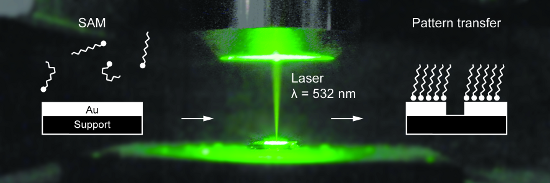
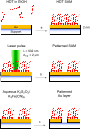
- only [32]. HDT coated substrates are characterized by contact-angle measurements and infrared reflection–absorption spectroscopy (IRRAS). Static water contact angles are about 109°. IR measurements show no difference for all samples considered here. A typical spectrum is shown in Figure 3, and peak
- infrared reflection–absorption spectroscopy (IRRAS) were used. UV–vis spectra were measured with a Perkin Elmer UV–vis spectrometer (Lambda 950). Laser reflectance and transmittance measurements were carried out at λ = 532 nm by using the DPSS laser of the patterning setup and a power meter with a thermal




X-ray spectroscopy characterization of self-assembled monolayers of nitrile-substituted oligo(phenylene ethynylene)s with variable chain length
Beilstein J. Nanotechnol. 2012, 3, 12–24, doi:10.3762/bjnano.3.2
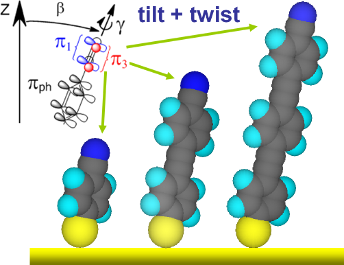
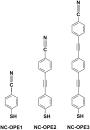
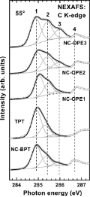
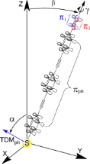
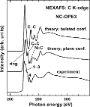
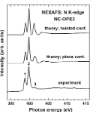
- nitrile moiety, which served as a spectroscopic marker group, to the OPEn backbone did not significantly affect the molecular orientation in the SAMs. Keywords: nitrile substitution; oligo(phenylene ethynylene); self-assembled monolayers; twist angle; X-ray absorption spectroscopy; Introduction Current



How to remove the influence of trace water from the absorption spectra of SWNTs dispersed in ionic liquids
Beilstein J. Nanotechnol. 2011, 2, 653–658, doi:10.3762/bjnano.2.69
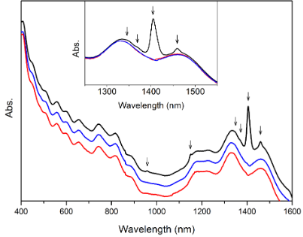
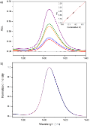
- introduced in the absorption spectra of IL-dispersed SWNTs and cause problems in spectral deconvolution and further analysis. In order to remove this influence, a quantitative characterization of the trace water in [BMIM]+[PF6]− and [BMIM]+[BF4]− was carried out by means of UV–vis-NIR absorption spectroscopy




Nanostructured, mesoporous Au/TiO2 model catalysts – structure, stability and catalytic properties
Beilstein J. Nanotechnol. 2011, 2, 593–606, doi:10.3762/bjnano.2.63
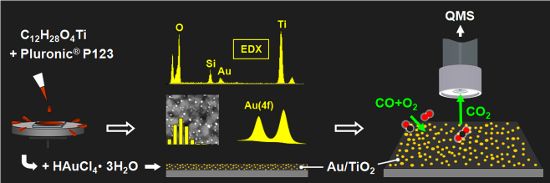
- -modulation infrared reflection absorption spectroscopy (PM-IRAS) [15][16][17] or X-ray absorption spectroscopy (XAS) techniques [18][19], which allow us to gain detailed information on the structure, elemental/molecular chemical composition and electronic/vibrational properties of the catalyst surface and






Nanoscaled alloy formation from self-assembled elemental Co nanoparticles on top of Pt films
Beilstein J. Nanotechnol. 2011, 2, 473–485, doi:10.3762/bjnano.2.51
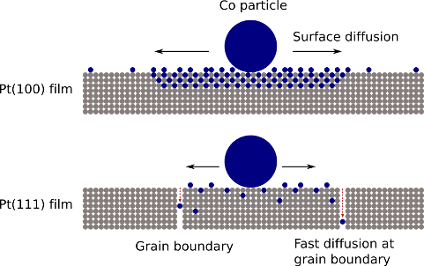
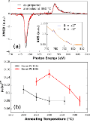
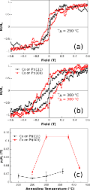
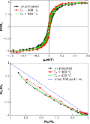
- alloy formation by X-ray absorption spectroscopy and SQUID magnetometry. The excellent sensitivity of SQUID magnetometers can be exploited, at suitably selected temperatures, to detect the magnetic response corresponding to the Co particles and nanoscale alloys. X-ray magnetic circular dichroism (XMCD




Extended X-ray absorption fine structure of bimetallic nanoparticles
Beilstein J. Nanotechnol. 2011, 2, 237–251, doi:10.3762/bjnano.2.28
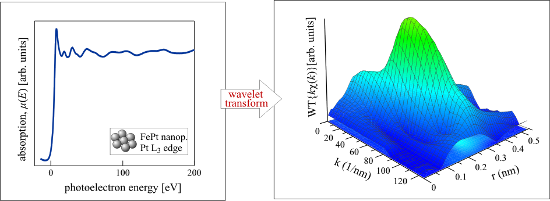
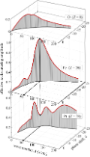
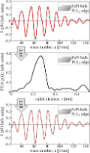
- absorption spectroscopy. In this review, recent developments in the field of extended X-ray absorption fine structure measurements and in the analysis methods for structural investigations of bimetallic nanoparticles are highlighted. The standard analysis based on Fourier transforms is compared to the
- on state-of-the-art X-ray absorption spectroscopy (XAS) on 3rd generation synchrotron sources such as the ESRF and BESSY II. In general, XAS deals with the excitation of core-level electrons, with their element-specific binding energies, by incident X-rays. After absorption of an X-ray photon, a core
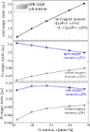
- detailed study of the (local) structure for data interpretation in terms of magnetic or electronic characterisation was discussed on the basis of magnetic moments of FexPt1−x alloys measured by XMCD [68] and calculated using the SPR-KKR method. In summary, the different aspects of X-ray absorption






Zirconium nanoparticles prepared by the reduction of zirconium oxide using the RAPET method
Beilstein J. Nanotechnol. 2011, 2, 198–203, doi:10.3762/bjnano.2.23
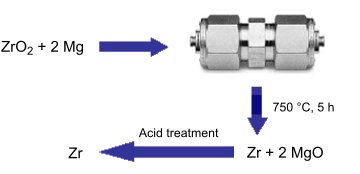
- reaction of commercial ZrO2 with Mg powder was carried out in a closed stainless steel cell, at 750 °C. On completion of the reaction, the additionally formed MgO is removed by treatment with acid. The characterization of the product was performed by XRD, X-ray absorption spectroscopy, SEM, TEM and
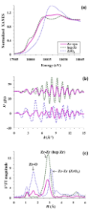
- between 20° and 24° in Figure 1b, is due to the mylar layer that covers the sample in the specially inert XRD cell [12] designed to avoid the oxidation of the Zr sample. However, further proof for the successful fabrication of metallic zirconium is required. X-ray absorption spectroscopy (XAS) was



Precursor concentration and temperature controlled formation of polyvinyl alcohol-capped CdSe-quantum dots
Beilstein J. Nanotechnol. 2010, 1, 119–127, doi:10.3762/bjnano.1.14
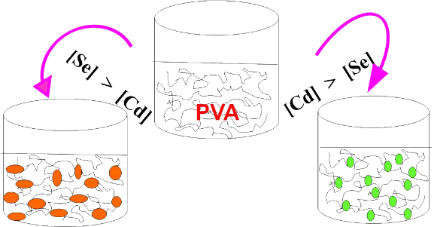
- which could be used conveniently for tuning the size of the particles, as well as their optical properties. The synthesized quantum dots were characterized by optical absorption spectroscopy, fluorescence spectroscopy, X-ray diffraction, atomic force microscopy and transmission electron microscopy. The