Search results
Search for "adhesion" in Full Text gives 472 result(s) in Beilstein Journal of Nanotechnology. Showing first 200.
Recent advances in nanoarchitectures of monocrystalline coordination polymers through confined assembly
Beilstein J. Nanotechnol. 2022, 13, 763–777, doi:10.3762/bjnano.13.67
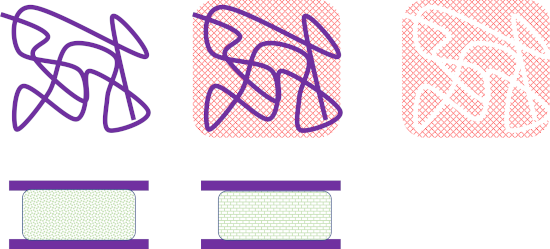
- adhesion strength could reach about 50 N·cm−2 for different kinds of substrates. The stacking nanoflakes formed multiple domains. Most of the domains were quasi-parallel to the substrates, suggesting a correlation between the alignment of nanoflakes and the anisotropic adhesion strength. The adhesion
- function is quite attractive because this function is versatile even for nanoparticles. Electrodes of sodium-ion batteries can be fabricated by using the Ni–CN–Ni colloids as glue. The contribution to the adhesion strength among 2D coordination polymers was generally considered to be van der Waals forces
- [147]. However, the adhesion strength varied over time, sometimes reaching values even close to 100 N·cm−2, which is higher than to be expected from van der Waals forces. The non-uniform deposition of Ni–CN–Ni nanosheets caused by Marangoni flow was an important reason for the unstable value of the




Effects of substrate stiffness on the viscoelasticity and migration of prostate cancer cells examined by atomic force microscopy
Beilstein J. Nanotechnol. 2022, 13, 560–569, doi:10.3762/bjnano.13.47
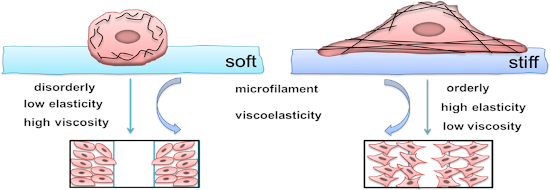
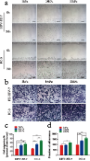
- cellular behaviours such as cell migration and adhesion and is an important indicator of the physiological state of the cells [28][29]. Thus, stiff substrates do promote migration of prostate cancer cells by altering their morphology, including cellular polarity index, filamentous pseudopods, and surface
- imaging of the cell membrane. We observed that prostate cancer cells exhibit a strong migration ability by sensing changes in the extracellular environment through actin polymerization and filamentous pseudopods. This is because the role of actin polymerisation in cell adhesion structure formation
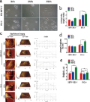
- deformation [38][39]) the energy dissipation was mainly caused by cell adhesion, which was a certain separation between the approach and retraction curves (Figure 5c). The results showed a negative correlation between viscosity values and substrate stiffness in PC-3 cells: the higher the substrate stiffness



Ethosomal (−)-epigallocatechin-3-gallate as a novel approach to enhance antioxidant, anti-collagenase and anti-elastase effects
Beilstein J. Nanotechnol. 2022, 13, 491–502, doi:10.3762/bjnano.13.41
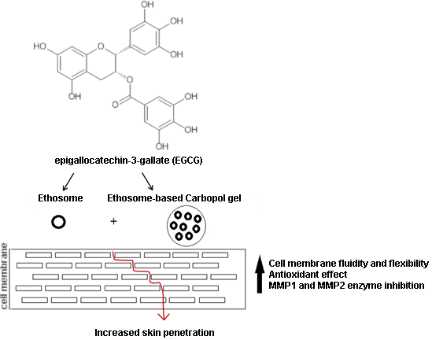
- cytotoxicity experiments, the MTT colorimetric assay was used [24]. Suspensions of L929 cells (100 μL, 2.5 × 10⁴ cells/well) were seeded onto 96-well culture plates which were kept at 37 °C for 24 h for cell adhesion [43]. The cells were treated with different EGCG solutions (31.25–1000 µg/mL) and EGCG-loaded



A non-enzymatic electrochemical hydrogen peroxide sensor based on copper oxide nanostructures
Beilstein J. Nanotechnol. 2022, 13, 424–436, doi:10.3762/bjnano.13.35
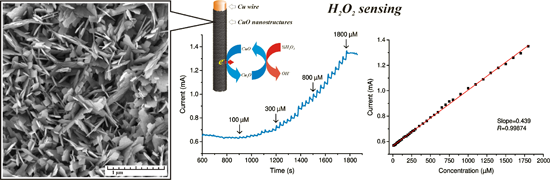
- nanostructures were obtained by a one-step hydrothermal oxidation method. The resulting coating is uniform and dense and shows good adhesion to the wire surface. Structure, surface, and composition of the obtained samples were studied using field-emission scanning electron microscopy along with energy-dispersive
- nanostructured suspension in solution. Second, nanostructures are distributed randomly during the process of deposition, which can affect the electrochemical activity of the electrode and reduce the repeatability of the experiment. Third, the obtained coatings are characterized by their low adhesion and poor
- ) shows the surface morphology of a thermally obtained copper oxide film. The resulting film is a homogeneous, polycrystalline oxide layer consisting of grains of arbitrary shape. In practice, this layer exhibits poor adhesion to the surface and can be easily damaged mechanically during post-processing




A chemiresistive sensor array based on polyaniline nanocomposites and machine learning classification
Beilstein J. Nanotechnol. 2022, 13, 411–423, doi:10.3762/bjnano.13.34
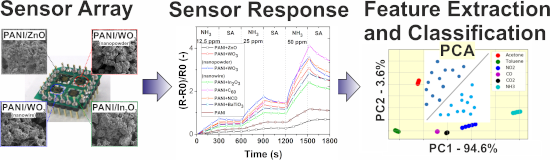
- , the sensor array platforms were cleaned in acetone and isopropyl alcohol for 15 min and then exposed to hexamethyldisilazane (HMDS) for 2 h to improve the adhesion of sensing layers. Figure 14 demonstrates the top view of sensor array with nanocomposite sensing layers and the bottom view with heating




Electrostatic pull-in application in flexible devices: A review
Beilstein J. Nanotechnol. 2022, 13, 390–403, doi:10.3762/bjnano.13.32
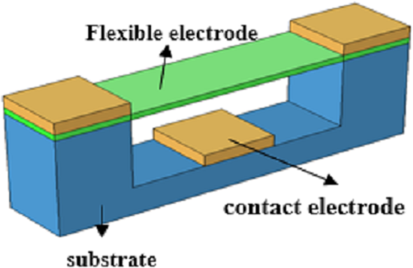
- tear of the switches, especially for CNT [16] and GR [29] switches. Permanent adhesion caused by the dielectric charging [52][53] and chemical bonding [24] are the focus of the research on improving the life cycles. At present, it is mainly solved by reducing the electrode contact area [14] or
- removable element to prepare RF switches. The response time of metal RF switches is about 1–15 µs, and the pull-in voltage is about tens of volts, which cannot meet the demand. Also, the metal lattice stability is poor. Electromigration or micro-welding adhesion failure might easily occur. GR-NEM switches


Micro- and nanotechnology in biomedical engineering for cartilage tissue regeneration in osteoarthritis
Beilstein J. Nanotechnol. 2022, 13, 363–389, doi:10.3762/bjnano.13.31
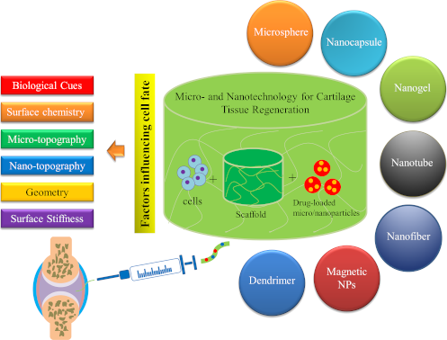
- ) (PLGA) microspheres coated with TGF-β3 loaded heparin/poly(ʟ-lysine) NPs showed extended growth factor release for 28 days and were found to be excellent structures for cell adhesion and chondrogenic differentiation [27]. Apart from serving as cell adhesion platforms and growth factor supplements
- films (nanofiber composites) coated with PLDLA nanofibers on the behavior of bovine chondrocytes [109]. The researchers observed that electrospun nanofibers supported the adhesion of cells and maintained the chondrocyte phenotype. Besides, the adhesivity and mechanics of the nanofiber-based scaffolds
- traditionally incorporated in scaffolds to provide proper cell–matrix interactions for tissue regeneration [149]. Among these, cell adhesion motifs including RGD peptide and fibronectin fragments at the nanoscale are widely used to enhance the cell motility and adhesion functionality of hydrogels [178]. For


Selected properties of AlxZnyO thin films prepared by reactive pulsed magnetron sputtering using a two-element Zn/Al target
Beilstein J. Nanotechnol. 2022, 13, 344–354, doi:10.3762/bjnano.13.29
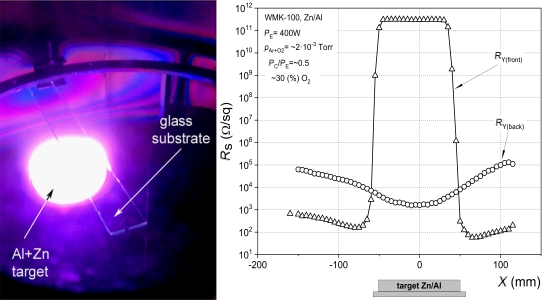
- manufacturing transparent electrodes, the TCO films should have relatively low resistivity, ρTCO ≤ 10−3 Ω·cm, and optical transmittance, preferably over 80%, for films with thicknesses not exceeding 200 nm. In addition, parameters such as high resistance to mechanical exposure and good adhesion to the substrate


Relationship between corrosion and nanoscale friction on a metallic glass
Beilstein J. Nanotechnol. 2022, 13, 236–244, doi:10.3762/bjnano.13.18
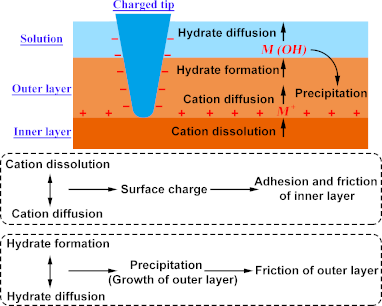
- corrosion on nanoscale friction. The evolution of friction upon repeated scanning cycles on the corroded surfaces reveals a bilayer surface oxide film, of which the outer layer is removed by the scanning tip. The measurement of friction and adhesion allows one to compare the physicochemical processes of
- during respective scanning. For both solutions and all immersion times, the friction force of the inner layer increases linearly with the normal load (Figure 4a,c). Adhesion contributes significantly to the friction force, that is, a friction force is measured even at zero externally applied load. A
- of the friction coefficient and the adhesion force on immersion time for inner and outer layers. The friction coefficient is calculated as the slope of a linear fit to the friction force versus normal load data (Figure 4). The adhesion force of the inner layer versus the AFM tip is determined as the


Engineered titania nanomaterials in advanced clinical applications
Beilstein J. Nanotechnol. 2022, 13, 201–218, doi:10.3762/bjnano.13.15
- rejection [11]. TiO2 nanomaterials with tailored porosity have already been developed as an alternative orthopedic implantation material as they support cell adhesion, viability, growth, and differentiation, which are favorable in bone tissue growth and biological implant fixation [12]. Moreover, to
- affinities for the nanoparticle surface or the corona. Recently, Zhongru Gou et al. investigated the amount and type of cell adhesion-related proteins (such as fibronectin, vitronectin, and laminin) from serum adsorbed on titanium nanotube arrays. Their findings suggest that all the abovementioned proteins
- got adsorbed on the nanotube surface and that the nanotopography plays an important role in their selective adsorption and maintenance of biological function [34]. It has been reported that the small size of the nanotubes seems to speed up cell adhesion by providing an effective length scale for


A photonic crystal material for the online detection of nonpolar hydrocarbon vapors
Beilstein J. Nanotechnol. 2022, 13, 127–136, doi:10.3762/bjnano.13.9
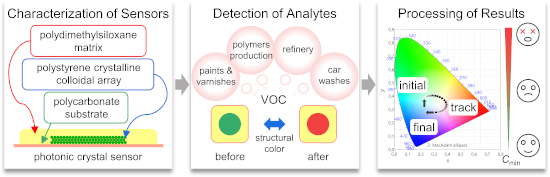
- adhesion of PS particles. Therefore, an experiment was carried out with cyclic exposure to toluene vapor. The sensor matrix was exposed to saturated toluene vapors for 8 min. Then, the sensor was allowed to stand for a day to recover the photonic bandgap to its initial position, although 90% of recovery


Nanoscale friction and wear of a polymer coated with graphene
Beilstein J. Nanotechnol. 2022, 13, 63–73, doi:10.3762/bjnano.13.4
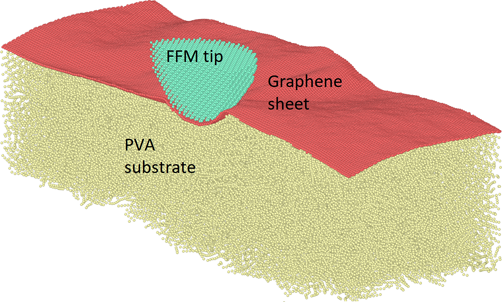
- total normal force applied is around 4 nN (3.3 MPa). Then the force is removed and the graphene sheet stays on the surface due to adhesion. To avoid sliding of the entire graphene sheet over the polymer substrate, we fix the position of some of the graphene carbon atoms during indentation and sliding
- adhesion. In this case, the load is small compared to the adhesion force at the edge of the tip. Since a bigger tip has a bigger circumference, it is exposed to a larger adhesion force and a larger total downward force. At higher loads, the smaller tip penetrates further, as it is exposed to larger
- adhesion or covalent chemical bonds, would behave more like the flat graphene in our simulations and would provide additional protection. The temperature dependence of friction can potentially allow one to probe different relaxation mechanisms in the polymer [33][34]. In our previous work [23], we


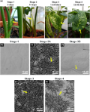
Polarity in cuticular ridge development and insect attachment on leaf surfaces of Schismatoglottis calyptrata (Araceae)
Beilstein J. Nanotechnol. 2021, 12, 1326–1338, doi:10.3762/bjnano.12.98
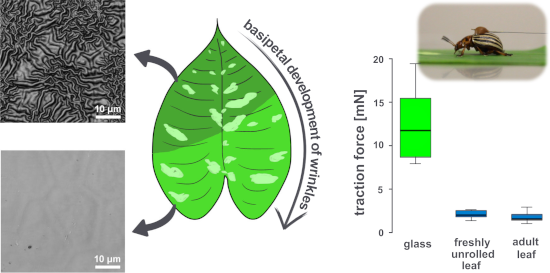
- surfaces. The changes in the micro- and macroscale morphology of the leaves should improve our understanding of the way that plants defend themselves against insect herbivores. Keywords: cuticular ridges; insect adhesion; leaf surfaces; ontogeny; polarity; surface replication; Introduction The plant




Cantilever signature of tip detachment during contact resonance AFM
Beilstein J. Nanotechnol. 2021, 12, 1286–1296, doi:10.3762/bjnano.12.96
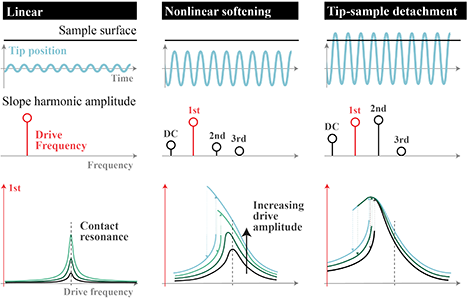
- indentation model of Equation 3 are defined in conjunction with experimental observables. The adhesion force Fadh* and adhesion gap gadh are identified from the retraction force–distance curve taken just before vibration sweeps. While gadh is observed directly, Fadh requires multiplication with kcantilever


Two dynamic modes to streamline challenging atomic force microscopy measurements
Beilstein J. Nanotechnol. 2021, 12, 1226–1236, doi:10.3762/bjnano.12.90
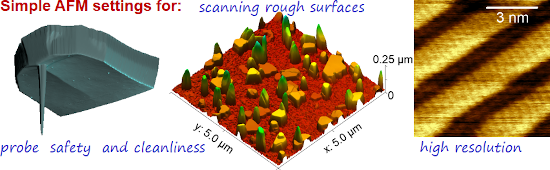
- classical contact mode, the friction force can be measured; when using off-resonance dynamic modes, stiffness and adhesion in the samples can be determined. Obviously, in determining the mechanical properties, the force of tip–surface interaction should be somewhat greater than that required if the task is
- /hydrocarbons), and increased adhesion caused by the large contact area of a blunt tip. Regular AM-AFM feedback operation in the presence of sticking is very unstable and inhibits one from obtaining correct surface profile. Using the VM can help in this case. At each measurement point, we take a height


Use of nanosystems to improve the anticancer effects of curcumin
Beilstein J. Nanotechnol. 2021, 12, 1047–1062, doi:10.3762/bjnano.12.78
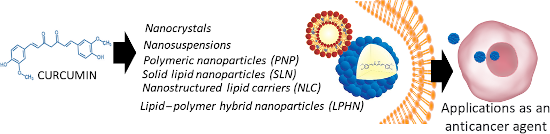
- of a drug which is stabilized by the use of surfactants [48]. Therefore, a nanosuspension can be prepared by dispersing a nanocrystal or any other powdered material in an outer liquid medium using a stabilizing agent [45]. Furthermore, these nanosystems have shown increased adhesion to surfaces. The


An overview of microneedle applications, materials, and fabrication methods
Beilstein J. Nanotechnol. 2021, 12, 1034–1046, doi:10.3762/bjnano.12.77
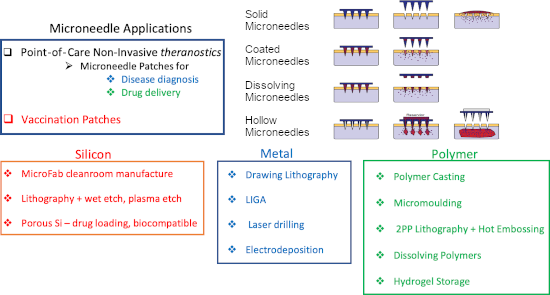
- into the master mould and solidified by raised temperature (thermosetting), cooling, or UV curing to produce crosslinking. It can then be peeled from the master mould, which can be repeatedly reused to produce more replica moulds. To reduce the adhesion of the soft replica mould, the surface of the


The role of deep eutectic solvents and carrageenan in synthesizing biocompatible anisotropic metal nanoparticles
Beilstein J. Nanotechnol. 2021, 12, 924–938, doi:10.3762/bjnano.12.69
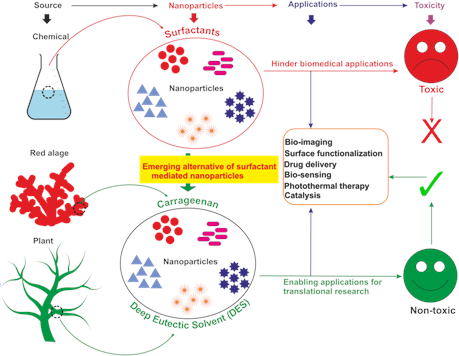
- carrageenan gel retaining the antibacterial property [85]. A study based on an injectable composite of carrageenan and nanoscale hydroxyapatite as an injectable bone substitute showed good adhesion properties with no cytotoxicity in vitro, as shown in Figure 6 [116]. The nanocomposite also exhibited
- aggregation and sedimentation above pH 5 [117]. The stability was enhanced upon adhesion of carrageenan to the nanoparticle surface rendering it negatively charged. Although there are little reports on using carrageenan as a safe and sustainable component for synthesizing plasmonic metal nanomaterials, the


Modification of a SERS-active Ag surface to promote adsorption of charged analytes: effect of Cu2+ ions
Beilstein J. Nanotechnol. 2021, 12, 902–912, doi:10.3762/bjnano.12.67
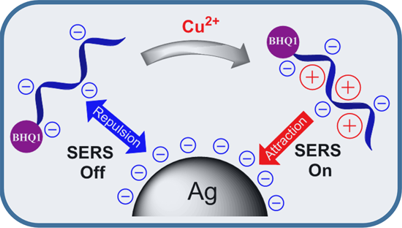
- the NPs are sticking out of the polymer layer. The adhesion image proves that the surface properties of the immobilized Ag NPs strongly differ from those on the glass substrate and that the polymer does not cover them. Weak citrate interaction with the Ag surface enables one to treat the NPs with
- microscope in PeakForceQNM mode with recording the adhesion force maps and topographic images. SERS measurements were carried out by using a scanning probe Raman microscope “NanoFlex” (Solar LS, Belarus). The source of excitation at 488.0 nm was an argon ion laser (Melles Griot, USA). Excitation and


The role of convolutional neural networks in scanning probe microscopy: a review
Beilstein J. Nanotechnol. 2021, 12, 878–901, doi:10.3762/bjnano.12.66
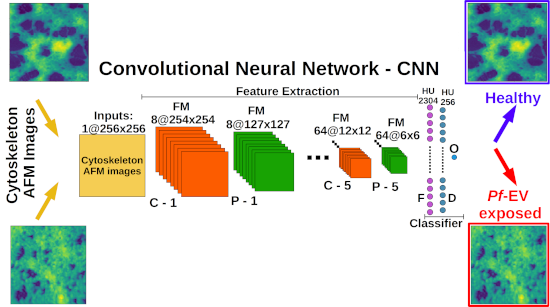
- topography, for example, adhesion, phase shift, stiffness, work function, or friction. In the following section, the utility of CNN in SPM is illustrated through several examples taken from the literature. Enhancing speed of image acquisition As discussed above, SPM imaging is inherently slow. One of the
- acquired using an enhanced scanning technique termed “ringing mode”, which simultaneously gives mappings of other surface properties together with topography [133]. In this case, it was found that whereas topography was a poor criterion for separating the two populations, adhesion was much better







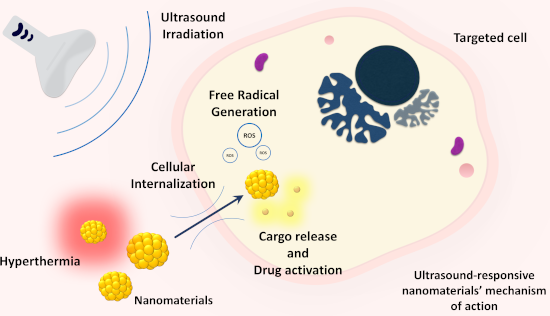
Comprehensive review on ultrasound-responsive theranostic nanomaterials: mechanisms, structures and medical applications
Beilstein J. Nanotechnol. 2021, 12, 808–862, doi:10.3762/bjnano.12.64


Physical constraints lead to parallel evolution of micro- and nanostructures of animal adhesive pads: a review
Beilstein J. Nanotechnol. 2021, 12, 725–743, doi:10.3762/bjnano.12.57
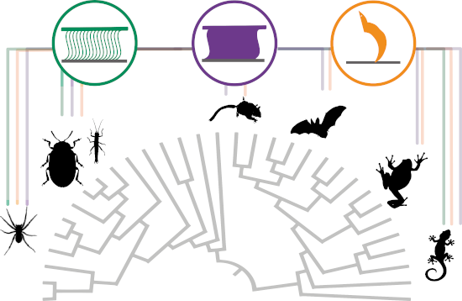
- principles of attachment pads with a special focus on insects, describe micro- and nanostructures, surface patterns, origin of different pads and their evolution, discuss the material properties (elasticity, viscoelasticity, adhesion, friction) and basic physical forces contributing to adhesion, show the
- might be potentially interesting for engineers as a kind of optimal solution by nature, the biomimetic implications of the discussed results are briefly presented. Keywords: adhesion; attachment devices; biomechanics; convergence; friction; substrate compliance; Review Animal attachment systems
- Attachment is of major importance in the biology of most living animals. Secure attachment to specific surfaces is essential for many animals, for example, to maintain access to nutrients and to support locomotion on any terrain that necessitates adhesion to the substrate. The properties of the specific


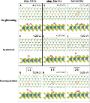
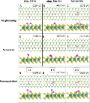
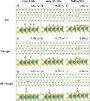
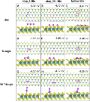
Prediction of Co and Ru nanocluster morphology on 2D MoS2 from interaction energies
Beilstein J. Nanotechnol. 2021, 12, 704–724, doi:10.3762/bjnano.12.56
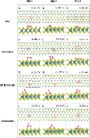
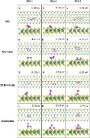
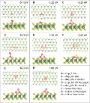
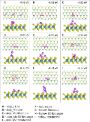
- adsorption. Using the formation of H2S from H2, we computed a vacancy formation energy of −6.16 eV, which confirms that defects are easily formed. Furthermore, our results showed that the presence of an S vacancy (giving a concentration of 2% vacancies per supercell) improved Cu adhesion and promoted the
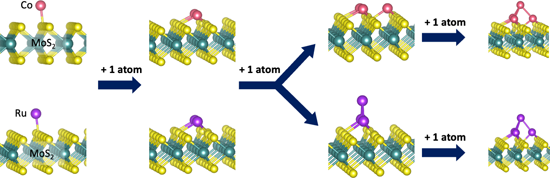
- is more favourable than the metal–metal interaction. The interaction energy is also not affected by the incorporation of S into the Co cluster as is observed for the rhombus configuration at site hollow. This structure has very favourable adhesion to the ML, but the metal–metal interaction energy is
- this, as well as the symmetrical addition of atoms at the same site instead of non-equivalent sites, is correlated with the strength of adhesion. As n increases, Cu adsorption no longer depends on the adsorption site. Instead, the stability of structures is governed by the number of Cu–Cu bonds. This


A review of defect engineering, ion implantation, and nanofabrication using the helium ion microscope
Beilstein J. Nanotechnol. 2021, 12, 633–664, doi:10.3762/bjnano.12.52
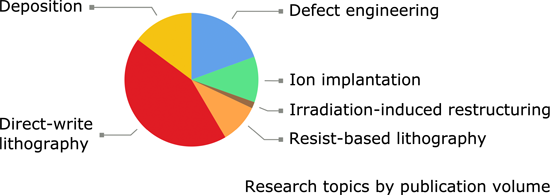
- nanoimprint. In another HIBL-related study, helium ion irradiation was used to induce varying degrees of cross-linking of aromatic self-assembled monolayers supported on a gold substrate, followed by removal of the non-cross-linked regions by adhesion to a PMMA film [112]. This leaves the exposed (cross


Stability and activity of platinum nanoparticles in the oxygen electroreduction reaction: is size or uniformity of primary importance?
Beilstein J. Nanotechnol. 2021, 12, 593–606, doi:10.3762/bjnano.12.49
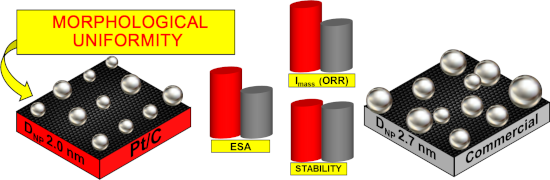
- features of spatial distributions), and the adhesion strength of NPs to the support [10]. The latter is likely to depend on the method/conditions of the synthesis [11]. The number of publications related to the effect of the structure of Pt/C catalysts on their activity, primarily in ORR, is rather large
- methods for synthesizing Pt/C can also have an effect on the surface of the carbon support and the strength of the platinum NPs adhesion to its surface. Thus, the positive effects of the structural uniformity can compensate for the size effect that has a negative influence on the NP stability. It is