


Search results
Search for "biomimetic" in Full Text gives 141 result(s) in Beilstein Journal of Nanotechnology.
Advances in nanomaterials
Beilstein J. Nanotechnol. 2013, 4, 805–806, doi:10.3762/bjnano.4.91

- , from energy harvesting to energy storage technologies and from biomimetic structures to medical technologies, to mention just a few examples. One recent development in the field of nanomaterials is the ability not only to tailor the properties of nanomaterials (to achieve custom-designed, “tailor-made
Controlled synthesis and tunable properties of ultrathin silica nanotubes through spontaneous polycondensation on polyamine fibrils
Beilstein J. Nanotechnol. 2013, 4, 793–804, doi:10.3762/bjnano.4.90
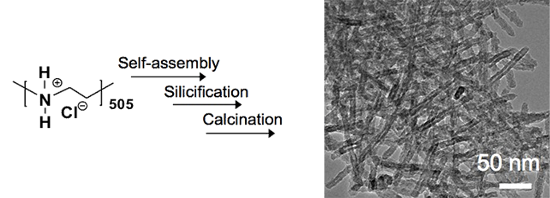
- 10.3762/bjnano.4.90 Abstract This paper describes a facile approach to a biomimetic rapid fabrication of ultrathin silica nanotubes with a highly uniform diameter of 10 nm and inner hollow of around 3 nm. The synthesis is carried out through a spontaneous polycondensation of alkoxysilane on polyamine
- polymers and subsequent carbonization. Keywords: biomimetic silicification; polyethyleneimine; silica–carbon nanocomposite; silica nanotubes; template synthesis; Introduction Silica nanotubes with a controlled nanostructure (i.e., wall thickness and hollow space) and a tunable chemical composition are
- chemistry is highly desirable. We are interested in the programmable construction of biomimetic silica nanomaterials by exploiting the crystallization-driven self-assembly of a simple synthetic polyamine, namely linear polyethyleneimine (LPEI) [31][32][33]. In contrast to branched PEI, LPEI is composed only


Physics, chemistry and biology of functional nanostructures
Beilstein J. Nanotechnol. 2012, 3, 843–845, doi:10.3762/bjnano.3.94
- broader view on biomimetic approaches can be found in [8]. The choice of these recommendations becomes obvious on summarizing the main topics of the present Thematic Series: Nanolithography approaches based on self-organized colloidal systems Experimental and theoretical description of electrical
Analysis of fluid flow around a beating artificial cilium
Beilstein J. Nanotechnol. 2012, 3, 163–171, doi:10.3762/bjnano.3.16
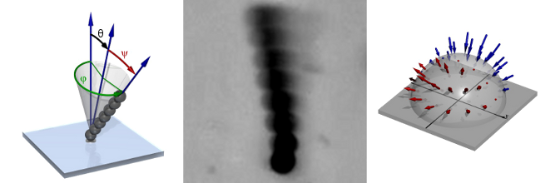
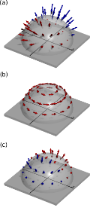
- generation of a fluid flow above a ciliated surface in multicellular ones. Following the biological example, externally driven artificial cilia have recently been successfully implemented as micropumps and mixers. However, biomimetic systems are useful not only in microfluidic applications, but can also


Impact of cell shape in hierarchically structured plant surfaces on the attachment of male Colorado potato beetles (Leptinotarsa decemlineata)
Beilstein J. Nanotechnol. 2012, 3, 57–64, doi:10.3762/bjnano.3.7
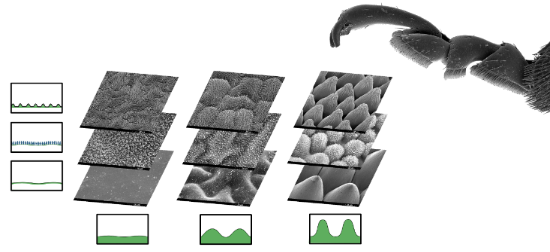
- development of biomimetic technical surfaces. Experimental Insects and plant species Beetles constitute the largest order within the class of insects, and their attachment pads are of the hairy type [28]. In the present study the Colorado potato beetle Leptinotarsa decemlineata (Coleoptera: Chrysomelidae) was


Approaches to nanostructure control and functionalizations of polymer@silica hybrid nanograss generated by biomimetic silica mineralization on a self-assembled polyamine layer
Beilstein J. Nanotechnol. 2011, 2, 760–773, doi:10.3762/bjnano.2.84
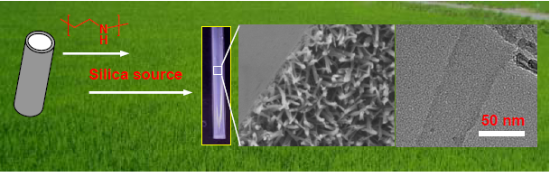
- polyamine@silica nanoribbon-based hybrid nanograss film, which was generated by performing a biomimetic silica mineralization reaction on a nanostructured linear polyethyleneimine (LPEI) layer preorganized on the inner wall of a glass tube. We found that the film thickness, size and density of the
- nanoribbons and the aggregation/orientation of the nanoribbons in the film were facile to tune by simple adjustment of the biomimetic silicification conditions and LPEI self-assembly on the substrate. Our LPEI-mediated nanograss process allows the facile and programmable generation of a wide range of
- and facilely functionalized makes our nanograss potentially important for device-based application in microfluidic, microreactor and biomedical fields. Keywords: biomimetic silica mineralization; linear polyethyleneimine; nanofiber; nanograss; thin film; Introduction Silica-based, one-dimensional


Self-organizing bioinspired oligothiophene–oligopeptide hybrids
Beilstein J. Nanotechnol. 2011, 2, 525–544, doi:10.3762/bjnano.2.57
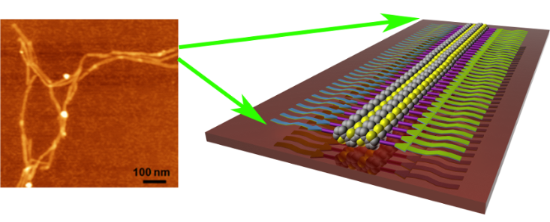
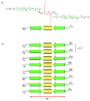
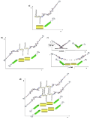
- β-sheet organization (Figure 15c) fits well with the available experimental data and may be considered as the highly probable model for the actual aggregation pattern. Conclusion Combining synthetic and biological building blocks to form various types of biomimetic thiophene-based hybrid compounds




The effect of surface anisotropy in the slippery zone of Nepenthes alata pitchers on beetle attachment
Beilstein J. Nanotechnol. 2011, 2, 302–310, doi:10.3762/bjnano.2.35
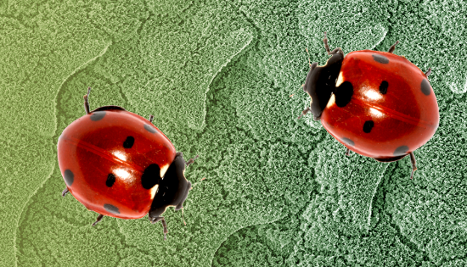
- slide more easily inside the pitcher. In intact pitchers, the latter effect is reinforced by a strong reduction of adhesion by adhesive pads due to the crystalline wax coverage. Outlook: biomimetic potential and implementation The anisotropic properties of the slippery zone in N. alata pitchers and
- University of Hohenheim (Stuttgart, Germany) for providing plant material. Ms. V. Kastner (Max Planck Institute for Metals Research, Stuttgart, Germany) helped with editing of the manuscript. This study was partly supported by the SPP 1420 priority program of the German Science Foundation (DFG) ‘Biomimetic



Determination of object position, vortex shedding frequency and flow velocity using artificial lateral line canals
Beilstein J. Nanotechnol. 2011, 2, 276–283, doi:10.3762/bjnano.2.32
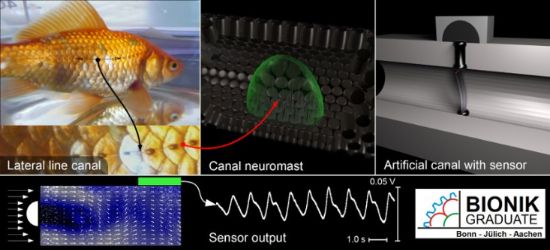
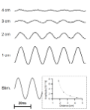
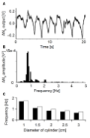
- between neighbouring parts of the canal. The present study is the first to measure the performance of ALLCs equipped with optical ANs. This has enabled us to illustrate the potential of optical ANs and of biomimetic ALLCs. In general, ALLCs can be used to measure and quantify air and water motions, but



Hierarchically structured superhydrophobic flowers with low hysteresis of the wild pansy (Viola tricolor) – new design principles for biomimetic materials
Beilstein J. Nanotechnol. 2011, 2, 228–236, doi:10.3762/bjnano.2.27
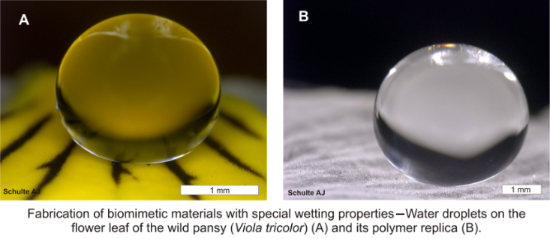
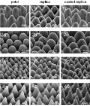
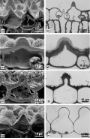
- -based wetting characteristics of petals seem to offer a great alternative for the development of biomimetic superhydrophobic materials for micro droplet transport in micro fluidic systems, sensors or optical devices [19][20]. These hierarchically designed petal surfaces, with micropapillae and cuticular
- end biomimetic replicas of four petals, differing in their surface morphology, were generated and their wetting behavior was examined by measuring the static CA and the TA. Finally, the contact area between a water droplet and the Viola petal surface was examined and superhydrophobic artificial petal
- that the combination of high micropapillae with high ar, sharp tips and small peak to peak distances is required for the design of biomimetic superhydrophobic petal surfaces with low hysteresis. The cuticular folds also have an influence on the wetting stage. On Violar the micropapillae are completely



Functional morphology, biomechanics and biomimetic potential of stem–branch connections in Dracaena reflexa and Freycinetia insignis
Beilstein J. Nanotechnol. 2011, 2, 173–185, doi:10.3762/bjnano.2.21
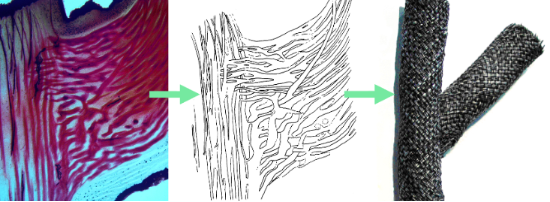
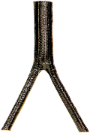
- of D. reflexa and F. insignis makes them promising biological concept generators with a high potential for biomimetic implementation, i.e., for the development of branched fibre-reinforced technical composites. A wide range of constructional elements with branched (sub-)structures can be optimised by
- combined with high fracture toughness and very high strains at failure. Outlook: biomimetic potential and implementation These mechanical properties make the arborescent monocotyledons studied well suited as concept generators for technical implementations in branched fibre-reinforced compound structures
- Fink) for competent help in microtome cutting and image processing. We gratefully acknowledge the German Research Foundation (DFG) for funding the project on branched biomimetic structures within the Priority Programme SPP 1420. We would also like to thank Markus Milwich from the ITV Denkendorf for his




Superhydrophobicity in perfection: the outstanding properties of the lotus leaf
Beilstein J. Nanotechnol. 2011, 2, 152–161, doi:10.3762/bjnano.2.19
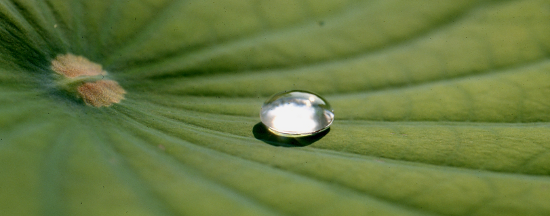
- h. Bhushan et al. (2010) [4] used the surface structures of the lotus leaf as model for the development of artificial biomimetic superhydrophobic structures. It became obvious that the outstanding and stable superhydrophobicity of the lotus leaf relies on the combination of optimized features such







Superhydrophobic surfaces of the water bug Notonecta glauca: a model for friction reduction and air retention
Beilstein J. Nanotechnol. 2011, 2, 137–144, doi:10.3762/bjnano.2.17
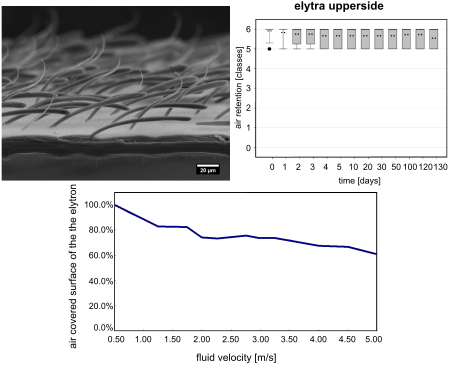
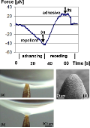
- biomimetic applications. Whereas the self-cleaning properties of superhydrophobic surfaces have been extensively investigated, their ability to retain an air film while submerged under water has not, in the past, received much attention. Nevertheless, air retaining surfaces are of great economic and
- ecological interest because an air film can reduce friction of solid bodies sliding through the water. This opens perspectives for biomimetic applications such as low friction fluid transport or friction reduction on ship hulls. For such applications the durability of the air film is most important. While
- extremely interesting as a biomimetic model for low friction fluid transport or drag reduction on ship hulls. Keywords: air film; aquatic insects; backswimmer; drag reduction; superhydrophobic surfaces; Introduction Superhydrophobic surfaces are of great economic interest because of their amazing



Biomimetic materials
Beilstein J. Nanotechnol. 2011, 2, 135–136, doi:10.3762/bjnano.2.16
- ) and radiation (e.g., sunlight). Boundary layers and, in particular, superhydrophobic surfaces and their interactions with the environment were thus the focus of this Thematic Series on Biomimetic materials. The most interesting phenomena happen on boundary layers: from the biosphere at the boundary
- layer of our planet down to the surfaces of lotus leaves or Salvinia water ferns. And these are only two out of the 20 million species which all have secrets to be revealed: Biomimetic materials provide innovative solutions for the design of a new generation of bio inspired functional materials. Wilhelm
Biomimetics inspired surfaces for drag reduction and oleophobicity/philicity
Beilstein J. Nanotechnol. 2011, 2, 66–84, doi:10.3762/bjnano.2.9
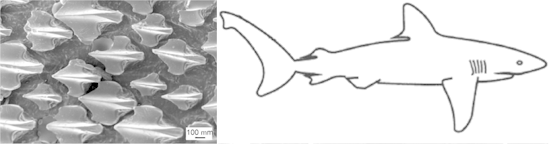
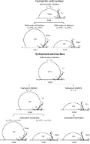
- created, and in this article the influence of structure on drag reduction efficiency is reviewed. Biomimetic-inspired oleophobic surfaces can be used to prevent contamination of the underwater parts of ships by biological and organic contaminants, including oil. The article also reviews the wetting
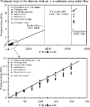
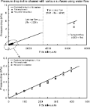
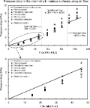
- of Biomimetic Structures for Fluid Drag Reduction In this section, we discuss drag reduction efficiency on biomimetic structured surfaces in channels. Experimental techniques For the measurement of pressure drop using water and air flows, an experimental flow channel with a rectangular channel was
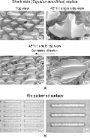
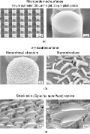
- for hydrophobic surfaces [21]. Fabrication and characterization of biomimetic structures A shark (Squalus acanthias, L. Squalidae) was used for creating a shark skin replica [21]. A shark is an aquatic animal, and its skin is permanently exposed to contamination from marine organisms, e.g., bacteria








Review of "Contact Mechanics and Friction: Physical Principles and Applications" by Valentin L. Popov
Beilstein J. Nanotechnol. 2011, 2, 57–58, doi:10.3762/bjnano.2.7
- the author and which repeatedly finds its way into numerous examples and problems is the tribology of biological objects. Since Popov knows biological and biomimetic systems from his own collaborative research with biologists [1][2][3], the book is not only an excellent starting point for engineers



