


Search results
Search for "cell lines" in Full Text gives 141 result(s) in Beilstein Journal of Nanotechnology.
Functionalized polystyrene nanoparticles as a platform for studying bio–nano interactions
Beilstein J. Nanotechnol. 2014, 5, 2403–2412, doi:10.3762/bjnano.5.250
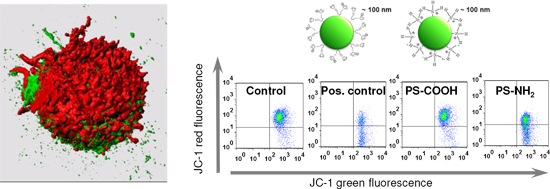
- used superparamagnetic iron oxide nanoparticles. Keywords: amino groups; apoptosis; carboxyl groups; cell proliferation; leukemia cell lines; macrophages; mTOR; polystyrene nanoparticles; Review Applications of polystyrene Polystyrene, one of the most extensively used types of plastic [1], is an
- studies using macrophages. Tumor cell lines are often used as models to study nanoparticle–cell interactions. Many studies analyzing the toxicity of nanoparticles on macrophages have actually been carried out with leukemia cancer cell lines of murine or human origin at different stages of differentiation
- -COOH activates the mTOR signaling in leukemia cells. Consistently, PS-NH2 inhibits the activation of the mTOR downstream targets, Akt and p70 ribosomal S6 kinase 1, and blocked proliferation in three leukemia cell lines in vitro and in vivo [41]. Conclusion In these studies, we have used functionalized


Nanoparticle interactions with live cells: Quantitative fluorescence microscopy of nanoparticle size effects
Beilstein J. Nanotechnol. 2014, 5, 2388–2397, doi:10.3762/bjnano.5.248
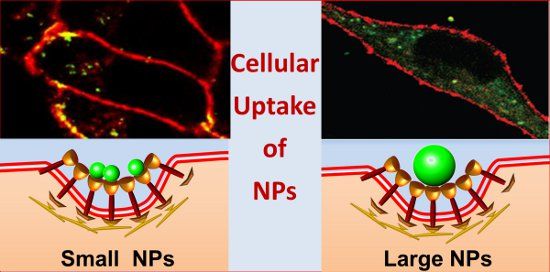
- surface functionalizations and investigated their interactions with various human cell lines, in particular HeLa cells and mesenchymal stem cells (MSCs). Of note, these studies were carried out in phosphate buffered saline (PBS), pH 7.4, or serum-free DMEM, so that we could probe interactions between


Interaction of dermatologically relevant nanoparticles with skin cells and skin
Beilstein J. Nanotechnol. 2014, 5, 2363–2373, doi:10.3762/bjnano.5.245
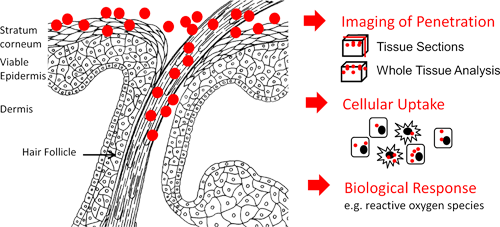
- solution, skin contact with the particles lead to destabilization with the release of loaded dyes [36][37]. The studies further illustrated that cells, especially immortalized cell lines compared to primary cells as well as cell types, e.g., epithelial cells versus dendritic cells, differ significantly in


Anticancer efficacy of a supramolecular complex of a 2-diethylaminoethyl–dextran–MMA graft copolymer and paclitaxel used as an artificial enzyme
Beilstein J. Nanotechnol. 2014, 5, 2293–2307, doi:10.3762/bjnano.5.238
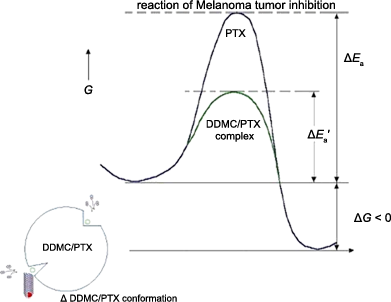
- supramolecular anticancer agent. Above all, the supramolecular complex by DDMC/PTX should play an important role as an amplifier of the PTX drug efficacy [64]. Non-viral vectoring of DEAE–dextran and DEAE–dextran–MMA graft copolymer (DDMC). (a) Transfection of DDMC into HEK293 cell lines. The grafting rate is


PVP-coated, negatively charged silver nanoparticles: A multi-center study of their physicochemical characteristics, cell culture and in vivo experiments
Beilstein J. Nanotechnol. 2014, 5, 1944–1965, doi:10.3762/bjnano.5.205

- brain astrocytes are shown to be fairly tolerant toward silver nanoparticles, silver nanoparticles induce the formation of DNA double-strand-breaks (DSB) and lead to chromosomal aberrations and sister-chromatid exchanges in Chinese hamster fibroblast cell lines (CHO9, K1, V79B). An exposure of rats to
- increase the risk of human cancer [110]. Permanent fibroblast cell lines from ovaries (CHO9, K1) and lung tissue (V79B) of Chinese hamsters are well-established in the cytogenetic analysis of potentially mutagenic triggers that induce chromosomal aberrations (CA) [111] or sister-chromatid exchanges (SCE
- -PKcs, which plays an important role in non-homologous-end-joining (NHEJ), is essential for the repair of DSB caused by silver nanoparticles [120]. In this study, normal human cells (IMR-90), DNA-PKcs-proficient (AA8) and DNA-PKcs-deficient (V33) Chinese hamster cell lines and human cell lines (MO59K


Carbon-based smart nanomaterials in biomedicine and neuroengineering
Beilstein J. Nanotechnol. 2014, 5, 1849–1863, doi:10.3762/bjnano.5.196
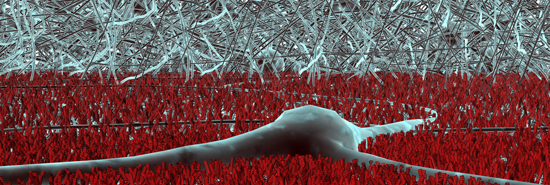
- . These differences can induce distinct toxicological responses in biological systems and require a systematic investigation. In vitro studies, carried out on human cell lines (i.e., HepG2, BEAS-2B, PC12, hMSCs), have demonstrated that the cyto- and genotoxicity of graphene depends on the dose, shape, and


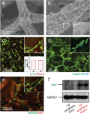
Biocompatibility of cerium dioxide and silicon dioxide nanoparticles with endothelial cells
Beilstein J. Nanotechnol. 2014, 5, 1795–1807, doi:10.3762/bjnano.5.190
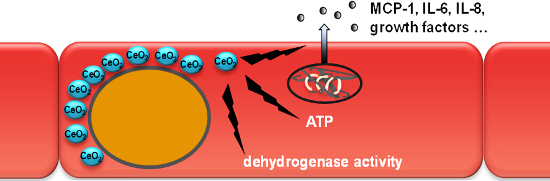
- lines in cytotoxicity examinations has a series of advantages and disadvantages. In particular, the phenotype of HUVEC should resemble the in vivo situation to a higher extent than immortalized ones, but require specific culture media conditions and life span in culture is limited. Immortalized cell
- ) supplemented with SupplementMix (PromoCell GmbH, Germany). Both cell lines were cultured at 37 ºC in a 5% CO2 humidified environment and the growth medium was exchanged every 2–3 days. Once the cells reached 70–85% confluency they were subcultivated. To detach the cells, GIBCO® trypsin (Life Technologies GmbH
- comparable doubling times of the corresponding endothelial cells (HMEC-1: approximately 33.6 h; HUVEC: approximately 36 h), it can be excluded that cell division caused the observed differences in the sensitivity of the cells on nanoparticle treatment. The use of primary and immortalized endothelial cell


Different endocytotic uptake mechanisms for nanoparticles in epithelial cells and macrophages
Beilstein J. Nanotechnol. 2014, 5, 1625–1636, doi:10.3762/bjnano.5.174
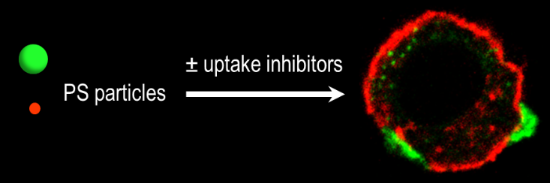
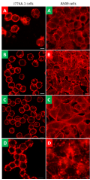
- of clathrin-coated vesicles (preventing clathrin-mediated endocytosis). Our data showed that a combination of several distinguishable endocytotic uptake mechanisms are involved in the uptake of 40 nm polystyrene nanoparticles in both the macrophage and epithelial cell line. Keywords: cell lines
- for both cell types. Conditions were chosen such that the uptake of the relevant control substance was completely inhibited and no impaired cell morphology was observed. Both cell lines were exposed to either 1 µm PS particles or 40 nm PS NPs at a concentration of 20 µg/mL for 1 hour either after
- route is deployed, and additionally, this process is cell type dependent. Not all inhibitors blocked the related pathway in the two different cell lines in the same way, which is also in agreement with the expected uptake mechanism per cell type. Therefore, each condition must be evaluated with the use



Current state of laser synthesis of metal and alloy nanoparticles as ligand-free reference materials for nano-toxicological assays
Beilstein J. Nanotechnol. 2014, 5, 1523–1541, doi:10.3762/bjnano.5.165
- [156], TiO2, ZnO [157], Ni, NiTi, NiFe, Ti [11] and MoS2 [158] on the viability of mammalian cell lines were studied. Furthermore, some studies addressed antimicrobial effects of Ni [159] and Ag nanoparticles [160][161]. Additionally, some authors reported on the application of laser-fabricated CuO


In vitro interaction of colloidal nanoparticles with mammalian cells: What have we learned thus far?
Beilstein J. Nanotechnol. 2014, 5, 1477–1490, doi:10.3762/bjnano.5.161
- ]. In addition, results will depend on the cellular test model used. In order to simplify the discussion, this review focuses on in vitro interaction of NPs with adherent, mammalian, immortalized cell lines. This avoids for example the problem of having to discuss how NPs reach and penetrate tissue
- on physicochemically defined NPs, i.e., solutions of monodisperse NPs with a defined ligand shell attached, and without residual “left-over” impurities of the NP synthesis [13][18]. Review How do particles enter cells and where do they go? Virtually all cell lines internalize NPs, which are dispersed
- in the growth medium [19]. Uptake of different NPs by different cell lines, however, can vary significantly in biological kinetics [20][21][22] (this is also true for larger microparticles [23]). This is particularly important to keep in mind for specific (i.e., targeted) NP uptake, in which NPs


Protein-coated pH-responsive gold nanoparticles: Microwave-assisted synthesis and surface charge-dependent anticancer activity
Beilstein J. Nanotechnol. 2014, 5, 1452–1462, doi:10.3762/bjnano.5.158
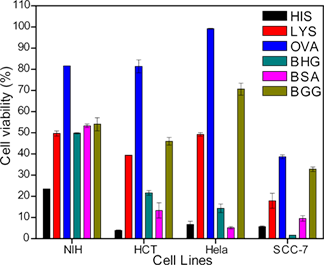
- respectively. The surface charge on the AuNPs at an acidic pH was studied and we observed all the AuNPs possess a positive surface charge at pH 5. The HIS-AuNPs and OVA-AuNPs exhibited the same behavior for all three cancerous cell lines as with the NIH-3T3 cell line. The HIS-AuNPs were the most toxic, and OVA
- OVA > BGG > LYS > BSA > BHG > HIS, OVA > BGG > LYS > BHG > BSA > HIS and OVA > BGG > BSA > BHG > LYS > HIS for the HCT116, HeLa and SCC-7 cell lines, respectively (Table S3, Supporting Information File 1). The MTT assay on the blank proteins showed cell viabilities greater than 80% (Figure S7
- , Supporting Information File 1). The protein-coated AuNPs exhibited specificity towards certain cancer cell lines, which was observed from the differences in their IC50 values. The BHG-AuNPs has the second lowest IC50 value for HCT116, while the BSA-AuNPs and the LYS-AuNPs were the second lowest for the HeLa


Nanodiamond-DGEA peptide conjugates for enhanced delivery of doxorubicin to prostate cancer
Beilstein J. Nanotechnol. 2014, 5, 937–945, doi:10.3762/bjnano.5.107
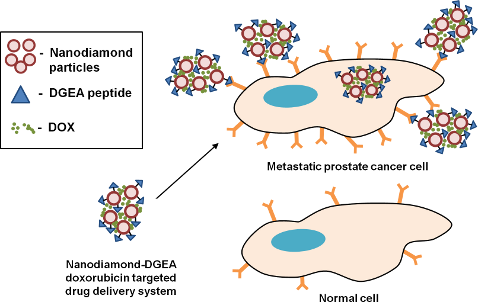
- collagens, laminins, E-cadherin, and matrix metalloproteinase 1 [31]. α2β1 integrins have been proven to be up-regulated in bone metastatic prostate cancer cells [32][33]. Particularly, PC3 human bone metastatic prostate cancer cell lines have the highest expression of α2β1 integrins when compared to other
- metastatic cell lines CWR-22 and LNCaP [31]. The over-expression of α2β1 integrins in PC3 can be harnessed as a target for a drug delivery platform. The toxicity of DOX can be decreased by increasing the interaction between the drug and cancer cells. Since α2β1 integrins are over-expressed in bone metastatic
- ., Atlanta, GA) and 1% penicillin/streptomycin/anphotericin (Fisher Scientific, Hampton, NH) at 37 °C and 5% CO2 in a humidified incubator. The cell lines were cultured in T75 flasks until confluent before use in experiments. All hMSCs and PC3 cells were seeded in 48 well plates and allowed to attach


In vitro toxicity and bioimaging studies of gold nanorods formulations coated with biofunctional thiol-PEG molecules and Pluronic block copolymers
Beilstein J. Nanotechnol. 2014, 5, 546–553, doi:10.3762/bjnano.5.64
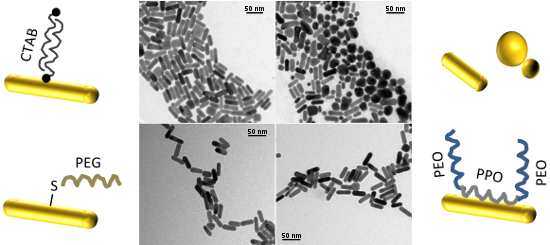
- experiment where AuNRs were also observed to be internalized by malignant oral epithelial cell lines and the extinction spectra analysis confirmed that the scattering colors within the cells was caused by nanoparticles [7]. Thus, the coupling of the inherent scattering property of AuNRs with the use of


The softening of human bladder cancer cells happens at an early stage of the malignancy process
Beilstein J. Nanotechnol. 2014, 5, 447–457, doi:10.3762/bjnano.5.52
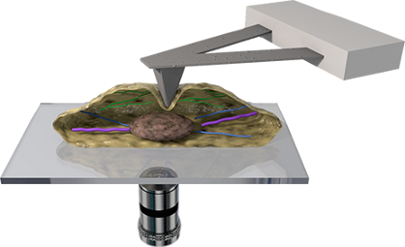
- are stiffer (higher Young’s modulus) than cancerous cells (HTB-9, HT1376, and T24 cell lines). However, independently of the histological grade of the studied bladder cancer cells, all cancerous cells possess a similar level of the deformability of about a few kilopascals, significantly lower than non
- cancer transformation [6][7][8][9][10][11][12]. This change is probably associated with the enhanced capability to migrate and to adapt to changing environments, which is observed in metastasis. Importantly, these results are valid for other cell lines, such as ovary or prostate cancers [10], and can be
- confocal microscopy of early and late stages of ovarian cancer progression [22]. Here, we study the correlation between the elastic properties and the expression and organization of the actin cytoskeleton in human bladder cancer cells. We have chosen four cell lines with various histological grades. Those


Near-infrared dye loaded polymeric nanoparticles for cancer imaging and therapy and cellular response after laser-induced heating
Beilstein J. Nanotechnol. 2014, 5, 313–322, doi:10.3762/bjnano.5.35
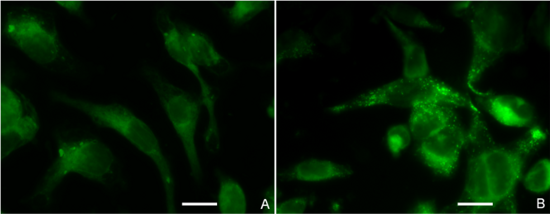
- improved cytotoxicity compared to incubator HT. ** p < 0.05 (by ANOVA) between HT and without HT group in both cell lines, indicating significantly higher cancer cell killing was achieved due to HT. HT-induced ROS production following laser/NPs and incubator was measured in MES-SA and Dx5 cells


Magnetic-Fe/Fe3O4-nanoparticle-bound SN38 as carboxylesterase-cleavable prodrug for the delivery to tumors within monocytes/macrophages
Beilstein J. Nanotechnol. 2012, 3, 444–455, doi:10.3762/bjnano.3.51
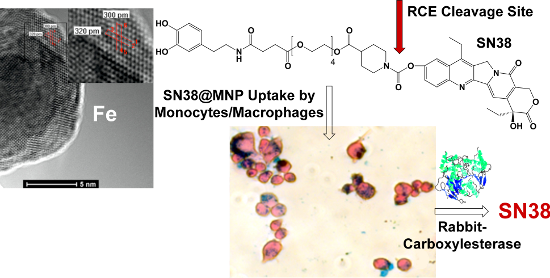
- tissue have been observed [22]. Liposome encapsulation of SN38 (LE-SN38) enhances the solubility of SN38 and provides protection from rapid drug degradation. Increased cytotoxicity against various tumor cell lines and better therapeutic efficacy in xenograft mouse models, as compared to CPT-11, have been





