


Search results
Search for "composite materials" in Full Text gives 130 result(s) in Beilstein Journal of Nanotechnology.
Nano-FTIR chemical mapping of minerals in biological materials
Beilstein J. Nanotechnol. 2012, 3, 312–323, doi:10.3762/bjnano.3.35
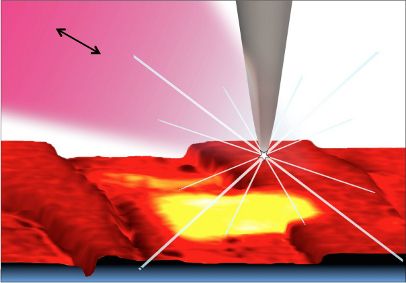
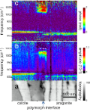
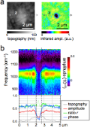
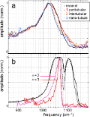
- -FTIR sensitively responds to structural disorder it is well suited for the study of biomineral formation and aging. Generally, nano-FTIR is suitable for the analysis and identification of composite materials in any discipline, from testing during nanofabrication to even the clinical investigation of





Analysis of fluid flow around a beating artificial cilium
Beilstein J. Nanotechnol. 2012, 3, 163–171, doi:10.3762/bjnano.3.16
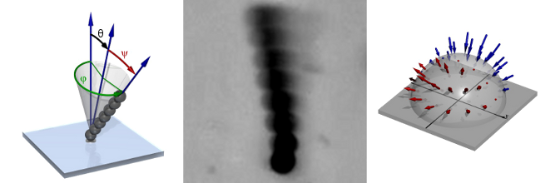
- externally driven artificial cilia resulted in nanorods manufactured from magnetic–polymeric composite materials [4]. The cilia were actuated in a simple periodic motion by a moving permanent magnet. Metal-coated polymer films have been used for the fabrication of electrostatically driven artificial cilia




Formation of SiC nanoparticles in an atmospheric microwave plasma
Beilstein J. Nanotechnol. 2011, 2, 665–673, doi:10.3762/bjnano.2.71
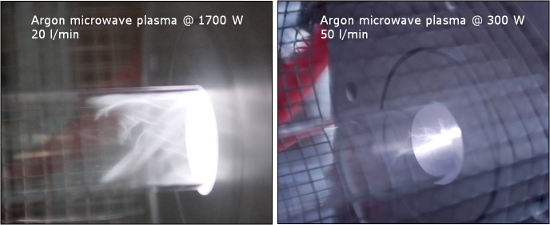
- industrial process. But, SiC nanoparticles also exhibit properties different from the bulk material and allow the creation of composite materials with new properties. Thus, their production has been studied by different methods such as the thermal pyrolysis of organic precursors [3][4][5], or plasma



Fabrication of multi-parametric platforms based on nanocone arrays for determination of cellular response
Beilstein J. Nanotechnol. 2011, 2, 545–551, doi:10.3762/bjnano.2.58
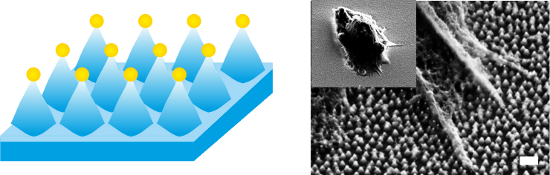
- . However, most of these methods have disadvantages such as high fabrication costs, lengthy preparation times, small-sized nanostructured areas (few square microns) or restricted chemical functionality due to the limited access to composite materials. In particular, the number of material surfaces that
- offer a tuneable parameter range is insufficient. In spite of the huge progress in material science, chemical and topographical surface gradients have mainly been investigated separately [13] neglecting composite materials such as semiconductor/metal structures [14][15][16][17]. Only a few attempts to


Magnetic coupling mechanisms in particle/thin film composite systems
Beilstein J. Nanotechnol. 2010, 1, 101–107, doi:10.3762/bjnano.1.12
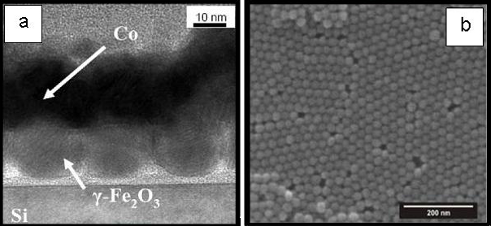
- investigate the surface domain structure of the composite materials with the sample in the remanent state (Figure 6c and Figure 6d). For comparison, the corresponding AFM images are also shown (Figure 6a and Figure 6b). In the case of the ion-milled system no well-defined magnetic domain structure at


Other Beilstein-Institut Open Science Activities



