


Search results
Search for "isotherms" in Full Text gives 127 result(s) in Beilstein Journal of Nanotechnology.
Pore structure and surface area of silica SBA-15: influence of washing and scale-up
Beilstein J. Nanotechnol. 2011, 2, 110–118, doi:10.3762/bjnano.2.13
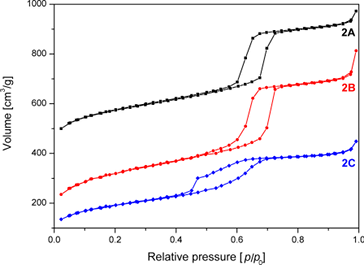
- shape of the isotherms of sample 1 (Figure 1) is almost ideally type-IV and no change of the hysteresis was observed with the different washing procedures. This means that the homogeneity and order of the hexagonal pores were not altered by washing. The surface area and the pore volume of the untreated
- × batch and calcined at 550 °C. The half size batches were then washed with linearly scaled up amounts of solvent based on material weight and also calcined at 550 °C. Interestingly, the BET isotherms of the 1× half batch (Figure 8), which was obtained by dividing the 9× batch into smaller factions, shows
- of 2C. Furthermore, the peak broadening of 3C is much lower as in case of 2C. Comparison of the desorption branches of the isotherms of the extensively washed samples 3C, 3D, 3E (Figure 8) revealed that with increasing batch size the bulge at relative pressure 0.45 decreases and the surface area


Synthesis of LiNbO3 nanoparticles in a mesoporous matrix
Beilstein J. Nanotechnol. 2011, 2, 28–33, doi:10.3762/bjnano.2.3
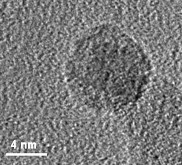
- . Elemental analyses of these materials showed that there was no silica residue after the treatment. Figure 2 shows the nitrogen physisorption isotherms of the SBA-15 and LiNbO3/SBA-15 composite (LN), and the corresponding pore size distributions of the samples. The measurements were recorded to investigate
- samples, nitrogen adsorption–desorption curves show type IV isotherms with hysteresis loops, which is typical for mesoporous solids, suggesting that the ordered structure remains intact after LiNbO3 loading. Furthermore, the isotherms show a significant reduction of the specific BET surface area from 729
- taken into account based on LaB6 reference measurements. Small-angle X-ray diffraction patterns were recorded on a Bruker AXS Nanostar. The nitrogen physisorption isotherms at 77 K were measured using a Quantachrome Autosorb 1C. The samples were pre-treated at 150 °C for 3 h in vacuum (10−6 bar). The


Other Beilstein-Institut Open Science Activities



