


Search results
Search for "layer-by-layer" in Full Text gives 135 result(s) in Beilstein Journal of Nanotechnology.
Horizontal versus vertical charge and energy transfer in hybrid assemblies of semiconductor nanoparticles
Beilstein J. Nanotechnol. 2012, 3, 629–636, doi:10.3762/bjnano.3.72
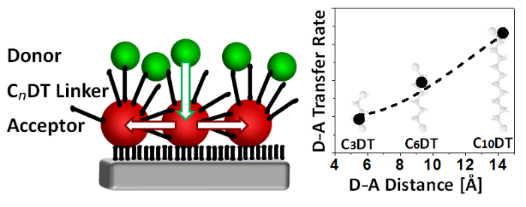
- [10], or TiO2 devices [11][12] as the conductive substrates, have also been reported. Long-range resonance energy transfer was shown in mixtures of donor and acceptor close-packed arrays of NPs (quantum dot solids, QDS) [13][14][15]. Furthermore, studies on multilayered NP arrays, prepared by layer-by
- -layer electrostatic assembly (LBL) or Langmuir–Blodgett (LB) techniques, showed that the NPs funnel the absorbed energy from larger bandgap NPs to smaller ones [16][17][18][19][20][21]. Buhbut et al. even used NPs as nano-antennas in dye-sensitized solar cells. The NPs transfer the absorbed light


The oriented and patterned growth of fluorescent metal–organic frameworks onto functionalized surfaces
Beilstein J. Nanotechnol. 2012, 3, 570–578, doi:10.3762/bjnano.3.66
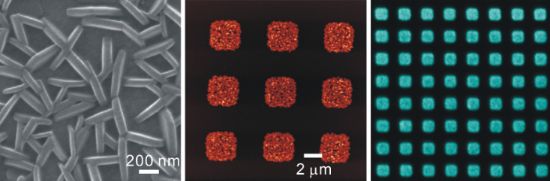
- monolayers (SAMs) are a powerful tool due to the flexibility regarding the functional groups that they expose, which in turn permit a remarkable control over the growth of SURMOFs. In particular, by using a step-wise layer-by-layer procedure, it has been demonstrated that SAMs cannot only control the spatial
- ][30], electrochemical deposition [33], gel-layer deposition [35], spin-coating deposition from a precursor solution [17][45], Langmuir–Blodgett based layer-by-layer method [34][46], and direct step-wise layer-by-layer growth [29][31][44][47][48]. Of these, the latter method is particular suitable
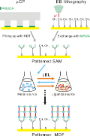
- -exposed areas, significantly enhancing the exchange rate during the following immersion into the 16-mercaptohexadecanoic acid (MHDA) solution. These carboxyl-terminated areas then acted as nucleation sites for the growth of the SURMOF, again by the layer-by-layer method. As shown in the optical micrograph





Macromolecular shape and interactions in layer-by-layer assemblies within cylindrical nanopores
Beilstein J. Nanotechnol. 2012, 3, 475–484, doi:10.3762/bjnano.3.54
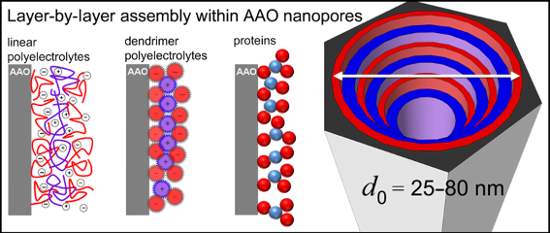
- of Technology, Donau City Str. 1, 1220 Vienna, Austria, Institute of Physical Chemistry, Tammannstr. 6, 37077 Göttingen, Germany 10.3762/bjnano.3.54 Abstract Layer-by-layer (LbL) deposition of polyelectrolytes and proteins within the cylindrical nanopores of anodic aluminum oxide (AAO) membranes was
- . Keywords: avidin-biotin; dendrimers; nanoporous substrates; optical lightmode waveguide spectroscopy; polyelectrolytes; Introduction Layer-by-layer (LbL) deposition is a versatile technique [1][2] to create functional submicrometer thin films and consists of the sequential deposition of functional
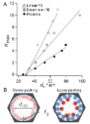
- to the experimentally observed changes of the dielectric constant, providing an average adlayer thickness on the inner pore walls (see Experimental) [22][23]. Layer-by-layer growth The influence of the geometric confinement on the LbL process was elucidated by comparing the deposition of different




Dipole-driven self-organization of zwitterionic molecules on alkali halide surfaces
Beilstein J. Nanotechnol. 2012, 3, 285–293, doi:10.3762/bjnano.3.32
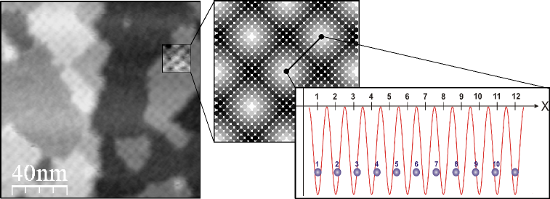
- directional, as for example by H-bonding [11] or by covalent bonding [12][13], layer-by-layer growth or even one-dimensional growth [14] was observed. When the MS interaction dominates, monolayer (ML) growth can be obtained more easily. For example, a few systems have been reported in which a metastable phase


Variations in the structure and reactivity of thioester functionalized self-assembled monolayers and their use for controlled surface modification
Beilstein J. Nanotechnol. 2012, 3, 213–220, doi:10.3762/bjnano.3.24
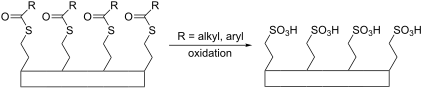
- to carboxylic acids [11][12]. All three of these functionalized surfaces could not have been deposited directly since the requisite silanes would not have been stable. Layer-by-layer [13] and modular assembly [14] of sulfonic acid surfaces with a lower degree of order and uniformity has also been


Mechanical characterization of carbon nanomembranes from self-assembled monolayers
Beilstein J. Nanotechnol. 2011, 2, 826–833, doi:10.3762/bjnano.2.92
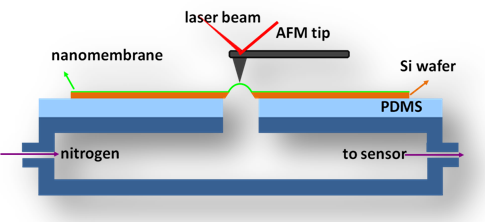
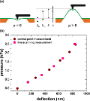
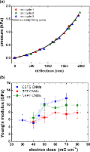
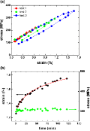
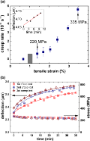
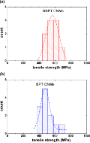
- nanodevices from freestanding nanomembranes. A variety of approaches to fabricate nanomembranes has been tested: Spin-assisted layer-by-layer (LBL) assembly [3][4]; spin-coating of organic–inorganic hybrid films with an interpenetrating network (IPN) structure [5][6]; cross-linking of ligand-stabilized

Self-assembly at solid surfaces
Beilstein J. Nanotechnol. 2011, 2, 824–825, doi:10.3762/bjnano.2.91

- techniques. The term self-assembling monolayer was thus coined with reference to the planned layer-by-layer assembly of organized films thicker than a single monolayer [2]. These directions, which gained momentum in the 1980s and continue strongly today, are forging new avenues of development. With the
Lifetime analysis of individual-atom contacts and crossover to geometric-shell structures in unstrained silver nanowires
Beilstein J. Nanotechnol. 2011, 2, 740–745, doi:10.3762/bjnano.2.81
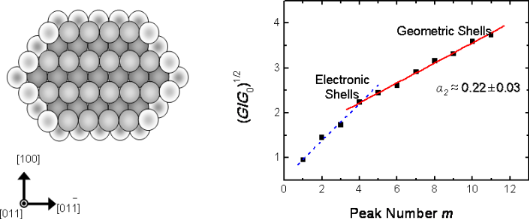
- point contacts obtained by electrochemical deposition allowed the direct observation of the fingerprints of atom-by-atom and subsequent layer-by-layer growth of the metallic point contacts. We gave a complete quantitative description of the different stages of nanowire growth: First, individual-atomic


Recrystallization of tubules from natural lotus (Nelumbo nucifera) wax on a Au(111) surface
Beilstein J. Nanotechnol. 2011, 2, 261–267, doi:10.3762/bjnano.2.30
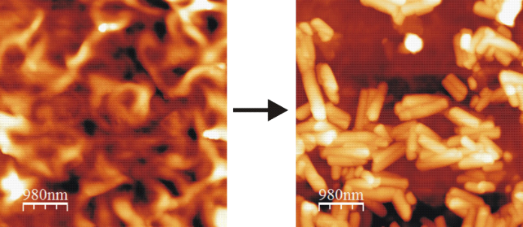
- ., 200, 220, 260, 280 and 300 nm) as observed in our experiments. Such variations in the outer diameter can also be found on a number of different substrates, e.g., glassy carbon, mica, glass, etc., as was also observed in our experiments. Figure 2a shows an initial stage of layer by layer growth of a


Electrochemical behavior of dye-linked L-proline dehydrogenase on glassy carbon electrodes modified by multi-walled carbon nanotubes
Beilstein J. Nanotechnol. 2010, 1, 135–141, doi:10.3762/bjnano.1.16
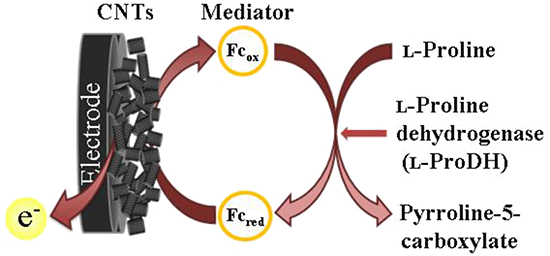
- ) from hyperthermophilic archaeon (Thermococcus profundus) was used to fabricate L-proline sensor based electrodes modified by layer-by-layer self-assembly immobilization of dye-linked L-proDH and ferrocene-labeled redox polyelectrolytes [9][28], which exhibited an amperometric current response to L





