


Search results
Search for "material properties" in Full Text gives 196 result(s) in Beilstein Journal of Nanotechnology.
Biomechanics of selected arborescent and shrubby monocotyledons
Beilstein J. Nanotechnol. 2016, 7, 1602–1619, doi:10.3762/bjnano.7.154
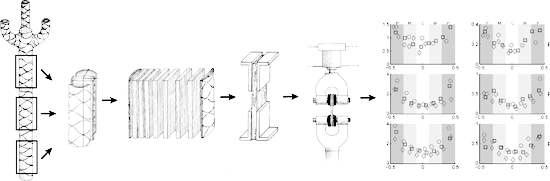
- in an atactostele in D. marginata and the dense arrangement of stiff tissues in conifers and dicotyledons. Relationships between density and the axial Young’s modulus are visualized in a material property chart (Figure 5) and thereby fill major “white spots” for biological material properties. The
- nurseries and cultivated in the Botanic Garden of the University of Freiburg. D. surculosa was also cultivated in the Botanic Garden Freiburg, whereas P. pygmaeus was cultivated at the Botanic Garden of the Technical University Dresden. Methods For measuring of the material properties three sets of
- dependence of the MoE and in the materials property chart (see below for details). To determine the radial variation of the material properties for each zone and plant, the original rectangular samples were then cut into smaller rectangular samples along the length and perpendicular to the width of the



Influence of ambient humidity on the attachment ability of ladybird beetles (Coccinella septempunctata)
Beilstein J. Nanotechnol. 2016, 7, 1322–1329, doi:10.3762/bjnano.7.123
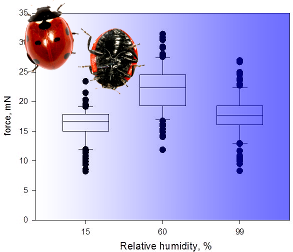
- ) humidity-dependent material properties of insect cuticle and β-keratin (main constituent of gecko setae) [41][42][43][44]. In geckos, the effect of a RH on viscoelastic properties of the setal shaft was shown [13]. It was argued that with an increasing humidity the viscoelastic bulk energy dissipation
- results on ladybird beetles, at least the increase in traction forces from 15% RH to 60% RH. Two other observations may further support the hypothesis that a change in material properties with increasing humidity is responsible for at least the increase in traction forces from 15% RH to 60% RH. Voigt et
- the humidity levels were randomized for individual runs, there were some beetles that were measured first at higher humidity and then at lower humidity. In combination with relatively short durations between individual runs, those individuals, according to the idea of changing material properties


Functional diversity of resilin in Arthropoda
Beilstein J. Nanotechnol. 2016, 7, 1241–1259, doi:10.3762/bjnano.7.115
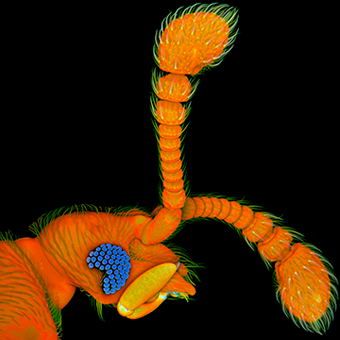
- the relationship between the material properties and the hydration status of resilin mentioned above. Besides the differences in the Young’s modulus, the mechanical behaviour of the respective materials shows the pronounced differences in the material composition between the tips and the bases of
- the tip and the base, a pronounced material composition gradient was revealed by CLSM. This gradient is reflected by a pronounced gradient of the material properties: the setal tip is rather soft, whereas the setal base is relatively stiff. Both gradients were hypothesised to represent an evolutionary


An ellipsometric approach towards the description of inhomogeneous polymer-based Langmuir layers
Beilstein J. Nanotechnol. 2016, 7, 1156–1165, doi:10.3762/bjnano.7.107
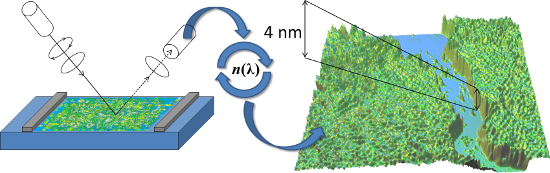
- dlayer represent the sample’s refractive index, absorption properties and layer thickness, respectively. With subsequent modeling of primary data, material properties such as film thickness, d, refractive index, n, or even the dielectric function, ε, may be obtained. However, for ultrathin films there is


Signal enhancement in cantilever magnetometry based on a co-resonantly coupled sensor
Beilstein J. Nanotechnol. 2016, 7, 1033–1043, doi:10.3762/bjnano.7.96
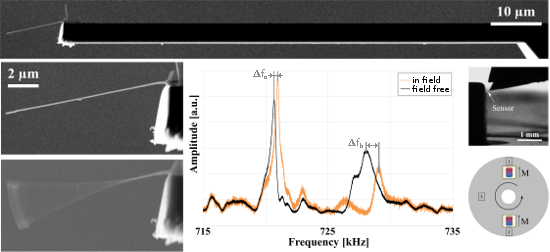
- latter with two out of three dimensions on the nanometer scale and therefore with low stiffness and low effective mass. Typical diameters of the iron filling are (15–30) nm and the nanotube length ranges from (15–45) μm [10][11]. The FeCNT not only features favorable geometric and material properties [12


![[Graphic 11]](/bjnano/content/inline/2190-4286-7-96-i21.png?max-width=637&scale=1.18182) on the interaction spring constant k3. Th...
on the interaction spring constant k3. Th...
Coupled molecular and cantilever dynamics model for frequency-modulated atomic force microscopy
Beilstein J. Nanotechnol. 2016, 7, 708–720, doi:10.3762/bjnano.7.63
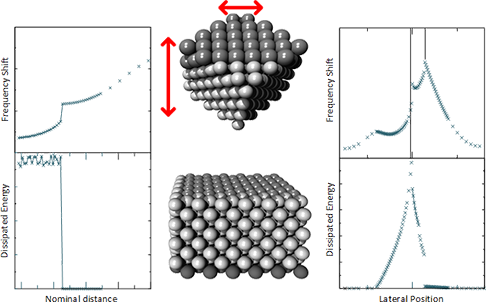
- these models use ab initio molecular dynamics or DFT methods [2][18][19], which represent the material properties most reliably. Their computational demand is very high, though, so that the force between tip and sample surface is usually calculated for a quasistatic tip. Molecular dynamics (MD


Correlative infrared nanospectroscopic and nanomechanical imaging of block copolymer microdomains
Beilstein J. Nanotechnol. 2016, 7, 605–612, doi:10.3762/bjnano.7.53
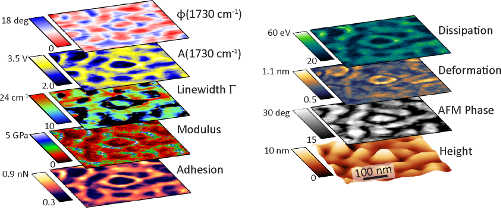
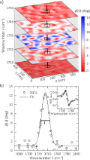
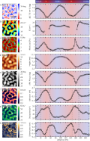
- channel alone. These variations suggest that regions of multicomponent chemical composition, such as the interfacial mixing regions between microdomains, are correlated with high spatial heterogeneity in nanoscale material properties. Keywords: block copolymers, force–distance nanomechanical spectroscopy
- important complimentary information on heterogeneous material systems [9]. By measuring the force on a scanning probe tip as it interacts with the sample, material properties including friction, adhesion, deformation, modulus, and dissipation can be quantified and mapped over nanoscale distances [10][11][12
- , is sensitive to the viscoelastic properties of the sample [20]. To further quantify nanoscale material properties, we also use force–distance spectroscopy (peak force quantitative nanomechanical mapping, PF-QNM) to map spatial variations in modulus, as well as the adhesion, deformation, and


![[Graphic 9]](/bjnano/content/inline/2190-4286-7-53-i10.png?max-width=637&scale=1.18182) (1730 ...
(1730 ...
Nanoscale effects in the characterization of viscoelastic materials with atomic force microscopy: coupling of a quasi-three-dimensional standard linear solid model with in-plane surface interactions
Beilstein J. Nanotechnol. 2016, 7, 554–571, doi:10.3762/bjnano.7.49
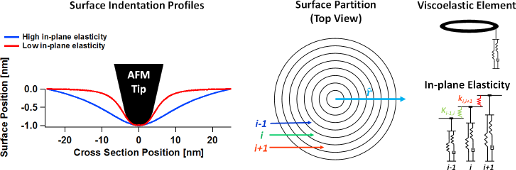
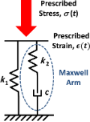
- microscopy (AFM) methods designed to measure surface material properties. However, current methods are based on one-dimensional (1D) descriptions of the tip–sample interaction forces, thus neglecting the intricacies involved in the material behavior of complex samples (such as soft viscoelastic materials) as
- , which can cause the material properties to vary with time and location within the sample. This paper, therefore, offers only a glimpse into the research gaps that exist in the treatment of sample material properties within AFM simulation. Viscoelasticity and the standard linear solid The standard linear
- subject to errors due to changes in material properties. In the case under consideration, the relaxed surface is located at the same position with respect to the cantilever for all simulations labeled with the same cantilever height. However, changes in the surface properties can lead to changes in the


Free vibration of functionally graded carbon-nanotube-reinforced composite plates with cutout
Beilstein J. Nanotechnol. 2016, 7, 511–523, doi:10.3762/bjnano.7.45
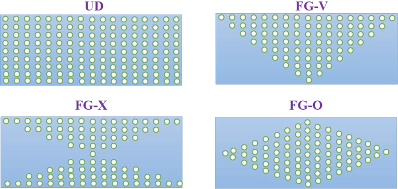
- as the polymeric matrix. The mechanical properties of the PMMA are Em = 2.5 GPa, νm = 0.34 and ρm = 1150 kg/m3. Reinforcement of the matrix is chosen as (10,10)-armchair SWCNT. For this kind of reinforcement, which is orthotropic, the material properties are given as = 5.6466 TPa, = 7.0800 TPa, G12
- fundamental and second symmetric modes of the frequency parameters of a unidirectional, orthotropic plate in a square platform with a centric square cutout. The material properties of the layer are E11 = 140 GPa, E22 = 3.5 GPa, G12 = 0.5 GPa, ν12 = 0.25 and ρ = 4000 kg/m3. The plate is simply supported all


Length-extension resonator as a force sensor for high-resolution frequency-modulation atomic force microscopy in air
Beilstein J. Nanotechnol. 2016, 7, 432–438, doi:10.3762/bjnano.7.38
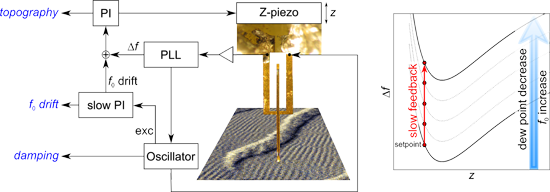
- that material properties primarily change along the fast scan axis. An example of how this additional slow feedback compensates for environmental changes is shown in Figure 3. Here, consecutive scans over a period of 140 min were performed on a KBr crystal surface with a frequency shift setpoint of


High-bandwidth multimode self-sensing in bimodal atomic force microscopy
Beilstein J. Nanotechnol. 2016, 7, 284–295, doi:10.3762/bjnano.7.26
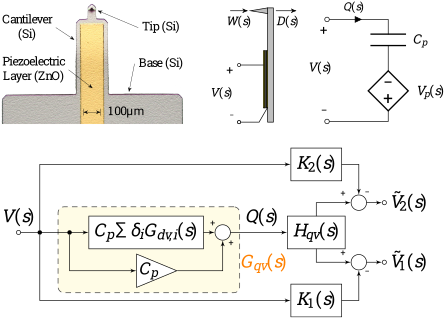
- between material properties [37]. The experimental results are presented in Figure 11; a plane level algorithm has been applied to the topography images. The first row represents a bimodal experiment with the OBD sensor and the second row shows bimodal imaging of the same area with the charge sensor. For
- commonly used optical lever method, promoting the potential downsizing of an AFM. In future work, the authors aim to extend this work to the point where quantitative material properties can be extracted using a multimode charge sensor. Furthermore, we aim to implement an automatic feedthrough compensation


Synthesis and applications of carbon nanomaterials for energy generation and storage
Beilstein J. Nanotechnol. 2016, 7, 149–196, doi:10.3762/bjnano.7.17
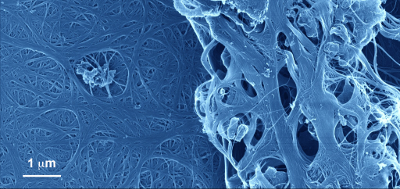
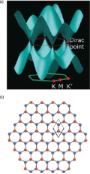
- their unique hybridization properties and sensitivity to perturbation during synthesis, allowing for fine manipulation of the material properties. In particular, carbon can be found in several different hybridization states, each having unique properties (Figure 3). In fact, the chemical, mechanical















Large area scanning probe microscope in ultra-high vacuum demonstrated for electrostatic force measurements on high-voltage devices
Beilstein J. Nanotechnol. 2015, 6, 2485–2497, doi:10.3762/bjnano.6.258
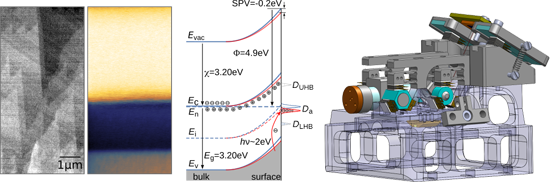
- Fermi-level position on SiC samples is strongly affected by surface preparation and material properties [44]. Figure 6 shows a KPFM measurement of a SiC calibration sample consisting of a 2 μm thick nitrogen-doped n-type (NN = 2 × 1018 cm−3) followed by a 4 μm thick aluminium doped p-type (NAl = 1
- of NN,eff = 1.3 × 1016 cm−3. SiC JBS device structure Finally, we applied the technique to analyse the electronic structure of a complex SiC power semiconductor device. SiC material properties enable devices compatible with higher voltages and operating temperatures compared to traditional Si-based


Nanoscale rippling on polymer surfaces induced by AFM manipulation
Beilstein J. Nanotechnol. 2015, 6, 2278–2289, doi:10.3762/bjnano.6.234
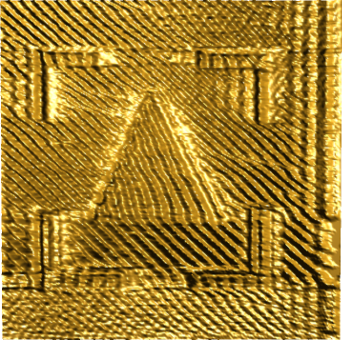
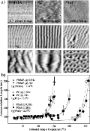
- ][24]. The ripple formation has been found to depend on a variety of material properties such as the preparation method, the mean molar mass of the polymer, the degree of crystallinity, as well as on the scanning conditions, namely the applied force, the tip shape and size, and the relative velocity. A
- thus demonstrated that the ripples move after consecutive frames in a manner that can be considered similar to a wave packet travels in space. Additionally, they have managed to calculate the corresponding group velocity. Dependence on material properties Molecular weight (Mw): For amorphous polymers
- clearly pointed out and described. Many theoretical works and models have been also proposed up to now. Some of them can reasonably describe and predict the nanoripple formation for several experimental conditions and for some specific material properties. This represents an important improvement for the




A simple and efficient quasi 3-dimensional viscoelastic model and software for simulation of tapping-mode atomic force microscopy
Beilstein J. Nanotechnol. 2015, 6, 2233–2241, doi:10.3762/bjnano.6.229
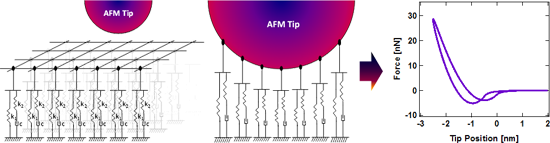
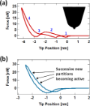
- rate-dependent dissipative processes. Viscoelasticity, in particular, is a very difficult phenomenon to deal with accurately within AFM spectroscopy, whereby one tries to extract material properties following a set of measurements in which generally one parameter is varied while keeping all other
- extract properties such as the Young’s modulus, which describes the bulk stress–strain relation of the material, or the Hamaker constant, which describes the dispersion forces between the tip and the sample. In the case of a viscoelastic surface the extraction of material ‘properties’ is difficult for a



Conformational switching of ethano-bridged Cu,H2-bis-porphyrin induced by aromatic amines
Beilstein J. Nanotechnol. 2015, 6, 2154–2160, doi:10.3762/bjnano.6.221
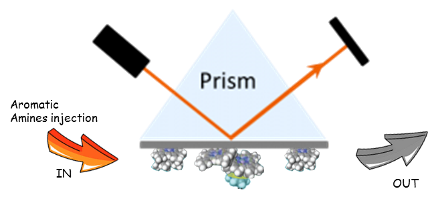
- resonance; Introduction Various porphyrin derivatives, both free-base and metal complexes, have been widely employed as active molecules for detecting analytes in vapor as well as in liquid phase [1][2][3]. Porphyrins are endowed with good host material properties and the ability to form films [4


Development of a novel nanoindentation technique by utilizing a dual-probe AFM system
Beilstein J. Nanotechnol. 2015, 6, 2015–2027, doi:10.3762/bjnano.6.205
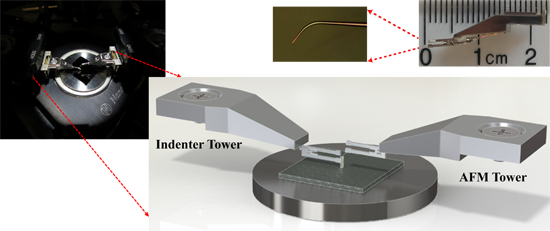
- . An indenter probe fabricated with a known tip geometry is used to penetrate into the sample. By utilizing the force and small amount of depth information measured during indentation, material properties such as elastic (Young’s) modulus of the sample can be estimated. For example, a growing
- (motion in X and Y). The convolution of X and Y motion into the measurement cause overestimation errors in the interpretation of material properties using FD curves. Instrumented nanoindentation (INI) tools can be used for a large dynamic force range. However, the displacement and force sensitivity are
- data and yield a more accurate estimation of material properties by nanoindentation. Evan et al. report the development of a tool specifically designed for nanoindentation on compliant materials considering the surface detection problems of commercially available nanoindentation devices [11


A simple method for the determination of qPlus sensor spring constants
Beilstein J. Nanotechnol. 2015, 6, 1733–1742, doi:10.3762/bjnano.6.177
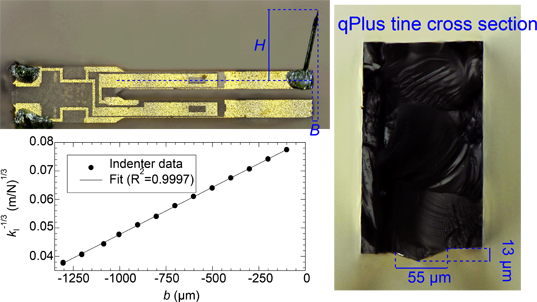
- agreement with theoretical predictions for the geometry and material properties of the sensor once a peaked ridge in the beam cross section is included. We further develop a correction necessary to adjust the spring constant for the size and placement of the tip. Keywords: atomic force microscopy




![[Graphic 9]](/bjnano/content/inline/2190-4286-6-177-i28.png?max-width=637&scale=1.18182) vs b is plotted where kI is the spring constan...
vs b is plotted where kI is the spring constan...
Atomic scale interface design and characterisation
Beilstein J. Nanotechnol. 2015, 6, 1708–1711, doi:10.3762/bjnano.6.174

- -ray microscopy has shown to be a powerful tool for chemical analysis of radiation-sensitive nanomaterial [7]. Combining the chemical and magnetic information provided by XPEEM with the structural sensitivity of LEEM has created a complete characterization tool of material properties at the nanometer
How decision analysis can further nanoinformatics
Beilstein J. Nanotechnol. 2015, 6, 1594–1600, doi:10.3762/bjnano.6.162
- and more efficient decisions. Due to the complex nature of nanomaterials, rapid changes in technology, and disunified testing and data publishing strategies, information regarding material properties is often illusive, uncertain, and/or of varying quality, which limits the ability of researchers and
Thermal energy storage – overview and specific insight into nitrate salts for sensible and latent heat storage
Beilstein J. Nanotechnol. 2015, 6, 1487–1497, doi:10.3762/bjnano.6.154
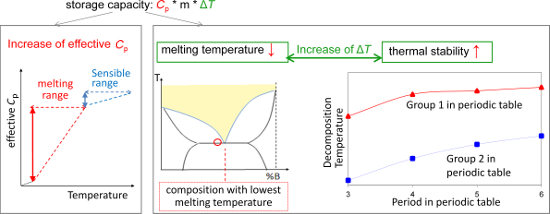
- recent years, material investigations were performed to reduce costs of the one-tank thermocline concept further by using filler materials with very low costs or improved material properties such as a higher heat capacity. One optional filler material is a very inexpensive material called Cofalit


Optimization of phase contrast in bimodal amplitude modulation AFM
Beilstein J. Nanotechnol. 2015, 6, 1072–1081, doi:10.3762/bjnano.6.108
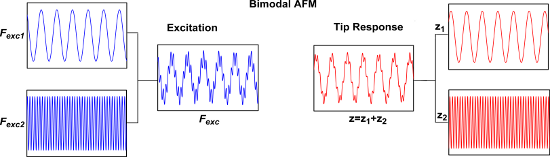
- Bimodal force microscopy has expanded the capabilities of atomic force microscopy (AFM) by providing high spatial resolution images, compositional contrast and quantitative mapping of material properties without compromising the data acquisition speed. In the first bimodal AFM configuration, an amplitude
- with atomic and nanoscale spatial resolutions [1][2][3][4][5][6][7][8]. The evolution of AFM is being shaped by the need to provide images of heterogeneous surfaces with high spatial resolution combined with compositional contrast and/or material properties mapping [7][9]. Amplitude modulation force
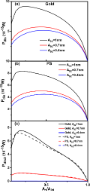
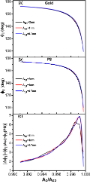
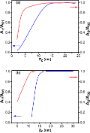
- the conditions to optimize the compositional contrast and material properties sensitivity in bimodal AM. The compositional contrast is usually defined as the phase shift difference of the second mode between two regions of the surface of a heterogeneous material. We study the phase contrast as a



Multiscale modeling of lithium ion batteries: thermal aspects
Beilstein J. Nanotechnol. 2015, 6, 987–1007, doi:10.3762/bjnano.6.102
- .6.102 Abstract The thermal behavior of lithium ion batteries has a huge impact on their lifetime and the initiation of degradation processes. The development of hot spots or large local overpotentials leading, e.g., to lithium metal deposition depends on material properties as well as on the nano- und
- dependency on composition or atomistic structure is the starting point for a rational design of energy storage materials [3]. Density functional theory with all its approximations [4][5] if combined with statistical mechanics methods is in this context the most successful method to simulate material
- properties of electrochemically active materials [3][6]. The combination with statistical methods is important to bridge the gap between zero-temperature DFT simulations in vacuum and the properties of the studied materials at finite temperatures in contact with different phases. Standard DFT simulations


Simulation tool for assessing the release and environmental distribution of nanomaterials
Beilstein J. Nanotechnol. 2015, 6, 938–951, doi:10.3762/bjnano.6.97
- meteorological parameters, as well as material properties. The compartmental modeling approach, which is generally suitable for regional assessments [26][27][28] of a minimum area of 1 km2 [12], lends itself to screening level analysis. Spatial resolution, however, may be increased by using nested or
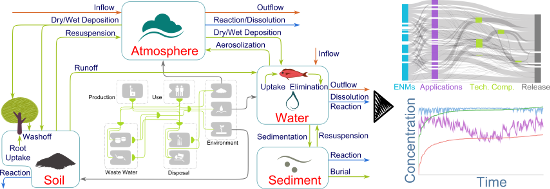
- modules that include: (a) geography, (b) meteorology, (c) material properties, and (d) source release (Figure 6). Scenario design is initiated by selecting the environmental compartments (e.g., air, water, soil, sediment, vegetation canopy, biota) and ITPs (e.g., dry/wet deposition, resuspension
- distribution (lower subplot). It is noted that such information can be utilized to convert MendNano reported ENM mass concentrations to surface area concentration [35][36] given the knowledge of the primary particle size. Databases The parameter database contains material properties, geographical, and


Mapping of elasticity and damping in an α + β titanium alloy through atomic force acoustic microscopy
Beilstein J. Nanotechnol. 2015, 6, 767–776, doi:10.3762/bjnano.6.79
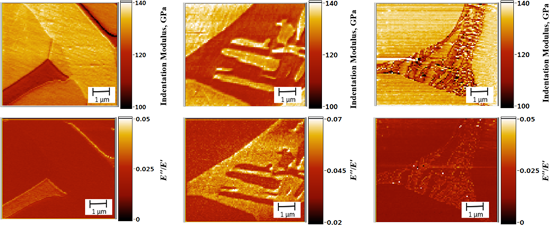
- properties in living cells [15], proteins [16] and polymers [17][18]. They have been found to be useful in probing material properties with enhanced sensitivity, less surface damage and also at larger distances [18][19]. However, these techniques were developed for soft materials with moduli smaller than 10





