


Search results
Search for "mechanism" in Full Text gives 1270 result(s) in Beilstein Journal of Nanotechnology. Showing first 200.
Modeling and simulation of carbon-nanocomposite-based gas sensors
Beilstein J. Nanotechnol. 2025, 16, 90–96, doi:10.3762/bjnano.16.9
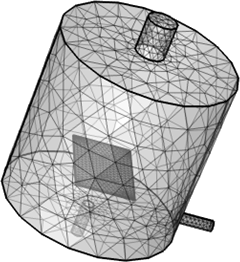
- crucial for understanding the adsorption mechanism in a system and predicting its behavior [17]. Methods Gas sensor analysis with COMSOL Multiphysics To implement the methodology from the flow chart in Figure 1, we begin with pre-processing. During this step, we define the domain with physics modules



Advanced atomic force microscopy techniques V
Beilstein J. Nanotechnol. 2025, 16, 54–56, doi:10.3762/bjnano.16.6

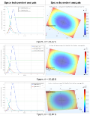
- inaccuracy caused by electrostatic or capillary forces, this is an additional mechanism having an impact on AFM height measurements. Closely related is the measurement of conductivity. Skolaut et al. investigate conductivity in dependence on the roughness of the substrate using alkanethiol self-assembled
Orientation-dependent photonic bandgaps in gold-dust weevil scales and their titania bioreplicates
Beilstein J. Nanotechnol. 2025, 16, 1–10, doi:10.3762/bjnano.16.1
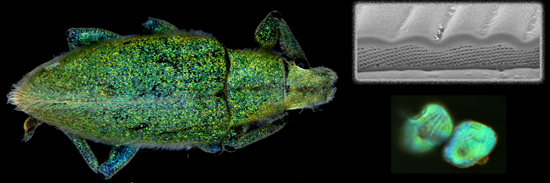
- orientations, we obtained a uniform diffuse green scatterogram, confirming the mechanism producing the dull, unsaturated overall coloration found on the gold-dust weevil and several other weevils [19][21][28]. Subsequently, using plasma etching, we removed the scale cortex and made negative titania replicas of


Mechanistic insights into endosomal escape by sodium oleate-modified liposomes
Beilstein J. Nanotechnol. 2024, 15, 1667–1685, doi:10.3762/bjnano.15.131
- mechanism, facilitating cytosolic delivery with reduced cytotoxicity. This approach offers a safer and more effective option for targeted drug delivery applications. Keywords: Aurein 1.2; endosomal escape; fusogenic effect; molecular dynamics simulation; sodium oleate; Introduction The quest for efficient
- localized membrane destabilization [23]. Furthermore, our results correlate with studies proposing a detergent-like mechanism, where AUR induces high local curvature, disrupting membrane integrity without fully spanning the membrane [24]. To further elucidate effects on membrane structure and dynamics, we
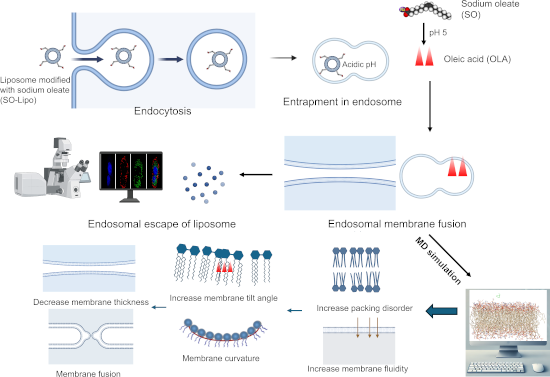
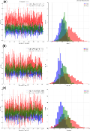
- new strategies in targeted drug delivery. Proposed mechanism of sodium oleate-enhanced endosomal escape in drug delivery In this study, we developed an innovative strategy to modify liposomes with SO to enhance their endosomal escape capabilities. By combining in vitro experiments with in silico MD




Attempts to preserve and visualize protein corona on the surface of biological nanoparticles in blood serum using photomodification
Beilstein J. Nanotechnol. 2024, 15, 1654–1666, doi:10.3762/bjnano.15.130

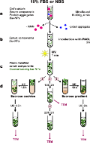
- . When incubated in the dark, PACL binds to the thiol groups of serum proteins (i.e., it modifies them). The reaction mixture is then irradiated with UV, under the action of which the nitroaryl azide group covalently fixes the modified proteins on the surface of the NPs. This mechanism has been



Fabrication of hafnium-based nanoparticles and nanostructures using picosecond laser ablation
Beilstein J. Nanotechnol. 2024, 15, 1639–1653, doi:10.3762/bjnano.15.129
- mbar) using an electron beam melting furnace having a beam power of 60 kW (ELIT 60) at an accelerating voltage of 24 kV in a water-cooled crucible with feeding mechanism and an extraction system [32]. All operations were conducted at the Centre for Materials for Electronics Technology (CMET), Hyderabad




Heterogeneous reactions in a HFCVD reactor: simulation using a 2D model
Beilstein J. Nanotechnol. 2024, 15, 1627–1638, doi:10.3762/bjnano.15.128
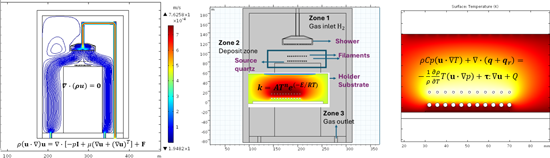
- . Different tools such as ab initio density functional theory [13][14], kinetic Monte Carlo simulations [15][16], and reactive molecular dynamics simulations [17][18] have been used to understand the chemical reactions underlying the growth of the films [19]. Modeling the reaction mechanism in both two
- -dimensional (2D) and three-dimensional (3D) systems is a tool that allows us to understand the key steps regarding the reproducibility and uniformity of the films [19][20]. From a computational point of view, prior works focused on the growth mechanism of SiOx in a plasma-enhanced chemical vapor deposition
- exhibited greater photoluminescence compared to those that did not undergo thermal treatment [29]. The SiO species plays an important role in the proposed mechanism; the reaction of SiO with •OH and •H radicals leads to the formation of HSiO and silanes [15]. Silane and silanol species were also found in


Biomimetic nanocarriers: integrating natural functions for advanced therapeutic applications
Beilstein J. Nanotechnol. 2024, 15, 1619–1626, doi:10.3762/bjnano.15.127

- delivery due to their protective mechanism against harmful endogenous and exogenous substances through transcellular pathways. The BBB selectively permits molecules smaller than 400 Da with specific shapes, ionization states, and lipophilicity, thereby excluding macromolecular drugs and those with
- chemodynamical therapy (CDT): the high presence of reducing species (GSH) inhibit the therapeutic effects of CDT in tumors [78]. By releasing metal cations in the early stages to consume the reducing substances, these nanocarriers enhance therapeutic efficacy of CDT. This mechanism has also been applied to


Liver-targeting iron oxide nanoparticles and their complexes with plant extracts for biocompatibility
Beilstein J. Nanotechnol. 2024, 15, 1593–1602, doi:10.3762/bjnano.15.125
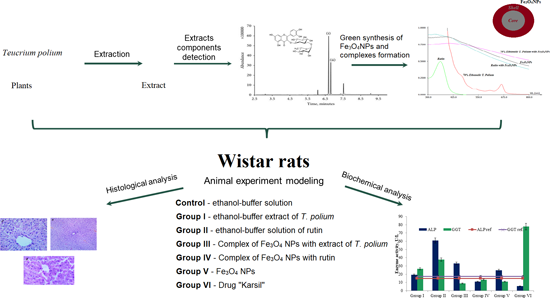
- , unlike their complexes. All agents exert a hypolipidemic effect by lowering LDL, despite maintaining the synthetic functions of the liver. Fe3O4 NPs increase the activity of GPO, which is associated with their peroxidase-like properties. A multifaceted and diverse mechanism of action of all studied


Facile synthesis of size-tunable L-carnosine-capped silver nanoparticles and their role in metal ion sensing and catalytic degradation of p-nitrophenol
Beilstein J. Nanotechnol. 2024, 15, 1576–1592, doi:10.3762/bjnano.15.124
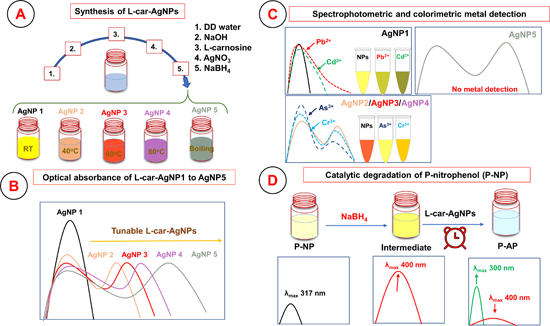
- grafting magnetic nanoparticles with ʟ-carnosine significantly enhanced the catalytic performance of the nanoparticles [15]. In another study, metal-organic framework nanoparticles fabricated with ʟ-carnosine were employed for arsenic removal via an adsorption mechanism. The maximum removal of arsenic was




Green synthesis of silver nanoparticles derived from algae and their larvicidal properties to control Aedes aegypti
Beilstein J. Nanotechnol. 2024, 15, 1566–1575, doi:10.3762/bjnano.15.123
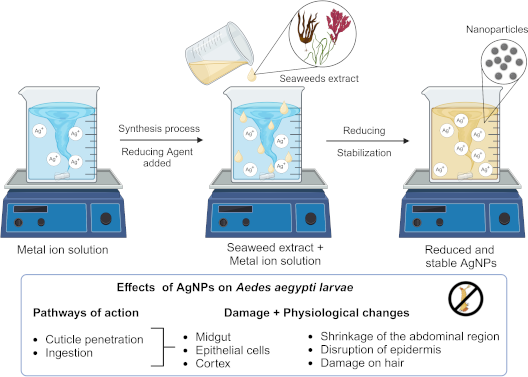
- nanoparticles in controlling vector mosquitoes [62]. AgNPs synthesized from seaweed have been investigated as a vector control strategy based on their larvicidal properties. Table 2 summarizes data from bioassays with AgNPs synthesized from different species of seaweed against A. aegypti larvae. The mechanism
- nanoparticles via green synthesis and their larvicidal activity against A. aegypti, some challenges still persist. Aspects such as the mechanism of action of AgNPs in the different stages of A. aegypti, resistance of mosquitoes to larvicides, and the long-term effects of NPs on non-target organisms still need


Ultrablack color in velvet ant cuticle
Beilstein J. Nanotechnol. 2024, 15, 1554–1565, doi:10.3762/bjnano.15.122

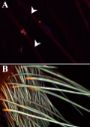
- a light-trapping mechanism and can enhance absorption by 5% compared to a flat surface. The dense layer of black epicuticular setae further enhances ultrablack coloration. Ishay and collaborators [22] suggested that longitudinal chitinous plates would be interconnected by dark transverse and



Electrochemical nanostructured CuBTC/FeBTC MOF composite sensor for enrofloxacin detection
Beilstein J. Nanotechnol. 2024, 15, 1522–1535, doi:10.3762/bjnano.15.120
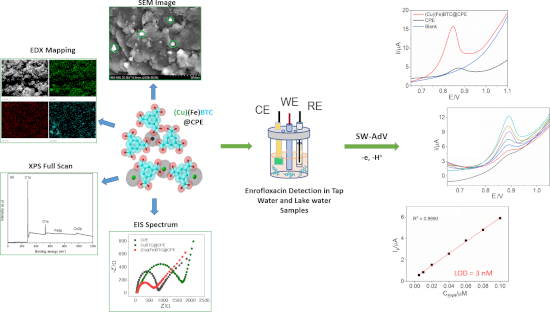
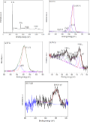
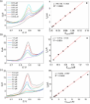
- electrochemical reaction mechanism of ENR is irreversible. The experimental results are consistent with previous studies [16][43][44]. Besides, the ENR peak obtained on (Cu)(Fe)BTC was much higher than those on CPE, CuBTC@CPE, and FeBTC@CPE, likely because of the catalytic properties of two MOF materials in the





Polymer lipid hybrid nanoparticles for phytochemical delivery: challenges, progress, and future prospects
Beilstein J. Nanotechnol. 2024, 15, 1473–1497, doi:10.3762/bjnano.15.118
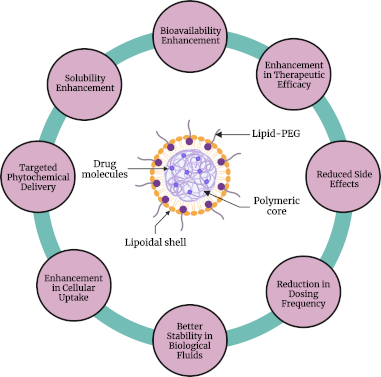
- crucial for maintaining therapeutic drug levels over extended periods of time [20][21]. By adjusting the polymer composition and lipid matrix, researchers can fine-tune the release kinetics of phytochemicals, ensuring sustained therapeutic effects. This controlled release mechanism is particularly
- against HCT-116 cells, in terms of apoptosis and cell cycle arrest, was assessed using flow cytometry. Comparison with APN suspension showed significant improvements favoring APN-PLHNPs. Additionally, the anticancer mechanism was further explored by examining the gene expression of key signaling molecules


Effect of radiation-induced vacancy saturation on the first-order phase transformation in nanoparticles: insights from a model
Beilstein J. Nanotechnol. 2024, 15, 1453–1472, doi:10.3762/bjnano.15.117

- the self-diffusion coefficients in a monovacancy mechanism mediated by nearest-neighbor vacancy jumps [26][27]. It is important to note that Shen’s approach assumes a size-dependence of the vacancy concentration in the steady-state regime (Equations 15 and 16), that is, the concentrations are
- K), regardless of whether the material is irradiated or not (indicating instability of the initial bcc phase). In this zone, the dominant mechanism is not radiation but rather surface effects associated with a decrease in surface energy during the phase change. Consequently, both functions Δg and


Ion-induced surface reactions and deposition from Pt(CO)2Cl2 and Pt(CO)2Br2
Beilstein J. Nanotechnol. 2024, 15, 1427–1439, doi:10.3762/bjnano.15.115

- performance of Pt(CO)2Cl2 and Pt(CO)2Br2 as Pt precursors and comparing the differences in H2+-, He+-, and Ar+-induced Pt deposition. To determine precursor and ion identity effects on the deposition mechanism, we employ a surface analysis approach under UHV conditions to determine the ion-induced
- /cm2 Ar+ dose was required to completely remove Br from PtBr2. Since ion beam-induced physical sputtering is driven by a momentum/energy transfer mechanism with a dependence on the mass ratio between the ion and target [69][70][71][72], this difference can attributed to the better mass match between Ar



Hymenoptera and biomimetic surfaces: insights and innovations
Beilstein J. Nanotechnol. 2024, 15, 1333–1352, doi:10.3762/bjnano.15.107
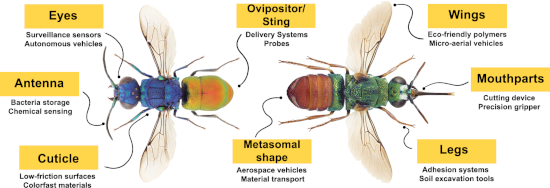
- morphological and functional innovations predominantly involve the slender waist of Apocrita wasps, the stinging mechanism observed in Aculeata, parasitoidism (a specialized form of carnivorous behavior), and secondary phytophagy (a reversion to plant-based feeding) [7]. Hymenoptera are also well known as the
- feature observed in ensign wasps (Afrevania and Trissevania, Evaniidae) [110]. These wasps exhibit a sophisticated ability to fold their forewings along two intersecting fold lines, creating a four-plane wing folding mechanism [110]. By incorporating a similar four-plane wing folding mechanism, drones
- applications for the development of micro-aerial vehicles [118][119]. The wing-to-wing coupling mechanism in Hymenoptera functions as a multifaceted joint, linking the forewing’s rolled membrane to the hindwing’s hook structures, enabling synchronized movement and improved aerodynamic performance [121][122




Nanoarchitectonics with cetrimonium bromide on metal nanoparticles for linker-free detection of toxic metal ions and catalytic degradation of 4-nitrophenol
Beilstein J. Nanotechnol. 2024, 15, 1312–1332, doi:10.3762/bjnano.15.106
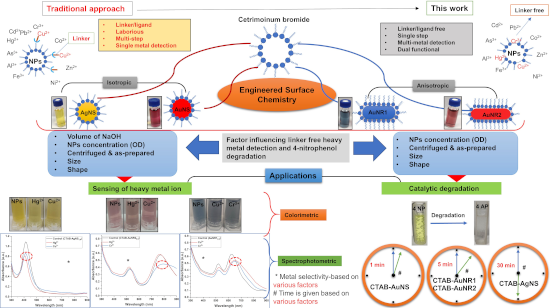
- the shorter nanorods. The mechanism is similar to the interaction of metals with longer nanorods. However, the change in metal selectivity is due to the size of nanorods. In NaOH absence, no metal shows prominent interaction with centrifuged CTAB-AuNR21.0 and AuNR20.5 (Supporting Information File 1
- detection. Table 2 summarizes various studies on detecting heavy metals using CTAB-capped metal nanoparticles via linkers or buffers. Table 2 includes detected metals using as-prepared/centrifuged CTAB-capped AgNS, AuNS, AuNR1, and AuNR2. Possible mechanism of heavy metal detection Previous studies have
- mechanism in this study is influenced by factors such as the amount of NaOH, nanoparticle shape, and nanoparticle concentration. As previously reported, CTAB-capped silver nanospheres detected Cu2+ and Hg2+, attributed to the interaction between the metal ions and the nanoparticles. The underlying mechanism




Interaction of graphene oxide with tannic acid: computational modeling and toxicity mitigation in C. elegans
Beilstein J. Nanotechnol. 2024, 15, 1297–1311, doi:10.3762/bjnano.15.105
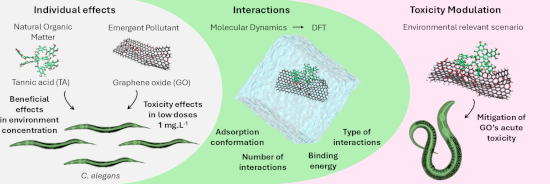
- -selective feeding mechanism, which transports particles in the size range from 0.5 to 3 μm to the intestinal lumen [59][60]. Therefore, even at higher doses, we did not observe a linear relationship between C. elegans’ survival and the material’s concentration. Considering this, we evaluated the effects of


Mn-doped ZnO nanopowders prepared by sol–gel and microwave-assisted sol–gel methods and their photocatalytic properties
Beilstein J. Nanotechnol. 2024, 15, 1283–1296, doi:10.3762/bjnano.15.104
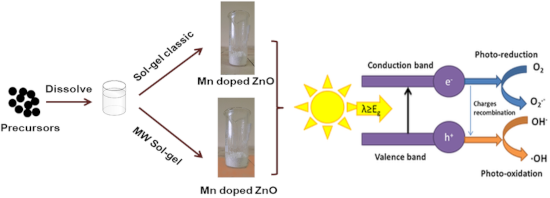
- to examine the photocatalytic mechanism under different irradiation sources. Also by the sol–gel method, the active materials can be deposited in future studies as films on different supports for better surface contact and recovery degree, enhancing the scale-up opportunity for water cleaning


New design of operational MEMS bridges for measurements of properties of FEBID-based nanostructures
Beilstein J. Nanotechnol. 2024, 15, 1273–1282, doi:10.3762/bjnano.15.103
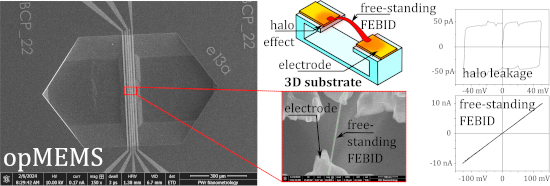
- actuation mechanism. This opens the possibility to perform both electrical and mechanical measurements of nanostructures, in particular, free-standing nanostructures, which are the most interesting for their mechanical and electrical properties combined in nanoscale phenomena [28][29][30]. The requirements
- for the desired MEMS measurement platforms are as follows: They should be dimensionally compatible with the nanostructure to be tested and allow for actuation with an embedded actuation mechanism. To operate, MEMS platforms require auxiliary equipment such as a scanning electron microscope (SEM) or
- device, as has been shown in the case of FIB origami [46]. More recently, Masteghin et al. have shown how strain engineering and eigenstrain modification can influence single-material MEMS devices [47]. The exact mechanism depends on the ion and substrate materials, but surface amorphisation or material


Enhanced catalytic reduction through in situ synthesized gold nanoparticles embedded in glucosamine/alginate nanocomposites
Beilstein J. Nanotechnol. 2024, 15, 1227–1237, doi:10.3762/bjnano.15.99
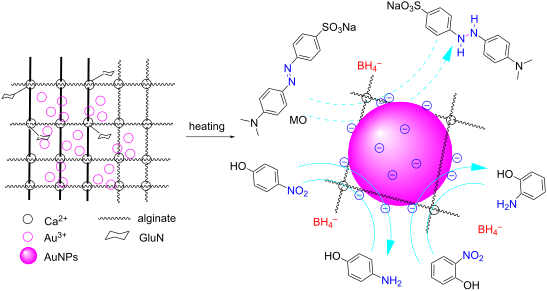
- synthesizing gold nanoparticles (AuNPs) within a glucosamine/alginate (GluN/Alg) nanocomposite via an ionotropic gelation mechanism in aqueous environment. The resulting nanocomposite, AuNPs@GluN/Alg, underwent thorough characterization using UV–vis, EDX, FTIR, SEM, TEM, SAED, and XRD analyses. The spherical
- Au3+ into Au(0) during the synthesis of the nanocomposite AuNPs@GluN/Alg without additional chemicals. Alginate serves as a stabilizing agent. In the ionotropic gelation mechanism, the cross-linking matrix of Ca–alginate, formed by Ca2+ ions and carboxyl groups in sodium alginate, becomes insoluble
- mechanism involves the transfer of electrons from BH4− (the electron donor) to the dye (the electron acceptor) facilitated by the surface of the metal nanoparticles [42][43]. Prior to electron transfer, dye and BH4− are adsorbed onto the catalyst surface, as depicted in Figure 5. Consequently, the



Realizing active targeting in cancer nanomedicine with ultrasmall nanoparticles
Beilstein J. Nanotechnol. 2024, 15, 1208–1226, doi:10.3762/bjnano.15.98
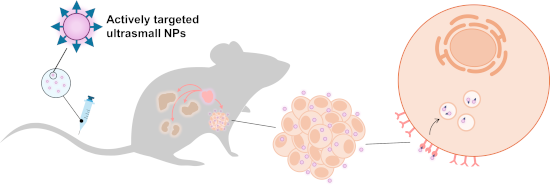
- ) designed to transport therapeutic agents with precise delivery to tumor sites. This approach aims to mitigate toxic effects associated with off-target drug delivery and optimize therapeutic efficacy. For decades, the enhanced permeability and retention (EPR) effect has stood as the central mechanism for
- were 8–10 nm in size and exhibited efficient renal clearance, with over 90% ID found in the urine at 72 h p.i. Such a high clearance rate was unexpected considering the larger size of the construct compared to the kidney filtration barrier, and the underlying mechanism for this phenomenon requires


Synthesis, characterization and anticancer effect of doxorubicin-loaded dual stimuli-responsive smart nanopolymers
Beilstein J. Nanotechnol. 2024, 15, 1189–1196, doi:10.3762/bjnano.15.96
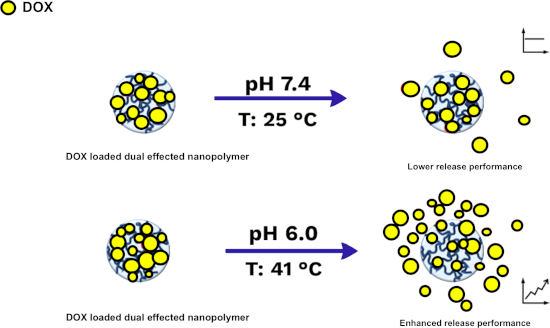
- drug doxorubicin (DOX) has been used in the present study. It is a known antitumor antibiotic of the anthracycline series, which has been approved as anticancer drug in 1974. It has antimitotic and antiproliferative effects. The mechanism of action is interaction with DNA, the formation of free


AI-assisted models to predict chemotherapy drugs modified with C60 fullerene derivatives
Beilstein J. Nanotechnol. 2024, 15, 1170–1188, doi:10.3762/bjnano.15.95
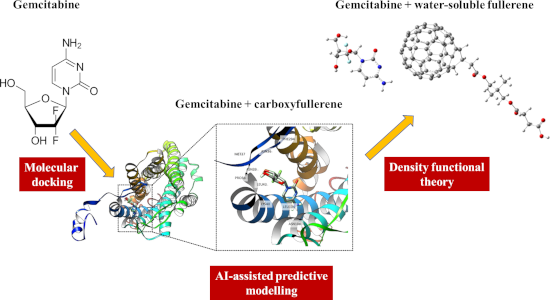
- are mostly designed to serve as chemotherapy agents for breast cancer. Thus, it is possible to assume that several drugs share a common mechanism of action and, subsequently, a common protein target, such as CXCR7. For instance, gemcitabine, shown in Figure 2, shares the pocket within CXCR7 with





