Search results
Search for "milling" in Full Text gives 137 result(s) in Beilstein Journal of Nanotechnology.
AFM as an analysis tool for high-capacity sulfur cathodes for Li–S batteries
Beilstein J. Nanotechnol. 2013, 4, 611–624, doi:10.3762/bjnano.4.68
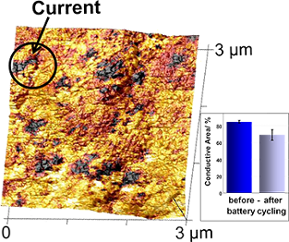
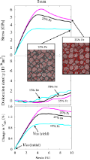
- morphology. Therefore an additional milling step with a pearl mill to gain a finer dispersion of the superior SC-PVDF cathode material was introduced, and performance increased significantly as shown in Figure 10. The optimized battery has an initial discharge capacity of 1030 mAh·g−1 and after 43 cycles
- which was LiOH, which had formed from the reaction of Li2S/Li2S2 in humid air. Based on the principle advantage of the SC-PVDF preparation technique with an advantageous stability of the electronic network but too large sulfur particles, an additional milling step to get a finer dispersion was



k-space imaging of the eigenmodes of sharp gold tapers for scanning near-field optical microscopy
Beilstein J. Nanotechnol. 2013, 4, 603–610, doi:10.3762/bjnano.4.67
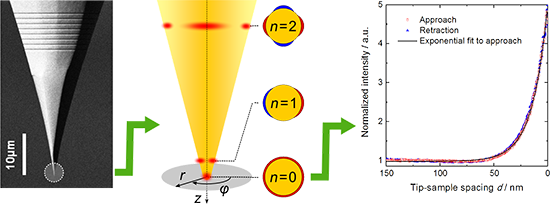
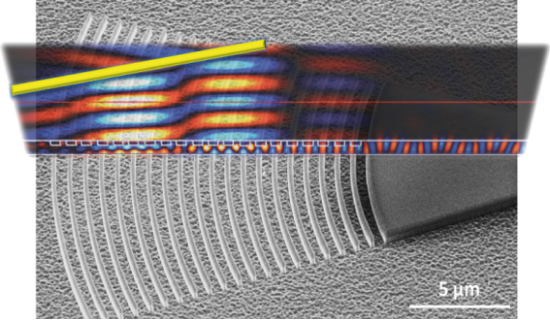
- experimental setup. Tapers as shown in Figure 1 are produced from single-crystalline gold wire by an electrochemical AC-etching technique followed by focused ion beam milling of a grating coupler [11]. Typical cone opening angles are between 20 and 30° and apex radii are well below 30 nm. These tips have a
- ion beam milling of the grating couplers. Field enhancement at the taper apex was much more pronounced for the tip shown in panel a). Propagation constants kz of the three lowest eigenmodes of an infinitely long gold wire as a function of wire radius R. Displayed are the real (solid blue lines) and


Deformation-induced grain growth and twinning in nanocrystalline palladium thin films
Beilstein J. Nanotechnol. 2013, 4, 554–566, doi:10.3762/bjnano.4.64
- -mortem TEM analysis were prepared either by focused ion beam (FIB) using a FEI Strata 400S DualBeam at 5 kV and 8 pA beam current for final polishing (sample ncPd 1) or by mechanical dimpling and Argon ion milling from the polyimide side at 2.5 kV in a PIPS (Gatan) (sample ncPd 2). FIB prepared samples


Plasticity of nanocrystalline alloys with chemical order: on the strength and ductility of nanocrystalline Ni–Fe
Beilstein J. Nanotechnol. 2013, 4, 542–553, doi:10.3762/bjnano.4.63
- state was found after rolling at liquid nitrogen temperature to obtain a nanometer grain size [6]. In nanostructured Ni3Al processed by ball milling [7] or high pressure torsion [8], on the contrary, a complete loss of order is observed during preparation. Grain refinement by severe plastic deformation



Grating-assisted coupling to nanophotonic circuits in microcrystalline diamond thin films
Beilstein J. Nanotechnol. 2013, 4, 300–305, doi:10.3762/bjnano.4.33
- waveguide fabricated this way is shown in Figure 1b. Focussed ion beam (FIB) milling is used to cut through a waveguide cross-section, which is the reason for the line features at the edge of the waveguide. The FIB image reveals that the sidewalls resulting from the etching are near vertical, illustrating
- 15 nm rms is determined. (b) Cross-sectional SEM image of a nanophotonic waveguide cut by focussed-ion-beam milling. The diamond, e-beam resist, and buried oxide layers are marked in a false-colour overlay. (a) SEM image of a fabricated focussing grating coupler. Light propagating through the


Diamond nanophotonics
Beilstein J. Nanotechnol. 2012, 3, 895–908, doi:10.3762/bjnano.3.100
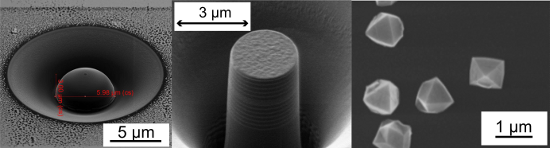
- surface of a standard diamond sample. Due to the small size, thousands of microscopic lenses could be fabricated into a single diamond sample, and moreover, each lens could be fabricated precisely around a single fluorescent color center. A suitable fabrication technique is focused ion beam milling. We
- manufactured by sputtering and focused ion beam milling. Photon antibunching from a NV center inside a dielectric pillar cavity could be observed. In addition, a reproducible gas-phase doping approach to incorporate nickel and tungsten atoms during MWPECVD growth of single-crystal diamond films has been
- microscopic diamond hemisphere by focused ion beam milling. (a) Grid of FIB markers for the precise alignment of the SIL on top of a single color center. (b) Fluorescence microscope image of one quadrant of FIB markers. The bright blue spots are single color centers. A color center a few microns below the






Sub-10 nm colloidal lithography for circuit-integrated spin-photo-electronic devices
Beilstein J. Nanotechnol. 2012, 3, 884–892, doi:10.3762/bjnano.3.98
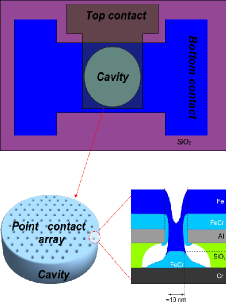
- forms a hard mask for subsequent ion milling. After a 5 min Ar-plasma etch to remove surface residue, 7 min long ion milling etches through the 10 nm thick Au layer and slightly into the SiO2 substrate, thus transferring the hexagonal pattern of sub-10 nm polystyrene particles into sub-10 nm pattern of
- photomask. The top electrode mask has different diameter disks and half-disks in the range of 10–50 µm. The pattern transfer is done by ion milling for 1 h. The etching time was calibrated by using surface profilometry such as to stop the etching at the Al bottom electrode. The sample was then capped with a


Plasmonic nanostructures fabricated using nanosphere-lithography, soft-lithography and plasma etching
Beilstein J. Nanotechnol. 2011, 2, 448–458, doi:10.3762/bjnano.2.49

- linked with the optical function of the structures. Current techniques for the fabrication of plasmonic cavities include electrochemical growth combined with nanosphere lithography [25][35], electron-beam lithography [36], etching techniques [37][38][39][40] and focused ion beam milling [41][42][43]. The
- techniques based on electron beam lithography and focused ion beam milling allow us to obtain structures of arbitrary shape and two-dimensional profile, but they are size limited and time consuming. Applications outside of sensing are also envisaged. Plasmonic resonators can not only confine light but can


Manipulation of gold colloidal nanoparticles with atomic force microscopy in dynamic mode: influence of particle–substrate chemistry and morphology, and of operating conditions
Beilstein J. Nanotechnol. 2011, 2, 85–98, doi:10.3762/bjnano.2.10
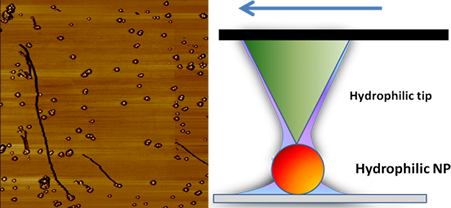
- (FIB) milling technique. The width and depth of the pits are 650 nm and 5 nm, respectively, and the spacing between two adjacent pits is 125 nm. On the patterned surface, the mean direction of motion remains identical (on average), even after a long acquisition time. This stability of the direction of


Biomimetics inspired surfaces for drag reduction and oleophobicity/philicity
Beilstein J. Nanotechnol. 2011, 2, 66–84, doi:10.3762/bjnano.2.9
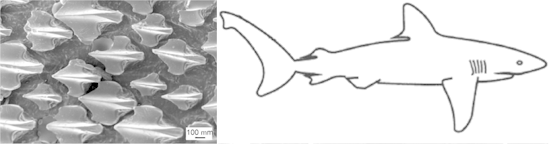
- using a FlashCut CNC milling machine [21]. Bechert et al. [57] and Dean and Bhushan [22] have reported that optimal groove depth for the rib surface should be about half of the lateral rib spacing for low drag. In the rib pattern design selected here, multiple stacks of ribs oriented along an axis were
- fabricated. For the fabrication, first a model of a rib-patterned surface was designed in SolidWorks, and then the code for the rib’s height, width, spacing and lengths, and channel dimensions was written with FeatureCAM in order to fabricate structures using the CNC milling machine. An acrylic resin was








Magnetic coupling mechanisms in particle/thin film composite systems
Beilstein J. Nanotechnol. 2010, 1, 101–107, doi:10.3762/bjnano.1.12
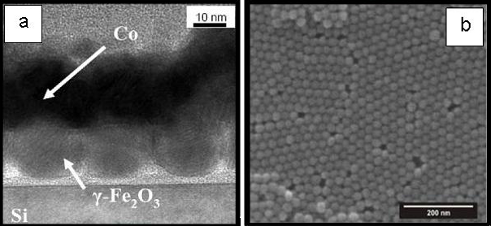
- without ion-milling. The nanoparticle array showed a collective super-spin behavior due to dipolar interparticle coupling. In the composite system, we observed a decoupling into two nanoparticle subsystems. In the ion-milled system, the nanoparticle layer served as a magnetic flux guide as observed by
- composites are prepared by physical growth methods, such as sputtering [18][19], sequential pulsed laser deposition [20][21], sputtering gas aggregation [22] or mechanical milling [23]. In this work, we report a different approach to fabricate composite nanoparticle/thin-film materials, i.e., which combines
- a structural coherence length, as probed by scattering techniques, in the order of 200–300 nm [28]. AFM observations, shown in Figure 1a, also confirm the hexagonal close-packed ordering with an average surface roughness of the film of approximately 1.4 nm. Ion-milling carried out at the surface of


Preparation and characterization of supported magnetic nanoparticles prepared by reverse micelles
Beilstein J. Nanotechnol. 2010, 1, 24–47, doi:10.3762/bjnano.1.5
- . Possibly the simplest approach is ball milling of the corresponding bulk materials. This mostly yields a rather broad size distribution, which, in turn, often hinders the study of size-dependent properties [15]. A better defined physical approach is inert-gas condensation where NPs are formed by sputtering