


Search results
Search for "photocatalyst" in Full Text gives 128 result(s) in Beilstein Journal of Nanotechnology.
Self-assembled monolayers and titanium dioxide: From surface patterning to potential applications
Beilstein J. Nanotechnol. 2011, 2, 845–861, doi:10.3762/bjnano.2.94
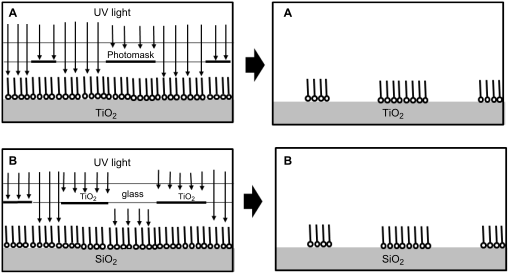
- ; Introduction Photocatalytic degradation of pollutants is attracting increasing attention. In this context, anatase-phase titanium dioxide is regarded as the photocatalyst of choice, due to its low cost, nontoxicity, and relatively high efficiency, which make it suitable not only for air and water
- decontamination [1][2] but also for self-cleaning applications [3]. The general scheme for the photocatalytic destruction of organics involves the excitation of this semiconductor by irradiation with suprabandgap photons and migration of the electron–hole pairs to the surface of the photocatalyst, where the holes
- applied bias acted to push photogenerated holes to the external surface of the TiO2 layer while pulling the photogenerated electrons to the platinum electrons, thus limiting the recombination rate. Indeed, the degradation rate constant was found to increase as the positive bias on the photocatalyst was

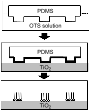


Approaches to nanostructure control and functionalizations of polymer@silica hybrid nanograss generated by biomimetic silica mineralization on a self-assembled polyamine layer
Beilstein J. Nanotechnol. 2011, 2, 760–773, doi:10.3762/bjnano.2.84
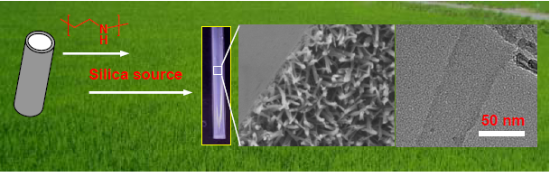
- –superhydrophilic) by surface hydrophobic treatment and UV irradiation. The anatase titania component in the nanograss film acts as a highly efficient photocatalyst for the decomposition of the low-surface-energy organic components attached to the nanosurface. The ease with which the nanostructure can be controlled


Enhanced visible light photocatalysis through fast crystallization of zinc oxide nanorods
Beilstein J. Nanotechnol. 2010, 1, 14–20, doi:10.3762/bjnano.1.3
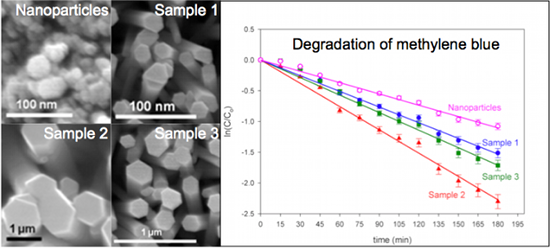
- sites arising from oxygen nonstoichiometry, has emerged to be an efficient photocatalyst material compared to other metal oxides [8][9][10]. ZnO exhibits comparatively higher reaction and mineralization rates [11] and can generate hydroxyl ions more efficiently than titania (TiO2) [12]. Surface area and


Other Beilstein-Institut Open Science Activities



