Search results
Search for "polycrystalline" in Full Text gives 259 result(s) in Beilstein Journal of Nanotechnology. Showing first 200.
Electron-driven and thermal chemistry during water-assisted purification of platinum nanomaterials generated by electron beam induced deposition
Beilstein J. Nanotechnol. 2018, 9, 77–90, doi:10.3762/bjnano.9.10
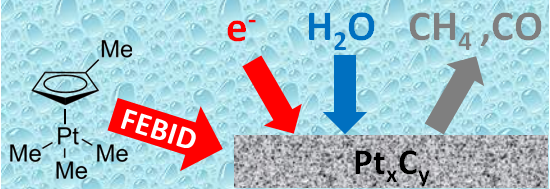
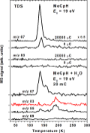
- FEBID from MeCpPtMe3. Experimental All experiments were performed in an ultrahigh vacuum (UHV) chamber [39] with a base pressure of about 10−10 mbar. In all experiments, multilayer films of MeCpPtMe3 were condensed on a polycrystalline Ta sheet held between 105 K and 110 K by liquid N2 cooling. The
- calibrated volume where the absolute pressure is measured with a capacitance manometer. For each film deposition, a calibrated amount of vapour was leaked via a stainless steel capillary opening onto the metal substrate. Experiments on methylcyclopentadiene (MeCpH) were performed on a polycrystalline Au



Direct writing of gold nanostructures with an electron beam: On the way to pure nanostructures by combining optimized deposition with oxygen-plasma treatment
Beilstein J. Nanotechnol. 2017, 8, 2530–2543, doi:10.3762/bjnano.8.253
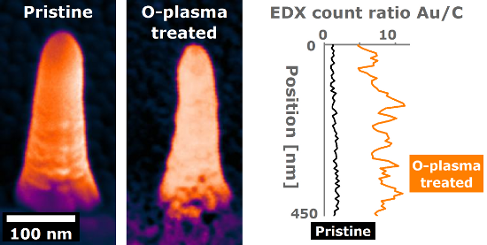
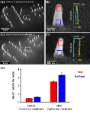
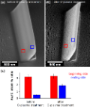
- ratio (up to 50), measuring several micrometers in height while only having ≈100 nm in diameter (Figure 1b). Transmission electron microscopy (TEM) revealed the polycrystalline nature of the NPs having 3–8 nm crystallites embedded in an amorphous matrix (Figure 1c), which seems to be a common feature of
- Au NPs produced by FEBID in non-reactive environments [38][43]. The corresponding electron diffraction pattern given in the inset of Figure 1c is consistent with polycrystalline Au, revealing interplanar distances of (2.4 ± 0.1) Å, (2.1 ± 0.1) Å, (1.4 ± 0.1) Å, and (1.2 ± 0.1) Å that correspond to
- axis (FSA) and slow scanning axis (SSA), can be adjusted relative to the gas flux vector (GFV). (b) SEM image (45° tilt) of a Au nanopillar (NP) fabricated by FEBID. (c) TEM image of a FEBID Au NP, with the corresponding electron diffraction pattern given in the inset, confirming the polycrystalline

Laser-assisted fabrication of gold nanoparticle-composed structures embedded in borosilicate glass
Beilstein J. Nanotechnol. 2017, 8, 2454–2463, doi:10.3762/bjnano.8.244
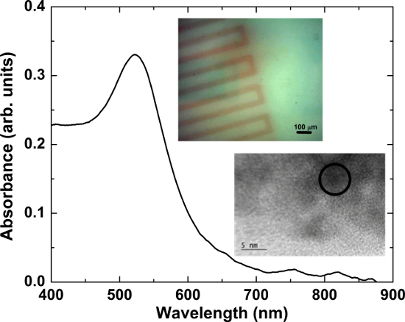
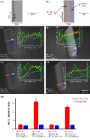
- presence of darker zones. The inset is an SEAD image taken from one of these areas; it indicated the existence of a polycrystalline structured component, while the analysis of the diffraction pattern revealed that the material was metallic gold. The high-resolution TEM image pointed to cubic phase Au


Fabrication of CeO2–MOx (M = Cu, Co, Ni) composite yolk–shell nanospheres with enhanced catalytic properties for CO oxidation
Beilstein J. Nanotechnol. 2017, 8, 2425–2437, doi:10.3762/bjnano.8.241
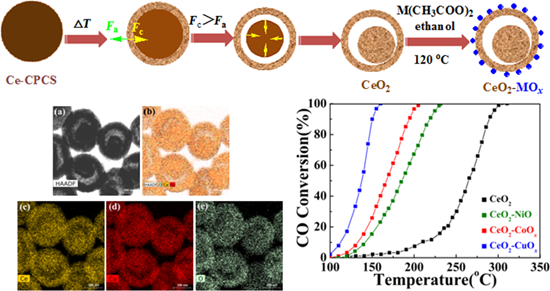
- corresponded to Cu species. In the corresponding selected-area electron diffraction (SAED) pattern in Figure 3d only the diffraction rings belonging to CeO2, indicative of a polycrystalline structure, can be recognized. This result is similar to the previously reported literature [22]. Energy-dispersive X-ray





Application of visible-light photosensitization to form alkyl-radical-derived thin films on gold
Beilstein J. Nanotechnol. 2017, 8, 1863–1877, doi:10.3762/bjnano.8.187
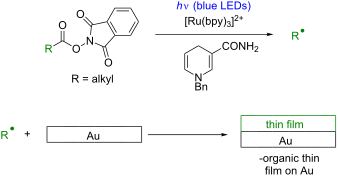
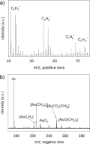
- blue LED irradiation) were duplicated. AFM data shown here and in the Supporting Information File 1 are representative. Procedure for preparation of samples for IRRAS and contact angle goniometry. Polycrystalline 100 nm Au-film-coated glass slides obtained from Platypus Technologies (catalog number Au
- procedures. The resulting thin films on Au were subjected to AFM, XPS, and TOF SIMS analysis. Alternatively, glass-backed slides consisting of polycrystalline Au were irradiated in the presence of phthalimide ester, benzyl nicotinamide and Ru(bpy)3Cl2 for a duration of 3 h. The resulting thin films were
- . Since the film coverage remained the same over a period of 6 months, this suggests that the film is highly robust. Contact angle goniometry. The wettability of both Au–Me and Au–NHBoc thin films on polycrystalline Au slides was investigated by measuring the water contact angles of freshly prepared



Laser processing of thin-film multilayer structures: comparison between a 3D thermal model and experimental results
Beilstein J. Nanotechnol. 2017, 8, 1749–1759, doi:10.3762/bjnano.8.176
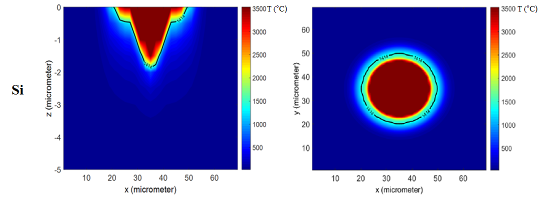
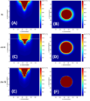
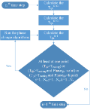
- can have many potential applications including patterning the cell growth for biomedical applications and controlling the grain size in fabrication of polycrystalline silicon (poly-Si) thin-film transistors (TFTs). Keywords: 3D transient modelling; heat transfer; laser materials processing
- interesting applications that can introduce new possibilities to the art of laser processing. One of the most interesting applications is the fabrication of polycrystalline silicon (poly-Si) thin-film transistors (TFTs). In this method, a thin film of amorphous silicon (a-Si) is deposited on a glass substrate





Methionine-mediated synthesis of magnetic nanoparticles and functionalization with gold quantum dots for theranostic applications
Beilstein J. Nanotechnol. 2017, 8, 1734–1741, doi:10.3762/bjnano.8.174
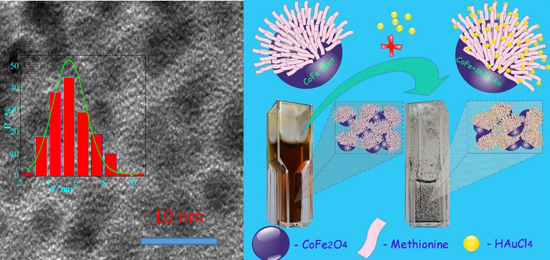
- (400), 53.45 (422), 56.97 (511) 62.59 (440), and 74.01 (533) match well with the standard polycrystalline CoFe2O4 diffraction data summarized in the PDF Card No. 00.022-1086. The average size of as-grown Nps, calculated by the Scherrer formula [26] from the (311) XRD line broadening ~ 6.0 nm, it is a


Parylene C as a versatile dielectric material for organic field-effect transistors
Beilstein J. Nanotechnol. 2017, 8, 1532–1545, doi:10.3762/bjnano.8.155
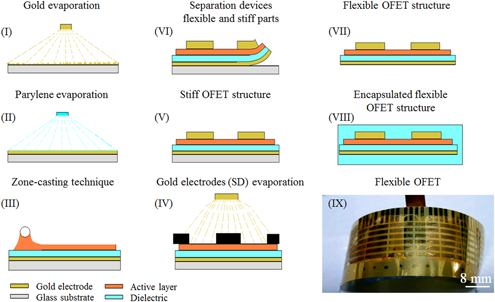
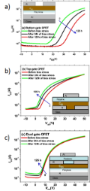
- derivatives (parylenes). Because of its unique properties described above, the latter polymer has the potential to outgrow the remaining candidates in its application as a gate dielectric in both single-crystal organic transistors and polycrystalline TFTs. One of the most cited publications in the field of




Formation of ferromagnetic molecular thin films from blends by annealing
Beilstein J. Nanotechnol. 2017, 8, 1469–1475, doi:10.3762/bjnano.8.146
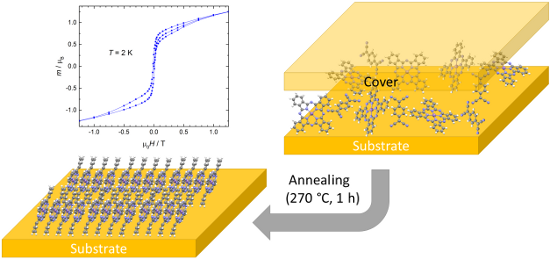
- fabrication advantages of molecular materials. The β-phase is particularly attractive for MnPc, where it leads to ferromagnetism in polycrystalline powders and single crystals [10][11]. Due to the arrangement in molecular columns with a stacking angle of 45° the Mn ion lies directly underneath a nitrogen atom



A top-down approach for fabricating three-dimensional closed hollow nanostructures with permeable thin metal walls
Beilstein J. Nanotechnol. 2017, 8, 1231–1237, doi:10.3762/bjnano.8.124
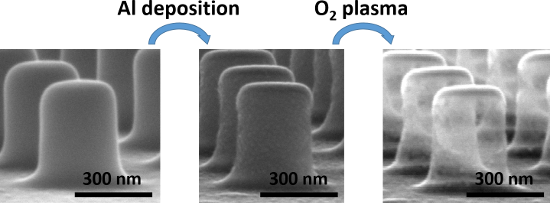
- could be considered to form the nanocages. For example, sputtering could be used to create nanometer-thick amorphous or polycrystalline films, which are expected to have pores (voids) and diffusion paths (grain boundaries). Note, however, that the sputtering technique typically leads to highly conformal


Metal oxide nanostructures: preparation, characterization and functional applications as chemical sensors
Beilstein J. Nanotechnol. 2017, 8, 1205–1217, doi:10.3762/bjnano.8.122
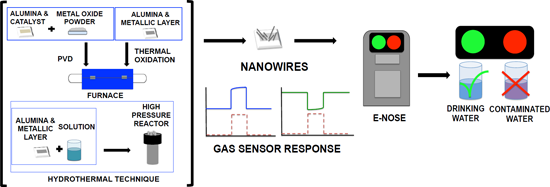
- Raman spectrum of WO3 nanowire networks. All identified peaks can be attributed to tungsten trioxide, while there is no sign of alumina (corundum) peaks related to the polycrystalline substrate. This means that tungsten oxide covers the entire substrates. More specifically, the peaks at 707 cm−1 and


Synthesis, spectroscopic characterization and thermogravimetric analysis of two series of substituted (metallo)tetraphenylporphyrins
Beilstein J. Nanotechnol. 2017, 8, 1191–1204, doi:10.3762/bjnano.8.121
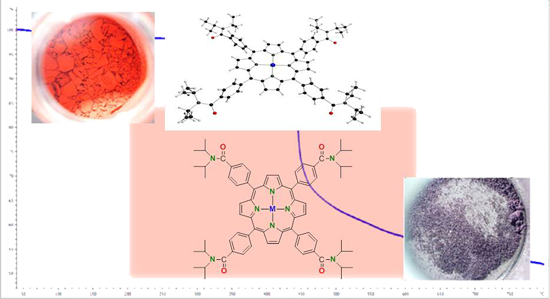
- -consuming grinding of the pure (polycrystalline) materials the IR spectra reveal the presence of water, likely due to the hygroscopic nature of the compounds and/or of KBr. In Figure 2 (2, 2a–d) and Figure 3 (3, 3a–d) the spectral region between 500 and 1800 cm−1 is displayed. Shaded areas within individual


Assembly of metallic nanoparticle arrays on glass via nanoimprinting and thin-film dewetting
Beilstein J. Nanotechnol. 2017, 8, 1049–1055, doi:10.3762/bjnano.8.106
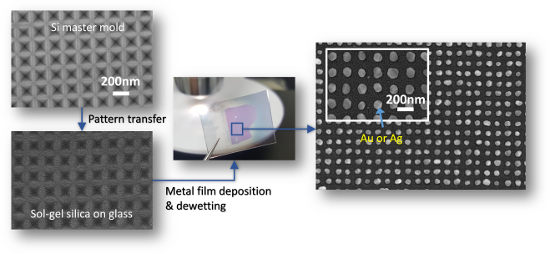
- solid-state dewetting. The dewetting processes of polycrystalline metallic films on smooth and topographic substrates are well known. On smooth substrates, solid-state dewetting of the film occurs with film thinning and hole formation at a grain boundary (GB) triple junction, followed by retraction of
- grooving and breakage of the film at the edges of the pits (or mesas) with high curvature before the film breaks at GB triple junctions [1][12][13]. This mechanism enables the formation of a single isolated particle inside the pit. If the as-deposited polycrystalline film is so thin that it has high


Investigation of growth dynamics of carbon nanotubes
Beilstein J. Nanotechnol. 2017, 8, 826–856, doi:10.3762/bjnano.8.85


Synthesis of graphene–transition metal oxide hybrid nanoparticles and their application in various fields
Beilstein J. Nanotechnol. 2017, 8, 688–714, doi:10.3762/bjnano.8.74
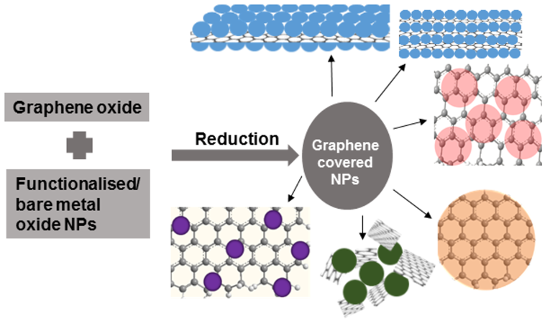
- using ambient pressure CVD on polycrystalline Ni; this was transferred to a variety of substrates like SiO2/Si or glass [36]. For the preparation of graphene–NP hybrids, bulk quantities of GSs are required. Therefore, for the synthesis of graphene–NP hybrid systems, top-down approaches have been used in
- Li2O layer. They also found that the single crystalline Fe2O3 NPs were converted to polycrystalline NPs and the delithiated product is no longer Fe2O3 but FeO. A solvothermal process is introduced to construct 3D macroscopic Fe2O3 nanocube/N-doped graphene aerogels as an anode material for LIB






Graphene functionalised by laser-ablated V2O5 for a highly sensitive NH3 sensor
Beilstein J. Nanotechnol. 2017, 8, 571–578, doi:10.3762/bjnano.8.61
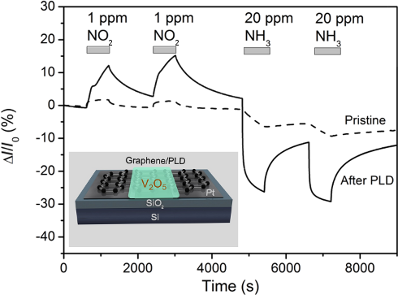
- thick polycrystalline copper foil (99.5%, Alfa Aesar) using a home-built CVD reactor. First, the foil was annealed at 1000 °C in Ar/H2 flow (both 99.999%, AGA Estonia) for 60 min, and then exposed to the mixture of 10% CH4 (99.999%, AGA Estonia) in Ar at the same temperature for 120 min. The sample was


Formation and shape-control of hierarchical cobalt nanostructures using quaternary ammonium salts in aqueous media
Beilstein J. Nanotechnol. 2017, 8, 494–505, doi:10.3762/bjnano.8.53
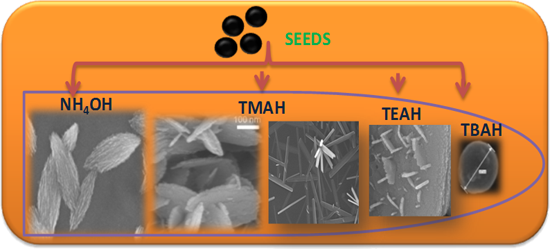
- of ammonium hydroxide is a significant novelty in the growth of these nanostructures. A high-resolution image of a nanorod shows grain boundaries (Figure 7a) of aggregating nanoparticles and indicates the polycrystalline nature of nanorods. A lattice spacing of 0.20 nm corresponding to the hcp Co(002
- polycrystalline themselves, while the primary particles in the formation of nanoplates are single-crystalline. The thickness of the nanoplates is limited to two particles (size of monomers ca. 15 nm). The above discussion describes the similarity in the growth direction of nanoplates and nanorods. In both
- the XPS spectrum shown in Figure S7 (Supporting Information File 1). Oxide formation was inevitable since the analyses required drying or separation of cobalt nanoparticles that might lead to interactions of the surfactant with metal surfaces [46]. Polycrystalline nanorods show a higher value of Ms


Advances in the fabrication of graphene transistors on flexible substrates
Beilstein J. Nanotechnol. 2017, 8, 467–474, doi:10.3762/bjnano.8.50
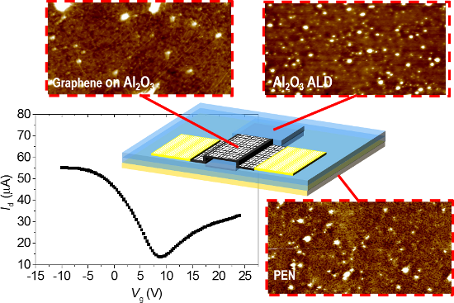
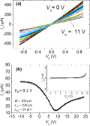
- graphene. In particular, it is expected that the polycrystalline nature of CVD graphene has a direct effect on the current transport in a large area channel. In addition to these natural defects originating from CVD growth, the graphene membrane is subjected to significant strain if transferred to a rough



Role of oxygen in wetting of copper nanoparticles on silicon surfaces at elevated temperature
Beilstein J. Nanotechnol. 2017, 8, 425–433, doi:10.3762/bjnano.8.45
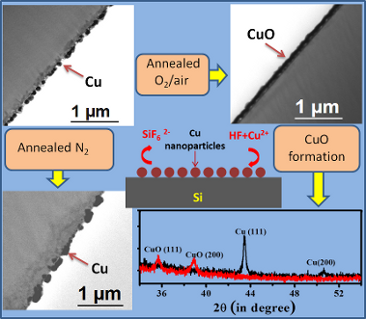
- crystal silicon and the ring patterns (indexed in green) are from polycrystalline Cu, Cu2O or CuO. X-ray diffraction pattern for the (a) as-deposited copper nanoparticles on silicon substrate and (b) when the copper nanoparticle substrate is annealed under oxygen at 500 °C for 1 min. (a),(b) Cross


Methods for preparing polymer-decorated single exchange-biased magnetic nanoparticles for application in flexible polymer-based films
Beilstein J. Nanotechnol. 2017, 8, 408–417, doi:10.3762/bjnano.8.43
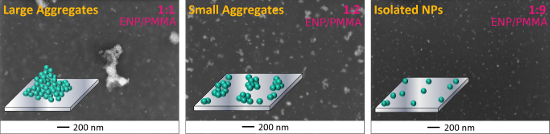
- perfectly epitaxial fashion with an antiferromagnetic CoO polycrystalline shell about 1 nm thick, as described in previous work [16]. We then controlled their surface functionality to tentatively design well-tailored nano-building-blocks for the aforementioned devices. To reduce mutual magnetic attraction


Template-controlled piezoactivity of ZnO thin films grown via a bioinspired approach
Beilstein J. Nanotechnol. 2017, 8, 296–303, doi:10.3762/bjnano.8.32
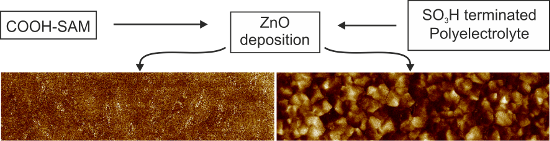
- the coupling of the materials response in the z-direction to an electric field applied in the same direction [7]. For piezoactive, polycrystalline ZnO thin films it is therefore essential that most of the crystallites are oriented in the same way. This means a (002) texture is formed resulting in a
- composite nacre with its remarkable mechanical stability [37]. The growth of the inorganic, polycrystalline aragonite platelets is directed by biopolymers. This organic template leads to oriented attachment of the CaCO3 crystallites so that a preferred orientation along the c-axis arises [38]. According to


Influence of hydrofluoric acid treatment on electroless deposition of Au clusters
Beilstein J. Nanotechnol. 2017, 8, 183–189, doi:10.3762/bjnano.8.19
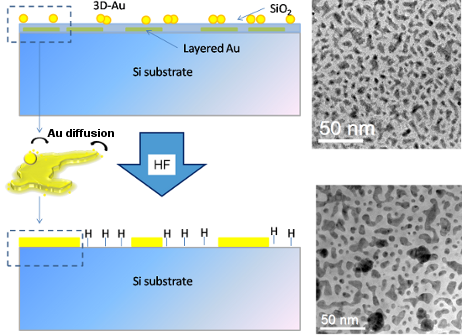
- silicon. The SAED and the XRD measurements showed a pronounced heteroepitaxial component but also a polycrystalline phase for Au on Si(100) obtained by galvanic displacement. The layered gold regions could be altered by means of postdeposition HF treatments. TEM observations and XRD analysis showed that


Nitrogen-doped twisted graphene grown on copper by atmospheric pressure CVD from a decane precursor
Beilstein J. Nanotechnol. 2017, 8, 145–158, doi:10.3762/bjnano.8.15
- with a 14 mm diameter tubular quartz reactor was employed for the experiment. Polycrystalline copper foil (99.9% purity, proved by the EDX study) with a thickness of 60 μm was used as the catalyst. Prior to the APCVD, the foil was electrochemically polished for 5 min in 1 M phosphoric acid at a bias
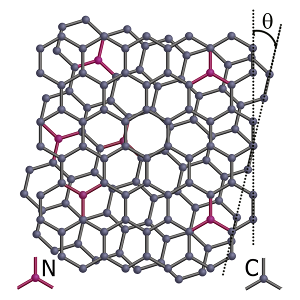
- wavelengths. Such a difference can be reasonably explained by the presence of nitrogen in the graphene structure (as confirmed by XPS) and the accompanying stress or polycrystalline nature of the studied thin film. Actually, both factors lead to the decrease of the ratio intensity. It is worth highlighting


Nanocrystalline TiO2/SnO2 heterostructures for gas sensing
Beilstein J. Nanotechnol. 2017, 8, 108–122, doi:10.3762/bjnano.8.12
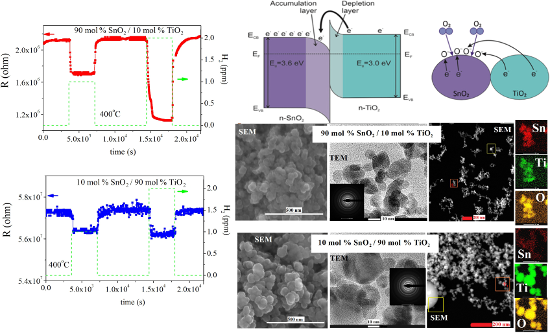
- . In our previous work [1] one can find an analysis of TiO2–SnO2 in the form of polycrystalline ceramics and rf-sputtered thin films upon interaction with H2 but not much is known in the case of nanomaterials. Since that time we have focused on commercial TiO2 and SnO2 starting nanomaterials for the
- grains well dispersed within the primary SnO2 cassiterite phase cannot be excluded. The influence of 10 mol % SnO2 in TiO2 on the XRD pattern (Figure 2b) is much more pronounced. As observed previously for polycrystalline ceramics and thin films [1], even a relatively small amount of SnO2 in TiO2 results




Annealing-induced recovery of indents in thin Au(Fe) bilayer films
Beilstein J. Nanotechnol. 2016, 7, 2088–2099, doi:10.3762/bjnano.7.199
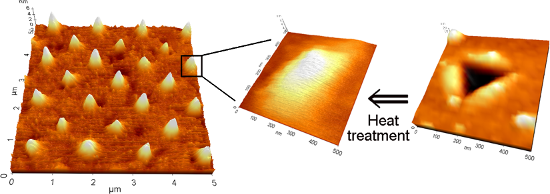
- several micrometers. In the case of the thicker films studied in the present work (the total thickness is 50 nm), the average grain size was comparable to the film thickness (Figure 1a). Triple junctions are clearly observed between the majority of grains, which is typical of a polycrystalline film. The
- results of the present study, the following conclusions can be drawn: Thin polycrystalline Au(Fe) films on basal-plane oriented sapphire substrates were produced by electron beam deposition. The films exhibited a strong [111] texture and all grain boundaries were either of the near-Σ3<111> tilt, or of the