


Search results
Search for "wettability" in Full Text gives 127 result(s) in Beilstein Journal of Nanotechnology.
Superhydrophobicity in perfection: the outstanding properties of the lotus leaf
Beilstein J. Nanotechnol. 2011, 2, 152–161, doi:10.3762/bjnano.2.19
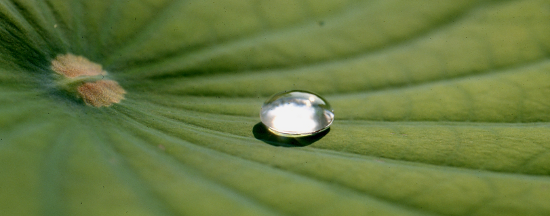
- with contact angles >150° and their surface morphologies. Many studies, in which the properties of lotus leaves were compared with those of other superhydrophobic plants, have shown the superiority of the upper side of the lotus leaf. A standard tool for the determination of wettability or water
- . Only the lotus leaves showed no significant loss of water repellency when water vapour condensed on the surface of the cooled samples at 5 °C. Wagner et al. (2003) [9] examined the morphology of the epidermal structures and the wettability with liquids of varying surface tension such as methanol–water
- mixtures. They reported the lowest wettability by these liquids for the lotus leaves in comparison to other species. They also described the unique shape of the papillae and a very high papillae density (number per area). Chemical analyses [10] and crystal structure analysis by X-ray diffraction [11







Review of "Contact Mechanics and Friction: Physical Principles and Applications" by Valentin L. Popov
Beilstein J. Nanotechnol. 2011, 2, 57–58, doi:10.3762/bjnano.2.7

- contact problem in biology see [4]). Biological and technical systems have many common features. First, the mechanical interaction occurs on identical length and force scales [5]. In both types of systems, surface properties – for example wettability, microstructure or surface chemistry – have a strong
Other Beilstein-Institut Open Science Activities



