Search results
Search for "adhesion" in Full Text gives 472 result(s) in Beilstein Journal of Nanotechnology. Showing first 200.
A review on nanostructured silver as a basic ingredient in medicine: physicochemical parameters and characterization
Beilstein J. Nanotechnol. 2021, 12, 440–461, doi:10.3762/bjnano.12.36
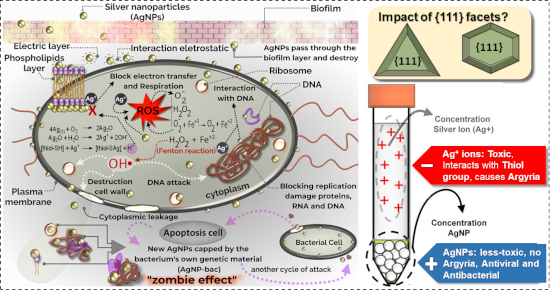
- in the manufacture of medical devices to prevent adhesion, colonization, and formation of microbial biofilms on the surfaces of these devices. Moreover, the history of AgNPs as a broad spectrum microbicidal agent places it as a viable candidate to be one of the basic ingredients of antibiotics to be
- binding between the virus and the host cell [109]. A viral infection begins with the adhesion or binding of the virus to the host receptors, followed by penetration, replication, and budding. The main antiviral strategies are to effectively block the binding of the virus to the host receptors (i.e, the


The impact of molecular tumor profiling on the design strategies for targeting myeloid leukemia and EGFR/CD44-positive solid tumors
Beilstein J. Nanotechnol. 2021, 12, 375–401, doi:10.3762/bjnano.12.31
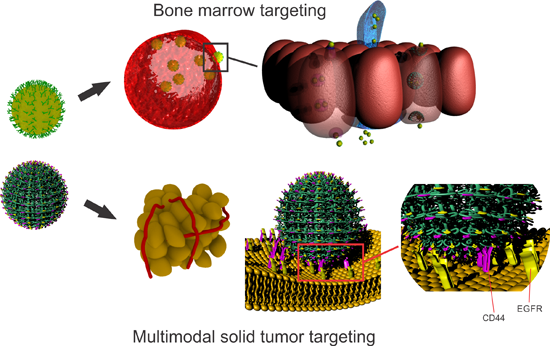
- , acquiring this targeted approach could enable the employment of higher doses that will result in a more effective therapy with fewer side effects. In vivo imaging of the epithelium of BM blood vessels revealed that the vasculature expresses the adhesion molecule E-selectin and the chemoattractant stromal


The nanomorphology of cell surfaces of adhered osteoblasts
Beilstein J. Nanotechnol. 2021, 12, 242–256, doi:10.3762/bjnano.12.20
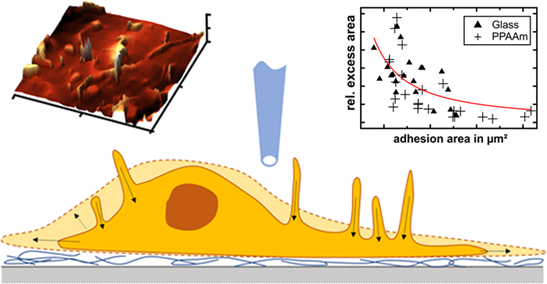
- micrometers down to the nanometer scale. The cell surface plays a particularly important role. Electric signaling, including information processing, takes place at the membrane, as well as adhesion and contact. For osteoblasts, adhesion and spreading are crucial processes with regard to bone implants. Here we
- characteristic membrane protrusions. They contribute to the overall surface corrugation, which we systematically study by introducing the relative 3D excess area as a function of the projected adhesion area. A clear anticorrelation between the two parameters is found upon analysis of ca. 40 different cells on
- capability of apical membrane features and fluctuation dynamics in aiding the assessment of adhesion and migration properties on a single-cell basis. Keywords: cell adhesion; membrane fluctuations; osteoblast; plasma membrane nanomorphology; scanning ion conductance microscopy (SICM); Introduction


Bulk chemical composition contrast from attractive forces in AFM force spectroscopy
Beilstein J. Nanotechnol. 2021, 12, 58–71, doi:10.3762/bjnano.12.5
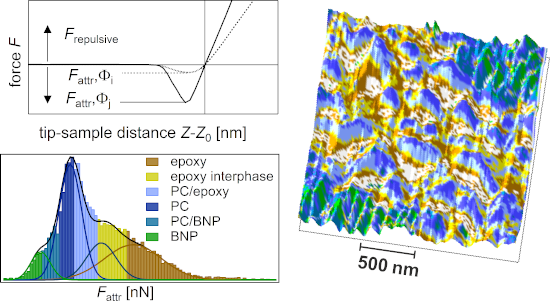
- used to identify the local chemical composition [31]. The attractive forces are acting on the AFM tip during the approach of the tip towards the sample surface (not to be confused with the adhesion force Fadh needed to separate the tip and the sample upon retraction). These attractive forces are highly
- is reached again (only shown in Figure 1b, blue dashed line). In this study, only the approach part of the acquired curves is considered and evaluated. Hence, only attractive forces from the approach part are evaluated, which are not identical to the adhesion forces, dominated by the force needed to


Nanomechanics of few-layer materials: do individual layers slide upon folding?
Beilstein J. Nanotechnol. 2020, 11, 1801–1808, doi:10.3762/bjnano.11.162
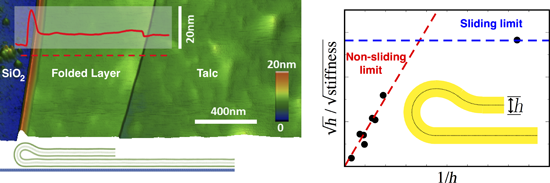
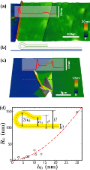
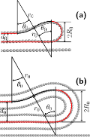
- materials, also called “2D materials”, after exfoliation, eventually creating folded edges across the resulting flakes. We investigate the adhesion and flexural properties of single-layered and multilayered 2D materials upon folding in the present work. This is accomplished by measuring and modeling
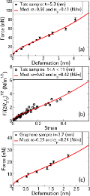
- obtained interlayer adhesion energy for graphene (0.25 N/m) and talc (0.62 N/m) is in good agreement with recent experimental results and theoretical predictions. The obtained value for the adhesion energy of graphene on a silicon substrate is also in agreement with previous results. Keywords: analytical
- all those cases, the interlayer adhesion energy (α), the substrate adhesion energy (αs), and the bending stiffness (κ) govern folding, sliding, and wrinkling of 2D materials, which are ultimately responsible for those unusual kinds of behavior. α is intimately related to tribological properties of

![[Graphic 5]](/bjnano/content/inline/2190-4286-11-162-i8.svg?max-width=637&scale=1.18182) =
= ![[Graphic 6]](/bjnano/content/inline/2190-4286-11-162-i9.svg?max-width=637&scale=1.18182) as a function of 1/h for the nine measured talc samples. h is a directly measured ...
as a function of 1/h for the nine measured talc samples. h is a directly measured ...
Application of contact-resonance AFM methods to polymer samples
Beilstein J. Nanotechnol. 2020, 11, 1714–1727, doi:10.3762/bjnano.11.154
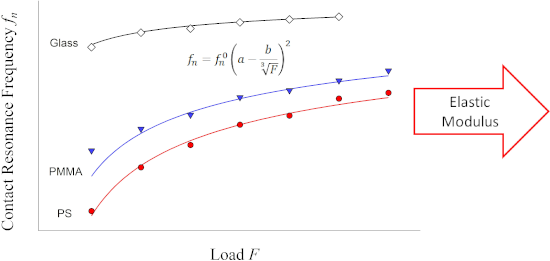
- , hence, can be used to calculate fn(α) analytically. Since Equation 12 can be inverted analytically, it is useful to express the contact stiffness as a function of the static load F. For a spherical or a paraboloidal tip and for a homogeneous sample, if sample adhesion to the AFM tip is negligible, that
- definitely too low for glass. As shown in this example, the proportionality between α and can be used to test values of γ, provided measurements are performed on homogeneous samples that are deformed only elastically and exhibit small adhesion, that is, the deformation of which can be described by Hertz
- ) The sample is described by Hertz theory, that is, plastic deformations, viscoelastic behavior, and adhesion are neglected [3][40]. Yet, adhesion has been shown to be indeed negligible for measurements on polymers such as PS and PMMA with a customary AFM tip [3]. (3) The description of the cantilever
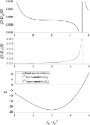


Seebeck coefficient of silicon nanowire forests doped by thermal diffusion
Beilstein J. Nanotechnol. 2020, 11, 1707–1713, doi:10.3762/bjnano.11.153
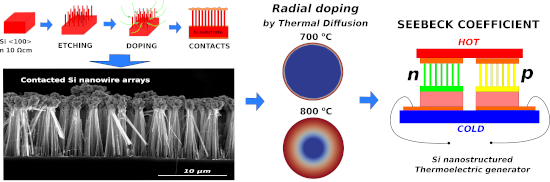
- publication [18]. At first, a Cr (for adhesion)/Cu double metal layer has been deposited by thermal evaporation both on top of the nanowires and on the other side of the silicon wafer, that is, at the bottom of the substrate. The Cu layer on the top has been used as a seed for the electrodeposition of copper


Cardiomyocyte uptake mechanism of a hydroxyapatite nanoparticle mediated gene delivery system
Beilstein J. Nanotechnol. 2020, 11, 1685–1692, doi:10.3762/bjnano.11.150
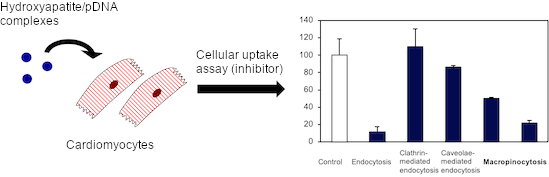
- 25 μg/mL fibronectin solution (Wako) prepared in a 0.02% gelatin solution (Wako) in order to increase cell adhesion. The cells were grown in a humidified incubator at 37 °C containing 5% CO2. Cytotoxicity assay The cytotoxicity of HAp/pDNA complexes or endocytosis inhibitors was verified by an MTT


Oxidation of Au/Ag films by oxygen plasma: phase separation and generation of nanoporosity
Beilstein J. Nanotechnol. 2020, 11, 1608–1614, doi:10.3762/bjnano.11.143
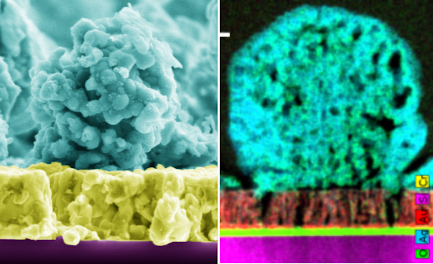
- speed and no intentional heating was applied to the substrate during the procedure. To ensure a proper adhesion of the Au/Ag alloy films, prior to each deposition a ≈100 nm thick chromium layer was deposited by sputtering of a chromium target (99.99% in purity), under pure argon atmosphere at 10 mT, for


Wafer-level integration of self-aligned high aspect ratio silicon 3D structures using the MACE method with Au, Pd, Pt, Cu, and Ir
Beilstein J. Nanotechnol. 2020, 11, 1439–1449, doi:10.3762/bjnano.11.128
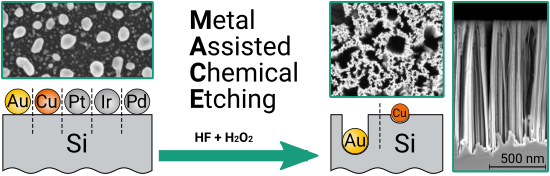
- main etching mechanism remains the same. However, these structures stick together at the topmost point. The nanostructure bundles form during the drying process. This occurs when the capillary forces during drying are high enough to cluster neighbouring single Si wires, and the adhesion force of the


Photothermally active nanoparticles as a promising tool for eliminating bacteria and biofilms
Beilstein J. Nanotechnol. 2020, 11, 1134–1146, doi:10.3762/bjnano.11.98
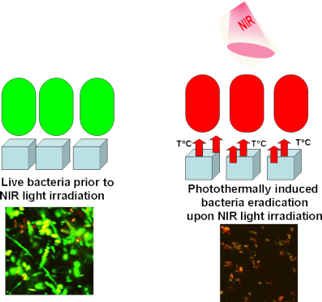
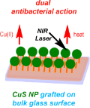
- of 0.25 W/cm2 at 808 nm, lower than the ANSI limits) and the intrinsic nanochemical Ag NP bactericidal effect was observed. In order to combat bacterial adhesion and proliferation, recent techniques have been developed to functionalize photothermally active monolayers of gold nanostars on glass with


Thermophoretic tweezers for single nanoparticle manipulation
Beilstein J. Nanotechnol. 2020, 11, 1126–1133, doi:10.3762/bjnano.11.97
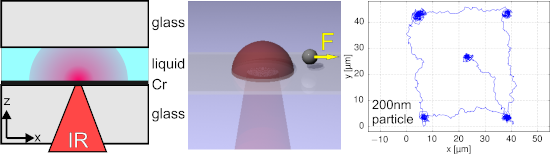
- with an aqueous solution of bovine serum albumin (Sigma-Aldrich) and washed to prevent nanoparticle adhesion to the glass. A collimated IR laser beam (Compass 1064-2500MN, Coherent, λ = 1064 nm) is deflected with a pair of acousto-optic deflectors (AODs). AODs enable the simultaneous generation of


A 3D-polyphenylalanine network inside porous alumina: Synthesis and characterization of an inorganic–organic composite membrane
Beilstein J. Nanotechnol. 2020, 11, 938–951, doi:10.3762/bjnano.11.78
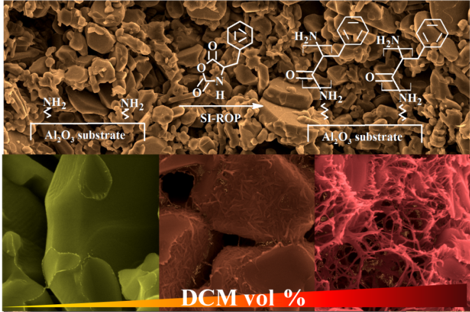
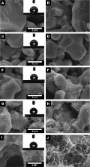
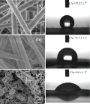
- ), the model of Wenzel can be applied [55][56][57]. Here we assume a relatively high fraction, f, because no roll off angles or high adhesion properties of the water droplets are observed (see Supporting Information File 1, Figure S5). The morphology of the polymer structure within the pore volume is




Integrated photonics multi-waveguide devices for optical trapping and Raman spectroscopy: design, fabrication and performance demonstration
Beilstein J. Nanotechnol. 2020, 11, 829–842, doi:10.3762/bjnano.11.68
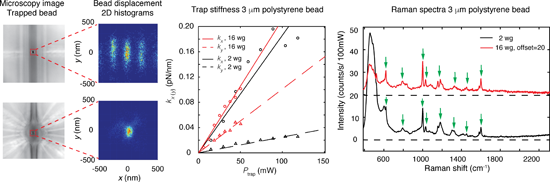
- microbath. After dicing of the wafer, a millimeter-scale macrobath is created on each chip by placing a 100 µm thick imaging spacer (Biolink Relink 1300) with a 4.0 mm hole. The adhesion strength of the top and bottom surface of the image spacer are different. The weaker adhesive is affixed to the chip to


Quantitative determination of the interaction potential between two surfaces using frequency-modulated atomic force microscopy
Beilstein J. Nanotechnol. 2020, 11, 729–739, doi:10.3762/bjnano.11.60
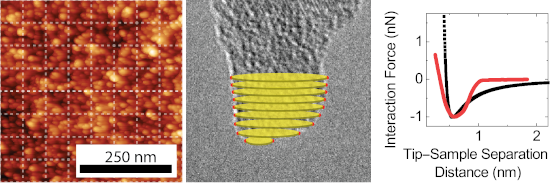
- . It also determines interfacial properties, such as adhesion and friction, and is a key input into mechanics models and atomistic simulations of contacts. We have developed a novel methodology to experimentally determine interaction potential parameters, given a particular potential form, using
- then compared to experimental results. The method is demonstrated here using a silicon AFM probe with its native oxide and a diamond sample. Assuming the 6-12 Lennard-Jones potential form, best-fit values for the work of adhesion (Wadh) and range of adhesion (z0) parameters were determined to be 80
- separation distances. This methodology represents the first experimental technique in which material interaction potential parameters were verified over a range of tip–sample separation distances for a tip apex of arbitrary geometry. Keywords: adhesion; atomic force microscopy; diamond; frequency-modulated


Structural optical and electrical properties of a transparent conductive ITO/Al–Ag/ITO multilayer contact
Beilstein J. Nanotechnol. 2020, 11, 695–702, doi:10.3762/bjnano.11.57
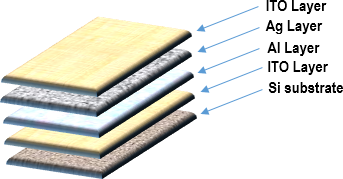
- improve the transport from the lower to the upper part of the device [9]. The good adhesion, low resistivity, and the stability against oxidation and corrosion of Al films make them suitable for application in optical and electronic devices [18][19][20]. The low resistivity and relatively high
- transmittance (compared to other metals) in the visible region of Ag thin films at room temperature led to the wide use of Ag layers in ITO multilayer contacts [21][22][23][24]. However, Ag thin films agglomerate upon annealing due to low adhesion, which degrades the quality of the films [25]. This issue can be
- overcome by adding a thin layer of Al, Au, Pd, or Cr to the Ag film to improve the adhesion [4][25][26]. Optical and electrical properties of ITO films are enhanced by post-deposition annealing especially at high temperatures [7]. Gulen et al. [27] exposed pure ITO films deposited by sputtering to heat


Preparation, characterization and photocatalytic performance of heterostructured CuO–ZnO-loaded composite nanofiber membranes
Beilstein J. Nanotechnol. 2020, 11, 631–650, doi:10.3762/bjnano.11.50
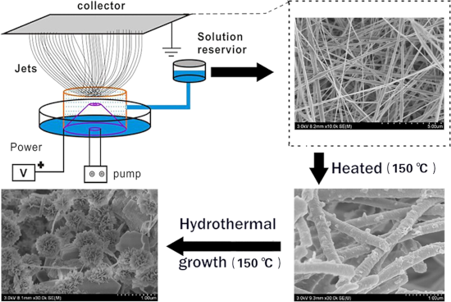
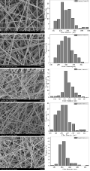
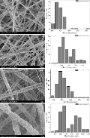
- temperature reached 180 °C, the tensile strength of the CNFMs increased suddenly because of the increased adhesion between nanofibers resulting from the almost complete melting of PVDF. In addition, as the heat-treatment temperature increases, the ductility of PVDF increases, resulting in a higher elongation











Identification of physicochemical properties that modulate nanoparticle aggregation in blood
Beilstein J. Nanotechnol. 2020, 11, 550–567, doi:10.3762/bjnano.11.44
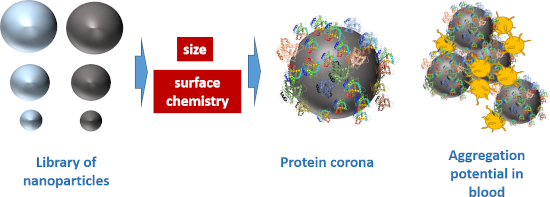
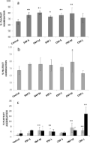
- purpose of investigating the role of surface curvature and chemistry on platelet aggregation, activation and adhesion. Substantial differences were found in the composition of the protein corona depending on the chemical nature of the nanoparticles, while the surface curvature was found to play a minor
- surface (platelet translocation distance), the number of platelets that stably adhered to the VWF-coated surface (static platelets), and the percent surface coverage on the final frame (percentage of platelet surface coverage). For this study we only considered the platelet adhesion parameters. Results
- . Platelet adhesion Activated platelets are physiologically programmed to adhere to the endothelial wall of damaged blood vessels. The VWF anchored to damaged endothelial cells plays a major role in this process, encouraging platelets to tether, roll and finally adhere at the site of damage. Dynamic platelet




Multilayer capsules made of weak polyelectrolytes: a review on the preparation, functionalization and applications in drug delivery
Beilstein J. Nanotechnol. 2020, 11, 508–532, doi:10.3762/bjnano.11.41
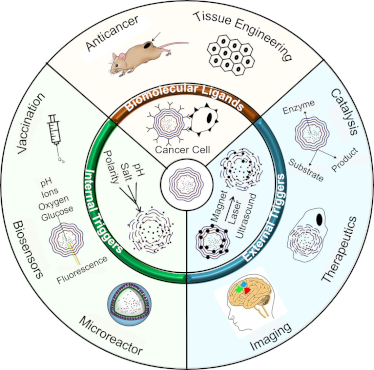
- application in implants or tissue engineering. Another strategy for biomolecular functionalization is covalently linking the receptor specific ligands to one of the layer components that are known to interact with cancer cell receptors. For instance, the improved cell adhesion and proliferation was observed


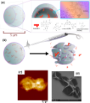

Poly(1-vinylimidazole) polyplexes as novel therapeutic gene carriers for lung cancer therapy
Beilstein J. Nanotechnol. 2020, 11, 354–369, doi:10.3762/bjnano.11.26
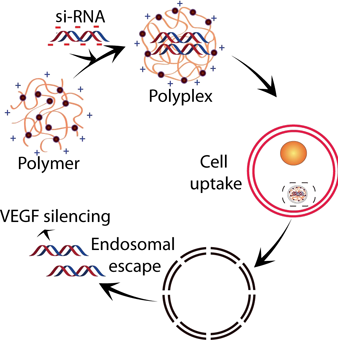
- retard spheroid and stroma formation. VEGF signaling has been connected to an activation of focal adhesion kinases and paxillin leading to cell morphology changes promoting migration [30]. Therefore, the inhibition of VEGF leads to a reduction in the formation of cell–cell junctions that are a primer for
- formation in the cells clearly indicating the effect of VEGF inhibition. Earlier studies have shown that VEGF binds to α9β1 integrin on the cell surface, which mediates the formation and migration of endothelial cells through Src and focal adhesion kinase [34]. Therefore, the silencing of VEGF retards tube


Interactions at the cell membrane and pathways of internalization of nano-sized materials for nanomedicine
Beilstein J. Nanotechnol. 2020, 11, 338–353, doi:10.3762/bjnano.11.25
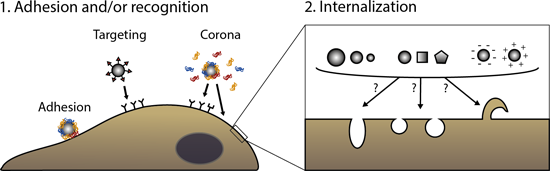
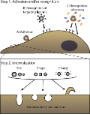
- current understanding of the initial steps in the interactions of nano-sized materials with cells in relation to nanomedicine applications. In particular, we focus on the difficult interplay between the initial adhesion of nano-sized materials to the cell surface, the potential recognition by cell
- description of the known endocytic pathways in cells. Review 1 Interactions of nano-sized materials at the cell surface and recognition by cell receptors 1.1 Active targeting The first steps in nanoparticle–cell interactions are those happening at the cell surface, including the adhesion of nanoparticles to
- unspecific uptake), possibly triggered by the nano-sized object itself (Figure 2C). Another possibility is that the recognition by cell receptors is involved only in the initial adhesion to the cell membrane, but not in the internalization (Figure 2D). A combination of all these different possibilities may


Understanding nanoparticle flow with a new in vitro experimental and computational approach using hydrogel channels
Beilstein J. Nanotechnol. 2020, 11, 296–309, doi:10.3762/bjnano.11.22
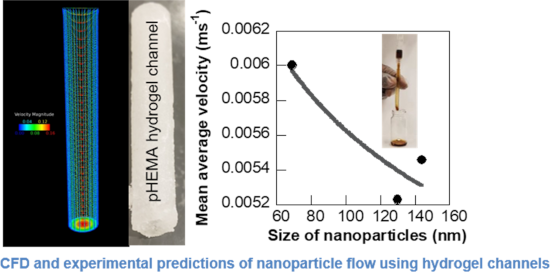
- transvascular transport through vascular networks of varying dimensions within the body, before reaching the action site [7][8][9]. It is increasingly complex to predict the flow properties of NP-based drug delivery system such as the local velocity and adhesion of the NPs in vivo. If we can predict the flow
- and interaction, e.g., adhesion or deposition, of the NPs through in vitro techniques, it will significantly enhance the preclinical to clinical translation of NP-based drugs from the current success rate of 8% [10]. Currently, preclinical assessment of NP drug delivery systems relies on animal models
- equation for flow [30][31]. Fullstone et al. have used CFD in couple with flexible large-scale agent based modeling to predict NP distributions in vivo [32]. The size and shape of the NPs greatly influenced the adhesion and path of NPs within the vascular network. This CFD model predicted a higher


Rational design of block copolymer self-assemblies in photodynamic therapy
Beilstein J. Nanotechnol. 2020, 11, 180–212, doi:10.3762/bjnano.11.15
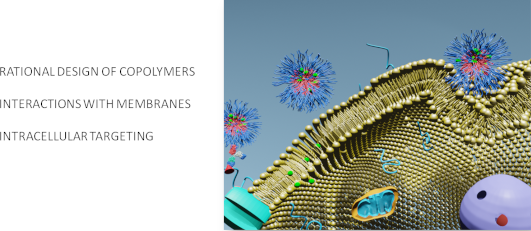
- proteins and adhesion to cells [108][109]. A hydrophobic cargo, well within the hydrophobic core is thus protected from hydrolysis and enzymatic degradation. Besides, PEO prevents the recognition from the mononuclear phagocyte system and preliminary clearance from the bloodstream is reduced. Although PEO






Size effects of graphene nanoplatelets on the properties of high-density polyethylene nanocomposites: morphological, thermal, electrical, and mechanical characterization
Beilstein J. Nanotechnol. 2020, 11, 167–179, doi:10.3762/bjnano.11.14
- HDPE/GnP nanocomposites. The Young’s moduli of the nanocomposites increased with increasing GnP loading, regardless of the GnP size. This may have been due to the extraordinary Young’s moduli of GnPs, their high aspect ratio, good dispersion, and good interfacial adhesion between GnPs and HDPE, which


Nonclassical dynamic modeling of nano/microparticles during nanomanipulation processes
Beilstein J. Nanotechnol. 2020, 11, 147–166, doi:10.3762/bjnano.11.13
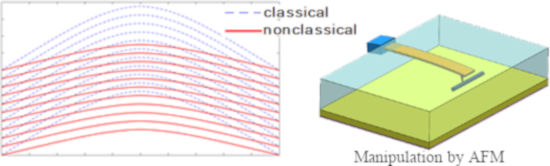
- dynamics simulation and a multiscale approach, Korayem et al. investigated geometrical effects on the manipulation of carbon allotropes [24]. Ghattan Kashani et al. presented a new method to overcome the adhesion force between the tip and nanoparticle while releasing the nanoparticle. They created the
- critical time and force of the dominant motion mode are used as the inputs of next steps. After applying the exerted force on the nanoparticle by AFM and distributed resistant force resulting from friction and adhesion, deflections of the cylindrical nanoparticle before the onset of motion in the dominant
- the adhesion contact in particle and substrate contact area. After the initial contact between the tip and nanoparticle is made, the AFM cantilever begins to deform, and by substrate motion, the particle moves with the substrate (in stick mode). This results in the increase of applied force from the