


Search results
Search for "alumina" in Full Text gives 157 result(s) in Beilstein Journal of Nanotechnology.
Ceria/silicon carbide core–shell materials prepared by miniemulsion technique
Beilstein J. Nanotechnol. 2011, 2, 638–644, doi:10.3762/bjnano.2.67
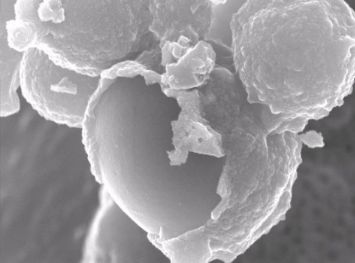
- nanosized [26] silicon carbide are becoming increasingly interesting. There are several reports in literature showing that these materials are able to compete with supports such as alumina, silica or activated carbons, particularly in exothermic reactions [27][28][29][30]. In particular, the use of


Formation of precise 2D Au particle arrays via thermally induced dewetting on pre-patterned substrates
Beilstein J. Nanotechnol. 2011, 2, 318–326, doi:10.3762/bjnano.2.37
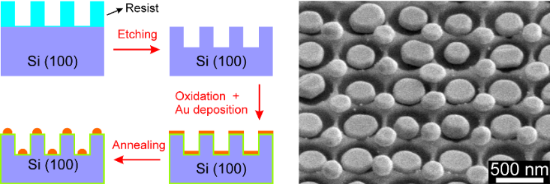
- annealing at 900 °C [11]. Elsewhere, a 2D ordered Au nanoparticle array was formed on a nano-hole patterned substrate via electron-beam-induced dewetting of the Au thin film [25]. Ripple patterned SiO2 substrates [35] and stepped alumina substrates [36] also led to the formation of metallic nanoparticle





Recrystallization of tubules from natural lotus (Nelumbo nucifera) wax on a Au(111) surface
Beilstein J. Nanotechnol. 2011, 2, 261–267, doi:10.3762/bjnano.2.30
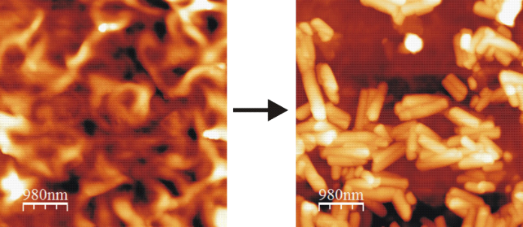
- HOPG (non-polar) to horizontally oriented tubules on polar substrates, e.g., silicon, alumina, or glass, they concluded that surface polarity is responsible for tubule orientation. They also demonstrated an increase in the hydrophobicity of the HOPG surface covered with tubules by measuring the contact
- parallel orientation of tubules on a number of different substrates, e.g., polyethylene, polypropylene, Teflon, alumina, mica, glass, etc. However, they applied a larger volume of solution of 50–250 µL (10 mg·mL−1) which effectively masks any effect of the substrate. A more recent study by Koch et al. [9
- ] demonstrated the effect of substrate polarity on the tubule growth by showing a vertical orientation on HOPG and a horizontal orientation on silicon and alumina. However, in our study by combining various properties (e.g., polarity, crystallinity) together at two different surfaces we have demonstrated that


Microfluidic anodization of aluminum films for the fabrication of nanoporous lipid bilayer support structures
Beilstein J. Nanotechnol. 2011, 2, 104–109, doi:10.3762/bjnano.2.12
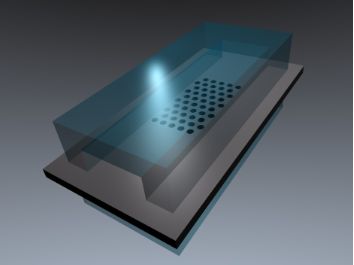
- membranes show great potential as support structures for biointerfaces. In this paper, we present a technique for fabricating nanoporous alumina membranes under constant-flow conditions in a microfluidic environment. This approach allows the direct integration of the fabrication process into a microfluidic
- monitored by impedance spectroscopy across the nanoporous alumina membrane in real-time. Our approach offers a simple and efficient methodology to investigate the activity of transmembrane proteins or ion diffusion across membrane bilayers. Keywords: anodization; lipid bilayer; microfluidics
- ; nanofabrication; nanoporous alumina; Introduction In recent years nanoporous alumina membranes have gained increased attention for technical and biological applications due to their versatile implementation as biointerfaces and ease of fabrication [1][2][3][4][5][6][7][8]. Their applications range from serving


Electrochemical behavior of dye-linked L-proline dehydrogenase on glassy carbon electrodes modified by multi-walled carbon nanotubes
Beilstein J. Nanotechnol. 2010, 1, 135–141, doi:10.3762/bjnano.1.16
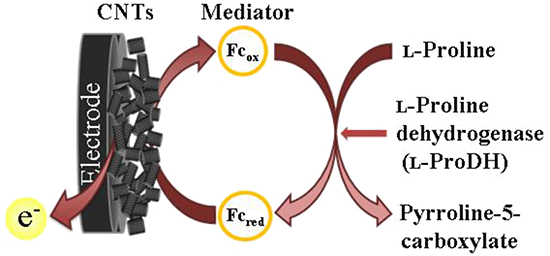
- electrode, a platinum wire as the counter electrode and Ag/AgCl (3 M NaCl) as the reference electrode. The GC electrodes were finely polished by 1.0 μm and 0.05 μm alumina, and cleaned by ultrasonication in Milli-Q water for 30 s before modification. Enzyme assay Recombinant dye-linked L-proDH, from


Flash laser annealing for controlling size and shape of magnetic alloy nanoparticles
Beilstein J. Nanotechnol. 2010, 1, 55–59, doi:10.3762/bjnano.1.7
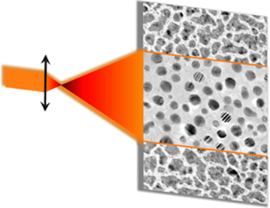
- pulsed laser beam, without changing the NPs composition. These developments open up a new way to design magnetic alloys NPs with ideal morphologies and size for magnetic studies and applications. Results and Discussion CoPt NP thin films on amorphous alumina (a-Al2O3) were produced by pulsed laser


Enhanced visible light photocatalysis through fast crystallization of zinc oxide nanorods
Beilstein J. Nanotechnol. 2010, 1, 14–20, doi:10.3762/bjnano.1.3
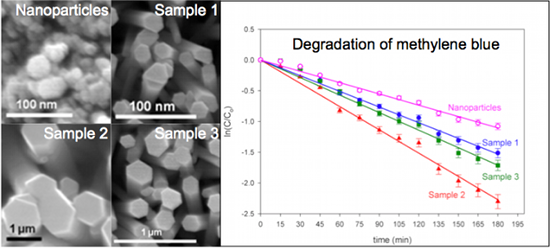
- during synthesis is an attractive option for visible light photocatalysis and further results with different pollutants will be presented in succeeding reports. ZnO, apart from having specific structural properties, can also be grown on any type of substrates, such as glass, alumina, polyethylene


Other Beilstein-Institut Open Science Activities



