


Search results
Search for "animals" in Full Text gives 158 result(s) in Beilstein Journal of Nanotechnology.
A catechol biosensor based on electrospun carbon nanofibers
Beilstein J. Nanotechnol. 2014, 5, 346–354, doi:10.3762/bjnano.5.39
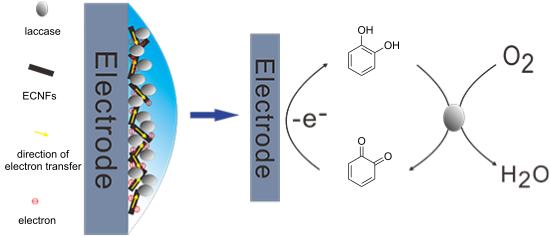
- electrocatalytic properties. However, it is rarely reported that ECNFs were utilized directly in the design of enzyme-based biosensors. Phenolic compounds, which widely occur in processes of agriculture and industry, often cause severe health problems in human beings and animals [28]. So it is important to develop


Cytotoxic and proinflammatory effects of PVP-coated silver nanoparticles after intratracheal instillation in rats
Beilstein J. Nanotechnol. 2013, 4, 933–940, doi:10.3762/bjnano.4.105
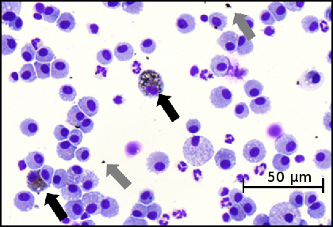
- toxicity, but only at rather high concentrations. Experimental Animals Female Wistar–Kyoto rats (WKY/Kyo@Rj rats, Janvier, Le Genest Saint Isle, France), 8–10 weeks of age (approx. 250 g body weight), were housed in pairs in relatively humidity- and temperature-controlled ventilated cages (VentiRack
- Bioscrene TM, Biozone, Margate, UK) on a 12-hour day/night cycle. Rodent diet and water were provided ad libitum. All experiments were conducted under German federal guidelines for the use and care of laboratory animals and were approved by the Regierung von Oberbayern (Government of District of Upper
- ZS (Malvern Instruments GmbH, Herrenberg, Germany). PVP-AgNP administration Non-fasted animals were intratracheally instilled with 80 µL of PVP-AgNP suspension (containing either 50 µg or 250 µg AgNP). For this purpose, rats were anesthetized by MMF anesthesia (150 µg/kg medetomidin, 2 mg/kg




Moisture harvesting and water transport through specialized micro-structures on the integument of lizards
Beilstein J. Nanotechnol. 2011, 2, 204–214, doi:10.3762/bjnano.2.24
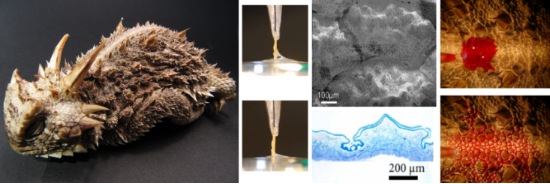
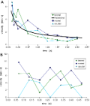
- allows the animals to collect moisture with their entire body surface. The collected water is transported into the capillary system. For Phrynosoma cornutum we found the interesting effect that, in contrast to the other two investigated species, the water flow in the capillary system is not uniform but
- (r ≈ 2.3) or Phrynocephalus arabicus (r ≈ 1.4) as estimated from the above mentioned dimensions of the honeycomb structures. So the reduction of the contact angle for these animals cannot simply be explained by increased roughness alone. Thus it is tempting to assume the Cassie-model for liquid
- network As stated earlier, initial wetting of the scales is necessary but not sufficient for successful moisture harvesting. The collected water has to be transported to the mouth of the animals as licking off the collected water from the integument is hardly possible due to the animals' anatomy. As shown


Superhydrophobicity in perfection: the outstanding properties of the lotus leaf
Beilstein J. Nanotechnol. 2011, 2, 152–161, doi:10.3762/bjnano.2.19
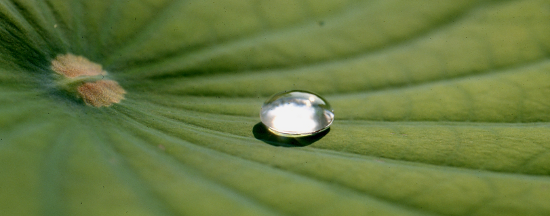
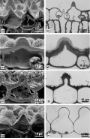
- ]. Superhydrophobic surfaces which feature permanent air retention under water are found on animals (some birds, spiders and insects). An outstanding air-retention capability is found, for example, for the aquatic insect Notonecta glauca (‘backswimmer’) [26][27]. Here the water repellency is created by a two-level







Superhydrophobic surfaces of the water bug Notonecta glauca: a model for friction reduction and air retention
Beilstein J. Nanotechnol. 2011, 2, 137–144, doi:10.3762/bjnano.2.17
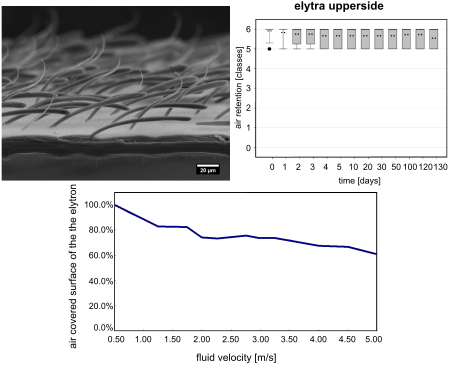
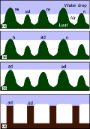
- Biomechanics, Christian-Albrechts-University of Kiel, Am Botanischen Garten 1–9, Kiel, 24098, Germany Lehrstuhl Strömungsmechanik, Universität Rostock, Albert Einstein Str. 2, Rostock, 18051, Germany 10.3762/bjnano.2.17 Abstract Superhydrophobic surfaces of plants and animals are of great interest for
- properties. In nature they occur in many species of animals and plants [1][2]. These surfaces combine a special topography at the micro- and nanoscale with a superhydrophobic surface chemistry [3][4]. Transferred to technical surfaces, superhydrophobic surfaces have successfully entered the markets of the
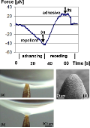
- friction on the elytron surface was measured. The combination of these two abilities makes these hierarchically structured surfaces extremely interesting for biomimetic applications such as low friction fluid transport or drag reduction on ship hulls. Experimental Animals. Freshly killed insects were



Biomimetic materials
Beilstein J. Nanotechnol. 2011, 2, 135–136, doi:10.3762/bjnano.2.16

- of our planet. The diversity of life, biodiversity, is one of the most fascinating phenomena. We know some 1.8 million different species, but all extrapolations show that probably 20 million or more species exist: We know less than 10% of the plants, animals and micro-organisms living on the planet
Twofold role of calcined hydrotalcites in the degradation of methyl parathion pesticide
Beilstein J. Nanotechnol. 2011, 2, 99–103, doi:10.3762/bjnano.2.11
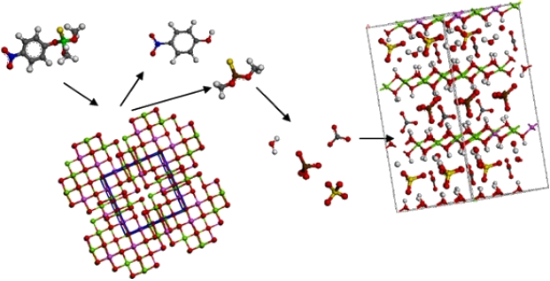
- degradation; mixed oxide; organophosphate; pesticide; water pollution; Introduction MP, an organophosphate, has been extensively used as pesticide since the 1970’s instead of chlorinated hydrocarbons (e.g., DDT). This pesticide is persistent and very toxic to humans and animals [1], even at low


Biomimetics inspired surfaces for drag reduction and oleophobicity/philicity
Beilstein J. Nanotechnol. 2011, 2, 66–84, doi:10.3762/bjnano.2.9
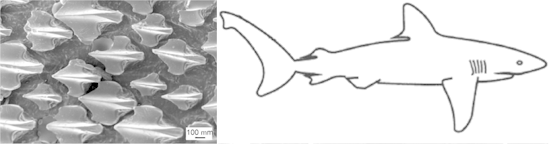
- animals, and seashells with properties of commercial interest. Certain plant leaves, such as lotus (Nelumbo nucifera) leaves, are known to be superhydrophobic and self-cleaning due to the hierarchical surface roughness and presence of a wax layer. In addition to a self-cleaning effect, these surfaces with
- behavior of oil droplets on various superoleophobic surfaces created in the lab. Keywords: aquatic animals; biomimetics; drag; lotus plants; shark skin; superhydrophobicity; superoleophobicity; Introduction Biologically inspired design, adaptation, or derivation from nature is referred to as ‘biomimetics
- understanding of the functions provided by objects and processes found in nature can guide us to imitate and produce nanomaterials, nanodevices, and processes [2]. There are a large number of objects (bacteria, plants, land and aquatic animals, seashells etc.) with properties of commercial interest. Natural








Other Beilstein-Institut Open Science Activities



