


Search results
Search for "aqueous solutions" in Full Text gives 215 result(s) in Beilstein Journal of Nanotechnology. Showing first 200.
Fabrication and characterization of novel multilayered structures by stereocomplexion of poly(D-lactic acid)/poly(L-lactic acid) and self-assembly of polyelectrolytes
Beilstein J. Nanotechnol. 2016, 7, 81–90, doi:10.3762/bjnano.7.10
- resonance frequency of the quartz crystal oscillator, A is the area of the electrode (0.205 cm2), ρq is the quartz density (2.648 g/cm3), and µq is its shear modulus (2.947·1011 g/cm·s2). The cleaned electrodes were immersed into aqueous solutions of PSS and PAH (2 mg/mL) for 15 min and PLL (5 mg/mL) for 30


Controlled graphene oxide assembly on silver nanocube monolayers for SERS detection: dependence on nanocube packing procedure
Beilstein J. Nanotechnol. 2016, 7, 9–21, doi:10.3762/bjnano.7.2
- obtained by Sigma-Aldrich. Aqueous solutions were prepared using ultrapure Milli-Q water. Silicon wafers (n-type, no dopant) were purchased from Sigma-Aldrich. Synthesis of AgNCs. EG (10 mL) was placed into a flask and heated under magnetic stirring in an oil bath at 150 °C for 1 h under a nitrogen flow


pH-Triggered release from surface-modified poly(lactic-co-glycolic acid) nanoparticles
Beilstein J. Nanotechnol. 2015, 6, 2504–2512, doi:10.3762/bjnano.6.260
- ), as well as aqueous solutions of polyethylenimine (PEI) (Mw ≈ 50,000–60,000 g/mol; 50 wt %) and polyacrylic acid (PAA) (Mw ≈ 100,000 g/mol; 35 wt %) were purchased from Sigma–Aldrich (Steinheim, Germany). An aqueous solution of poly(diallyldimethylammonium chloride) (PDADMAC) (Mw ≈ 8,500 g/mol; 28 wt


Green and energy-efficient methods for the production of metallic nanoparticles
Beilstein J. Nanotechnol. 2015, 6, 2354–2376, doi:10.3762/bjnano.6.243
- and it decreased with reducing C0POM [151]. Zhang et al. used K9[H4PVIVW17O62] (HPVIV) clusters as the reducer and stabilizer for production of Pd NPs from K2PdCl4 in acidic aqueous solutions. They also admitted that the starting molar ratio of precursor to POM has influence on formation of Pd NPs and


Influence of wide band gap oxide substrates on the photoelectrochemical properties and structural disorder of CdS nanoparticles grown by the successive ionic layer adsorption and reaction (SILAR) method
Beilstein J. Nanotechnol. 2015, 6, 2252–2262, doi:10.3762/bjnano.6.231
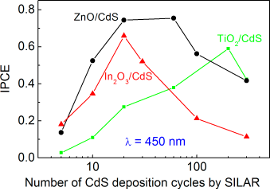
- ) films was carried out by successive adsorption of cadmium and sulfide ions by means of alternating immersion of the substrates into 0.1 mol/L Cd(NO3)2 and 0.01 mol/L Na2S aqueous solutions under vigorous stirring accompanied by intermediate rinsing with distilled water after each immersion. The duration


Au nanoparticle-based sensor for apomorphine detection in plasma
Beilstein J. Nanotechnol. 2015, 6, 2224–2232, doi:10.3762/bjnano.6.228
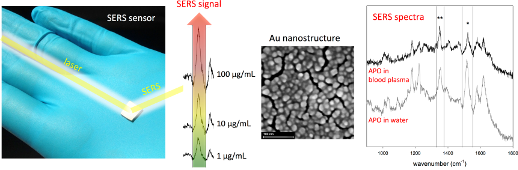
- .6.228 Abstract Artificially roughened gold surfaces with controlled nanostructure produced by pulsed laser deposition have been investigated as sensors for apomorphine detection aiming at clinical application. The use of such gold surfaces has been optimized using aqueous solutions of apomorphine in the
- most intense Raman features of apomorphine lie [30]. Two SERS peaks, namely at 1353 cm−1 and 1515 cm−1, were selected as intense, stable and reproducible markers for APO detection in aqueous solutions. The corrected areas under each peak were evaluated by manual selection of the baseline using Omnic 8
- ratio (see Figure 2A), was chosen for the SERS measurements of APO aqueous solutions at different concentrations. To explore the dynamic range of the sensor, the Au SERS-active substrates were tested with respect to APO concentrations of 100, 10, 1 and 0.1 μg/mL. Figure 3 shows a set of representative


Conformational switching of ethano-bridged Cu,H2-bis-porphyrin induced by aromatic amines
Beilstein J. Nanotechnol. 2015, 6, 2154–2160, doi:10.3762/bjnano.6.221
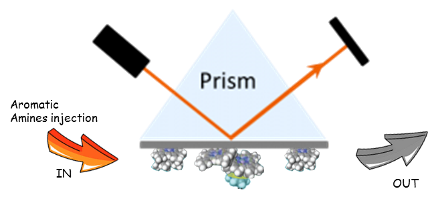
- in aqueous solution. The high selectivity of the SPR sensing device has been verified by checking the spectral response of the active layer towards other analytes dissolved in the aqueous solutions. Keywords: aromatic amines; bis-porphyrin; conformational switching; Langmuir film; surface plasmon
- were deposited on the SPR slide, and the shift of the SPR angle induced by the injection of amine aqueous solutions at different concentrations was monitored. The effect of aniline on the plasmon resonance of the Cu,H2-Por2 film could be detected when only 1 nM of analyte was fluxed over the active
- subphase and the Cu,H2-Por2 floating film. Aqueous solutions of amines were fluxed over the LS, Cu,H2-Por2 films deposited on metal/glass substrates (Corning 7059, with a refractive index of 1.723 at 632.8 nm, gold thickness of 44 nm) by a peristaltic pump. The SPR measurements were carried out using a


Enhanced model for determining the number of graphene layers and their distribution from X-ray diffraction data
Beilstein J. Nanotechnol. 2015, 6, 2113–2122, doi:10.3762/bjnano.6.216
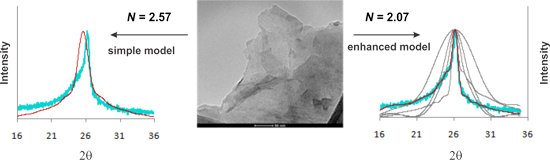
- calculated through , for each s = 1,2,…,M. Having defined the enhanced model, it is further used to analyze some graphene samples produced by electrolysis in molten salts and by electrolysis in aqueous solutions, both using reverse potential, providing considerably increased accuracy in determining graphene


Radiation losses in the microwave Ku band in magneto-electric nanocomposites
Beilstein J. Nanotechnol. 2015, 6, 1700–1707, doi:10.3762/bjnano.6.173
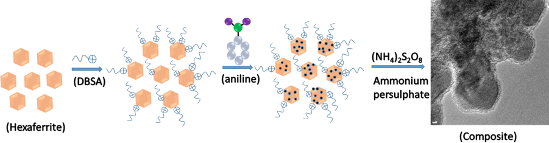
- ) and vector network analyser (VNA). Experimental Synthesis The synthesis of La–Co-substituted barium hexaferrite has been carried out through a sol–gel method [19] using metal nitrates (AR grade chemicals) without any purification. Aqueous solutions of iron and metal salts are mixed with each other in


Fulleropeptide esters as potential self-assembled antioxidants
Beilstein J. Nanotechnol. 2015, 6, 1065–1071, doi:10.3762/bjnano.6.107
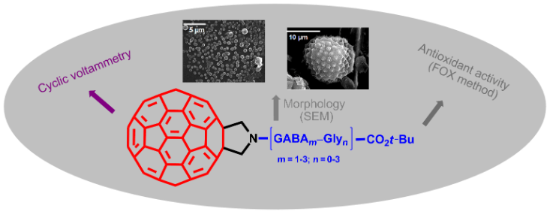
- -assembly has been observed. Here, cryo-transmission electron microscopy [14] and SEM [15] experiments on aqueous solutions of fullerene-based amino acids and peptides confirmed their strong aggregation behavior and formation of spherical and ellipsoidal clusters. In the area of biological applications, a


Effects of swift heavy ion irradiation on structural, optical and photocatalytic properties of ZnO–CuO nanocomposites prepared by carbothermal evaporation method
Beilstein J. Nanotechnol. 2015, 6, 928–937, doi:10.3762/bjnano.6.96
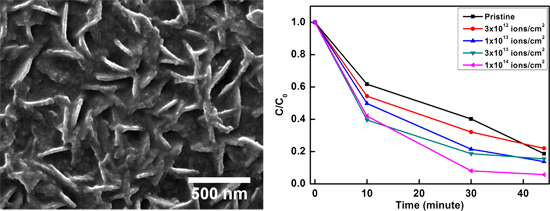
- the pristine and irradiated samples was evaluated by monitoring the degradation of methylene blue (MB) and methyl orange (MO) dyes in water under sun light irradiation in a similar manner, as described previously in [41]. For the photocatalytic studies, aqueous solutions of 3.7 μM MB and 3.7 μM MO


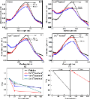

In situ observation of biotite (001) surface dissolution at pH 1 and 9.5 by advanced optical microscopy
Beilstein J. Nanotechnol. 2015, 6, 665–673, doi:10.3762/bjnano.6.67
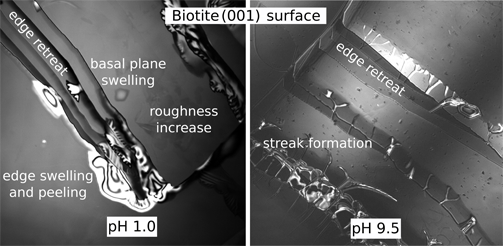
- -resolution phase shifting interferometer (PSI) that allows for the in situ measurement of extremely low surface dissolution (and growth) rates of minerals while submerged in aqueous solutions [26][27][28][29][30]. With the progress of these techniques our understanding of the mechanisms of the surface


Structural, optical, opto-thermal and thermal properties of ZnS–PVA nanofluids synthesized through a radiolytic approach
Beilstein J. Nanotechnol. 2015, 6, 529–536, doi:10.3762/bjnano.6.55
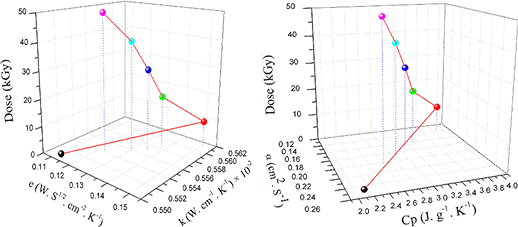
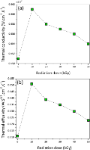
- typical procedure, five different aqueous solutions of PVA (5 wt %) were prepared in a water bath for 1 h at 75 °C. Subsequently, the same amount, 10−2 molar ratio with respect to water, of Zn(CH3COO)2 and Na2S2O3 were added and the solution was stirred for 2 h. The solutions were finally irradiated with


Pulmonary surfactant augments cytotoxicity of silica nanoparticles: Studies on an in vitro air–blood barrier model
Beilstein J. Nanotechnol. 2015, 6, 517–528, doi:10.3762/bjnano.6.54
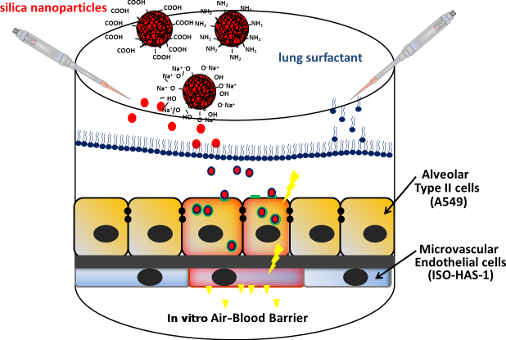
- the Nalp3 inflammasome, thus initiating the release of pro-inflammatory cytokines [37]. Phospholipids such as DPPC are also a crucial component of lung surfactant. Other studies reported that the aSNP-silanol-phospholipid interaction or even aSNP in aqueous solutions have the potential to initiate


Tunable white light emission by variation of composition and defects of electrospun Al2O3–SiO2 nanofibers
Beilstein J. Nanotechnol. 2015, 6, 313–320, doi:10.3762/bjnano.6.29
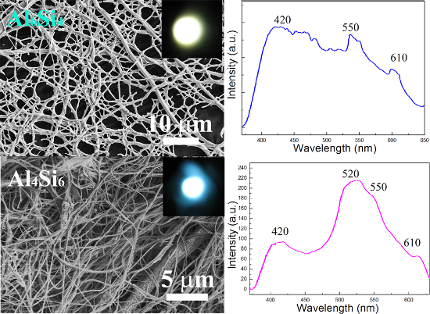
- and used as received without any further purification. Al2O3–SiO2 hetero-nanofibers were prepared by electrospinning, the details of which can be reviewed from previously published work [41][42][43][44]. Briefly, sol–gel aqueous solutions were prepared by dissolving TEOS, Al(NO3)3·9H2O, and PVP powder


The effect of surface charge on nonspecific uptake and cytotoxicity of CdSe/ZnS core/shell quantum dots
Beilstein J. Nanotechnol. 2015, 6, 281–292, doi:10.3762/bjnano.6.26
- MPA-ligands, and zwitterionic DPA ligands (Scheme 1). At physiological pH 7.4, CA–QDs exhibit high aggregation rates in aqueous solutions, with hydrodynamic diameters 4–5 times larger than those of the as-prepared particles with the initial coating in organic solution [11]. In contrast, DHLA–QDs and



Kelvin probe force microscopy in liquid using electrochemical force microscopy
Beilstein J. Nanotechnol. 2015, 6, 201–214, doi:10.3762/bjnano.6.19
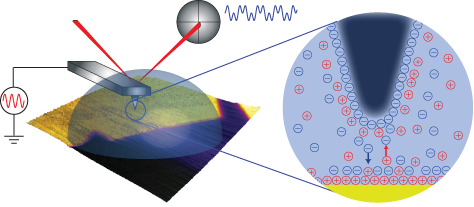
- Aω for Au is weakly dependent on bias in this range, suggesting the mechanisms at play are significantly different from those described by Equation 2. In aqueous solutions, charge screening from ions, adsorption of water molecules and surface dipoles at the probe and/or sample surface could also play
- performed with Vac = 0.5 V [25 kHz] applied to the probe. EcFM spectra [bias-on] collected 500 nm above HOPG in aqueous solutions of increasing salt concentration (1 mM–1 M NaCl). Measurements were recorded from low to high concentrations using the same probe. Vertical scale ±5 a.u. (data normalized by the


![[Graphic 6]](/bjnano/content/inline/2190-4286-6-19-i11.png?max-width=637&scale=1.18182) response collected 200 nm above a grounded Au electrode in (a, b, c) air, (d, e, f) decane an...
response collected 200 nm above a grounded Au electrode in (a, b, c) air, (d, e, f) decane an...


![[Graphic 22]](/bjnano/content/inline/2190-4286-6-19-i27.png?max-width=637&scale=1.18182) spectra [bias-on] collected 500 nm above HOPG in aqueous solutions of increasing salt concent...
spectra [bias-on] collected 500 nm above HOPG in aqueous solutions of increasing salt concent...

![[Graphic 25]](/bjnano/content/inline/2190-4286-6-19-i30.png?max-width=637&scale=1.18182) spectra [bias-on] collected 500 nm above (a) HOPG and (b) Au in milli-Q water (vertical color...
spectra [bias-on] collected 500 nm above (a) HOPG and (b) Au in milli-Q water (vertical color...

![[Graphic 27]](/bjnano/content/inline/2190-4286-6-19-i32.png?max-width=637&scale=1.18182) spectra [bias-on] recorded 500 nm above a HOPG/Au boundary in milli-Q water. T...
spectra [bias-on] recorded 500 nm above a HOPG/Au boundary in milli-Q water. T...

SERS and DFT study of copper surfaces coated with corrosion inhibitor
Beilstein J. Nanotechnol. 2014, 5, 2489–2497, doi:10.3762/bjnano.5.258
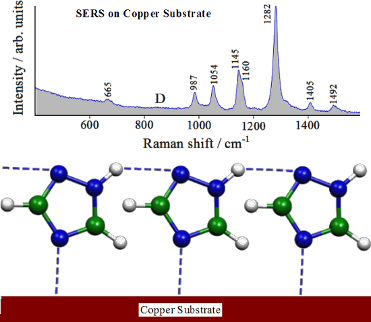
- in high amount in the environment, aqueous solutions or soil. A very efficient way to protect copper surfaces is by creating an anticorrosive thin film by chemisorption of organic inhibitors. Heterocycles containing sulphur or nitrogen atoms, available for bonding with the copper surface, are widely


Intake of silica nanoparticles by giant lipid vesicles: influence of particle size and thermodynamic membrane state
Beilstein J. Nanotechnol. 2014, 5, 2468–2478, doi:10.3762/bjnano.5.256
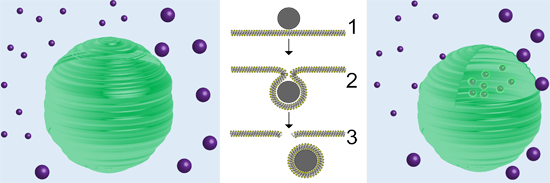
- Biotium Inc. (Hayward, CA, USA), Na2HPO4, NaH2PO4, sucrose and D-(+)-glucose monohydrate from Merck (Darmstadt, Germany). For aqueous solutions ultrapure water (pure Aqua, Germany) with a specific resistance ≥18 MΩ was used. GUVs were prepared by electroformation as described for the first time by


Synthesis and characterization of fluorescence-labelled silica core-shell and noble metal-decorated ceria nanoparticles
Beilstein J. Nanotechnol. 2014, 5, 2413–2423, doi:10.3762/bjnano.5.251
- -nitrobenzoic acid). The standard conditions for the determination of thiol groups, e.g., in molecules or proteins involve aqueous solutions and pH control [28]. This was, however, not applicable to the dispersions of silica NP because of increased agglomeration. We therefore performed the reaction in dry


Influence of stabilising agents and pH on the size of SnO2 nanoparticles
Beilstein J. Nanotechnol. 2014, 5, 2192–2201, doi:10.3762/bjnano.5.228
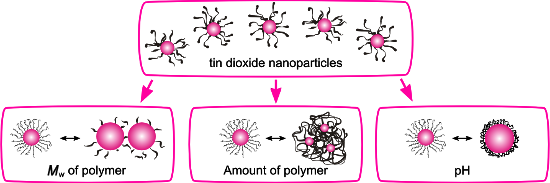
- PVP chain is more ordered than PEI due to the presence of these rings in the chain. In acidic aqueous solutions, charge transfer between the nitrogen and oxygen atoms of PVP occurs [29]. For this reason, in an acidic medium (pH 1.70, which is a mixture comprising tin(IV) chloride and PVP), a PVP
- PEI and PVP, aqueous solutions of concentrations 43 g/L and 111 g/L, respectively, were prepared, which corresponded to solutions of 1 mol/L concentration as calculated by the molar mass of the -mer per litre. During the synthesis, an aqueous solution containing tin ions, the polymer and the non-ionic


Nanomanipulation and environmental nanotechnology
Beilstein J. Nanotechnol. 2014, 5, 2079–2080, doi:10.3762/bjnano.5.216

- based on polyethylene oxide. The surface reactivity of minerals in contact with aqueous solutions can be investigated by laser confocal microscopy, as shown on the example of dissolution of the mineral biotite in solutions with acid and basic pH. Recent nanofiltration techniques are reviewed with
Electrostatic interplay: The interaction triangle of polyamines, silicic acid, and phosphate studied through turbidity measurements, silicomolybdic acid test, and 29Si NMR spectroscopy
Beilstein J. Nanotechnol. 2014, 5, 2026–2035, doi:10.3762/bjnano.5.211
- studied in order to visualize the possible influence of hydrophobic interactions. For 29Si NMR spectroscopy aqueous solutions of isotope-labelled sodium [29Si] metasilicate as precursor compound were used. Different silica precursors, such as toxic TMOS (tetramethyl orthosilicate) or TEOS (tetraethyl


Rapid degradation of zinc oxide nanoparticles by phosphate ions
Beilstein J. Nanotechnol. 2014, 5, 2007–2015, doi:10.3762/bjnano.5.209
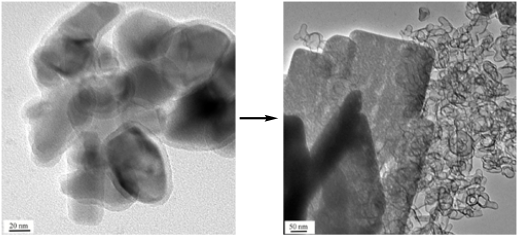
- phosphate ions with the ZnO surface is possible. This may account for the almost exclusive formation of crystalline zinc phosphate. The difference to the observed phases by others remains, however, unexplained. Conclusion Most nanoparticles are dynamical systems in aqueous solutions since equilibria between


Towards bottom-up nanopatterning of Prussian blue analogues
Beilstein J. Nanotechnol. 2014, 5, 1933–1943, doi:10.3762/bjnano.5.204
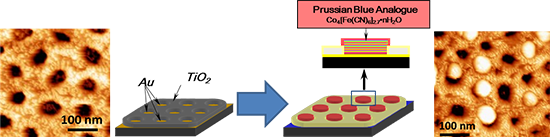
- shape is systematically obtained when the reaction medium is BuOH or the 1:1 mixture EtOH/H2O whereas the half-spherical or spherical shape is obtained in aqueous solutions. PBA particles are less soluble in BuOH and in the EtOH/H2O mixture than in H2O and therefore the dissolution–recrystallization





