Search results
Search for "characterization" in Full Text gives 1432 result(s) in Beilstein Journal of Nanotechnology. Showing first 200.
Mn-doped ZnO nanopowders prepared by sol–gel and microwave-assisted sol–gel methods and their photocatalytic properties
Beilstein J. Nanotechnol. 2024, 15, 1283–1296, doi:10.3762/bjnano.15.104
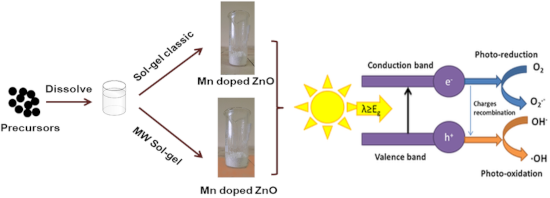
- /min. Characterization Fourier transform infrared spectra (FTIR) were recorded with a Nicolet 6700 apparatus in the range of 400–4000 cm−1. The resolution was 4 cm−1. The powders were pressed in KBr pellets, and the spectra were recorded in absorbance mode. Differential thermal analysis (DTA) and


New design of operational MEMS bridges for measurements of properties of FEBID-based nanostructures
Beilstein J. Nanotechnol. 2024, 15, 1273–1282, doi:10.3762/bjnano.15.103
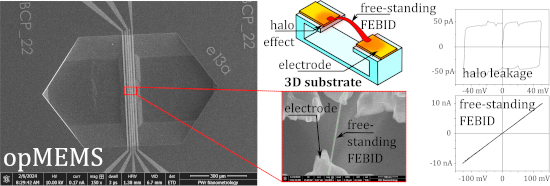
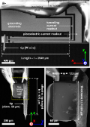
- fabricate 3D substrates (Figure 1) with gaps that interrupt the halo deposition [23], as we have done in our previous work [24]. There are ongoing investigations related to the fabrication, characterization, and application of flat nanostructures [25], but in the flat architecture, there are less
- the gallium FIB to mill a 200 nm wide slit (Figure 2c). As a side-effect, gallium was implanted along the edge of the RoI slit, so to prevent the leakage current; additional openings were formed using the DRIE process to create a non-conductive edge of the slit (Figure 3b). Mechanical characterization


Dual-functionalized architecture enables stable and tumor cell-specific SiO2NPs in complex biological fluids
Beilstein J. Nanotechnol. 2024, 15, 1238–1252, doi:10.3762/bjnano.15.100
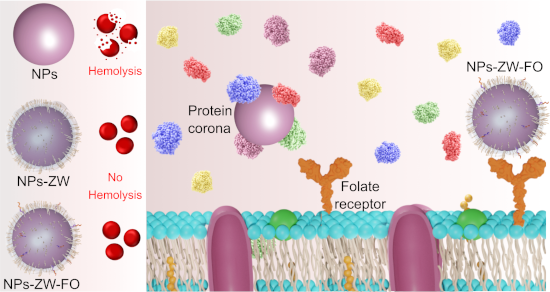
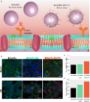
- ), SiO2NPs-ZW-NH2 (with ZW + APTES), and SiO2NPs-ZW-FO (with ZW + APTES + folate). Characterization of SiO2NPs Scanning electron microscopy (SEM) micrographs were obtained in a high-resolution FEI Inspect F50 microscope. A NP suspension (7 μL) was deposited directly onto a copper substrate, dried, and
- Discussion Nanoparticle characterization The functionalized NP synthesis was performed using zwitterionic as a kinetic stabilizer and folate as a tumor driver (Figure 1a). They presented a quasi-spherical shape (Figure 1b,c) and an average diameter of 86.4 ± 0.4 nm for non-functionalized SiO2NPs and 86.1


Enhanced catalytic reduction through in situ synthesized gold nanoparticles embedded in glucosamine/alginate nanocomposites
Beilstein J. Nanotechnol. 2024, 15, 1227–1237, doi:10.3762/bjnano.15.99
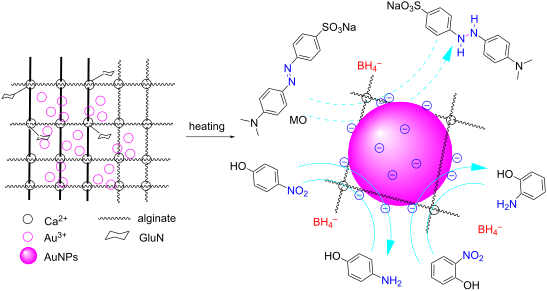
- synthesizing gold nanoparticles (AuNPs) within a glucosamine/alginate (GluN/Alg) nanocomposite via an ionotropic gelation mechanism in aqueous environment. The resulting nanocomposite, AuNPs@GluN/Alg, underwent thorough characterization using UV–vis, EDX, FTIR, SEM, TEM, SAED, and XRD analyses. The spherical
- three times with 10 mL of water each time to obtain the blank GluN/Alg nanocomposite, which was also used as the standard sample for further characterization. To synthesize the AuNPs@GluN/Alg nanocomposite, aqueous AuCl3 solution (13 mL, 0.0061–0.0554 mg·mL−1) was added to GluN/Alg suspension (8 mL, 1.0
- 0 to 140 min. Physicochemical characterizations of AuNPs@GluN/Alg nanocomposite The samples synthesized under optimal conditions underwent physicochemical characterization and were used for the catalytic reduction of organic dyes. FTIR spectra of blank GluN/Alg and AuNPs@GluN/Alg were acquired using



Realizing active targeting in cancer nanomedicine with ultrasmall nanoparticles
Beilstein J. Nanotechnol. 2024, 15, 1208–1226, doi:10.3762/bjnano.15.98
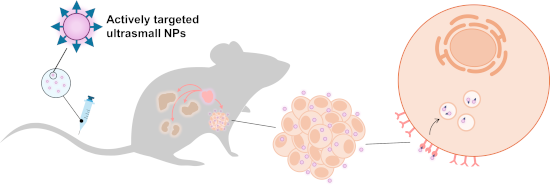
- detailed experimental characterization of the surface properties and interactions of targeted usNPs is indispensable for elucidating their biological behavior and optimizing their performance. 4 The significance of binding affinity and kinetics It is imperative to assess the apparent binding affinity (KD
- biological processes are dynamically regulated [152][153]. Consequently, it becomes important to extend the characterization beyond binding affinity and include the examination of binding kinetics between targeted usNPs and their receptors [59]. For a simple one-step binding model, KD = koff/kon and tr = 1
- et al., “Chemokine Receptor 2 Targeted Gold Nanocluster Imaging Triple Negative Breast Cancer with Positron Emission Tomography”, Particle & Particle Systems Characterization, with permission from John Wiley and Sons. Copyright © 2021 WILEY-VCH Verlag GmbH & Co. KGaA, Weinheim. Germany. This content


Synthesis, characterization and anticancer effect of doxorubicin-loaded dual stimuli-responsive smart nanopolymers
Beilstein J. Nanotechnol. 2024, 15, 1189–1196, doi:10.3762/bjnano.15.96
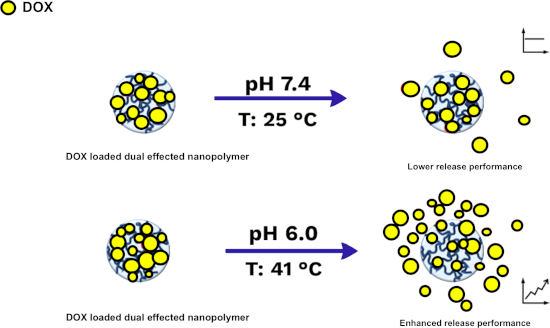
- Centrifugen, USA). The precipitated nanostructures were redispersed in distilled water utilizing a sonicator and dried with a lyophilizer. Then, the nanostructures were stored at 4 °C. Characterization studies Functional group analysis was carried out by Fourier-transform infrared (FTIR) spectroscopy
- relatively to the control (non-treated cells). Statistical analysis The statistical analysis of data was made by ANOVA with post-hoc Newman–Keuls test. The data are presented as mean ± S.D., N ≥ 6. Results and Discussion Characterization studies The SNPs were synthesized as both thermo- and pH-sensitive


Photocatalytic methane oxidation over a TiO2/SiNWs p–n junction catalyst at room temperature
Beilstein J. Nanotechnol. 2024, 15, 1132–1141, doi:10.3762/bjnano.15.92
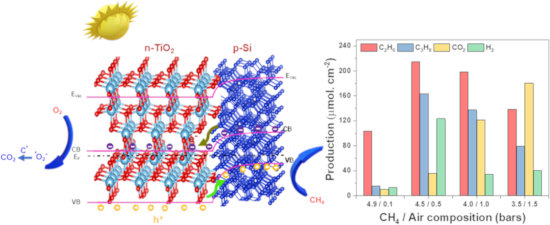
- gaseous reactants in batch reactor was established at 5 bar, and the photocatalytic system was kept in the dark (20 min) to reach equilibrium before exposure to simulated solar light. The temperature was kept at room temperature via a cooler. Characterization The crystalline structure and morphological


Recent updates in applications of nanomedicine for the treatment of hepatic fibrosis
Beilstein J. Nanotechnol. 2024, 15, 1105–1116, doi:10.3762/bjnano.15.89
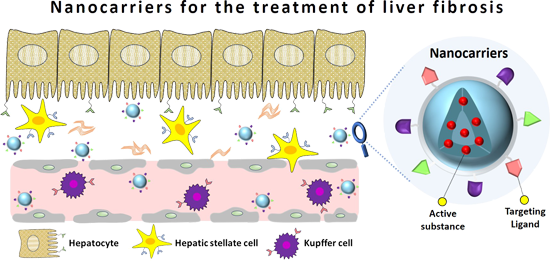
- that the incorporation of a broad range of therapeutic agents in a single nanocarrier makes the formulations more complex. Therefore, adequate concerns about standardized protocols and trans-disciplinary characterization strategies of the nanoproducts product should be addressed. A comprehensive set of
- characterization procedures using state-of-the-art nanomedicine manufacturing facilities allows for continuous monitoring of the production steps, which is required to maintain the consistency of nanocarriers, Despite its promises, the long-term hepatotoxicity of NPs should be carefully reviewed as 30–99% of the
- acknowledge the facilities, scientific and technical support from Advanced Chemical Characterization Laboratory and Advanced Characterization Laboratories Serpong, National Research and Innovation Agency through E- Layanan Sains – BRIN. Funding The researchers involved in this work received research funding


Unveiling the potential of alginate-based nanomaterials in sensing technology and smart delivery applications
Beilstein J. Nanotechnol. 2024, 15, 1077–1104, doi:10.3762/bjnano.15.88
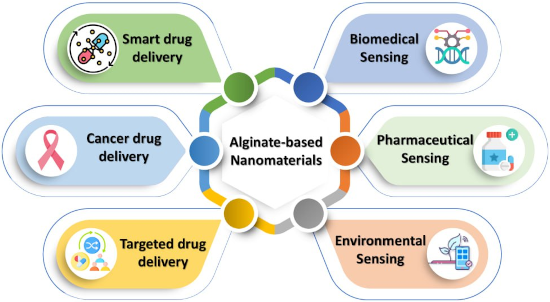
- -based composite nanoparticles, which provides a comprehensive overview of nanoparticles and their uses, especially in sensing applications (Figure 2). Moreover, characterization techniques of biopolymeric nanoparticles and their importance for drug delivery and sensing methods will be reviewed. In
- as drug carriers. Since then, tremendous progress has been achieved in the design, manufacture, and characterization of nanoparticle-based DDSs. The use of alginate in drug delivery goes back to the 1980s, when researchers first investigated its ability to encapsulate pharmaceuticals. Over time
- alginate–polymer nanoparticles involves the use of oil-in-water emulsions in polymer and calcium alginate solutions to prepare polymer NPs and calcium alginate NPs separately [57]. Characterization techniques of alginate-based nanoparticles Characterization techniques play a crucial role in analyzing


Effect of wavelength and liquid on formation of Ag, Au, Ag/Au nanoparticles via picosecond laser ablation and SERS-based detection of DMMP
Beilstein J. Nanotechnol. 2024, 15, 1054–1069, doi:10.3762/bjnano.15.86

- . This process took approximately 20 minutes. Characterization techniques The absorption studies were conducted by placing 3 mL of the colloidal solution in a 1 cm quartz cuvette and using a UV–visible absorption spectrometer (PerkinElmer, LAMBDA 750) within the 300–800 nm wavelength range. The
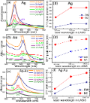
- recorded SERS spectra, after which SERS calculations were undertaken. Results and Discussion Characterization Optical absorption studies of as-synthesized nanoparticles The absorbance measurements were carried out on metallic Ag, Au, and Ag/Au NPs prepared using ps LASiS in both DW and aqueous NaCl


Bolometric IR photoresponse based on a 3D micro-nano integrated CNT architecture
Beilstein J. Nanotechnol. 2024, 15, 1030–1040, doi:10.3762/bjnano.15.84
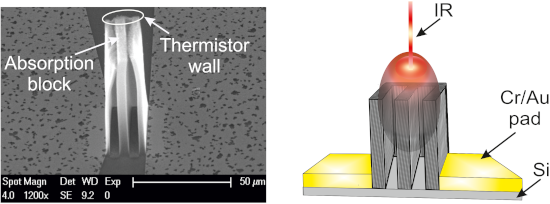
- diameters, qualities, and heights. So far, we have only investigated the IR response. Far-IR and THz measurements will be carried out in the future to prove the broadband property of our new bolometer architecture. Results The experimental characterization evaluated a number of parameters, including
- conditions with higher bias current. Our cost-efficient new microbolometer can be suitable for fast characterization of small materials under optical as well as microwave and terahertz illumination. Conclusion This work aims to advance the understanding and implementation of CNT-based non-cryogenic IR


Therapeutic effect of F127-folate@PLGA/CHL/IR780 nanoparticles on folate receptor-expressing cancer cells
Beilstein J. Nanotechnol. 2024, 15, 954–964, doi:10.3762/bjnano.15.78
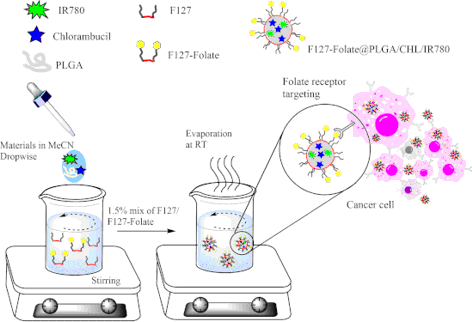
- then collected by 30 min of centrifugation at 12,000 rpm. Another set of particles, such as F127@PLGA/Cou-6, and F127-folate@PLGA/Cou-6, were used in the cell targeting experiment, which were prepared under similar conditions. Characterization of F127-folate@PLGA/CHL/IR780 nanoparticles Dynamic light



A review on the structural characterization of nanomaterials for nano-QSAR models
Beilstein J. Nanotechnol. 2024, 15, 854–866, doi:10.3762/bjnano.15.71
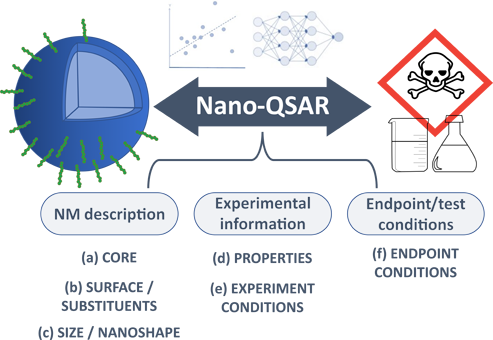
- their risks, are blooming. One of the challenges is the characterization of the NMs. This cannot be done with a simple SMILES representation, as for organic molecules, because their chemical structure is complex, including several layers and many inorganic materials, and their size and geometry are key
- tested for both the adequate characterization results and the prediction endpoint. Therefore, the development of QSAR models requires the codification of information on nanoforms beyond classical molecular descriptors. NMs have some particularities in comparison with discrete substances, which are (i
- by different authors to characterize the NMs [7]. Taking these models as starting point, and in order to harmonize the characterization of the nanoforms, we propose a classification of the descriptors as follows (Figure 3): (i) Descriptors that directly describe the nanoform, that is, its chemical


Synthesis of silver–palladium Janus nanoparticles using co-sputtering of independent sources: experimental and theorical study
Beilstein J. Nanotechnol. 2024, 15, 808–816, doi:10.3762/bjnano.15.67
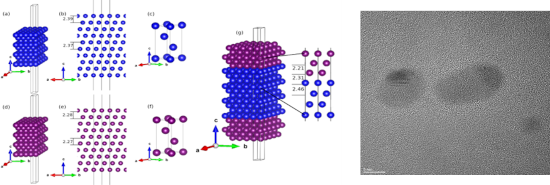
- drift”. Figure 4b presents the spectrum of elementary analysis; the two elements silver and palladium appear. All characterization techniques, as well as the calculation of the interplanar distances, showed only the presence of silver and palladium without any contaminants or other metals, which




Electrospun polysuccinimide scaffolds containing different salts as potential wound dressing material
Beilstein J. Nanotechnol. 2024, 15, 781–796, doi:10.3762/bjnano.15.65
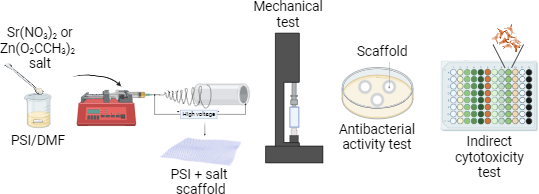
- ][37]. This study aimed to create a two-component polymer-composite scaffold as a potential wound dressing material by electrospinning, using antibacterial salts (Zn(O2CCH3)2 or Sr(NO3)2) in addition to PSI. We performed the following experiments: physical and chemical characterization of the fibers by
- powder was dried at 40 °C and stored at room temperature. Based on our previous publications, the molecular weight of the polymer is 28 500 ± 3000 Da [44]. Preparation and characterization of the solutions The preparation of solutions for electrospinning was the following: a 25% (w/w) mixture was made
- ). Results and Discussion To create a proper wound dressing material containing inorganic salt for potential antibacterial purposes, the first step was the synthesis of the polymer, the characterization of the solution, and the final scaffold with different techniques. Characterization of solutions and



Exploring surface charge dynamics: implications for AFM height measurements in 2D materials
Beilstein J. Nanotechnol. 2024, 15, 767–780, doi:10.3762/bjnano.15.64
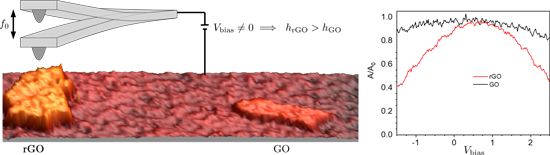
- addition, it can be integrated with classical optical spectroscopy methods such as Raman and fluorescence [20][28][29], enabling a multidimensional characterization approach. A well-recognized issue within the AFM community is the inaccurate height determination derived from topography images on


Green synthesis of biomass-derived carbon quantum dots for photocatalytic degradation of methylene blue
Beilstein J. Nanotechnol. 2024, 15, 755–766, doi:10.3762/bjnano.15.63
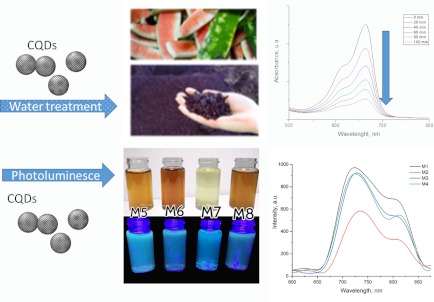
- 24 h, CQDs were successfully synthesized. A comprehensive characterization of the CQDs was performed using UV–visible spectroscopy, Fourier-transform infrared spectroscopy, dynamic light scattering, Raman spectroscopy, and luminescence spectroscopy, confirming their high quality. The photocatalytic


Effect of repeating hydrothermal growth processes and rapid thermal annealing on CuO thin film properties
Beilstein J. Nanotechnol. 2024, 15, 743–754, doi:10.3762/bjnano.15.62
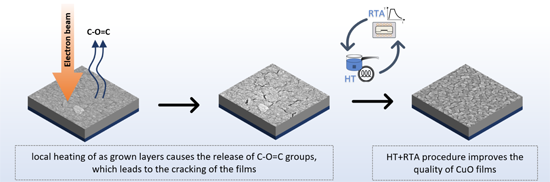
- acknowledge Adrian Gruszecki for his help in the Raman spectroscopy measurements. The results discussed in this paper were partially presented in M. Ozga’s doctoral thesis “Copper(II) oxide films obtained by hydrothermal method – growth technology, characterization and potential applications in electronics


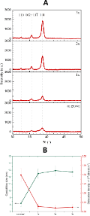


Simultaneous electrochemical determination of uric acid and hypoxanthine at a TiO2/graphene quantum dot-modified electrode
Beilstein J. Nanotechnol. 2024, 15, 719–732, doi:10.3762/bjnano.15.60
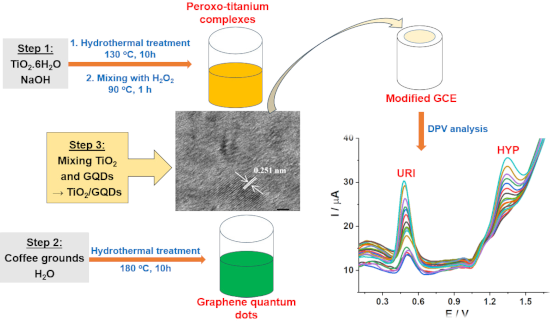
- µL of 500 µM URI and 20 µL of 500 µM HYT before dilution to 10 mL. Results and Discussion Characterization of materials The mixtures of GQDs and TiO2/GQDs suspensions were exposed to visible and UV light to confirm their fluorescence behavior. Under visible light, the aqueous suspension of GQDs is


Elastic modulus of β-Ga2O3 nanowires measured by resonance and three-point bending techniques
Beilstein J. Nanotechnol. 2024, 15, 704–712, doi:10.3762/bjnano.15.58
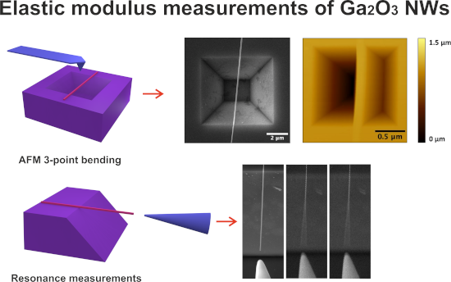
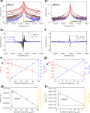
- research was supported by the Latvian Council of Science project lzp-2022/1-0311. S.O, S.V, T.T., and A.K acknowledge the European Union’s Horizon 2020 program, under Grant Agreement No. 856705 (ERA Chair “MATTER”). Characterization facilities at the University of Tartu were supported by the Center of


Enhancing higher-order modal response in multifrequency atomic force microscopy with a coupled cantilever system
Beilstein J. Nanotechnol. 2024, 15, 694–703, doi:10.3762/bjnano.15.57

- ; Introduction Multifrequency atomic force microscopy (AFM) has become an important tool for nanoscale imaging and characterization [1][2]. This technique involves the excitation and detection of multiple frequencies to improve data acquisition speed, sensitivity, and resolution, as well as to enable material


Gold nanomakura: nanoarchitectonics and their photothermal response in association with carrageenan hydrogels
Beilstein J. Nanotechnol. 2024, 15, 678–693, doi:10.3762/bjnano.15.56

- . Also, the photothermal responses of the nanoparticles in association with k-CG hydrogels were assessed, indicating their potential in biomedical applications. Furthermore, characterization such as zeta potential, crystallinity, and surface functionalization were investigated through ZetaSizer, X-ray
- 3 h at 60 °C. The dried beads were used for the subsequent experiments and characterization techniques. Characterization techniques The absorption spectra of the synthesized gold nanoparticles capped with CTAB, MTAB, and DTAB were measured using an Epoch2 (BioTek, USA) spectrophotometer. An amount




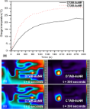


Exfoliation of titanium nitride using a non-thermal plasma process
Beilstein J. Nanotechnol. 2024, 15, 631–637, doi:10.3762/bjnano.15.53
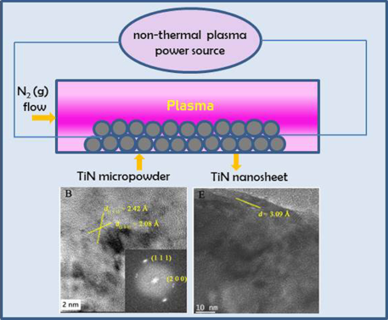
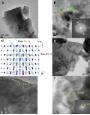
- and Konstantin Novoselov in 2004 [1], the field of nanostructures has witnessed remarkable advancements. Various methods to fabricate graphene, such as mechanical and chemical exfoliation, combined with innovative characterization techniques, have enabled the preparation of diverse layered two



AFM-IR investigation of thin PECVD SiOx films on a polypropylene substrate in the surface-sensitive mode
Beilstein J. Nanotechnol. 2024, 15, 603–611, doi:10.3762/bjnano.15.51
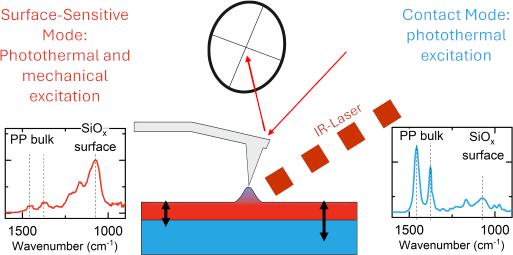
- the AFM-IR surface-sensitive mode for the investigation of ultra-thin films and the interfaces to the supporting materials. Conclusion The benefits of the surface-sensitive mode in the AFM-IR characterization of thin PECVD SiOx films on polymer substrates were investigated in this study. Our results


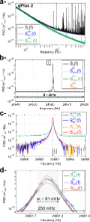
Stiffness calibration of qPlus sensors at low temperature through thermal noise measurements
Beilstein J. Nanotechnol. 2024, 15, 580–602, doi:10.3762/bjnano.15.50
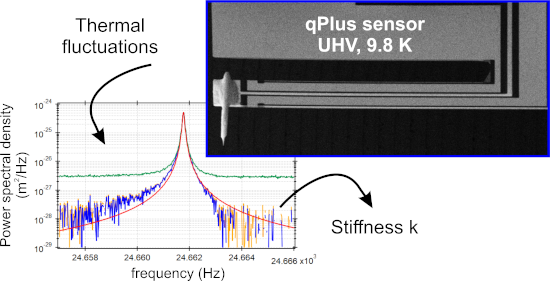
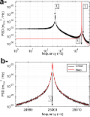
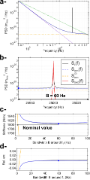
- -vacuum (UHV) system and at, or close to, liquid helium temperature (4–10 K, LT UHV), the method allows for the direct characterization of individual molecules with intramolecular contrast [4], opening up the field of studying on-surface reactions [5] or tip-induced chemistry [6]. The method also makes it