


Search results
Search for "energy storage" in Full Text gives 174 result(s) in Beilstein Journal of Nanotechnology.
Microwave assisted synthesis and characterisation of a zinc oxide/tobacco mosaic virus hybrid material. An active hybrid semiconductor in a field-effect transistor device
Beilstein J. Nanotechnol. 2015, 6, 785–791, doi:10.3762/bjnano.6.81
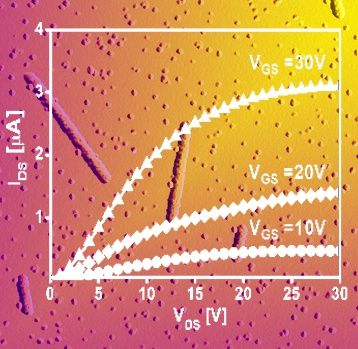
- , bacteriophages and viruses which exhibit diverse properties for the controlled formation of devices with possible application in areas such as sensors, photonics, energy storage as well as electronic transistors [4][5][6][7][8]. Fabrication of necessary functional hybrid materials often require well-defined 1D


Overview of nanoscale NEXAFS performed with soft X-ray microscopes
Beilstein J. Nanotechnol. 2015, 6, 595–604, doi:10.3762/bjnano.6.61
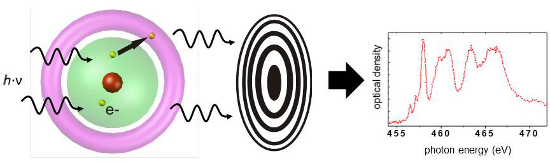
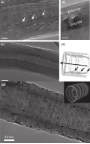
- nanoscale structures are becoming more and more important. Not only for the further miniaturization of semiconductor devices like carbon nanotube based transistors, but also for newly developed efficient energy storage devices, gas sensors or catalytic systems nanoscale and functionalized materials have to
- nanoelectronics, catalysis, light harvesting and energy storage applications. The newly developed NEXAFS-TXM together with further complementary physicochemical methods and spectroscopic techniques will allow a more complete understanding of the function of low dimensional nanostructures. Schematic layout of


Filling of carbon nanotubes and nanofibres
Beilstein J. Nanotechnol. 2015, 6, 508–516, doi:10.3762/bjnano.6.53
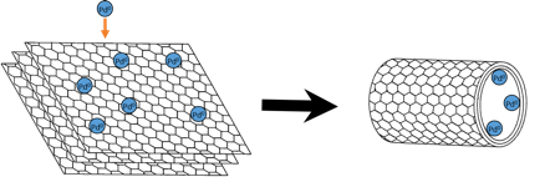
- energy storage [34][35], battery electrodes [24][36], catalysis [37][38] and nanowelding [39]. Shortly after their discovery in 1991, MWCNTs were filled with metals in order to create metal nanowires encapsulated within the CNT [10]. While this was the original inspiration behind the filling of TCNSs, it
- to create nanoscale capacitors with high energy storage rates, high specific capacitance (329 F/g) [8][79] in addition to high surface area electrodes [76][77][80]. TCNSs have also been used as a membrane for water and gas filtration [81]. It has been proposed that by chemically functionalizing the


Kelvin probe force microscopy in liquid using electrochemical force microscopy
Beilstein J. Nanotechnol. 2015, 6, 201–214, doi:10.3762/bjnano.6.19
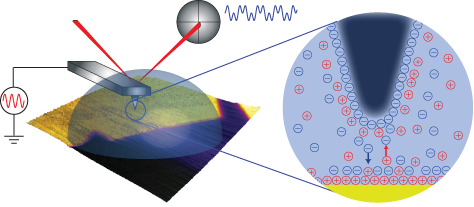
- (KPFM) has emerged as a powerful technique for probing electric and transport phenomena at the solid–gas interface. The extension of KPFM capabilities to probe electrostatic and electrochemical phenomena at the solid–liquid interface is of interest for a broad range of applications from energy storage
- ., pseudocapacitive storage). Consequently, understanding the local electrostatic, electrochemical and double layer ion dynamics at the solid–liquid interface is crucial to the study of corrosion, sensing, energy storage and bioelectric interfaces [3]. These processes are dynamic in nature, involving changes of the


![[Graphic 6]](/bjnano/content/inline/2190-4286-6-19-i11.png?max-width=637&scale=1.18182) response collected 200 nm above a grounded Au electrode in (a, b, c) air, (d, e, f) decane an...
response collected 200 nm above a grounded Au electrode in (a, b, c) air, (d, e, f) decane an...


![[Graphic 22]](/bjnano/content/inline/2190-4286-6-19-i27.png?max-width=637&scale=1.18182) spectra [bias-on] collected 500 nm above HOPG in aqueous solutions of increasing salt concent...
spectra [bias-on] collected 500 nm above HOPG in aqueous solutions of increasing salt concent...

![[Graphic 25]](/bjnano/content/inline/2190-4286-6-19-i30.png?max-width=637&scale=1.18182) spectra [bias-on] collected 500 nm above (a) HOPG and (b) Au in milli-Q water (vertical color...
spectra [bias-on] collected 500 nm above (a) HOPG and (b) Au in milli-Q water (vertical color...

![[Graphic 27]](/bjnano/content/inline/2190-4286-6-19-i32.png?max-width=637&scale=1.18182) spectra [bias-on] recorded 500 nm above a HOPG/Au boundary in milli-Q water. T...
spectra [bias-on] recorded 500 nm above a HOPG/Au boundary in milli-Q water. T...

Manganese oxide phases and morphologies: A study on calcination temperature and atmospheric dependence
Beilstein J. Nanotechnol. 2015, 6, 47–59, doi:10.3762/bjnano.6.6
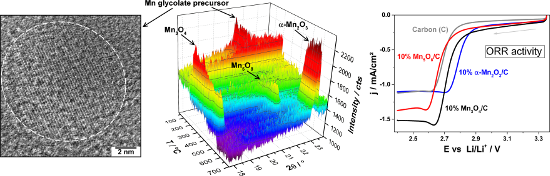
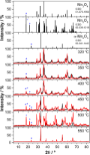
- Research Laboratory, Carl von Ossietzky University of Oldenburg, 26129 Oldenburg, Germany 10.3762/bjnano.6.6 Abstract Manganese oxides are one of the most important groups of materials in energy storage science. In order to fully leverage their application potential, precise control of their properties
- , 30 and 20 m2/g, respectively. The nanostructures of the obtained MnOx particles make them attractive candidates as highly active compounds in the field of catalysis and other applications in the field of energy storage. Furthermore, the synthesis presented in this study provides easy access to three





Dissipation signals due to lateral tip oscillations in FM-AFM
Beilstein J. Nanotechnol. 2014, 5, 2048–2057, doi:10.3762/bjnano.5.213
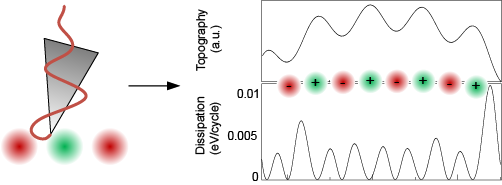
- damping and dissipation. Damping means, that the normal oscillation of the cantilever is reduced. The reason can be irreversible energy dissipation, or a redistribution of energy between normal and lateral modes. In principle, such a redistribution is reversible, but the lateral mode is no perfect energy
- storage. Mechanical damping is responsible for the dissipation of energy of the macroscopic degrees of freedom. We will therefore address three questions: (i) How large is the damping rate, (ii) is the resulting dissipation rate comparable to adhesion hysteresis, and (iii) what happens to the non


Liquid fuel cells
Beilstein J. Nanotechnol. 2014, 5, 1399–1418, doi:10.3762/bjnano.5.153
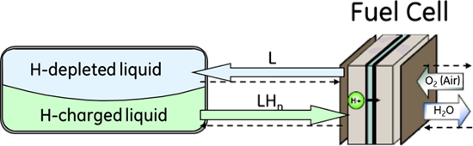
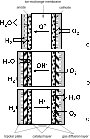
- reactions, a very important factor for energy storage, was reported to be over 99% for different classes of LOHCs and a promising cycling behavior was demonstrated [23][24]. The use of LOHCs, such as cycloalkanes, for hydrogen storage allows for the use of the existing liquid fuel infrastructure with
- for Innovative Energy Storage”, is to use partial electrooxidation of LOHC fuels to extract hydrogen (as protons and electrons) and form a stable dehydrogenated molecule, e.g., an aromatic or carbonyl compound (Equation 6) [36][37]. The overall reaction in the cell is described by Equation 7. The
- energy density of these systems is lower than those based on the full oxidation, but potentially they can be used for energy storage via electrochemical hydrogenation of the spent fuel (Equation 6 reverse). This approach is much simpler because it does not require an additional dehydrogenation catalyst

Magnesium batteries: Current state of the art, issues and future perspectives
Beilstein J. Nanotechnol. 2014, 5, 1291–1311, doi:10.3762/bjnano.5.143
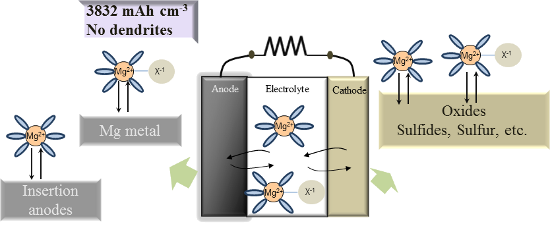
- of modern human life, energy storage systems or batteries occupy a central role in driving the electrification of our societies [1]. The basic principles of a battery are rather old; its invention by Allessandro Volta dates back to the eighteenth century [2] (archeological findings in the 20th
- century even suggest that the first battery was developed in Mesopotamia dating back to 2000 BC, to what is referred to as the “Baghdad battery” [3]). Since its invention, and most particularly in the twentieth century, advancements in energy storage technologies continued to evolve over time resulting in
- a myriad of distinct batteries and energy storage chemistries [1]. Out of the several known battery technologies, secondary or rechargeable batteries, such as nickel metal hydride and lithium-ion, which allow for reversibly storing and harnessing power on demand while providing high power and energy


Self-organization of mesoscopic silver wires by electrochemical deposition
Beilstein J. Nanotechnol. 2014, 5, 1285–1290, doi:10.3762/bjnano.5.142
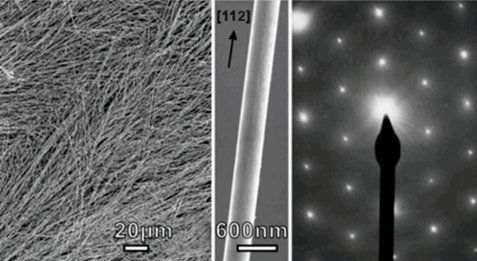
- Microstructures, Nanjing University, Nanjing 21009, China Helmholtz Institute Ulm Electrochemical Energy Storage, Albert-Einstein-Allee 11, 89081 Ulm, Germany Herbert Gleiter Institute of Nanoscience, NUST, Nanjing 21009, China 10.3762/bjnano.5.142 Abstract Long, straight mesoscale silver wires have been





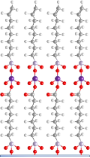
Organic and inorganic–organic thin film structures by molecular layer deposition: A review
Beilstein J. Nanotechnol. 2014, 5, 1104–1136, doi:10.3762/bjnano.5.123




Chemi- vs physisorption in the radical functionalization of single-walled carbon nanotubes under microwaves
Beilstein J. Nanotechnol. 2014, 5, 537–545, doi:10.3762/bjnano.5.63
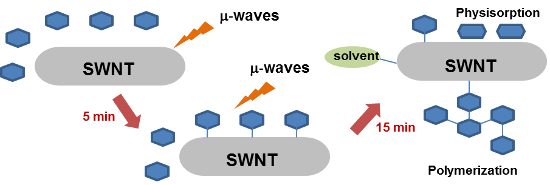
- functionalization; grafting; microwaves; physisorption; Introduction Carbon nanotubes (CNTs) are recognized to have a huge potential in a variety of applications such as electronics, composite materials, energy storage and medicine [1][2][3][4]. From bulk synthesis method, CNTs are often entangled contingent upon





Tensile properties of a boron/nitrogen-doped carbon nanotube–graphene hybrid structure
Beilstein J. Nanotechnol. 2014, 5, 329–336, doi:10.3762/bjnano.5.37
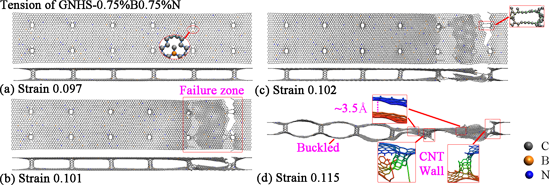
- for the application as fuel cell electrocatalyst, in field-effect transistors, and in lithium batteries. Thus, especially N-doped nanotube–graphene hybrid structures have been envisioned to have promising potential applications in the field of catalysis, gas storage and energy storage [16]. The


Thermal stability and reduction of iron oxide nanowires at moderate temperatures
Beilstein J. Nanotechnol. 2014, 5, 323–328, doi:10.3762/bjnano.5.36
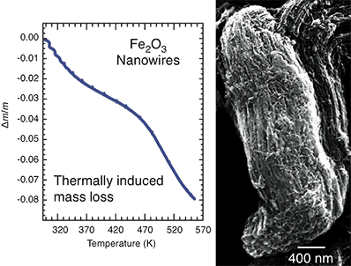
- electron microscopy (SEM); thermogravimetry; XPS; Introduction The ever-growing need for energy is pushing research towards the study and development of new energy storage and conversion tools with high efficiency such as Li-ion based batteries [1]. The request of stable low-cost components with a high


Change of the work function of platinum electrodes induced by halide adsorption
Beilstein J. Nanotechnol. 2014, 5, 152–161, doi:10.3762/bjnano.5.15
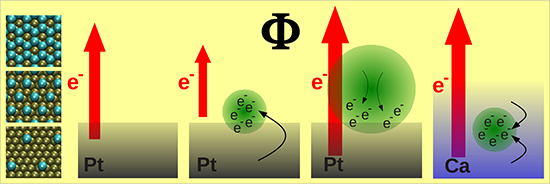
- Florian Gossenberger Tanglaw Roman Katrin Forster-Tonigold Axel Gross Institute of Theoretical Chemistry, Ulm University, 89069 Ulm, Germany Helmholtz Institute Ulm (HIU) for Electrochemical Energy Storage, 89069 Ulm, Germany 10.3762/bjnano.5.15 Abstract The properties of a halogen-covered
- calcium, but through a different mechanism. Calcium is considered to be an attractive electrode material in electrochemical energy storage because of its low electronegativity, earth abundance, and low cost [41]. Fluorine adsorbs stably at a threefold hollow site on calcium, which is a metal with fcc


Adsorption of the ionic liquid [BMP][TFSA] on Au(111) and Ag(111): substrate effects on the structure formation investigated by STM
Beilstein J. Nanotechnol. 2013, 4, 903–918, doi:10.3762/bjnano.4.102
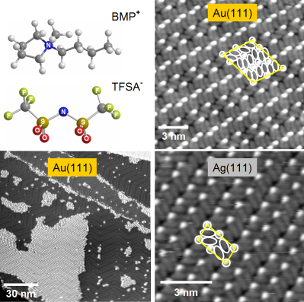
- Benedikt Uhl Florian Buchner Dorothea Alwast Nadja Wagner R. Jurgen Behm Institute of Surface Chemistry and Catalysis, University Ulm, Albert-Einstein-Allee 47, D-89081 Ulm, Germany Helmholtz Institute Ulm Electrochemical Energy Storage (HIU), Albert-Einstein-Allee 11, D-89081 Ulm, Germany





Synthesis and electrochemical performance of Li2Co1−xMxPO4F (M = Fe, Mn) cathode materials
Beilstein J. Nanotechnol. 2013, 4, 860–867, doi:10.3762/bjnano.4.97
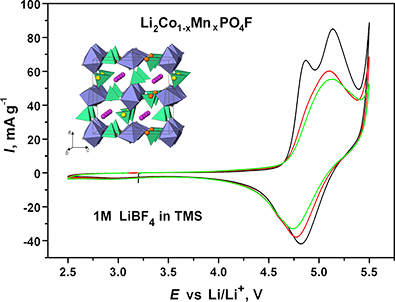
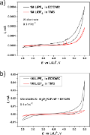
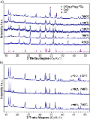
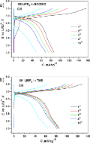
- of Li-ion batteries has been expanded from small-sized portable electronics to large-scale electric vehicles and stationary energy storage systems. Large-scale energy applications require batteries that are economically efficient, highly safe and that provide a high energy and power density. Today



Advances in nanomaterials
Beilstein J. Nanotechnol. 2013, 4, 805–806, doi:10.3762/bjnano.4.91

- , from energy harvesting to energy storage technologies and from biomimetic structures to medical technologies, to mention just a few examples. One recent development in the field of nanomaterials is the ability not only to tailor the properties of nanomaterials (to achieve custom-designed, “tailor-made
- the Helmholtz Institute Ulm for Electrochemical Energy Storage (HIU). He is Distinguished Professor at the Indian Institute of Technology Madras, India, and Honorary Professor at the University of Hyderabad, India, and at the Lanzhou University, China. Moreover, he is Elected Member of the German
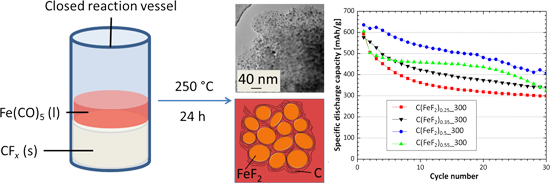
Influence of particle size and fluorination ratio of CFx precursor compounds on the electrochemical performance of C–FeF2 nanocomposites for reversible lithium storage
Beilstein J. Nanotechnol. 2013, 4, 705–713, doi:10.3762/bjnano.4.80
- Institute Ulm (HIU) Electrochemical Energy Storage, Albert-Einstein-Allee 11, 89081 Ulm, Germany Karlsruhe Insititute of Technology (KIT), Karlsruhe Nano Micro Facility (KNMF), Hermann-von-Helmholtz-Platz 1, 76344 Eggenstein-Leopoldshafen, Germany Karlsruhe Institute of Technology (KIT), Institute for
- ; enregy-related; graphite fluoride; lithium battery; iron fluoride; Introduction Lithium-ion batteries are key energy storage systems for portable and mobile electric devices. However, for applications that need high energy densities, current insertion-based lithium-ion batteries do not match the targets
- for such systems [1][2][3][4]. As a perspective, energy storage materials that are based on conversion reactions may offer high theoretical capacities and high theoretical energy densities for hydrogen storage and for electrochemical storage in batteries [5]. Compared to state-of-the-art insertion


A facile synthesis of a carbon-encapsulated Fe3O4 nanocomposite and its performance as anode in lithium-ion batteries
Beilstein J. Nanotechnol. 2013, 4, 699–704, doi:10.3762/bjnano.4.79
- oxide; lithium-ion battery; nanoparticles; pyrolysis; Findings Due to high energy density and excellent cyclic performance, lithium-ion batteries (LIBs) have become the leading energy storage device for portable electronic markets and for powering upcoming electric vehicles [1][2]. In order to obtain
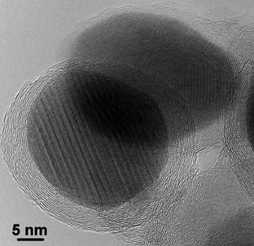
- cycles. Further experiments are underway to check its extended stability and capacity retention behaviour. We believe that this method opens a simple way for producing carbon encapsulated metal oxide nanocomposites for energy storage, catalysis, and magnetic applications. XRD pattern and Raman spectrum


Energy-related nanomaterials
Beilstein J. Nanotechnol. 2013, 4, 678–679, doi:10.3762/bjnano.4.76
- , energy storage poses an even greater challenge, requiring contributions from the fields of electrochemistry, catalysis and simulations on all length scales. Therefore, the cooperation of research facilities with a long-established experience in materials-oriented chemistry including catalysis and
High-resolution electrical and chemical characterization of nm-scale organic and inorganic devices
Beilstein J. Nanotechnol. 2013, 4, 318–319, doi:10.3762/bjnano.4.35
- increase in “More than Moore” developments targeting energy (photovoltaic, energy storage), imaging (e.g., quantitative medical imaging), sensor/actuators linked to CMOS-base circuitry, biochips, etc. The utilization of graphene in order to process high mobility (both for holes and electrons) field-effect
Near-field effects and energy transfer in hybrid metal-oxide nanostructures
Beilstein J. Nanotechnol. 2013, 4, 306–317, doi:10.3762/bjnano.4.34
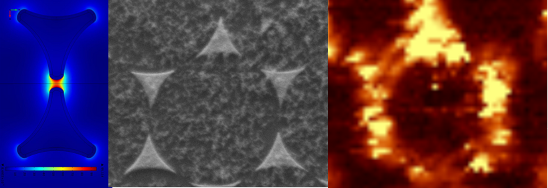
- requires reliable and large-scale energy storage. A most attractive way to this end would be conversion of solar energy directly into chemical energy; this can, for example, be achieved by photocatalytic splitting of water into hydrogen and oxygen, as already demonstrated forty years ago [1








Functionalization of vertically aligned carbon nanotubes
Beilstein J. Nanotechnol. 2013, 4, 129–152, doi:10.3762/bjnano.4.14
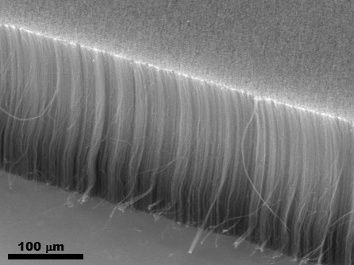
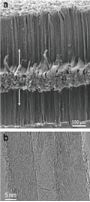
- tensile strength [9] and elastic modulus [10], CNTs form the strongest and stiffest material that humans have created. These properties offer a wide range of potential applications [11][12], for electronic devices, energy storage and transport, nanocomposite materials, and nanomedicine. The as-synthesized
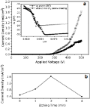
- SWCNTs and graphene. The covalent bond between both elements leads to an ohmic contact at the junction. In parallel to this efficient electrical contact, a SSA between 2,000 and 2,600 m2·g−1 was measured. This work opens perspectives for potential applications in energy storage and nanoelectronic devices








Inorganic–organic hybrid materials through post-synthesis modification: Impact of the treatment with azides on the mesopore structure
Beilstein J. Nanotechnol. 2011, 2, 486–498, doi:10.3762/bjnano.2.52
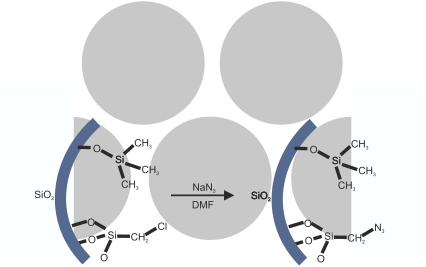
- Inorganic–organic hybrid materials with tailored porosity on several length scales are of interest for a variety of applications, such as separation, adsorption, catalysis, energy storage, etc., due to the benefits arising from each pore size regime, e.g., rapid mass transport through macropores combined





