Search results
Search for "interfaces" in Full Text gives 471 result(s) in Beilstein Journal of Nanotechnology. Showing first 200.
Review of advanced sensor devices employing nanoarchitectonics concepts
Beilstein J. Nanotechnol. 2019, 10, 2014–2030, doi:10.3762/bjnano.10.198
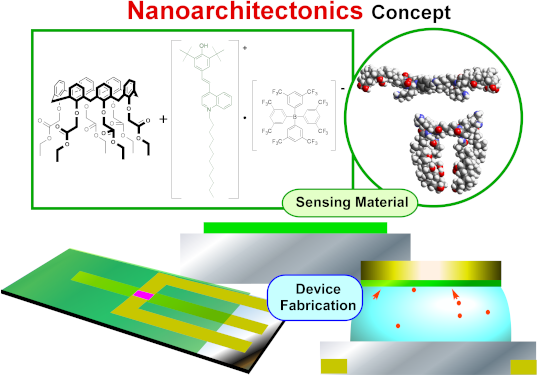
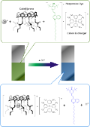
- different from the band-like carrier transport modes in thicker crystals. The fabricated sensor with ultrathin organic semiconductor crystals was an efficient NH3 sensor with a detection limit on the 10 ppb level. Specific effect of molecular sensing at interfaces The high surface area nature of nanoporous
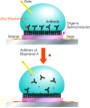
- , Figure 8). Interfaces provide the potential of contact between two different media. Molecules with recognition capability (receptor molecules) prepared through organic synthesis are not always soluble in the aqueous phase and are not appropriate for sensing of water-soluble targets in solution phases
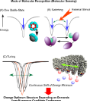
- receptors and enzymes, and macromolecular interfaces at DNA and proteins. This mechanism for the enhancement of the molecular recognition capability at interfaces is surely applicable to other molecular recognition pairs and should also lead to highly efficient molecular recognition of various aqueous





Fabrication and characterization of Si1−xGex nanocrystals in as-grown and annealed structures: a comparative study
Beilstein J. Nanotechnol. 2019, 10, 1873–1882, doi:10.3762/bjnano.10.182
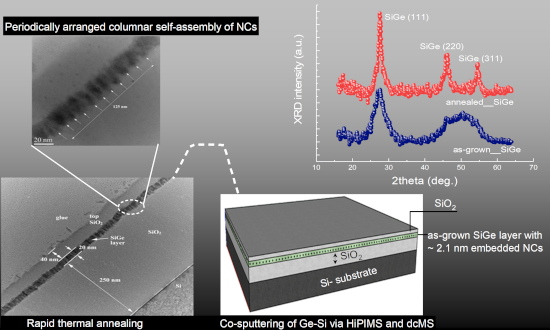
- /nanoparticle (NCs/NPs) interfaces. Several studies have been devoted to the morphology of the interface between oxide matrices and NCs [8][9][10]. The interface of these structures has been a matter of concern in studying optical response as it may give rise to dangling bonds acting as electrically active
- interface traps (known as Pb-type defects). These interface traps produce scattering centers that can affect the mobility of charge carriers, thus altering the transport properties [11]. Moreover, sharp interfaces with an abrupt change in the dielectric constant or thermal expansion coefficients give rise
- the film surface and internal interfaces, thus demonstrating the alteration in the internal interface morphology. This can be further explained by the observed reduction in thickness when annealed at 800–900 °C and might be due to diffusion of Si forming Si shells (as described earlier, when the SiGe


Growth dynamics and light scattering of gold nanoparticles in situ synthesized at high concentration in thin polymer films
Beilstein J. Nanotechnol. 2019, 10, 1768–1777, doi:10.3762/bjnano.10.172
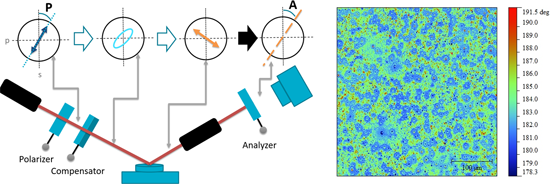
- model assumes flat interfaces between adjacent layers, each of them being characterized by its thickness and its (frequency-dependent) complex refractive index or dielectric function. In the case of layers containing mixed materials, which is the case for our nanocomposite layers, the optical properties


Precise local control of liquid crystal pretilt on polymer layers by focused ion beam nanopatterning
Beilstein J. Nanotechnol. 2019, 10, 1691–1697, doi:10.3762/bjnano.10.164
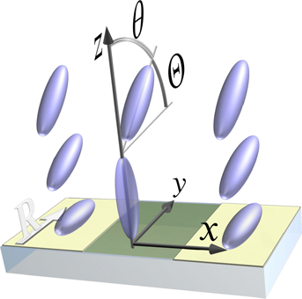
- beam nanopatterning; nematic liquid crystal; optical retardation; pretilt control; surface anchoring; Introduction Liquid crystal (LC) interactions with adjacent interfaces play a key role in LC-based optical devices as they are responsible for stabilizing mono-domain LC configurations and ensuring


Nanoporous smartPearls for dermal application – Identification of optimal silica types and a scalable production process as prerequisites for marketed products
Beilstein J. Nanotechnol. 2019, 10, 1666–1678, doi:10.3762/bjnano.10.162
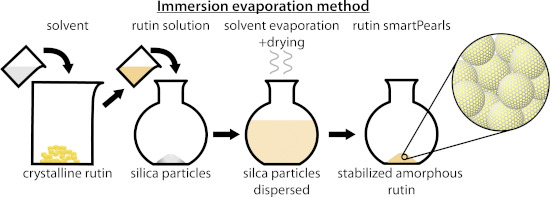
- Berlin, Germany Institute of Functional Interfaces, Karlsruher Institute of Technology, Hermann-von-Helmholtz-Platz 1, 76344 Eggenstein-Leopoldshafen, Germany 10.3762/bjnano.10.162 Abstract smartPearls are a dermal delivery system for poorly soluble active agents, consisting of nanoporous silica




Giant magnetoresistance ratio in a current-perpendicular-to-plane spin valve based on an inverse Heusler alloy Ti2NiAl
Beilstein J. Nanotechnol. 2019, 10, 1658–1665, doi:10.3762/bjnano.10.161
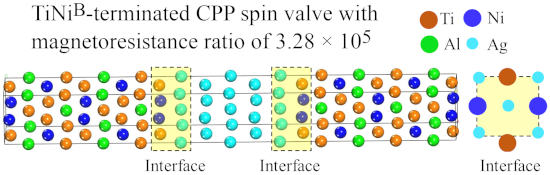
- Physics, Zunyi Normal College, Zunyi 563002, People’s Republic of China 10.3762/bjnano.10.161 Abstract A Ti2NiAl inverse Heusler alloy based current-perpendicular-to-plane (CPP) spin valve (SV) with various kinds of atomic terminated interfaces has been designed to explore the potential application of
- electronic structure and magnetic properties, and they deserve to be further studied and applied in spintronics devices. In this study, we built a CPP-SV device employing a half-metallic inverse Heusler alloy Ti2NiAl as the electrode and Ag as the spacer. Different atomic-terminated interfaces are considered
- ) terminated interfaces. In order to study the magnetic behavior of Ti2NiAl/Ag/Ti2NiAl CPP-SV, we calculated the spin-resolved atom magnetic moment of each layer of the device with various atomic-terminated interfaces, which are shown in Figure 2. It can be seen that the magnetic moment of interfacial Tib


Materials nanoarchitectonics at two-dimensional liquid interfaces
Beilstein J. Nanotechnol. 2019, 10, 1559–1587, doi:10.3762/bjnano.10.153
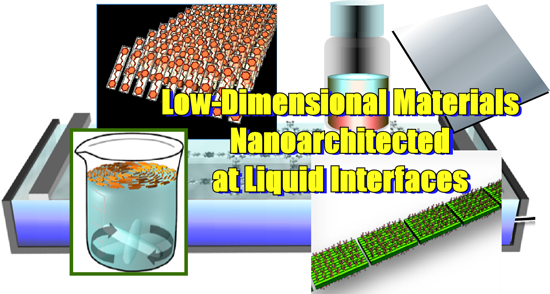
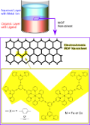
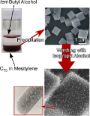
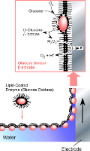
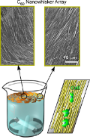
- emerging concept of nanoarchitectonics. In this review article, we overview recent research progresses on materials nanoarchitectonics at two-dimensional liquid interfaces, which are dimensionally restricted media with some freedoms of molecular motion. Specific characteristics of molecular interactions
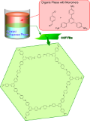
- and functions at liquid interfaces are briefly explained in the first parts. The following sections overview several topics on materials nanoarchitectonics at liquid interfaces, such as the preparation of two-dimensional metal-organic frameworks and covalent organic frameworks, and the fabrication of
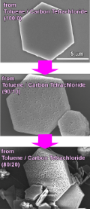
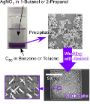
- low-dimensional and specifically structured nanocarbons and their assemblies at liquid–liquid interfaces. Finally, interfacial nanoarchitectonics of biomaterials including the regulation of orientation and differentiation of living cells are explained. In the recent examples described in this review













Superconducting switching due to a triplet component in the Pb/Cu/Ni/Cu/Co2Cr1−xFexAly spin-valve structure
Beilstein J. Nanotechnol. 2019, 10, 1458–1463, doi:10.3762/bjnano.10.144
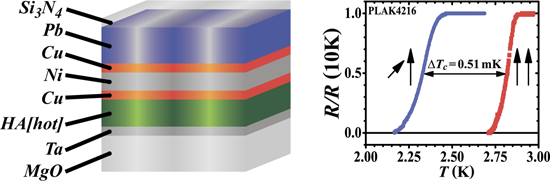
- ] along the lines of [27][28]. It allows to consider layered structures with different material parameters of all the layers and arbitrary Kupriyanov–Lukichev boundary parameters [29] of all the interfaces. Each of the two interfaces (F/S and F/F) is described by the matching parameter γ and the
- the S-layer, ξS = 41 nm, coherence lengths in the F2 and the F1-layer, ξF2 = 6.25 nm and ξF1 = 40 nm. The boundary conditions of the S/F and F/F interfaces are given by the material matching parameter γ and the transparency parameter γb, γSF = 0.1, , γFF = 1, and . The exchange energy of the F1 and of



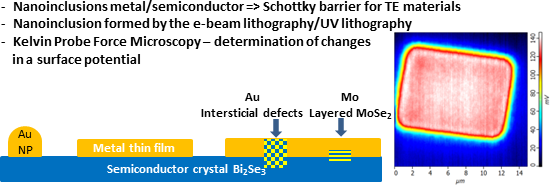
Kelvin probe force microscopy of the nanoscale electrical surface potential barrier of metal/semiconductor interfaces in ambient atmosphere
Beilstein J. Nanotechnol. 2019, 10, 1401–1411, doi:10.3762/bjnano.10.138


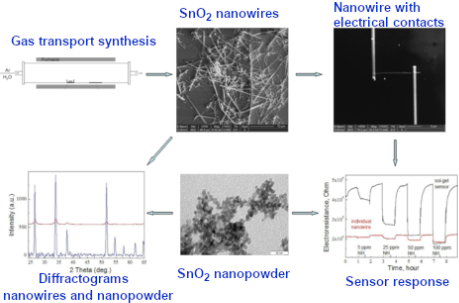
Gas sensing properties of individual SnO2 nanowires and SnO2 sol–gel nanocomposites
Beilstein J. Nanotechnol. 2019, 10, 1380–1390, doi:10.3762/bjnano.10.136
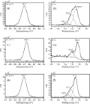
- , specifically in nanomaterials, and particularly in the investigation of the structure of tin–oxygen systems [35][36][37][38][39]. These methods, in particular, demonstrated high sensitivity to the physical and chemical states of surfaces and interfaces. A sintered lump of tetragonal SnO2 (Alfa Aesar) was used




A biomimetic nanofluidic diode based on surface-modified polymeric carbon nitride nanotubes
Beilstein J. Nanotechnol. 2019, 10, 1316–1323, doi:10.3762/bjnano.10.130
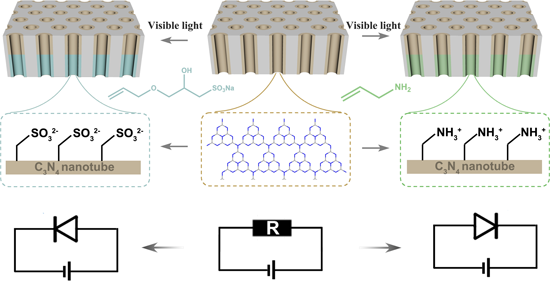
- Kai Xiao Baris Kumru Lu Chen Lei Jiang Bernhard V. K. J. Schmidt Markus Antonietti Max Planck Institute of Colloids and Interfaces, Department of Colloid Chemistry, 14476 Potsdam, Germany Key Laboratory of Bio-inspired Smart Interfacial Science and Technology of Ministry of Education, School of


Multicomponent bionanocomposites based on clay nanoarchitectures for electrochemical devices
Beilstein J. Nanotechnol. 2019, 10, 1303–1315, doi:10.3762/bjnano.10.129
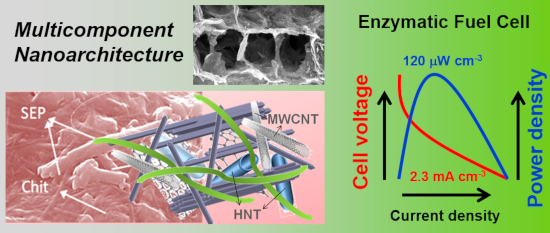
- functional materials. On the other hand, tubular nanoclays, such as halloysite nanotubes (HNTs), are interesting containers for the controlled chemical reactions at nanoscale interfaces and the delivery of active compounds thanks to their unique nature [12], which could be advantageous when integrated as



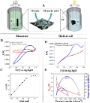
Tailoring the magnetic properties of cobalt ferrite nanoparticles using the polyol process
Beilstein J. Nanotechnol. 2019, 10, 1166–1176, doi:10.3762/bjnano.10.116
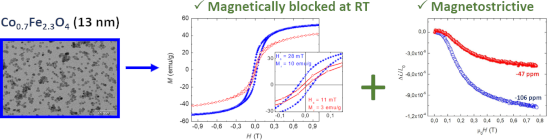
- electrical field. Thus, the geometry of the connectivity has a huge impact on the ME efficiency and high ME coefficients are expected for extrinsic multiferroics with optimized interfaces. Despites these very enthusiastic theoretical predictions, most of the experimentally measured ME coefficients appear to
- be significantly smaller. This discrepancy is mainly due to the difficulties in producing hybrid materials with large and perfect interfaces [5]. The use of nanomaterials exhibiting large surface-to-volume ratios instead of bulk materials can help to overcome this limitation. To the best of our


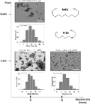


Photoactive nanoarchitectures based on clays incorporating TiO2 and ZnO nanoparticles
Beilstein J. Nanotechnol. 2019, 10, 1140–1156, doi:10.3762/bjnano.10.114
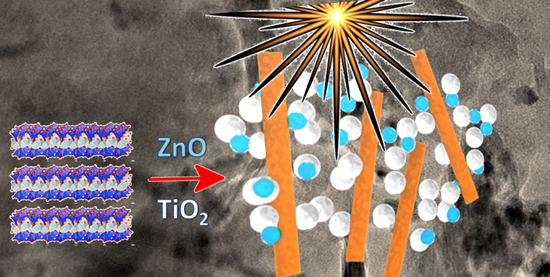
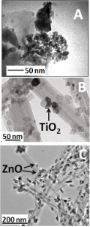
- significant differences in size, degree of self-agglomeration as well as dispersion on the surface of the clay, which may influence the resulting properties of the materials. The principle of using the interfaces in layered clays is also applicable to fibrous clays with the generation of NPs homogeneously



Quantitative analysis of annealing-induced instabilities of photo-leakage current and negative-bias-illumination-stress in a-InGaZnO thin-film transistors
Beilstein J. Nanotechnol. 2019, 10, 1125–1130, doi:10.3762/bjnano.10.112
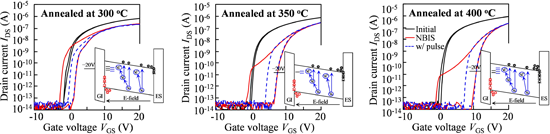
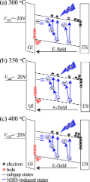
- bulk, whereas high-temperature annealing causes a quality degradation of the adjacent interfaces. Light of short wavelengths below 460 nm induces defect generation in the forward measurement and the leakage current increases in the reverse measurement, especially for the low-temperature-annealed device
- TFT devices comprise several functional layers and their respective contact interfaces. Generally, the individual layer fabrication process follows a number of thin film deposition and photolithographic patterning steps. During the film growth through plasma-enhanced chemical vapor deposition or
- recognized as an essential method to enhance the quality of the channel layer as well as its adjacent interfaces [5]. Although the initial performance of the TFTs can be improved using a passivation layer and suitable post-annealing, the devices in FPDs always undergo a negative gate bias and are exposed to


Synthesis and characterization of quaternary La(Sr)S–TaS2 misfit-layered nanotubes
Beilstein J. Nanotechnol. 2019, 10, 1112–1124, doi:10.3762/bjnano.10.111
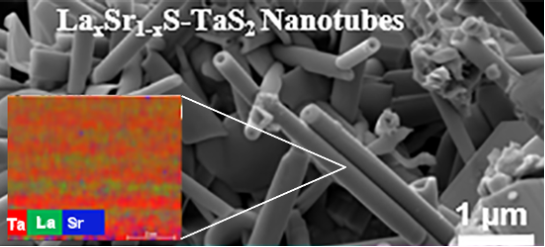
- Marco Serra Erumpukuthickal Ashokkumar Anumol Dalit Stolovas Iddo Pinkas Ernesto Joselevich Reshef Tenne Andrey Enyashin Francis Leonard Deepak Department of Materials and Interfaces, Weizmann Institute, Rehovot 76100, Israel Nanostructured Materials Group, Department of Advanced Electron


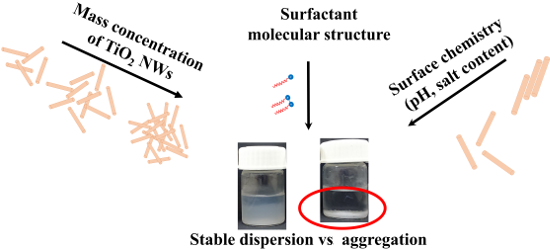
Tailoring the stability/aggregation of one-dimensional TiO2(B)/titanate nanowires using surfactants
Beilstein J. Nanotechnol. 2019, 10, 1024–1037, doi:10.3762/bjnano.10.103
- Chemistry, Weizmann Institute of Science, Rehovot 76100, Israel current affiliation: Department of Analytical Chemistry, Faculty of Chemical Engineering and Technology, Marulićev trg 19, 10000 Zagreb, Croatia Karlsruhe Institute of Technology (KIT), Institute of Functional Interfaces (IFG), Hermann-von
- . Several models for adsorption of surfactants on solid/aqueous interfaces have been proposed but the most widely accepted one for the cationic surfactants is the four-step or reverse orientation model [40]. Briefly, according to that model, the adsorption of surfactants is governed by electrostatic and


In situ AFM visualization of Li–O2 battery discharge products during redox cycling in an atmospherically controlled sample cell
Beilstein J. Nanotechnol. 2019, 10, 930–940, doi:10.3762/bjnano.10.94
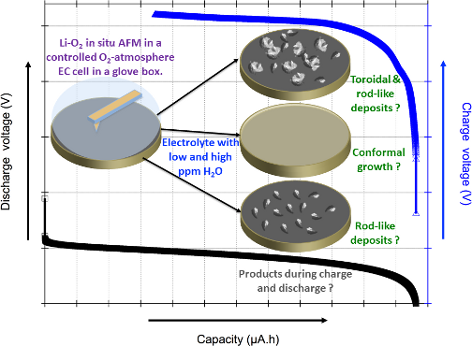
- deposition [3], corrosion and molecular adsorbates on a variety of surfaces [4] have also been investigated with scanning probe microscopy. In situ local probe techniques at electrical interfaces [5] use scanning probe microscopy to probe surface changes and reactions. A recent review by Yang et al. [6


Synthesis of novel C-doped g-C3N4 nanosheets coupled with CdIn2S4 for enhanced photocatalytic hydrogen evolution
Beilstein J. Nanotechnol. 2019, 10, 912–921, doi:10.3762/bjnano.10.92
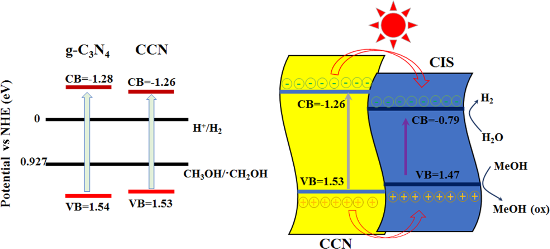
- [42]. As presented in Figure 11b, a possible mechanism of charge transfer for H2 formation has also been proposed over CISCCN heterostructured photocatalysts under visible-light irradiation. The type-I binary heterojunction interfaces can be formed because of the proper VB and CB positions for CCN and


Comparing a porphyrin- and a coumarin-based dye adsorbed on NiO(001)
Beilstein J. Nanotechnol. 2019, 10, 874–881, doi:10.3762/bjnano.10.88
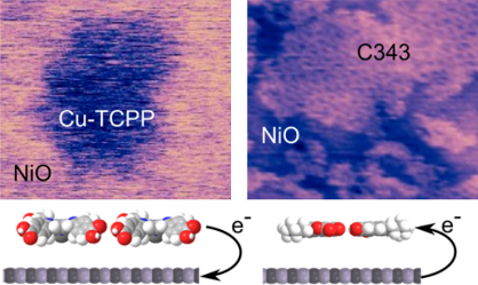
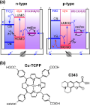
- , Switzerland 10.3762/bjnano.10.88 Abstract Properties of metal oxides, such as optical absorption, can be influenced through the sensitization with molecular species that absorb visible light. Molecular/solid interfaces of this kind are particularly suited for the development and design of emerging hybrid



Periodic Co/Nb pseudo spin valve for cryogenic memory
Beilstein J. Nanotechnol. 2019, 10, 833–839, doi:10.3762/bjnano.10.83
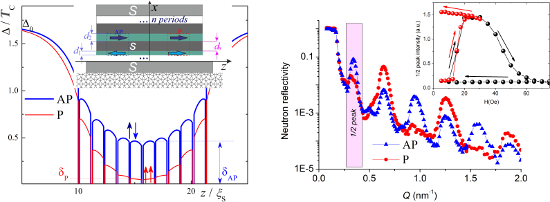
- and area of the corresponding interface. The plus sign in Equation 2 means that the pth material is located at the side xi − 0 from the interface position xi, and the minus sign corresponds to the case that the pth material is at xi + 0, while the x axis is oriented perpendicular to the interfaces


Capillary force-induced superlattice variation atop a nanometer-wide graphene flake and its moiré origin studied by STM
Beilstein J. Nanotechnol. 2019, 10, 804–810, doi:10.3762/bjnano.10.80
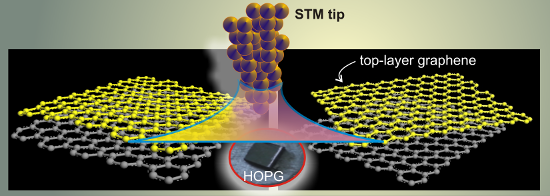
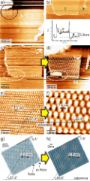
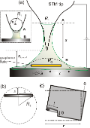
- -sized graphene flake wherein we have induced a further rotation of the flake utilizing the capillary forces at play at a solid–liquid interface using STM tip motion. We propose a more “realistic” tip–surface meniscus relevant to STM at solid–liquid interfaces and show that the capillary force is
- an STM image is a map of the local electronic density of states (LDOS), such electronic modifications may be visualized in real space. When STM is operated at solid–liquid interfaces, the capillary force due to the meniscus formed between the tip and the surface could be utilized for mechanically
- perfect agreement with values extracted from STM images, validating the moiré theory. A new “realistic” model for the capillary force at the interface pertinent to STM at solid–liquid interfaces is introduced. We showed that the capillary force alone can account for the entire expenditure of energy


Renewable energy conversion using nano- and microstructured materials
Beilstein J. Nanotechnol. 2019, 10, 771–773, doi:10.3762/bjnano.10.76

- optimization. Due to the significantly increased surface-to-volume ratio of nanostructured materials, the development of interface passivation strategies is one of the major challenges in the case of photovoltaic devices where recombination losses are most harmful at the photoactive interfaces. To a large
- extent, the difficulties in this endeavour originate from the complexity of interfaces nanostructured in three dimensions [22]. Relating the morphology to results from defect-spectroscopy experiments, theoretical models and device performance could be a valuable approach to comprehensively address such
Self-assembly and wetting properties of gold nanorod–CTAB molecules on HOPG
Beilstein J. Nanotechnol. 2019, 10, 696–705, doi:10.3762/bjnano.10.69
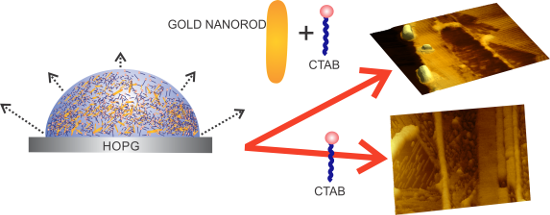
- Imtiaz Ahmad Floor Derkink Tim Boulogne Pantelis Bampoulis Harold J. W. Zandvliet Hidayat Ullah Khan Rahim Jan E. Stefan Kooij Physics of Interfaces and Nanomaterials, MESA+ Institute for Nanotechnology, University of Twente, P. O. Box 217, 7500AE Enschede, The Netherlands Department of Physics


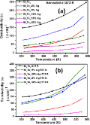
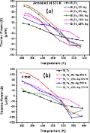
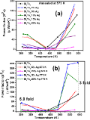
Enhancement in thermoelectric properties due to Ag nanoparticles incorporated in Bi2Te3 matrix
Beilstein J. Nanotechnol. 2019, 10, 634–643, doi:10.3762/bjnano.10.63
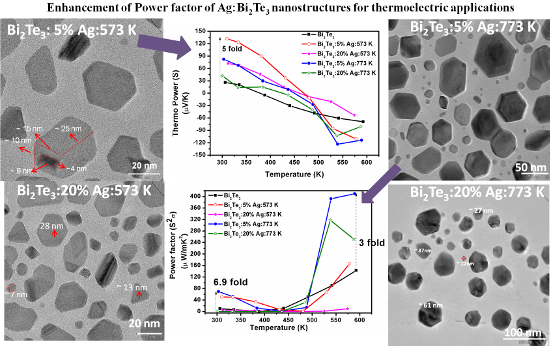
- conductivity with increase in Ag content in Bi2Te3 may be due to the enhanced carrier scattering at the interfaces of metal and semiconductor [20] and due to the presence of oxygen in all samples. An earlier report also suggests that the electrical resistivity of PbTe can increase up to 2–3 orders of magnitude
- a future study. The enhancement of the Seebeck coefficient can be attributed to carrier filtering. Band bending at the metal–semiconductor interfaces leads to a strong scattering of low-energy electrons whereas high-energy electrons remain unaffected [20][21]. The energy-dependent scattering of
- is ca. 6.3-times for 10% Ag at 300 K and 1.3-times for 2% Ag at 600 K. The nanoparticles in the semiconductor matrix also lead to a reduction of thermal conductivity through phonon scattering at the interfaces, which in turn increases the figure of merit. The present work shows that during the