


Search results
Search for "light" in Full Text gives 1532 result(s) in Beilstein Journal of Nanotechnology. Showing first 200.
Hymenoptera and biomimetic surfaces: insights and innovations
Beilstein J. Nanotechnol. 2024, 15, 1333–1352, doi:10.3762/bjnano.15.107
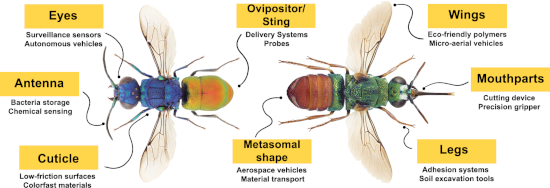
- and movement to unique features that enhance survival and reproductive success [4]. These adaptations may provide valuable insights for biomimetic and bioinspired technological advancements [1]. Hence, understanding these mechanisms not only sheds light on the evolutionary ingenuity of insects but
- pheomelanin) [21][22][23] (but see [24][25] for other pigments). Especially structural coloration provides a wealth of inspiration for creating vivid, durable colors without the use of dyes. This natural phenomenon involves the manipulation of light by micro- and nanostructures on the cuticle (e.g
- evolve structural coloration that reaches blue hues, like in carpenter bees [31]. Some species have ultrablack cuticles that absorb nearly all incident light (Lopez et al., this volume), a feature that can be used to create highly efficient light-absorbing materials for solar panels [32][33




Nanoarchitectonics with cetrimonium bromide on metal nanoparticles for linker-free detection of toxic metal ions and catalytic degradation of 4-nitrophenol
Beilstein J. Nanotechnol. 2024, 15, 1312–1332, doi:10.3762/bjnano.15.106
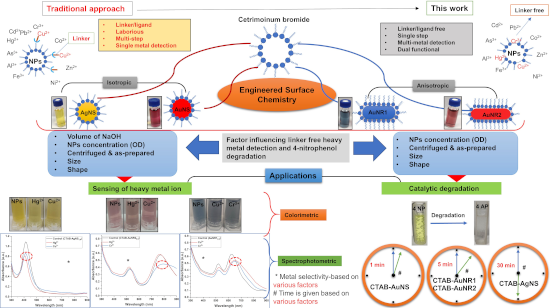
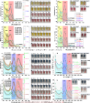
- nanostructures were measured using an Epoch2 spectrophotometer (BioTek, USA). Hydrodynamic radius and polydispersity index (PDI) were measured using dynamic light scattering (Zetasizer Nano ZS, Malvern, UK). The zeta potential measurements were conducted to determine the surface charge for both isotropic and




Interaction of graphene oxide with tannic acid: computational modeling and toxicity mitigation in C. elegans
Beilstein J. Nanotechnol. 2024, 15, 1297–1311, doi:10.3762/bjnano.15.105
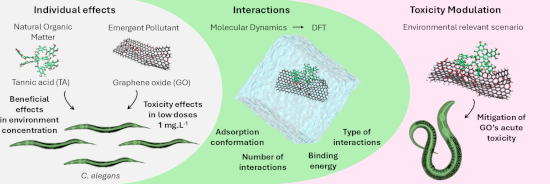
- sheets. TA did not improve the stability of these samples. After the 24 h, only the suspensions of 1 mg·L−1 of GO did not exhibit visual precipitation (Supporting Information File 1, Figure S1a). The results of dynamic light scattering (DLS) measurements presented in Table S1 (Supporting Information File
- added, and the suspension was sonicated in an ultrasonic bath. The sonication time was controlled by analyzing the material’s hydrodynamic diameters by dynamic light scattering (DLS). Dispersion aliquots for measurement were collected every 10 min, and the sonication was performed until there were no


Mn-doped ZnO nanopowders prepared by sol–gel and microwave-assisted sol–gel methods and their photocatalytic properties
Beilstein J. Nanotechnol. 2024, 15, 1283–1296, doi:10.3762/bjnano.15.104
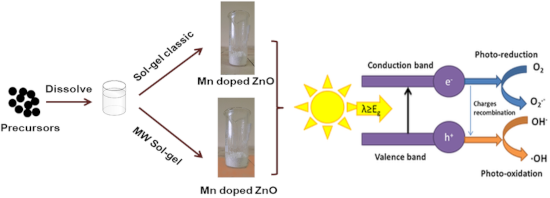
- their newly proved functionality, namely, the ability to photogenerate distinct reactive oxygen species (·OH or O2−) and to act as photoactive materials in aqueous media. The solar light-induced mineralization of oxalic acid by Mn-doped ZnO materials was clearly observed while similar amounts of
- generated CO2 were measured for both catalysts. These inexpensive semiconductor materials, which proved to be light-responsive, can be further used for developing water depollution technologies based on solar light energy. Keywords: microwave-assisted synthesis; oxalic acid mineralization; semiconductor
- toxic, and light-responsive. Up to now, advanced oxidation processes (AOPs) were used for the cleaning of waste water. Although AOPs based on engineered materials were performed in conjunction with biological treatments, the need for optimization still remains. Many photoactive semiconductors were


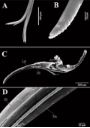
Functional morphology of cleaning devices in the damselfly Ischnura elegans (Odonata, Coenagrionidae)
Beilstein J. Nanotechnol. 2024, 15, 1260–1272, doi:10.3762/bjnano.15.102

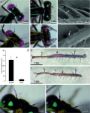
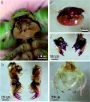
- Ischnura elegans males and females were collected in the field at Centro Ittiogenico del Trasimeno - Sant’Arcangelo (Perugia, Umbria region, Italy), in spring and summer 2023–2024. They were maintained for 2–3 days in a controlled climate chamber (14:10 light–dark rhythm, at a temperature of 25 ± 1 °C and
- relative humidity of 70 ± 10%) inside net cages (25 cm × 25 cm × 25 cm). Drosophila melanogaster flies were used to feed the damselflies. Adult insects of both sexes were used in the study. Light microscopy To count the mean number of foretibial grooming structures in males and females, we anaesthetized 13
- slides, stained with 1% methylene blue with sodium borate, and observed and photographed using a KOPPACE microscope camera KP-2100 (KOPPACE, Kepuaisi Science Technology, Shenzhen, China) mounted on a light microscope Leica DMLB (Leica Microsystem GmbH, Wetzlar, Germany). Scanning electron microscopy


Dual-functionalized architecture enables stable and tumor cell-specific SiO2NPs in complex biological fluids
Beilstein J. Nanotechnol. 2024, 15, 1238–1252, doi:10.3762/bjnano.15.100
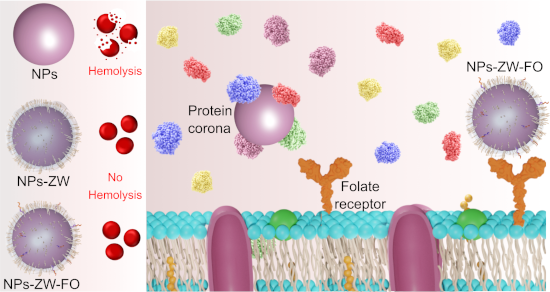
- Iris Renata Sousa Ribeiro Raquel Frenedoso da Silva Romenia Ramos Domingues Adriana Franco Paes Leme Mateus Borba Cardoso Institute of Chemistry (IQ), University of Campinas (UNICAMP), Postal Code 13083- 970, Post Office Box 6154, Campinas, SP, Brazil Brazilian Synchrotron Light Laboratory (LNLS
- 1.0 mg·mL–1) and later used for the quantification of captured SiO2NPs-ZW-FO. The calculations were performed using the value obtained at the maximum of the emission band. Stability of SiO2NPs in cell culture medium and human plasma Dynamic light scattering (DLS) measurements were performed to


Enhanced catalytic reduction through in situ synthesized gold nanoparticles embedded in glucosamine/alginate nanocomposites
Beilstein J. Nanotechnol. 2024, 15, 1227–1237, doi:10.3762/bjnano.15.99
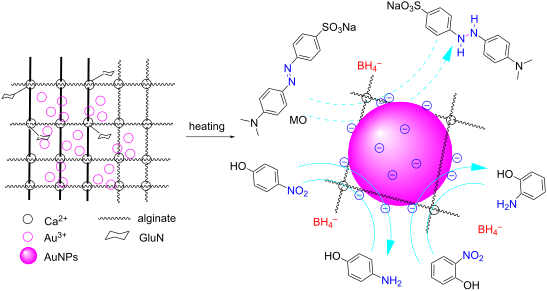
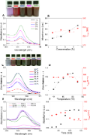
- microscopy (TEM) and selected area electron diffraction (SAED) were carried out using a JEOL JEM-2100 instrument. Crystal structure characterizations of AuNPs were carried out via XRD diffraction. Zeta potential and dynamic light scattering (DLS) measurements were carried out on gel solutions (1.0 mg·mL−1



A low-kiloelectronvolt focused ion beam strategy for processing low-thermal-conductance materials with nanoampere currents
Beilstein J. Nanotechnol. 2024, 15, 1197–1207, doi:10.3762/bjnano.15.97

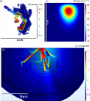
- light interactions with biological tissue [18] as well as focused electron beam-induced deposition (FEBID) [19]. The general approach to assess the beam-induced heat damage and undesired artifacts, regardless if working with ions [17], photons [18], or electrons [19], compares experiments to models
- based on heat transfer and to Monte Carlo or finite element simulations [17][18][19]. Open source programs that assess heat deposition and diffusion are readily available to assess damage in light–tissue interactions [18]. For electron beams, multidimensional models predicting electron beam-induced



Quantum-to-classical modeling of monolayer Ge2Se2 and its application in photovoltaic devices
Beilstein J. Nanotechnol. 2024, 15, 1153–1169, doi:10.3762/bjnano.15.94
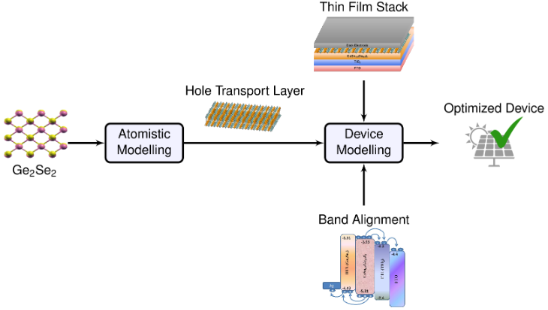
- and relatively low manufacturing cost [3][4]. These solar cells are based on perovskite-structured compounds, which have demonstrated excellent light absorption, charge-carrier mobilities, and tunable bandgaps [5]. Despite the rapid advancements in PSC technology, some critical issues, such as long
- , which further leads to higher transition possibilities. The absorption coefficient elucidates the rate at which light intensity diminishes while entering the material. It primarily depends upon the imaginary part of the refractive index k(λ) = Im{n(λ)} and the wavelength of the incident light λ, as per
- CBM around a wide range of spectra at the S point. Refractive index and extinction coefficient The real part of the material’s refractive index defines the angle of refraction that the light undergoes while entering a medium. Higher refractive indices refer to lower refraction angles measured from the




Photocatalytic methane oxidation over a TiO2/SiNWs p–n junction catalyst at room temperature
Beilstein J. Nanotechnol. 2024, 15, 1132–1141, doi:10.3762/bjnano.15.92
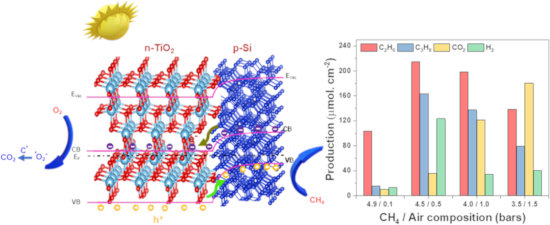
- of TiO2 on p-type SiNWs. The TiO2/SiNWs heterostructure exhibited an outstanding OCM performance under simulated solar light irradiation compared to the single components. This enhanced efficiency was attributed to the intrinsic electrical field formed between n-type TiO2 and p-type SiNWs, which
- because of its high stability, good dispersibility, and narrow energy bandgap. However, pristine TiO2 shows only low photocatalytic efficiency because of the high recombination rate between holes and electrons and the low visible-light harvesting ability [20][21][22]. The rapid recombination of charge
- electron–hole pairs. Additionally, TiO2/SiNWs offer flexibility, improved bandgap energy, and enhanced light harvesting across a broad spectrum, leading to higher photocatalytic efficiency. Combining SiNWs and TiO2 presents an opportunity to leverage the strengths of both materials while mitigating their


Direct electron beam writing of silver using a β-diketonate precursor: first insights
Beilstein J. Nanotechnol. 2024, 15, 1117–1124, doi:10.3762/bjnano.15.90

- . “Experimental” section) for focused electron beam-induced deposition (FEBID). (hfac)AgPMe3 is a white to light yellow solid, which was used before for chemical vapor deposition [32] and for growing silver nanoparticles by atomic layer deposition [33]. Like for other silver precursors, a pronounced halo and a


Unveiling the potential of alginate-based nanomaterials in sensing technology and smart delivery applications
Beilstein J. Nanotechnol. 2024, 15, 1077–1104, doi:10.3762/bjnano.15.88
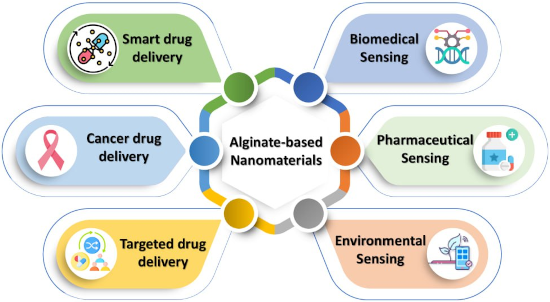
- [61]. Nanoparticle size: The nanoparticle size can be determined using a variety of methods including dynamic (DLS) and static (SLS) light scattering; TEM, SEM, and AFM are also widely employed [62][63]. DLS and SLS can detect particle size by determining changes in distribution of particle size
- sensor. Another fluorescence-based smart sensor from alginate nanofilms was prepared [122]. Scientists proved that relative humidity could be detected using a guar gum–sodium alginate (GGSA) nanocomposite film. The study found that the fluorescence of biocomposite films under UV light varies at various


Signal generation in dynamic interferometric displacement detection
Beilstein J. Nanotechnol. 2024, 15, 1070–1076, doi:10.3762/bjnano.15.87
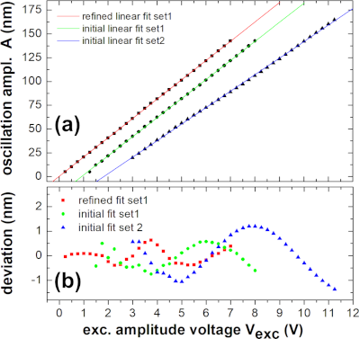
- to the harmonic displacement of the cantilever in the time domain. As the interferometer signal is limited in amplitude because of the spatial periodicity of the interferometer light field, an increasing cantilever oscillation amplitude creates an output signal with an increasingly complex temporal
- . Keywords: amplitude calibration; displacement detection; force microscopy; interferometer signal; NC-AFM; Introduction Optical interferometry is a reliable technique utilizing light waves to measure distance and displacement with high precision [1][2]. With the light wavelength as the length standard, a
- highly stable interferometer can detect displacements with an accuracy far beyond nanometer resolution [3], where the final physical limit is set by the photon emission statistics of the light source [4]. In non-contact atomic force microscopy (NC-AFM), interferometry is used to measure the periodic


Bolometric IR photoresponse based on a 3D micro-nano integrated CNT architecture
Beilstein J. Nanotechnol. 2024, 15, 1030–1040, doi:10.3762/bjnano.15.84
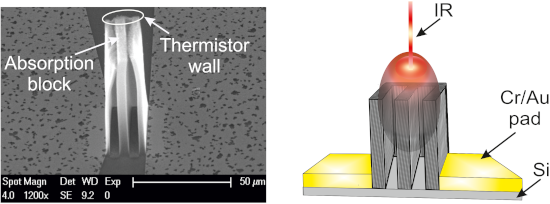
- (TCR) [6], and high mechanical stability [7]. Vertically aligned CNTs (VACNTs) are considered to be nearly ideal blackbody absorbers because of their ability to absorb light over a broad spectral range (0.2–200 μm), closely resembling the theoretical blackbody that absorbs all wavelengths of light [3
- VACNTs (water-assisted CVD on silicon substrates with ethylene as the carbon source) has been investigated by [3]. They showed that vertically aligned SWCNTs can absorb light almost perfectly with a reflectance of 0.01–0.02 over a very wide spectral range (0.2–200 μm). The UV-to-mid-IR absorption
- reduced by more than one order of magnitude. Assuming a similar temperature increase in the CNT walls, the responsivity will increase by an order of magnitude. In addition, the CNT height can be reduced to the effective light absorption depth to achieve a more homogeneous temperature rise over the wall


Entry of nanoparticles into cells and tissues: status and challenges
Beilstein J. Nanotechnol. 2024, 15, 1017–1029, doi:10.3762/bjnano.15.83
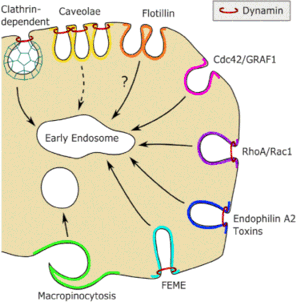
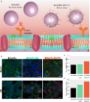
- [29]. Other microscopy techniques that are useful for such studies are correlative light and electron microscopy (CLEM) [30], confocal microscopy with Z-stacks [4], and structured illumination microscopy (SIM) which can also demonstrate in which organelles the NPs are localized. The SIM image shown in


Atomistic insights into the morphological dynamics of gold and platinum nanoparticles: MD simulations in vacuum and aqueous media
Beilstein J. Nanotechnol. 2024, 15, 995–1009, doi:10.3762/bjnano.15.81
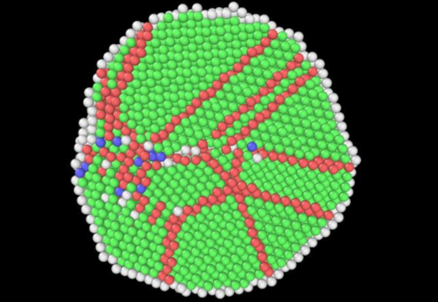
- cooling, is still hindered by several factors. For instance, observing NPs under real working conditions remains a challenge for experimentalists, as the capability to conduct in situ experiments has not yet been fully realized [21]. Experimental methods, such as confocal microscopy [22], laser light
- clusters consisting of 1157 atoms [51]. Some light on the microscopic origin of the anisotropic growth of gold NPs has been cast via molecular dynamics simulations [52]. In a similar way, Lümmen and Kraska investigated the homogeneous nucleation and cluster growth of Pt clusters from supersaturated vapour


Beyond biomimicry – next generation applications of bioinspired adhesives from microfluidics to composites
Beilstein J. Nanotechnol. 2024, 15, 965–976, doi:10.3762/bjnano.15.79
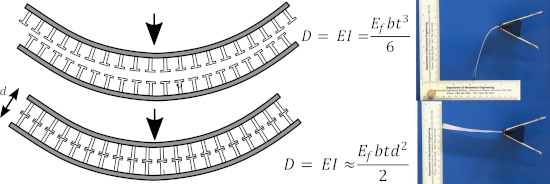
- under light loads but become adhesive upon applying a certain minimum pressure level. This concept inspired the first generation of gecko-jammed composites presented at the Adhesion Society annual meeting in 2020 [46]. To achieve a cost-effective system, we opted for commercial biomimetic materials from


Therapeutic effect of F127-folate@PLGA/CHL/IR780 nanoparticles on folate receptor-expressing cancer cells
Beilstein J. Nanotechnol. 2024, 15, 954–964, doi:10.3762/bjnano.15.78
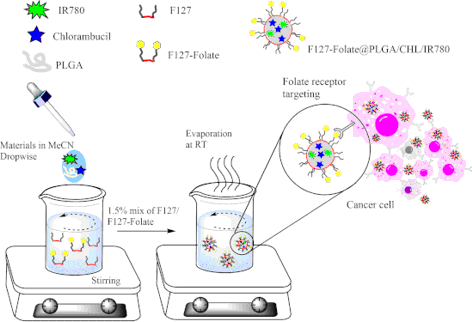
- ]. Therefore, it is essential to prevent CHL hydrolysis by incorporating it into nanoparticles, boosting its stability. IR780 iodide is a lipophilic heptamethine NIR fluorophore that absorbs light with a peak at 780 nm. It turns NIR (750–1000 nm) laser energy into heat after being exposed to it. It was
- then collected by 30 min of centrifugation at 12,000 rpm. Another set of particles, such as F127@PLGA/Cou-6, and F127-folate@PLGA/Cou-6, were used in the cell targeting experiment, which were prepared under similar conditions. Characterization of F127-folate@PLGA/CHL/IR780 nanoparticles Dynamic light
- fluorescent dye used to visualize particle location using infrared light [25]. Researchers have also found that F127-folate helps the nanoparticle to penetrate cancer cells through the folate receptor. This makes the treatment work better [12][13][14][34][35][36][37]. Our nanoparticles were also modified with



Electrospun nanofibers: building blocks for the repair of bone tissue
Beilstein J. Nanotechnol. 2024, 15, 941–953, doi:10.3762/bjnano.15.77
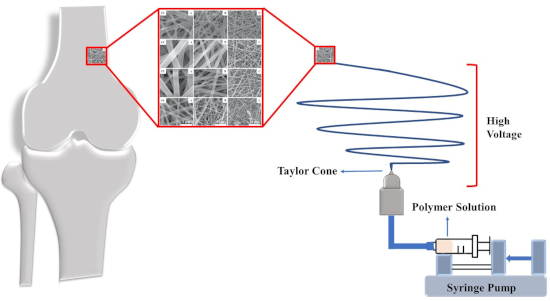
- osteoconduction, adaptability to the target area, biodegradation, and appropriate mechanical properties, which are among the main parameters that are important in the design of polymeric bone grafts. The aim of this review is to cast light on the increasing use of nanofiber-based scaffolds in bone tissue


The effect of age on the attachment ability of stick insects (Phasmatodea)
Beilstein J. Nanotechnol. 2024, 15, 867–883, doi:10.3762/bjnano.15.72

- extending over a larger time frame. Ageing effects on the morphology of the attachment pads and the autofluorescence of the cuticle were documented using light, scanning electron, and confocal laser scanning microscopy. The results show that both adhesion and friction forces decline with age. Deflation of
- abovementioned attachment measurements (see sections 2 and 3) were repeated once a week for six consecutive weeks. The measurements started ca. 1.5 months post adult molt. The order of substrates and the direction to be measured first were randomized per animal and week. 5 Light microscopy The tarsi of all
- , the degree of sclerotization [50][55]. Both methods indicate the degree of sclerotization through the autofluorescence of the materials excited with light of different wavelengths. The detected autofluorescence signals are visualized in different colors according to the excitation wavelength [50


A review on the structural characterization of nanomaterials for nano-QSAR models
Beilstein J. Nanotechnol. 2024, 15, 854–866, doi:10.3762/bjnano.15.71
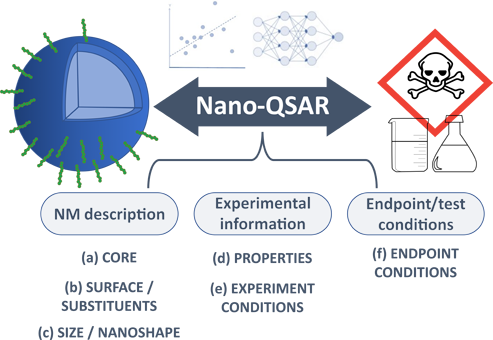
- features. In this review, we survey the literature for existing predictive models for NMs and discuss the variety of calculated and experimental features used to define and describe NMs. In the light of this research, we propose a classification of the descriptors including those that directly describe a
- light scattering (DLS) is another technique that can be used to describe the hydrodynamic size or the aggregation of the nanoforms in larger nanostructures, depending on the medium and other conditions. In some cases, the size values reported in the papers are not measured on purpose, but are the
- worth to note that Pathakoti et al. [61] included the light exposure as a variable in their toxicity models of metal oxides versus E. coli, obtaining two series of toxicity data for the same set of NMs. Analogously, Basant and collaborators considered toxicity values measured under different light


Intermixing of MoS2 and WS2 photocatalysts toward methylene blue photodegradation
Beilstein J. Nanotechnol. 2024, 15, 817–829, doi:10.3762/bjnano.15.68
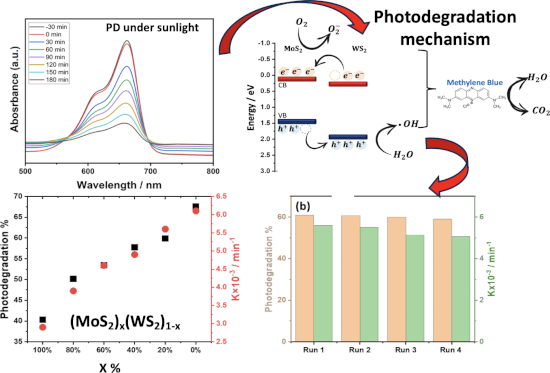
- Arab Emirates 10.3762/bjnano.15.68 Abstract Visible-light-driven photocatalysis using layered materials has garnered increasing attention regarding the degradation of organic dyes. Herein, transition-metal dichalcogenides MoS2 and WS2 prepared by chemical vapor deposition as well as their intermixing
- several cycles. This finding underscores the advantageous outcomes of intermixing WS2 and MoS2, shedding light on the development of an efficient and enduring photocatalyst for visible-light-driven photodegradation of methylene blue. Keywords: methylene blue; MoS2/WS2 composite; photocatalysis
- transport [14][15]. At each stage of the photocatalytic process sequence, the intermixing of TMD materials is intended to efficiently enhance light absorption, photogeneration of charge carriers, and activation of the surface redox reaction [16][17]. Furthermore, TMD materials are known to possess favorable


Electron-induced ligand loss from iron tetracarbonyl methyl acrylate
Beilstein J. Nanotechnol. 2024, 15, 797–807, doi:10.3762/bjnano.15.66
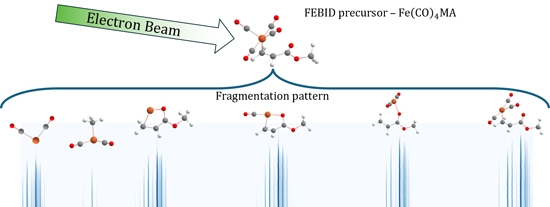
- . Interesting differences also appear when this precursor is compared to structurally similar iron pentacarbonyl. The present findings shed light on the recent electron-induced chemistry of Fe(CO)4MA on a surface under ultrahigh vacuum. Keywords: electron collision; focused electron beam-induced deposition



Electrospun polysuccinimide scaffolds containing different salts as potential wound dressing material
Beilstein J. Nanotechnol. 2024, 15, 781–796, doi:10.3762/bjnano.15.65
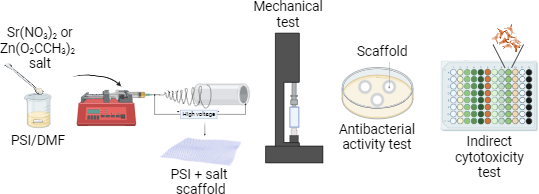
- research group [34]. The tests were performed first on tumor cells to optimize the experimental conditions and then on fibroblasts to investigate if the scaffolds have a cytotoxic effect. The discs with diameters of 16 mm (m = 0.5 ± 0.1 mg) were sterilized under UV light for 1 h. After that, they were



Green synthesis of biomass-derived carbon quantum dots for photocatalytic degradation of methylene blue
Beilstein J. Nanotechnol. 2024, 15, 755–766, doi:10.3762/bjnano.15.63
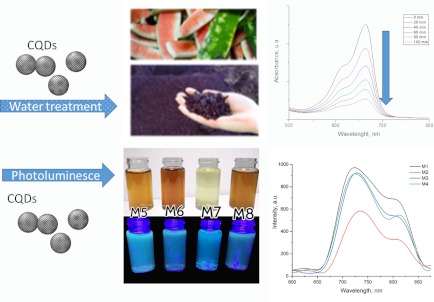
- 24 h, CQDs were successfully synthesized. A comprehensive characterization of the CQDs was performed using UV–visible spectroscopy, Fourier-transform infrared spectroscopy, dynamic light scattering, Raman spectroscopy, and luminescence spectroscopy, confirming their high quality. The photocatalytic
- activity of the CQDs in degrading methylene blue was evaluated under both sunlight and incandescent light irradiation, with measurements taken at 20 min intervals over a 2 h period. The CQDs, with sizes ranging from 1–10 nm, demonstrated notable optical properties, including upconversion and down
- are designed to be resistant to light, detergents, and cleaning products, making them difficult to remove. When these dyes are released into water bodies, they cause pollution problems such as chemical oxygen demand, toxicity, and reduced light penetration, which affects aquatic life. As a result, the





