Search results
Search for "nanocomposites" in Full Text gives 248 result(s) in Beilstein Journal of Nanotechnology. Showing first 200.
Electron-driven and thermal chemistry during water-assisted purification of platinum nanomaterials generated by electron beam induced deposition
Beilstein J. Nanotechnol. 2018, 9, 77–90, doi:10.3762/bjnano.9.10
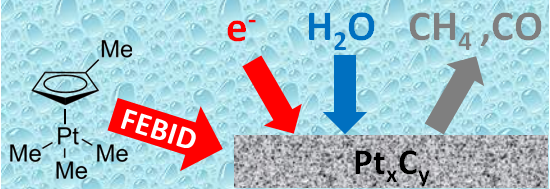
- MeCpPtMe3 have a nanogranular structure, i.e., they consist of nanoscale Pt particles embedded in a carbonaceous matrix [12]. While FEBID-based PtC metal-matrix nanocomposites can serve, for instance, as transducing elements for humidity sensing [13], other applications call for high electrical conductivity



Magnetic field induced orientational transitions in liquid crystals doped with carbon nanotubes
Beilstein J. Nanotechnol. 2017, 8, 2807–2817, doi:10.3762/bjnano.8.280
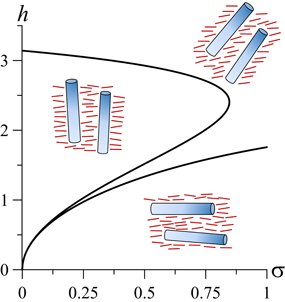
- shape (aspect ratios of 102 to 103) and anomalously high anisotropy of the diamagnetic susceptibility ( ≈ 10−5 to 10−4) [8][9][10][11], CNTs are very attractive for the creation of nanocomposites based on LCs with high magneto-orientational response. From experimental data [12][13][14][15][16], it is


![[Graphic 43]](/bjnano/content/inline/2190-4286-8-280-i72.svg?max-width=637&scale=1.18182) for the Fréedericksz transition as a function of the couplin...
for the Fréedericksz transition as a function of the couplin...

![[Graphic 58]](/bjnano/content/inline/2190-4286-8-280-i87.svg?max-width=637&scale=1.18182) and (b)
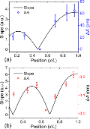
and (b) ![[Graphic 59]](/bjnano/content/inline/2190-4286-8-280-i88.svg?max-width=637&scale=1.18182) on the coupling energy of CNTs w...
on the coupling energy of CNTs w...
Material discrimination and mixture ratio estimation in nanocomposites via harmonic atomic force microscopy
Beilstein J. Nanotechnol. 2017, 8, 2771–2780, doi:10.3762/bjnano.8.276
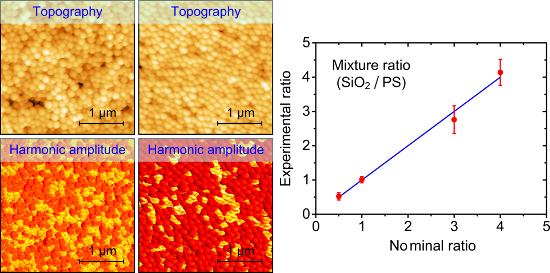
- materials and to estimate the mixture ratio of the constituent components in nanocomposites. The major influencing factors, namely amplitude feedback set-point, drive frequency and laser spot position along the cantilever beam, were systematically investigated. Employing different set-points induces
- applications in various fields of nanoscience and nanotechnology. Keywords: atomic force microscopy; harmonic imaging; material discrimination; mixture ratio; nanocomposites; Introduction Because of its extreme importance and widespread applications, nanocomposites have received more and more attention [1
- ]. Nanocomposites are usually composed of a bulk matrix and some nanofillers. The fillers can be nanoparticles (NPs), nanotubes, nanorods, nanosheets and so on. The physical and chemical properties of nanocomposites will often differ from their component materials and show remarkable added functionalities [2]. The




Exploring wear at the nanoscale with circular mode atomic force microscopy
Beilstein J. Nanotechnol. 2017, 8, 2662–2668, doi:10.3762/bjnano.8.266
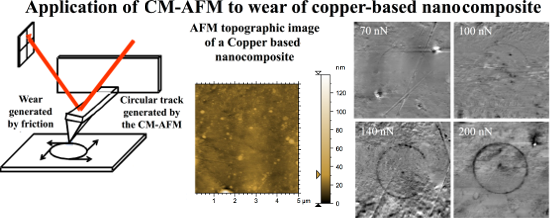
- and erratic, their related trends regarding Cu/Al2O3 nanocomposites at the nanoscale may be obtained. Experimental The investigated copper-based nanocomposite was produced by powder metallurgy technology and contained approximately 4.7 wt % of nanometer-sized Al2O3 particles (the average diameter was


Ta2N3 nanocrystals grown in Al2O3 thin layers
Beilstein J. Nanotechnol. 2017, 8, 2162–2170, doi:10.3762/bjnano.8.215
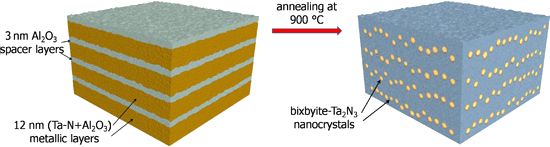
- generic procedure to realize highly tunable and designable optical properties of thin films containing transition-metal nitride nanocrystals. Keywords: nanocomposites; multilayers; refractory plasmonics; self-assembly; Ta2N3 nanoparticles; Introduction Metallic nanoparticles (NPs) can confine visible
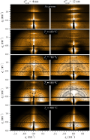


In situ controlled rapid growth of novel high activity TiB2/(TiB2–TiN) hierarchical/heterostructured nanocomposites
Beilstein J. Nanotechnol. 2017, 8, 2116–2125, doi:10.3762/bjnano.8.211
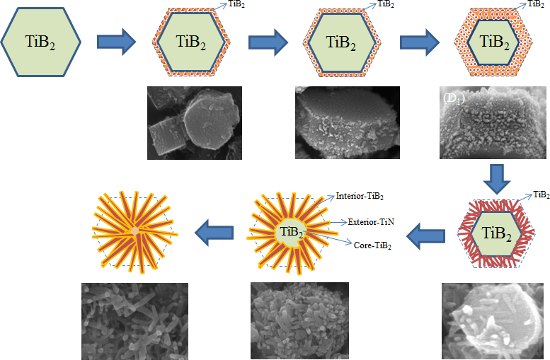
- -temperature synthesis (RC-SHS) method was developed for the in situ controlled synthesis of novel, high activity TiB2/(TiB2–TiN) hierarchical/heterostructured nanocomposites using TiO2, Mg, B2O3, KBH4 and NH4NO3 as raw materials. The as-synthesized samples were characterized using X-ray diffraction (XRD
- ), scanning electron microscope (SEM), X-ray energy dispersive spectroscopy (EDX), transition electron microscopy (TEM), high-resolution TEM (HRTEM) and selected-area electron diffraction (SAED). The obtained TiB2/TiN hierarchical/heterostructured nanocomposites demonstrated an average particle size of 100
- the proposed growth mechanism of the TiB2/(TiB2–TiN) hierarchical/heterostructured nanocomposites were further discussed. Keywords: chemical activity; hierarchical/heterostructures; self-propagating high-temperature synthesis; TiB2; TiN; Introduction Refractory materials such as borides, nitrides


High-stress study of bioinspired multifunctional PEDOT:PSS/nanoclay nanocomposites using AFM, SEM and numerical simulation
Beilstein J. Nanotechnol. 2017, 8, 2069–2082, doi:10.3762/bjnano.8.207
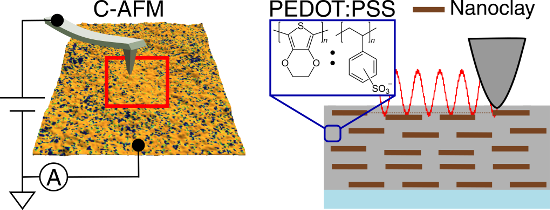
- Alfredo J. Diaz Hanaul Noh Tobias Meier Santiago D. Solares Department of Mechanical and Aerospace Engineering, The George Washington University, Washington, DC 20052, United States 10.3762/bjnano.8.207 Abstract Bioinspired design has been central in the development of hierarchical nanocomposites
- the AFM probe diameter. No pressure-induced changes in conductivity were observed in the clay-free polymer either. Keywords: biomimetics; conductive AFM; conductive nanocomposites; contact-resonance force microscopy; multifrequency AFM; transparent coatings; Introduction Bioinspired material designs
- structure [9][10]. Although the mechanical properties of the nanoclay/polymer nanocomposites have not matched those of nacre [8], other interesting properties have been reported besides being lightweight and potentially transparent [11]. Gas permeability experiments have shown that the brick-and-mortar


Preparation and characterization of polycarbonate/multiwalled carbon nanotube nanocomposites
Beilstein J. Nanotechnol. 2017, 8, 2026–2031, doi:10.3762/bjnano.8.203
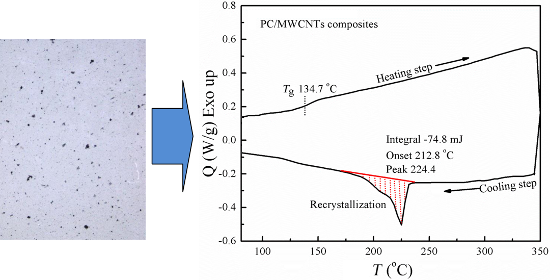
- of MWCNTs on the structure and properties of the composites. The nanocomposites were characterized by DSC, DTA, TGA, UV–vis, FTIR and Raman spectroscopy to evaluate the changes induced by the filler in the polymer matrix. UV–vis, FTIR and Raman spectroscopy measurements confirmed the presence of the
- dispersed phase in the composite films, while TGA and DSC analysis of the nanocomposites revealed enhanced thermal stability and decreased crystallinity, respectively, as compared to the neat polymer. The proposed composites can find application in a number of everyday products where polycarbonate is the
- base polymer. Keywords: multiwalled carbon nanotubes; nanocomposites; polycarbonate; thermal analysis; vibrational spectroscopy; Introduction Polycarbonate (PC) is a polymer with remarkable mechanical and optical properties, broadly used for water bottles, monitor screens and aircraft interiors but


Functional materials for environmental sensors and energy systems
Beilstein J. Nanotechnol. 2017, 8, 2015–2016, doi:10.3762/bjnano.8.201

- scientific community, policy makers and social networks. The topics of this Thematic Series, based on 23 peer-reviewed articles, includes works on advanced gas sensing semiconducting materials, hybrid materials and nanocomposites for chemical sensing, catalytic sensing materials, metal oxides for chemical
Freestanding graphene/MnO2 cathodes for Li-ion batteries
Beilstein J. Nanotechnol. 2017, 8, 1932–1938, doi:10.3762/bjnano.8.193
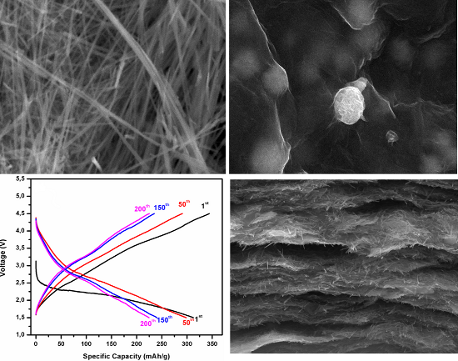
- microwave hydrothermal synthesis, and graphene oxide (GO) nanosheets were prepared by oxidation of graphite using a modified Hummers’ method. Freestanding graphene/MnO2 cathodes were manufactured through a vacuum filtration process. The structure of the graphene/MnO2 nanocomposites was characterized using X
- diameter with very thin nanoneedles. The structure of graphene/MnO2 nanocomposites was also investigated. It can be seen from Figure 1d,e that α-MnO2 nanowires and β-MnO2 nanorods were homogeneously distributed on the surface and between the layers of graphene. Moreover, it also indicates that the urchin


Enhancement of mechanical and electrical properties of continuous-fiber-reinforced epoxy composites with stacked graphene
Beilstein J. Nanotechnol. 2017, 8, 1909–1918, doi:10.3762/bjnano.8.191
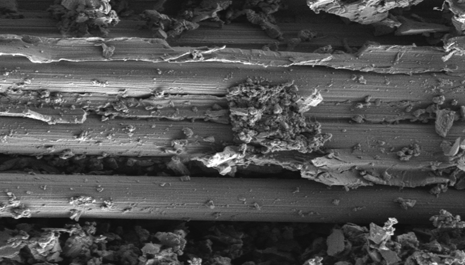
- , thus contributing to the mechanical properties and percolation threshold reduction of conductive polymer/graphite nanocomposites [11][12]. Graphite intercalation compounds (GIC) may provide a plausible high-yield source for polymer nanocomposites [8]. However, most of the methods described in the


Fabrication of carbon nanospheres by the pyrolysis of polyacrylonitrile–poly(methyl methacrylate) core–shell composite nanoparticles
Beilstein J. Nanotechnol. 2017, 8, 1897–1908, doi:10.3762/bjnano.8.190

- –shell nanoparticles; emulsion polymerization; polyacrylonitrile; Introduction Due to their high specific surface area, chemical inertness, good mechanical stability and unique electrical properties, carbon nanospheres have numerous potential applications in nanocomposites [1], gas storage [2], lithium
- nanomaterials, such as rattle-type magnetic carbon nanospheres (45.15 mg/g) [49], magnetic oxidized multiwalled carbon nanotube- κ-carrageenan-Fe3O4 nanocomposites (46.36 mg/g) [51], graphene (185.00 mg/g) [52], γ-Fe2O3 nanocrystal-anchored macro/mesoporous graphene (216.3 mg/g) [53], Fe3O4-graphene@mesoporous



Two-dimensional carbon-based nanocomposites for photocatalytic energy generation and environmental remediation applications
Beilstein J. Nanotechnol. 2017, 8, 1571–1600, doi:10.3762/bjnano.8.159
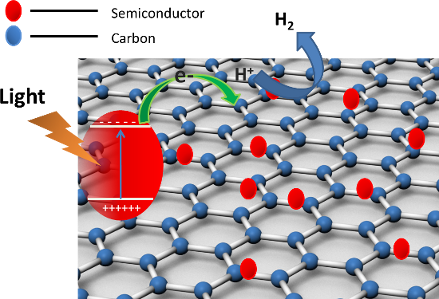
- way by using two of the most abundant natural resources, namely sunlight and water. Over the past few years, carbon-based nanocomposites, particularly graphene and graphitic carbon nitride, have attracted much attention as interesting materials in this field. Due to their unique chemical and physical
- properties, carbon-based nanocomposites have made a substantial contribution towards the generation of clean, renewable and viable forms of energy from light-based water splitting and pollutant removal. This review article provides a comprehensive overview of the recent research progress in the field of
- energy generation and environmental remediation using two-dimensional carbon-based nanocomposites. It begins with a brief introduction to the field, basic principles of photocatalytic water splitting for energy generation and environmental remediation, followed by the properties of carbon-based


Low-temperature CO oxidation over Cu/Pt co-doped ZrO2 nanoparticles synthesized by solution combustion
Beilstein J. Nanotechnol. 2017, 8, 1546–1552, doi:10.3762/bjnano.8.156

- reported a high activity of Cu-containing ZrO2-based nanocomposites (T50 = 70 °C) for CO oxidation. So, the combination of Cu, Pt and ZrO2 appears to be very interesting and promising. In literature, different methods have been used for the synthesis of doped ZrO2 nanoparticles. These include sol–gel, ball




A biofunctionalizable ink platform composed of catechol-modified chitosan and reduced graphene oxide/platinum nanocomposite
Beilstein J. Nanotechnol. 2017, 8, 1508–1514, doi:10.3762/bjnano.8.151
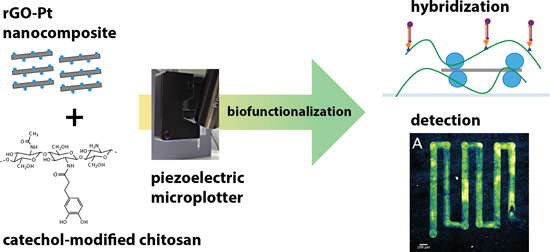
- polymerase chain reaction (PCR) products and low non-specific binding. Our results demonstrate that catechol-modified chitosan/rGO–Pt nanocomposites can be used as inks for piezoelectric printing and facilitate the attachment of biorecognition elements for biosensor applications. Keywords: biosensing
- be incorporated into polymer–graphene nanocomposites [4], gaining the additional properties of the polymer matrix, in addition to easing handling and reducing cost. Equally important have been advances in bioprinting [5], such as micro-contact printing, laser direct writing, and inkjet printing
- aqueous polymer solution and can be printed by using a commercial non-contact piezoelectric microplotter. While the application of chitosan/graphene nanocomposites for biosensing is established [4], to our knowledge, this is the first time that such a nanocomposite has been formulated as ink. Importantly


Miniemulsion copolymerization of (meth)acrylates in the presence of functionalized multiwalled carbon nanotubes for reinforced coating applications
Beilstein J. Nanotechnol. 2017, 8, 1328–1337, doi:10.3762/bjnano.8.134
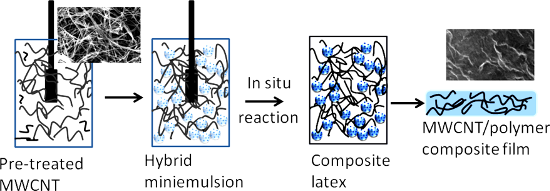
- synthesized. The interaction between the polymer and the CNTs is crucial to principally determine the distribution of CNTs within the polymer matrix and to obtain the best performance from the nanocomposites [1][2]. One way to improve this interaction is to functionalize the surface of CNTs, either by
- the MWCNTs was reported. The resulting nanocomposites were foamed with supercritical CO2. The foams showed a decreased pore size, an increased cell density and higher volume expansion when the MWCNT concentration increased. Capek and Kocsisova [35] studied the effect of the type and concentration of


Synthesis of [Fe(Leq)(Lax)]n coordination polymer nanoparticles using blockcopolymer micelles
Beilstein J. Nanotechnol. 2017, 8, 1318–1327, doi:10.3762/bjnano.8.133
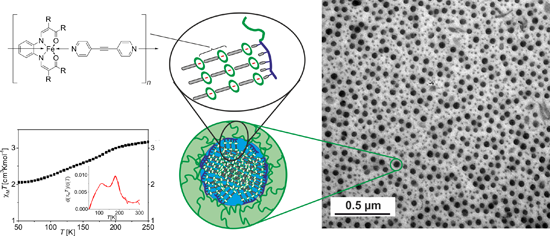
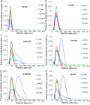
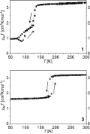
- (bpea)]n@BCP while pronounced differences are observed in the case of [FeLeq(bpey)]n@BCP nanoparticles. Keywords: block copolymer; composite; nanoparticles; self-assembly; spin crossover; Introduction Nanomaterials and especially nanocomposites of coordination polymers (CPs) and (porous) coordination
- of the reaction time and temperature. Having a high crystallinity of the core, the SCO properties were closer to those of the bulk material (thermal hysteresis loop). We herein report the synthesis of three further coordination polymer block copolymer nanocomposites (CP–BCP) using the same synthesis
- micelle, in agreement with previous observations for [FeLeq(bipy)]n@BCP[13][58]. In the case of [FeLeq(bpea)]n@BCP a different behaviour is observed that is indicative for differences in the sample composition. Characterisation of the nanocomposite Particle sizes of the nanocomposites were determined by



Characterization of ferrite nanoparticles for preparation of biocomposites
Beilstein J. Nanotechnol. 2017, 8, 1257–1265, doi:10.3762/bjnano.8.127
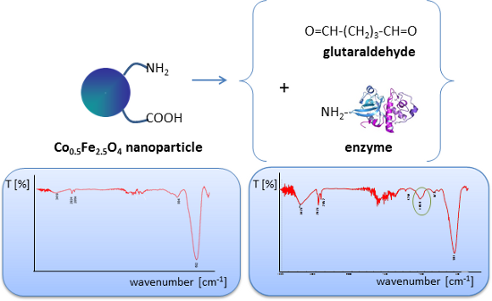
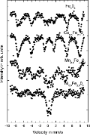
- , optical, magnetic and structural characteristics of specific nanoparticles in one hierarchical structure [9]. In such systems, nanoparticles can be functionalized with various biomolecules through different linkage chemistry [10][11][12]. Nanocomposites based on magnetic nanoparticles have a huge



High photocatalytic activity of Fe2O3/TiO2 nanocomposites prepared by photodeposition for degradation of 2,4-dichlorophenoxyacetic acid
Beilstein J. Nanotechnol. 2017, 8, 915–926, doi:10.3762/bjnano.8.93
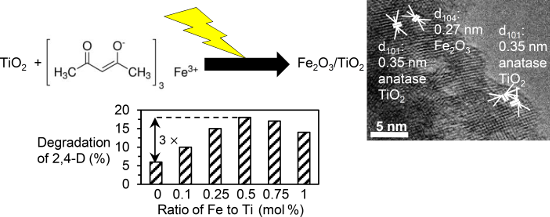
- -dichlorophenoxyacetic acid (2,4-D) under UV light irradiation was examined. The Fe2O3/TiO2 nanocomposites prepared by impregnation showed lower activity than the unmodified TiO2, mainly due to lower specific surface area caused by heat treatment. On the other hand, the Fe2O3/TiO2 nanocomposites prepared by
- the present study, Fe2O3/TiO2 nanocomposites were prepared by a similar approach but using iron(III) acetylacetonate as the precursor to facilitate a complete photodeposition process. The properties and activity results were compared with those prepared by the commonly used impregnation approach
- study, both impregnation and photodeposition methods were used to modify TiO2 nanoparticles with Fe2O3 in order to investigate the effect of preparation method on the properties and photocatalytic activity of the nanocomposites with respect to the degradation of 2,4-dichlorophenoxyacetic acid (2,4-D


Selective detection of Mg2+ ions via enhanced fluorescence emission using Au–DNA nanocomposites
Beilstein J. Nanotechnol. 2017, 8, 762–771, doi:10.3762/bjnano.8.79
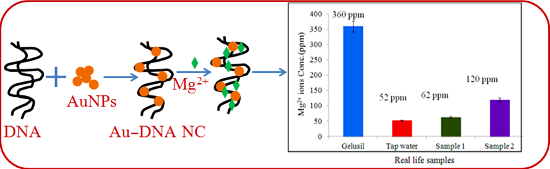
- nanoparticles (AuNPs) have attracted a great deal of research interest for various applications in biosensing. AuNPs have strong binding capability to the phosphate and sugar groups in DNA, rendering unique physicochemical properties for detection of metal ions. The formation of Au–DNA nanocomposites is evident
- to the size and shape dependent plasmonic interactions of AuNPs (33–78 nm) with DNA, the resultant Au–DNA nanocomposites (NCs) exhibit superior fluorescence emission due to chemical binding with Ca2+, Fe2+ and Mg2+ ions. A significant increase in fluorescence emission (λex = 260 nm) of Au–DNA NCs was
- observed after selectively binding with Mg2+ ions (20–800 ppm) in an aqueous solution where a minimum of 100 ppm Mg2+ ions was detected based on the linearity of concentration versus fluorescence intensity curve (λem = 400 nm). The effectiveness of Au–DNA nanocomposites was further verified by comparing




The longstanding challenge of the nanocrystallization of 1,3,5-trinitroperhydro-1,3,5-triazine (RDX)
Beilstein J. Nanotechnol. 2017, 8, 452–466, doi:10.3762/bjnano.8.49
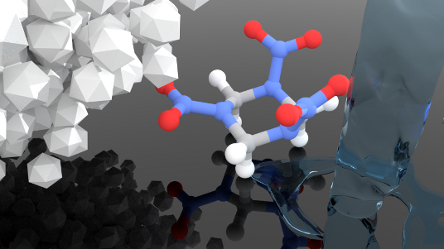
- reduction. Energetic nanocomposites are also promising materials improved by a more intimate mixing. Liu et al. [8] showed that detonation velocities of PBX composition from their milled n-RDX and n-HMX materials are slightly better while being significantly safer. The burning rate of nitrocellulose was
- also improved by Zhang and Weeks [9] due to the formation of sub-micrometer spheres. Recently, Comet et al. [10] proved that energetic nanocomposites can easily replace the hazardous primary explosives to initiate a secondary explosive: 500 nm diameter n-RDX from SFE was mixed with a nanoscale thermite
- nanocomposites using a technique similar to sol–gel [30]. The matrix is the NC itself solidified by micrometer-sized AP crystals and cross-linked with toluene diisocyanate (TDI) and dibutyltin dilaurate (DBTDL), whereas RDX is dissolved in acetone inside that template. The gel and the crystallization of RDX is


Methods for preparing polymer-decorated single exchange-biased magnetic nanoparticles for application in flexible polymer-based films
Beilstein J. Nanotechnol. 2017, 8, 408–417, doi:10.3762/bjnano.8.43
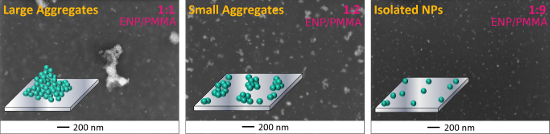
- ENPs. There is still intensive research to be done on the control of the magnetic properties of magnetic films, either comprised of nanocomposites or not [37], via the spatial ENP orientation [28][38] to be combined with polymer processing [39][40]. As a preliminary result, focusing on these PMMA


Functionalized TiO2 nanoparticles by single-step hydrothermal synthesis: the role of the silane coupling agents
Beilstein J. Nanotechnol. 2017, 8, 304–312, doi:10.3762/bjnano.8.33
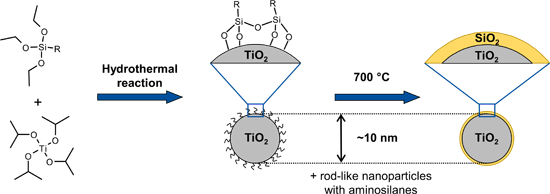
- –shell structures or grafted nanoparticles [8], has resulted in new applications such as nanofiller for polymer nanocomposites [9][10], coatings [11], and biosensors [3][12]. Classical synthesis routes for surface-functionalized particles are following two steps: particles synthesis followed by a post
- polymer nanocomposites, hydrophobicity is a parameter of utmost importance [10][27]. Heat treatment of the in situ surface-functionalized nanoparticles at 700 °C revealed neither crystallite growth nor phase transition of TiO2 because of the formation of an amorphous SiO2 layer, originating from the



Photocatalysis applications of some hybrid polymeric composites incorporating TiO2 nanoparticles and their combinations with SiO2/Fe2O3
Beilstein J. Nanotechnol. 2017, 8, 272–286, doi:10.3762/bjnano.8.30
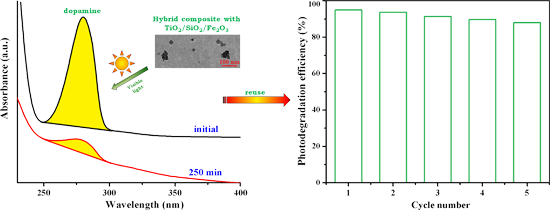
- Andreea Laura Chibac Tinca Buruiana Violeta Melinte Emil C. Buruiana Petru Poni Institute of Macromolecular Chemistry, 41 A Gr. Ghica Voda Alley, 700487 Iasi, Romania 10.3762/bjnano.8.30 Abstract Polymer nanocomposites containing titanium oxide nanoparticles (TiO2 NPs) combined with other
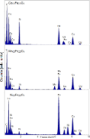
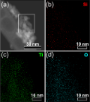
- ) of all hybrid nanocomposites containing TiO2 NPs and also to investigate the spatial distribution of the elements through the X-ray elemental mapping images. In the EDX patterns (Figure 3), the Ti, Si and Fe signals confirmed the existence of inorganic nanoparticles, while the organic matrix is
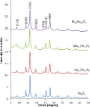
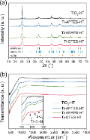
- inorganic components within the polymer matrix. The hybrid polymeric nanocomposites with TiO2 were also characterized by X-ray diffraction. The collected patterns are plotted in Figure 4. Although the presence of the amorphous organic matrix weakens the diffraction peaks, the appearance of anatase TiO2


Photo-ignition process of multiwall carbon nanotubes and ferrocene by continuous wave Xe lamp illumination
Beilstein J. Nanotechnol. 2017, 8, 134–144, doi:10.3762/bjnano.8.14
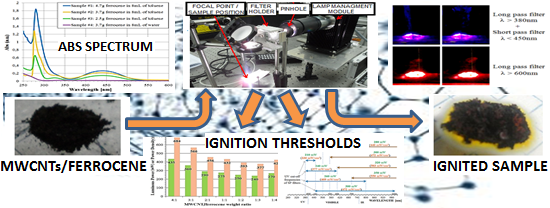
- promote an electron transfer by means of a photo-excitation process. The chemical physical feature of the multiwalled carbon nanotube/ferrocene nanocomposites (MWCNT/FeCp2) responsible for starting the ignition process could be ascribed to the charge-separated state, MWCNT .−–FeCp2 .+, as expected by
- process (b). Chemical reactions relative to photo-induced electron and energy transfer in MWNTs–FeCp2 nanocomposites occurring during the photo-induced ignition process. Solvent type and amount of ferrocene used in this work.