Search results
Search for "radicals" in Full Text gives 232 result(s) in Beilstein Journal of Nanotechnology. Showing first 200.
Parylene C as a versatile dielectric material for organic field-effect transistors
Beilstein J. Nanotechnol. 2017, 8, 1532–1545, doi:10.3762/bjnano.8.155
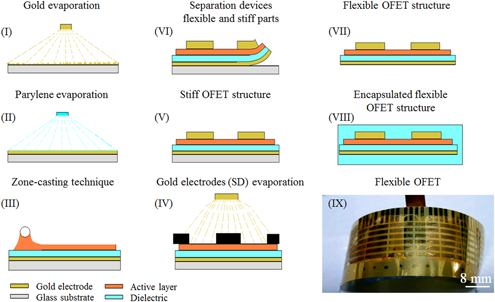
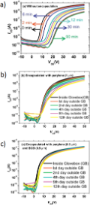
- threshold voltage can be controlled. This effect is mainly attributed to the mechanism of charge trapping at grain boundaries [52]. It was also found in further studies that the growth of C60 on the surface of Parylene C at elevated substrate temperatures leads to the creation of radicals at the interface
- between the active layer and the gate dielectric. The radicals formed during the C60 deposition help to improve the bias stress stability of C60-based n-type OFETs [53]. The creation of free radicals was also observed for a double-gate configuration with Parylene C as a dielectric layer [54]. This effect




Spin-chemistry concepts for spintronics scientists
Beilstein J. Nanotechnol. 2017, 8, 1427–1445, doi:10.3762/bjnano.8.143
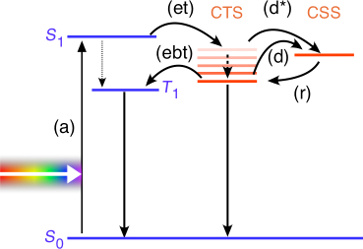
- reactions are controlled by diffusional transport of highly reactive particles, for example, free radicals, to the reaction zone. This view on chemistry is sufficient for processes which are spin conserving, that is, the spin multiplicity is not changed during the entire process. If during the course of
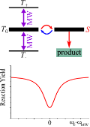
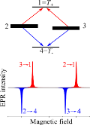
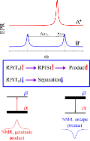
- , such as CIDNP, CIDEP, magnetically affected reaction yield (MARY) and reaction yield detected magnetic resonance (RYDMR) allow one to detect elusive paramagnetic species, such as radicals, radical pairs and triplet states, and to obtain their EPR parameters. This review is dedicated to scientists of
- the states are named very differently (Table 1), even the two Zeeman states of a radical are often labeled differently. Molecules with an unpaired electron are called radicals (R•). Two radicals on the same molecule form a biradical (R•–R•). In this case, normally the two radicals are at the two ends



Micro- and nano-surface structures based on vapor-deposited polymers
Beilstein J. Nanotechnol. 2017, 8, 1366–1374, doi:10.3762/bjnano.8.138
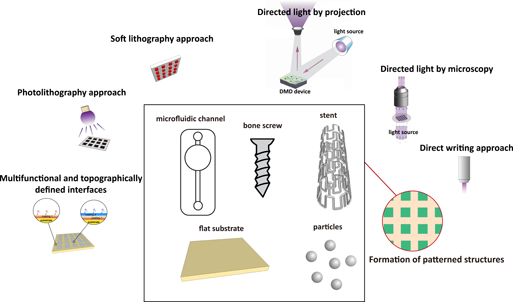
- -xylylenes and the high-energy metal substrates by attraction interactions. In contrast, an inhibitor surface experiences neutralization and deactivation at the free radicals for halogen- or non-substituted p-xylylenes. A continuum of deposition and polymer chain propagation can thus proceed for the case of


Miniemulsion copolymerization of (meth)acrylates in the presence of functionalized multiwalled carbon nanotubes for reinforced coating applications
Beilstein J. Nanotechnol. 2017, 8, 1328–1337, doi:10.3762/bjnano.8.134
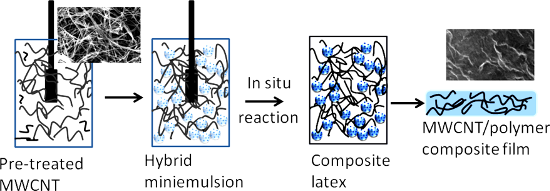
- droplets had a larger surface area, and hence they were more efficient capturing radicals from the aqueous phase. Figure 2 presents the kinetics of the miniemulsion polymerizations carried out with different air-sonicated MWCNT loads. In all cases, final conversion yields between 96% and 100% were obtained


Oxidative chemical vapor deposition of polyaniline thin films
Beilstein J. Nanotechnol. 2017, 8, 1266–1276, doi:10.3762/bjnano.8.128
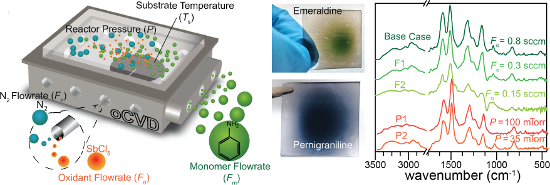
- essentially analogous to chemical oxidative polymerization and acid doping using liquid processing. In the presence of an oxidizing agent, polymerization is believed to proceed via the formation of cation radicals and the electrophilic attack of aniline monomer [42], while in tandem the polymer can be p-doped




Nano-engineered skin mesenchymal stem cells: potential vehicles for tumour-targeted quantum-dot delivery
Beilstein J. Nanotechnol. 2017, 8, 1218–1230, doi:10.3762/bjnano.8.123
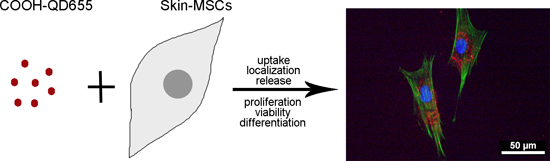
- materials. Unless coatings are damaged, QDs are mainly non-toxic [37]. Recently, Yaghini et al., by using non-photolytic visible wavelength excitation, have shown the formation of superoxide anion radicals by photoexcited CdSe/ZnS QDs [38]. Thus, the QDs may induce phototoxic reactions in labelled cells





Enhanced catalytic activity without the use of an external light source using microwave-synthesized CuO nanopetals
Beilstein J. Nanotechnol. 2017, 8, 1167–1173, doi:10.3762/bjnano.8.118
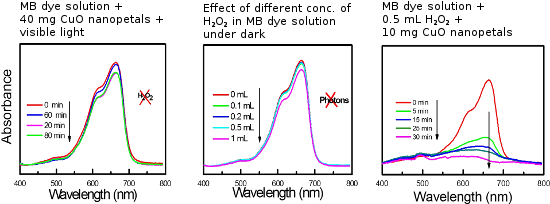
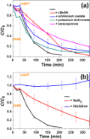
- the degradation through the formation of radicals [6][25]. The wide band gap, high surface area of CuO nanopetals was expected to be suitable for the photocatalytic activity for the degradation of the common cationic dye methylene blue (MB), and hence initially, a study has been carried out in which
- valence band position of CuO than that of the redox potential required for producing free radicals for effective degradation. This slow rate of degradation was then overcome by introducing H2O2 along with CuO, which resulted in the enhancement of the degradation of pollutants [12][26]. Recently, Zhang et
- , the nanoflowers could efficiently degrade ≈93% of MB in 30 min (Supporting Information File 1, Figure S3). Reaction mechanism It is well understood that the rate of degradation of organic dyes depends on the formation of free radicals [7][25][28]. The fast degradation of MB with the assistance of H2O2


ZnO nanoparticles sensitized by CuInZnxS2+x quantum dots as highly efficient solar light driven photocatalysts
Beilstein J. Nanotechnol. 2017, 8, 1080–1093, doi:10.3762/bjnano.8.110
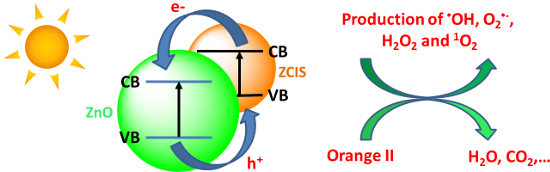
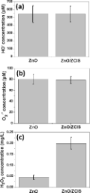
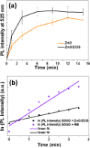
- absorption of Orange II at λmax = 485 nm. Detection of •OH radicals: DST assay The production of •OH radicals by ZnO and the ZnO/ZCIS photocatalyst was measured by using disodium terephthalate (DST). DST turns into fluorescent 2-hydroxyterephthalate, 2-OH-DST (λem = 428 nm) upon reaction with an •OH radical
- ]. Detection of O2•− radicals: NBT assay The production of superoxide O2•− radicals was measured using the nitroblue tetrazolium (NBT). The reduction of the yellowish NBT into purple formazan derivatives results in an increase of the absorbance between 450 and 700 nm. The ZnO or ZnO/ZCIS photocatalyst (5 mg
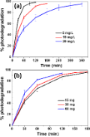
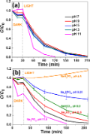
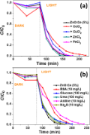
- values were varying from 4.8 for NaH2PO4 to 11.5 for Na3PO4) (Figure 6b). Na2CO3 and NaHCO3 reduced the photodegradation rates probably because these salts may adsorb at the surface of the ZnO/ZCIS catalyst and hinder the adsorption of the Orange II dye or consume •OH radicals. The generated carbonate




Vapor-phase-synthesized fluoroacrylate polymer thin films: thermal stability and structural properties
Beilstein J. Nanotechnol. 2017, 8, 933–942, doi:10.3762/bjnano.8.95
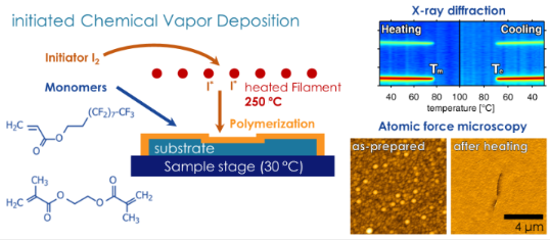
- decomposed into radicals by a filament heated to 250–300 °C. The radicals of the initiator selectively react with the vinyl bonds of monomer species absorbed on the substrate, initiating the polymerization. For this, the substrate is typically held below 60 °C. Chain growth then proceeds on the substrate


High photocatalytic activity of Fe2O3/TiO2 nanocomposites prepared by photodeposition for degradation of 2,4-dichlorophenoxyacetic acid
Beilstein J. Nanotechnol. 2017, 8, 915–926, doi:10.3762/bjnano.8.93
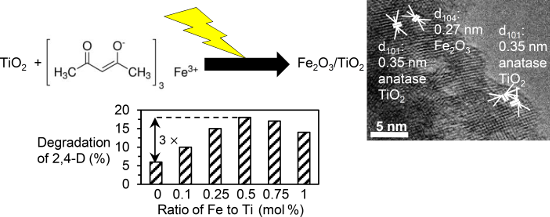
- and TiO2 nanoparticles that improved charge transfer and suppressed electron–hole recombination. A further investigation on the role of the active species on Fe2O3/TiO2 confirmed that the crucial active species were both holes and superoxide radicals. The Fe2O3(0.5)/TiO2 sample also showed good
- stability and reusability, suggesting its potential for water purification applications. Keywords: 2,4-dichlorophenoxyacetic acid; Fe2O3/TiO2; herbicide degradation; heterojunction; holes and superoxide radicals; photocatalyst; photodeposition; water purification; Introduction Photocatalytic reactions
- by the photogenerated oxygen radicals [21]. It was demonstrated that the use of the Fe(III) acetylacetonate precursor led to a complete photodeposition to form Fe2O3, as also supported by ICP-OES results discussed above. The improved charge transfer of the Fe2O3(0.5)/TiO2 (PD) sample was further


Relationships between chemical structure, mechanical properties and materials processing in nanopatterned organosilicate fins
Beilstein J. Nanotechnol. 2017, 8, 863–871, doi:10.3762/bjnano.8.88

- attributed to the limited penetration depth and diffusion length for ions, radicals and other chemically active species present during plasma etching and ashing, and wet cleans through the overlying hard mask and the interconnected porosity in the organosilicate. More specifically, as the fin dimensions



Vapor deposition routes to conformal polymer thin films
Beilstein J. Nanotechnol. 2017, 8, 723–735, doi:10.3762/bjnano.8.76
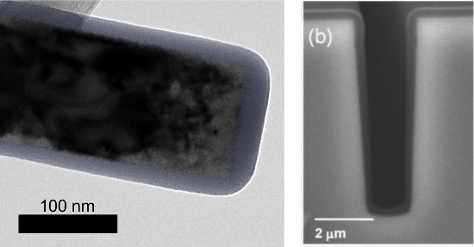
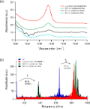
- polymer film. As seen in Figure 2b, gas phase monomers containing a reactive bond first adsorb on the substrate near room temperature. An initiator, such as di-tert-butyl peroxide is thermally cleaved by a hot filament (≈250 °C) and the resulting radicals collide with surface adsorbed monomers to initiate
- polymerize upon the impingement of an initiator radical. The initiator radicals are quite volatile and are expected to have negligible adsorption on the bare surface. Additionally, once a monomer undergoes polymerization, it is no longer a site for initiator chemisorption. Therefore, the number surface sites
- sticking probability of the initiator, the same monomer, cyclohexylmethacrylate, was iCVD polymerized holding Pm/Psat fixed using two different initiators [24]. The first initiator was tert-butyl peroxide (TBPO) which decomposes over the heated filament to give two tert-butoxy radicals. The second


α-((4-Cyanobenzoyl)oxy)-ω-methyl poly(ethylene glycol): a new stabilizer for silver nanoparticles
Beilstein J. Nanotechnol. 2017, 8, 627–635, doi:10.3762/bjnano.8.67
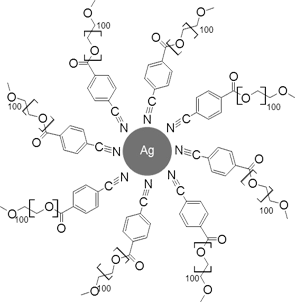
- be desirable (such as situations, where thiols may form thiyl radicals leading to protein degradation and cause diseases such as cancer) [34][35]. Hence, there is an interest in alternative anchoring groups with a similar or better anchoring efficiency. Among the possible candidates are the amine and


Investigation of the photocatalytic efficiency of tantalum alkoxy carboxylate-derived Ta2O5 nanoparticles in rhodamine B removal
Beilstein J. Nanotechnol. 2017, 8, 604–613, doi:10.3762/bjnano.8.65
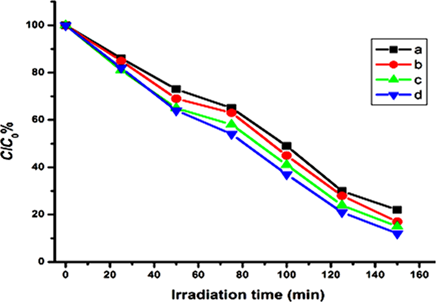
- –hole pairs migrate to the surface and react with adsorbed water molecules or hydroxide ions to produce hydroxyl radicals. These hydroxyl radicals decompose the dye molecule into CO2 and water. The concentration of remaining dye in the solution is measured by using UV–vIS spectroscopy. The formula
- has also been investigated. Electron–hole pairs are generated during exposure to the UV radiation. These charge carriers produce radicals for the decomposition of the dye. The synthesized Ta2O5 nanoparticles removed rhodamine B efficiently under UV irradiation. It is observed that the photocatalytic


Tailoring bifunctional hybrid organic–inorganic nanoadsorbents by the choice of functional layer composition probed by adsorption of Cu2+ ions
Beilstein J. Nanotechnol. 2017, 8, 334–347, doi:10.3762/bjnano.8.36
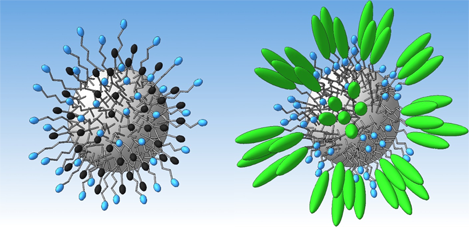
- fluoroalkyl radicals, the gross compositions of Cu2+/Lig complexes are close to 1:1. Table S7 (Supporting Information File 1) provides parameters of the EPR spectra of copper(II) complexes formed on the surface of some carriers discussed in this paper, and Figure 7 represents the EPR spectra of some of these
- functional groups in the surface layers of nanoparticles. Consequently, IR spectroscopy confirmed the presence of a polysiloxane network containing 3-aminopropyl and methyl or fluorinated functional groups, as well as silanol groups, and alkyl radicals in the synthesized particles. Furthermore, all samples
- , Supporting Information File 1) indirectly indicate the “island-like” structure of the surface layer, where the “islands” of amino groups are surrounded with long hydrophobic radicals (Figure 9c,d) preventing the diffusion of ions to the centers of adsorption. Consequently, the introduction of methyl groups


Photocatalysis applications of some hybrid polymeric composites incorporating TiO2 nanoparticles and their combinations with SiO2/Fe2O3
Beilstein J. Nanotechnol. 2017, 8, 272–286, doi:10.3762/bjnano.8.30
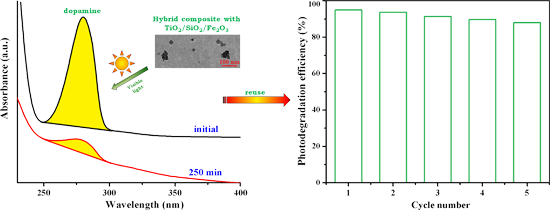
- point, the degradation of organic compounds into CO2 and H2O begins. It is caused by reactive radicals (•OH, •O2−) produced through the interactions between the charge carriers from the surface with the adsorbed molecules (e.g., water and molecular oxygen) [25][54]. For this study, the


Nitrogen-doped twisted graphene grown on copper by atmospheric pressure CVD from a decane precursor
Beilstein J. Nanotechnol. 2017, 8, 145–158, doi:10.3762/bjnano.8.15
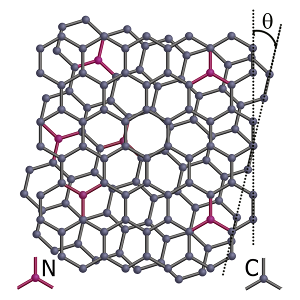
- ), a member of the homologous series of alkane hydrocarbons. n-Decane has a molecular mass approximately one order of magnitude greater than that of methane, which influences the growth kinetics of graphene. As a representative n-alkane, n-decane forms chains of radicals with a high reactive nature
- of the difference in ionic radii [16]. The radicals resulting from the decomposition of n-decane could lead to the decomposition of the nitrogen molecule, which in fact has one of the strongest binding energies. The resulting atomic nitrogen can be embedded into the graphene lattice. The n-decane was
- our case the efficient decomposition of nitrogen occurs due to the presence of hydrocarbon in the reactive mixture. Indeed, as it was shown by C. P. Fenimore, carbon (•C) or hydrocarbon (•CxHy) radicals may attack on nitrogen molecules [65]. The endothermicity of such a reaction can be an order of


Layered composites of PEDOT/PSS/nanoparticles and PEDOT/PSS/phthalocyanines as electron mediators for sensors and biosensors
Beilstein J. Nanotechnol. 2016, 7, 1948–1959, doi:10.3762/bjnano.7.186
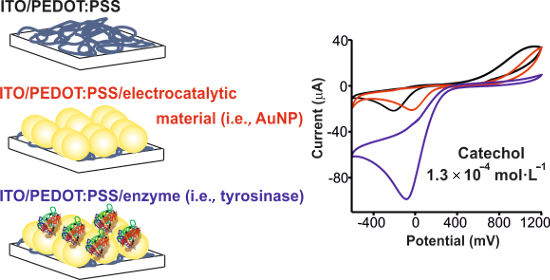
- quinone, whereas laccase catalyzes the oxidation of a larger variety of aromatic compounds such as substituted mono- and poly-phenols, with subsequent formation of radicals, which are converted to quinones in the second stage of the oxidation [19]. Tyrosinase (Tyr) and laccase (Lac) must be combined with


Role of RGO support and irradiation source on the photocatalytic activity of CdS–ZnO semiconductor nanostructures
Beilstein J. Nanotechnol. 2016, 7, 1684–1697, doi:10.3762/bjnano.7.161
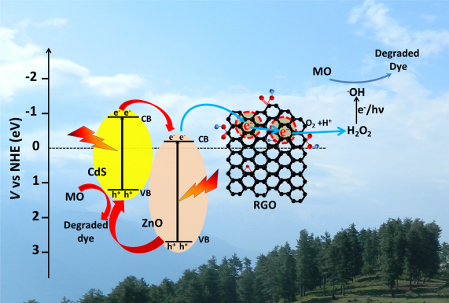
- electrons from graphene can react with O2 and H+ ions to produce H2O2, which further decomposes in the presence of light to generate hydroxyl radicals (•OH) [67]. Also ZnO is inactive under visible light, so hole formation takes place only in the VB of CdS. As the VB edge of CdS is more negative than the
- standard redox potential of •OH/OH− (2.38 eV vs NHE) and •OH/H2O (2.72 eV vs NHE), •OH cannot be generated by reacting with H2O molecules. The •OH radicals are responsible for the dye degradation into CO2 and H2O [68][69]. The enhanced photocatalytic activity of the RGO-supported CdS–ZnO nanocomposite




High performance Ce-doped ZnO nanorods for sunlight-driven photocatalysis
Beilstein J. Nanotechnol. 2016, 7, 1338–1349, doi:10.3762/bjnano.7.125
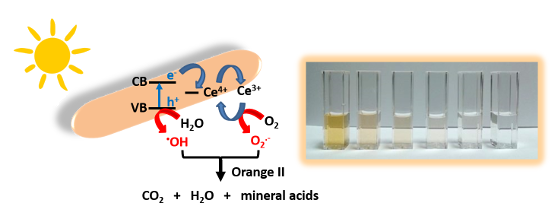
- can be trapped by water and oxygen to generate hydroxyl •OH and superoxide O2•− radicals, respectively. These highly oxidizing species are responsible of the conversion of organic compounds into carbon dioxide, water, and inorganic salts. Zinc oxide (ZnO) is one of the most widely investigated
- min at pH 10 and 12, respectively). The high photocatalytic activity of the Ce-doped ZnO rods at basic pH may be attributed to the increased concentration of hydroxy anions that facilitate the photogeneration of hydroxy •OH radicals (−OH + h+ → •OH), thus enhancing the photocatalytic degradation
- photocatalyst is only weakly sensitive to salts commonly present in wastewater. Noteworthy is also that the Cl− and SO42− anions, which are well-known to be •OH radicals scavengers, have no detrimental effect on the photocatalytic activity. Transition metal salts used at 100 µM concentration like ZnCl2 or FeCl3







Tight junction between endothelial cells: the interaction between nanoparticles and blood vessels
Beilstein J. Nanotechnol. 2016, 7, 675–684, doi:10.3762/bjnano.7.60
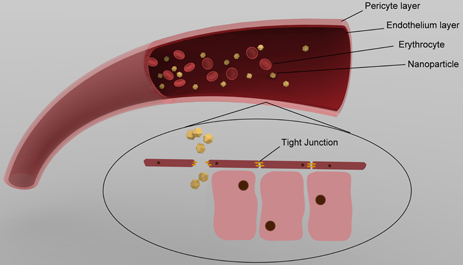
- epithelial A549 cells due to H2O2 and OH radicals caused by Cr(VI) [74]. From this prospective, the unclear mechanism behind the effect of NPs on the tight junction should never be considered to have only one reason, i.e., either the phosphorylation of core proteins or the oxidative stress on those proteins

Unraveling the neurotoxicity of titanium dioxide nanoparticles: focusing on molecular mechanisms
Beilstein J. Nanotechnol. 2016, 7, 645–654, doi:10.3762/bjnano.7.57
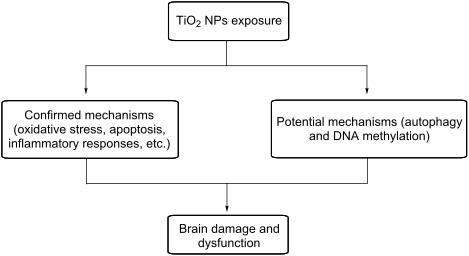
- injure tissues and organs, and is often associated with diseases and aging. Meanwhile, oxidative stress, caused by NPs, is the most important and widely accepted mechanism of nano-neurotoxicity. ROS, such as superoxide, hydrogen peroxide, and hydroxyl radicals, are natural products of the regular oxygen
- metabolism [15][16]. However, these free radicals can interact within biological systems, resulting in oxidative damage to the organism. These harmful effects can be counteracted by biological antioxidants, including superoxide dismutase (SOD), catalase (CAT), glutathione peroxidase (GSH-Px), the expression
Fabrication and properties of luminescence polymer composites with erbium/ytterbium oxides and gold nanoparticles
Beilstein J. Nanotechnol. 2016, 7, 630–636, doi:10.3762/bjnano.7.55
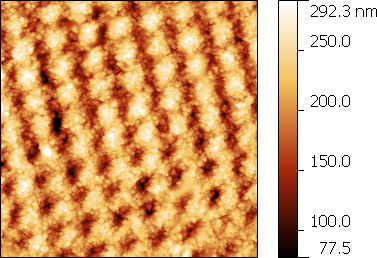
- , which together with the negative influence of OH radicals on the IR transmissions makes the development of new composites necessary. The aim of our work was to use the previously developed method of a water-free, low-temperature (below 230 °С) synthesis of rare-earth oxide nanoparticles from their


Novel roles for well-known players: from tobacco mosaic virus pests to enzymatically active assemblies
Beilstein J. Nanotechnol. 2016, 7, 613–629, doi:10.3762/bjnano.7.54
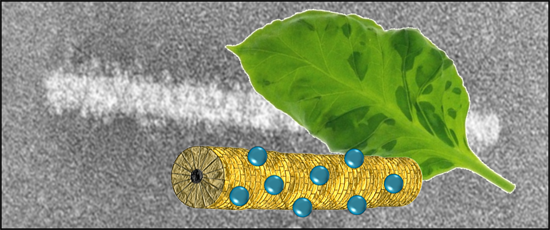
- were analyzed in colorimetric assays, detecting the generation of ABTS* radicals (Figure 6). Equal enzyme input amounts were applied into plate wells coated with (i) either fully assembled biotinylated TMVCys/Bio adapter sticks, or (ii) released lower-order CPCys/Bio aggregates, (iii) or stoichiometric
- these layouts using different adapter concentrations, applying the same [SA]-GOx/[SA]-HRP input for colorimetric glucose detection via formation of ABTS* radicals (absorption maximum at λ = 405 nm). TMV adapter templates support the immobilization of substantially increased enzyme activities. C: TMV


Comparison of the interactions of daunorubicin in a free form and attached to single-walled carbon nanotubes with model lipid membranes
Beilstein J. Nanotechnol. 2016, 7, 524–532, doi:10.3762/bjnano.7.46
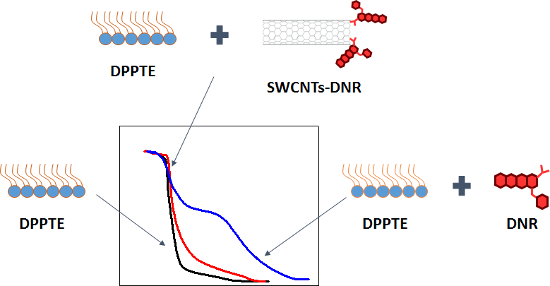
- -induced heart failure, which is mainly associated with the process of the reactive oxygen species formation as well as the formation of hydroxyl radicals by free iron cations in the Fenton reaction [4]. Therefore, numerous studies focus on the application of different drug delivery systems (DDS) to