


Search results
Search for "resistivity" in Full Text gives 248 result(s) in Beilstein Journal of Nanotechnology. Showing first 200.
Microfluidic setup for on-line SERS monitoring using laser induced nanoparticle spots as SERS active substrate
Beilstein J. Nanotechnol. 2017, 8, 237–243, doi:10.3762/bjnano.8.26
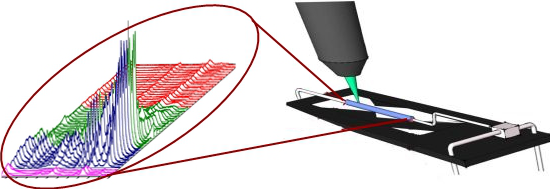
- water with a resistivity of 18 MΩ∙cm. The gold/citrate solution was prepared by solving 60 μL of 2% gold salt solution (1 g in 50 mL water) and 300 μL of 1% sodium citrate solution (1 g in 100 mL water) in 9.7 mL of ultrapure water. The silver/citrate mixture was kept in a dark glass bottle in order to


Laser irradiation in water for the novel, scalable synthesis of black TiOx photocatalyst for environmental remediation
Beilstein J. Nanotechnol. 2017, 8, 196–202, doi:10.3762/bjnano.8.21
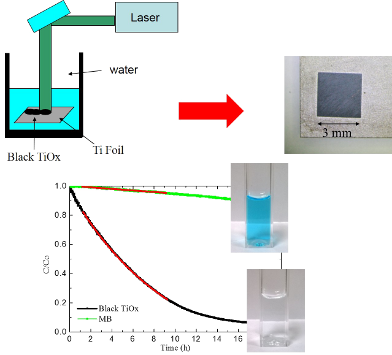
- of 15 ns to give a fluence of 2.0 J/cm2. The scanning speed was kept at 100 mm/s. The laser was focused using a lens (focal length of 20 cm), on the bottom of a vessel filled with 9 mm of deionized Milli-Q water (resistivity 18 MΩ·cm) above the sample. The sample was irradiated at a fluence of 2 J
- focused using a lens (focal length of 20 cm) on the bottom of a Teflon vessel filled with 5 mL of deionized Milli-Q water (resistivity 18 MΩ·cm). The sample was irradiated at a fluence of 20 J/cm2. Pt nanoparticles, dispersed in water, are stable for some months. The synthesis of Pt nanoparticles is


Electron energy relaxation under terahertz excitation in (Cd1−xZnx)3As2 Dirac semimetals
Beilstein J. Nanotechnol. 2017, 8, 167–171, doi:10.3762/bjnano.8.17
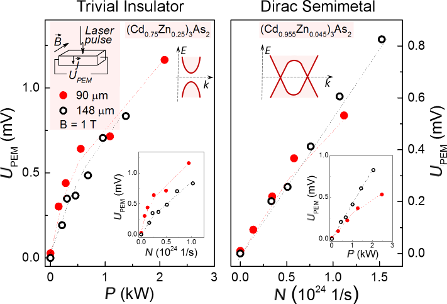
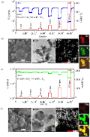
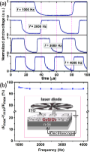
- range 4.2–300 K. The resistivity temperature dependence is typical for degenerate semiconductors: the resistivity decrease with decreasing temperature from 300 K to 20 K is followed by a further saturation at T < 20 K. Since the free electron concentration does not change, this resistivity variation is
- = 4.2 K for laser wavelengths 90 and 148 μm for a (Cd0.955Zn0.045)3As2 sample in the Dirac semimetal phase. Inset: The same data plotted as PEM effect amplitude versus incident radiation power P. The lines in the panels (a) and (b) are the guides for the eye. The values of resistivity, ρ, free electron


Nanocrystalline TiO2/SnO2 heterostructures for gas sensing
Beilstein J. Nanotechnol. 2017, 8, 108–122, doi:10.3762/bjnano.8.12
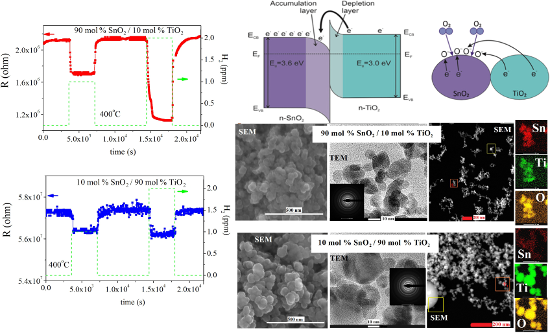
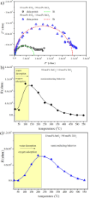
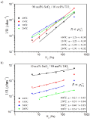
- electrical resistivity reduces to ρ = 1/(e·μe·ne) for n-type semiconductors, the 1/R(pH2) dependence assumes the same form as ne(pH2) does (Equations 8–10). Thus, n = 1/2, 1 or 2 are theoretically predicted for different oxygen species preadsorbed on the surface of the semiconductor. In the case of formation




Sensitive detection of hydrocarbon gases using electrochemically Pd-modified ZnO chemiresistors
Beilstein J. Nanotechnol. 2017, 8, 82–90, doi:10.3762/bjnano.8.9
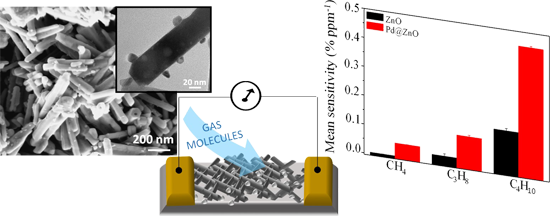
- , causing changes in the surface potential and resistivity of the sensing material. The electrical resistance can increase or decrease, depending on the type of doping of MOx (p- or n-type) and on the analyte gas. There are oxidizing gases, such as nitrogen oxide (NO2), and ozone (O3), and reducing gases


Surface-enhanced Raman scattering of self-assembled thiol monolayers and supported lipid membranes on thin anodic porous alumina
Beilstein J. Nanotechnol. 2017, 8, 74–81, doi:10.3762/bjnano.8.8
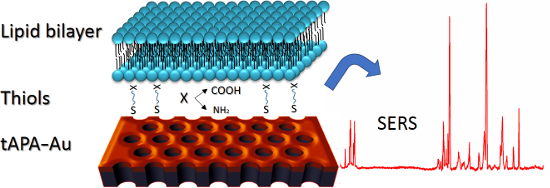
- fundamental resonance frequency were used. Before each experiment, the quartz sensor was first cleaned in a UV/Ozone ProCleaner (BioForce Nanoscience, US) for 10 min, then washed with milli-Q (18.2 MΩ·cm resistivity) water, dried under nitrogen flux and cleaned again for 10 min in the ozone cleaner. The



Graphene–polymer coating for the realization of strain sensors
Beilstein J. Nanotechnol. 2017, 8, 21–27, doi:10.3762/bjnano.8.3
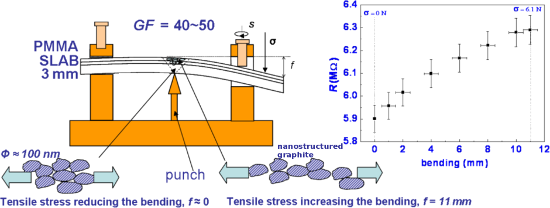
- , R0 is the value of the electric resistance in unstrained conditions and ε0 is the residual strain occurring in the unload sample when resistivity value R0 is measured. The data reported in Figure 9 have been fit with Equation 3 using τ as the fit parameter, resulting in τ = 53 ± 11. The parameter τ


Effect of Anderson localization on light emission from gold nanoparticle aggregates
Beilstein J. Nanotechnol. 2016, 7, 2013–2022, doi:10.3762/bjnano.7.192
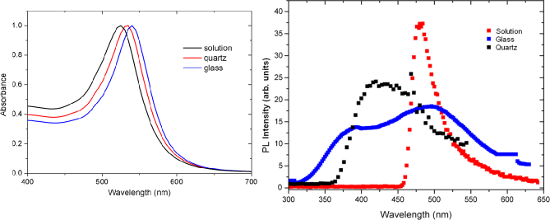
- ) of 99.99% purity (Sigma-Aldrich, Milan, Italy) were used as received. Milli-Q water of high purity and resistivity of 18.2 MΩ·cm was used during all the AuNP synthesis, cleaning and sample preparation. Substrates of ≈4 cm2 surface area were cut off of ≈1 mm thick plates of either glass from


Layered composites of PEDOT/PSS/nanoparticles and PEDOT/PSS/phthalocyanines as electron mediators for sensors and biosensors
Beilstein J. Nanotechnol. 2016, 7, 1948–1959, doi:10.3762/bjnano.7.186
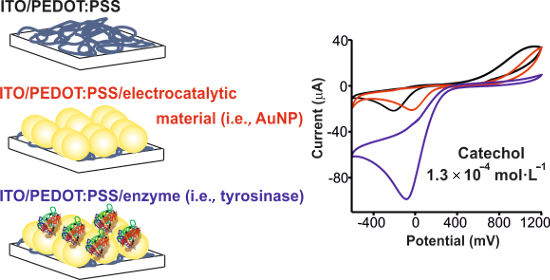
- and resistivity were measured with the four-point probe test (Table 1). The current–voltage curves obtained from PEDOT/PSS and PEDOT/PSS/EM electrodes exhibited a good linear fit with correlation coefficients higher than 0.999. It has been reported that the addition of different dopants to an aqueous
- coefficient of the constant phase element, respectively. Layered composites showed low Rct values (≈4300–5300 Ω) which is about half of the Rct observed in PEDOT/PSS (11500 Ω), indicating that charge transfer rates are higher in PEDOT/PSS/EM sensors. This agrees well with the aforementioned resistivity


Low temperature co-fired ceramic packaging of CMOS capacitive sensor chip towards cell viability monitoring
Beilstein J. Nanotechnol. 2016, 7, 1871–1877, doi:10.3762/bjnano.7.179
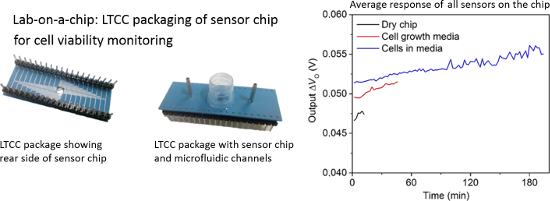
- functionality of the package. In addition, integration of microfluidic channels in the package was demonstrated. Experimental Dummy chips Dummy chips for testing purposes were fabricated on a 4 in silicon wafer (p++ type, boron-doped, resistivity <0.005 Ω·cm) with 500 nm of SiO2 (PECVD grown). Contact pads in


A new approach to grain boundary engineering for nanocrystalline materials
Beilstein J. Nanotechnol. 2016, 7, 1829–1849, doi:10.3762/bjnano.7.176
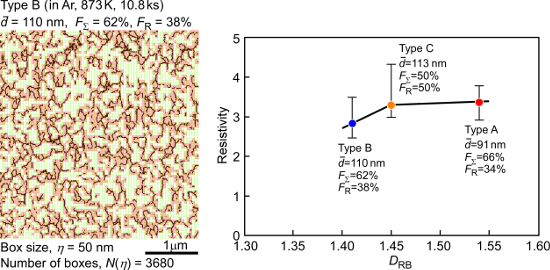
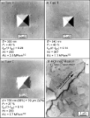
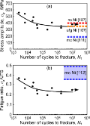
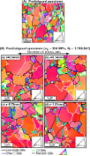
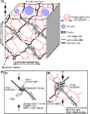
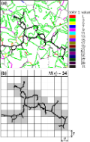
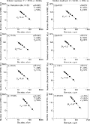
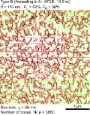
- the fractal analysis of the grain boundary microstructure. Keywords: electrical resistivity control; fractal analysis; grain boundary engineering (GBE); intergranular fracture control; nanocrystalline materials; Review Introduction Nanocrystalline metals and alloys have been receiving increased
- properties. Finally, our most recent work on GBE for the control of electrical resistivity in gold thin films is introduced as an example of a possible challenge toward GBE for high performance functional materials. Effect of grain boundary microstructure on hardness in electrodeposited nanocrystalline
- resistivity manipulated by GBE in nanocrystalline gold thin films The improvement of electrical conductivity or precise control of electrical resistivity is required for the development of high performance electrical and magnetic materials for modern electronic devices such as MEMS and NEMS. It has been







Effective intercalation of zein into Na-montmorillonite: role of the protein components and use of the developed biointerfaces
Beilstein J. Nanotechnol. 2016, 7, 1772–1782, doi:10.3762/bjnano.7.170
- water (resistivity of 18.2 MΩ·cm) was obtained with a Maxima Ultrapure Water from Elga. Synthesis of zein–montmorillonite biohybrids For the preparation of zein–montmorillonite biohybrids (Z-MMT) two synthetic routes were explored. Synthesis 1 (Z-MMT_S1 materials) A MMT suspension (6 g·L−1) was prepared




Nanostructured TiO2-based gas sensors with enhanced sensitivity to reducing gases
Beilstein J. Nanotechnol. 2016, 7, 1718–1726, doi:10.3762/bjnano.7.164
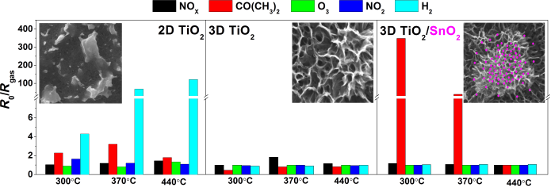
- semiconductor with an extremely high resistivity extending to 108 Ω·cm, however, even a small deviation from the stoichiometric composition with a surplus of titanium ions results in n-type semiconducting properties [16]. Such observations lead to the undeniable conclusions that the defect disorder and


Thickness-modulated tungsten–carbon superconducting nanostructures grown by focused ion beam induced deposition for vortex pinning up to high magnetic fields
Beilstein J. Nanotechnol. 2016, 7, 1698–1708, doi:10.3762/bjnano.7.162
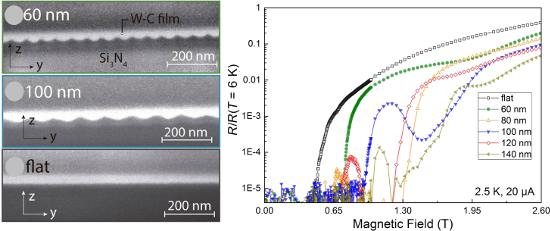
- films have been created with thickness modulation properties exhibiting periodicity from 60 to 140 nm, leading to a strong pinning potential for the vortex lattice. This produces local minima in the resistivity up to high magnetic fields (2.2 T) in a broad temperature range due to commensurability
- critical temperature of Tc = 4.40 ± 0.15 K and a room temperature resistivity of ρ300K = 213 ± 47 μΩ cm. The flat sample has been made using a 39 nm y-pitch, which is as large as the beam spot size. The SEM images in Figure 2 indicate the achievement of the targeted thickness modulation. In Table 1, the


Analysis of self-heating of thermally assisted spin-transfer torque magnetic random access memory
Beilstein J. Nanotechnol. 2016, 7, 1676–1683, doi:10.3762/bjnano.7.160
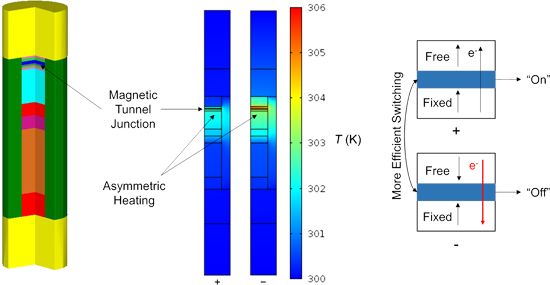
- resistivity of materials [8]. Crystalline and amorphous CoFeB values came from literature [12]. Schematic top-down view and quarter cross-section view of the simulated geometries. The dotted lines indicate the axis of symmetry for the 2D cylindrical simulations. The active area of the device is surrounded by





Nanostructured germanium deposited on heated substrates with enhanced photoelectric properties
Beilstein J. Nanotechnol. 2016, 7, 1492–1500, doi:10.3762/bjnano.7.142
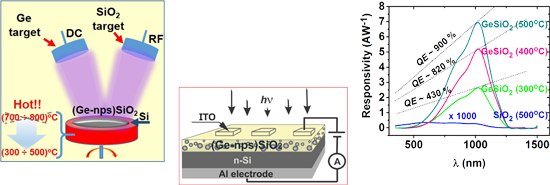
- Nanosystems, Gamma 1000, sputtering equipment. Clean 1 cm2 substrates of n-type Si(100) with a resistivity of 10–20 Ω·cm were used and they were firstly degassed for 5 min at 200 °C in vacuum. To obtain the desired Ge/SiO2 (50:50) concentration ratio on the Si substrate at a base pressure of 1 × 10⁻⁷ Torr




Effect of tetramethylammonium hydroxide/isopropyl alcohol wet etching on geometry and surface roughness of silicon nanowires fabricated by AFM lithography
Beilstein J. Nanotechnol. 2016, 7, 1461–1470, doi:10.3762/bjnano.7.138
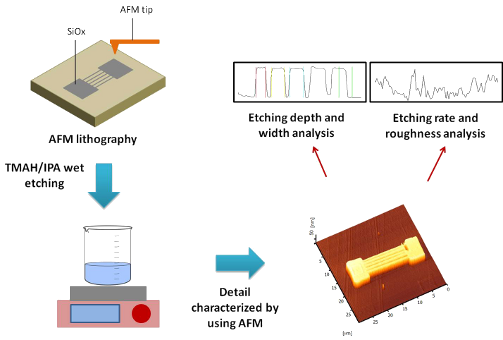
- three layers: the silicon layer (100 nm), the buried oxide layer (200 nm) and the silicon layer (6.25 µm) at the bottom with 13.5–22.5 Ω∙cm resistivity. Fabrication of silicon nanowires An array of silicon nanowires was designed using Nanonavi vector scan software. Then, these patterns were fabricated




A composite structure based on reduced graphene oxide and metal oxide nanomaterials for chemical sensors
Beilstein J. Nanotechnol. 2016, 7, 1421–1427, doi:10.3762/bjnano.7.133
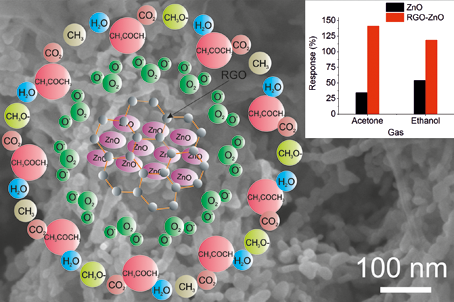
- the synthesis of ZnO films, nanowires and ZnO-based hybrids for applications in opto-electronics as well as in gas sensors [7][12][13][14][15]. ZnO has several advantages regarding the application in sensor structures. However, there are many obstacles (high resistivity and operating temperature
- stirring graphite oxide solids in pure water (18.0 MΩ·cm resistivity, purchased from Barnstead) for 3 h and sonicated the resulting mixture (VWR B2500A-MT bath sonicator) for 45 min. This method yields well-dispersed GO in water. We drop-cast the obtained aqueous dispersion of GO onto ZnO nanostructures


Diameter-driven crossover in resistive behaviour of heavily doped self-seeded germanium nanowires
Beilstein J. Nanotechnol. 2016, 7, 1284–1288, doi:10.3762/bjnano.7.119
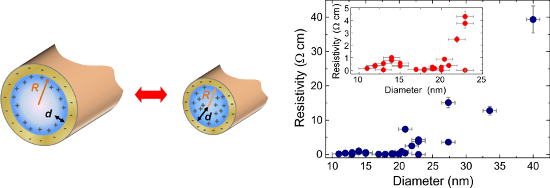
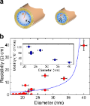
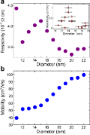
- (FAU), Staudtstraße 7, 91058 Erlangen, Germany Materials Chemistry & Analysis Group, Department of Chemistry, University College Cork, Cork, Republic of Ireland 10.3762/bjnano.7.119 Abstract The dependence of the resistivity with changing diameter of heavily-doped self-seeded germanium nanowires was
- studied for the diameter range 40 to 11 nm. The experimental data reveal an initial strong reduction of the resistivity with diameter decrease. At about 20 nm a region of slowly varying resistivity emerges with a peak feature around 14 nm. For diameters above 20 nm, nanowires were found to be describable
- spatial spreading of the free holes towards the nanowire centre upon diameter reduction. Keywords: diameter-dependence; germanium; nanowire; resistivity; self-seeded; Findings Semiconducting nanowires are in the focus of research due to their potential applications in electronics and optics [1][2][3][4

Reasons and remedies for the agglomeration of multilayered graphene and carbon nanotubes in polymers
Beilstein J. Nanotechnol. 2016, 7, 1174–1196, doi:10.3762/bjnano.7.109


An ellipsometric approach towards the description of inhomogeneous polymer-based Langmuir layers
Beilstein J. Nanotechnol. 2016, 7, 1156–1165, doi:10.3762/bjnano.7.107
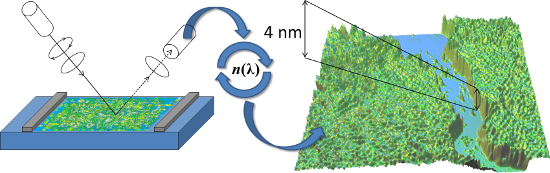
- calibration). For all compounds chloroform (Carl Roth, HPLC grade) was used as a spreading solvent. Ultrapure water with a nominal resistivity of ρ = 18.2 MΩ cm (Milli-Q gradient A-Merck Millipore) was used for all experiments and even for the final cleaning of the Langmuir trough and barriers. Langmuir


Voltammetric determination of polyphenolic content in pomegranate juice using a poly(gallic acid)/multiwalled carbon nanotube modified electrode
Beilstein J. Nanotechnol. 2016, 7, 1104–1112, doi:10.3762/bjnano.7.103
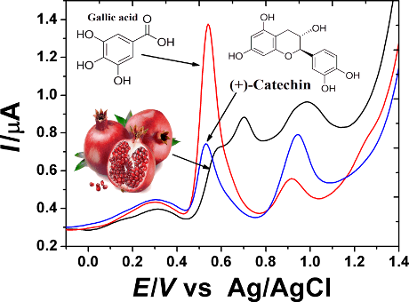
- rectangular indium tin oxide (ITO) coated glass slide (resistivity of 8–12 Ω/□) was examined using SEM (Figure 1). The film is deposited on the ITO with the same experimental conditions as for the GCE. As shown, the nanocomposite has a short, tubular topology with a smooth surface. The nanocomposites are


Photocurrent generation in carbon nanotube/cubic-phase HfO2 nanoparticle hybrid nanocomposites
Beilstein J. Nanotechnol. 2016, 7, 1075–1085, doi:10.3762/bjnano.7.101
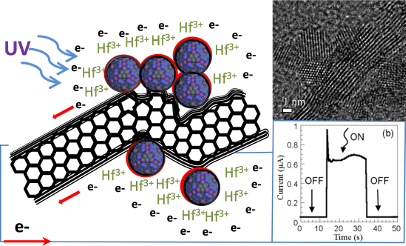
- . The photoresponse under UV excitation is sizeable with a higher quantity of the agglomerated HfO2:CNT density. The I–V characteristic is still mainly linear, with a relatively weak decrease of the resistivity, which is consistent with the fact that the electrical transport is dominated by the


Reorientation of single-wall carbon nanotubes in negative anisotropy liquid crystals by an electric field
Beilstein J. Nanotechnol. 2016, 7, 825–833, doi:10.3762/bjnano.7.74
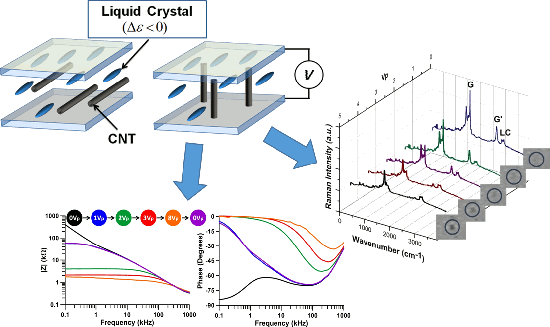
- energy storage system (i.e., a capacitor with an impedance phase value of approximately −90°) or as a conductor (phase value around 0°) with a specific resistivity value (related with the impedance magnitude). As a LC cell is formed by two parallel electrodes with a dielectric material between them (the
- resistivity of 100 Ω/□ and separated by 8.25 µm. The active area was 1 cm2. A LC planar alignment is induced by poly(3,4-ethylenedioxythiophene) and poly(styrenesulfonate) (PEDOT:PSS, Sigma-Aldrich). The PEDOT solution (1.3 wt % in water) was spin-coated at 1600 rpm and buffed. Polyimides and polymers


Thermo-voltage measurements of atomic contacts at low temperature
Beilstein J. Nanotechnol. 2016, 7, 767–775, doi:10.3762/bjnano.7.68
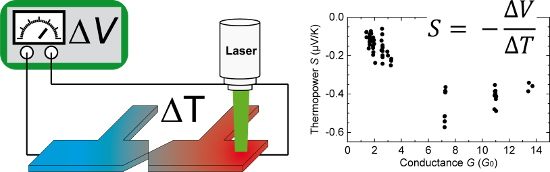
- experiment. As usual for thin films the resistivity is higher than estimated from bulk data [27]. The nominal experimental thickness of the Au films was 80 nm, but by comparison with literature data obtained on thin gold films on different substrates [28] and assuming that at temperatures above 200 K the
- temperature dependence of the resistivity should be dominated by electron-phonon scattering, we obtained an effective thickness of 63 nm. This reduction can be caused by the formation of a dead layer or by increased roughness due to the etching process. The complete length of the sensor leads including the
- , electrical resistivity ρ(T) = 8.73575 × 10⁻⁹ Ωm + 0.08325 × 10⁻⁹ Ωm K−1·T; polyimide: κ = 0.15 W m−1 K−1, cp = 1100 J kg−1 K−1, ρm = 1300 kg m−3; Kapton: κ = (−1.372384 × 10⁻³ + 5.601653 × 10⁻³·T + 2.082966 × 10⁻⁶·T2 − 5.05445 × 10⁻⁹·T3) W m−1 K−1 (for 5 K ≤ T < 140 K), κ = (−7.707532 × 10⁻³ + 5.769136 × 10





