Search results
Search for "sensing" in Full Text gives 519 result(s) in Beilstein Journal of Nanotechnology. Showing first 200.
Piezoelectric sensor based on graphene-doped PVDF nanofibers for sign language translation
Beilstein J. Nanotechnol. 2020, 11, 1655–1662, doi:10.3762/bjnano.11.148
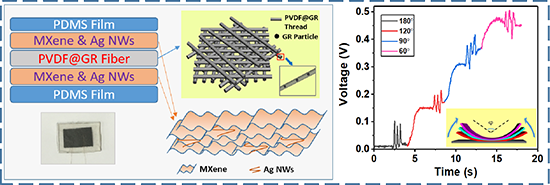
- correlation between temperature and signal can be used to avoid burns. The integrated sensing system based on multiple PESs can accurately recognize the action of each finger in real time, which can be effectively applied in sign language translation. PES-based motion-tracking applications have been
- interactions between humans and machines, the indispensability of external power sources greatly narrow their application scopes [27][28][29][30][31][32][33][34][35]. Piezoelectric sensors generate self-responsive electrical signals based on external mechanical forces. As a self-powered sensing system
- , piezoelectric sensors show potential in wearable sensing applications [19][36][37][38][39][40][41]. However, traditional piezoelectric sensor devices such as piezoelectric ceramics have disadvantages in detecting bending, and their detection stability and measurement range need to be improved [18][42][43][44


Selective detection of complex gas mixtures using point contacts: concept, method and tools
Beilstein J. Nanotechnol. 2020, 11, 1631–1643, doi:10.3762/bjnano.11.146
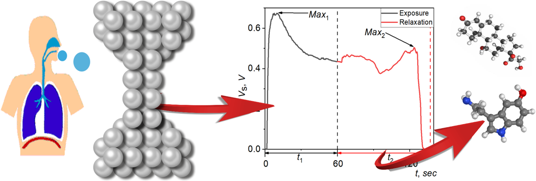
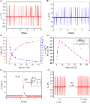
- unique properties of Yanson point contacts used as the sensing elements. The quantum properties of Yanson point contacts enable the solution of some of the problems that could not be solved using conventional sensors measuring conductance. In the present paper, we demonstrate this by showing the
- point contacts [4], used as the sensing elements. Spectral studies clearly demonstrate the fundamental difference between Yanson point contacts and traditional electrical contacts. The latter normally behave as bulk conductors of electric current without spectral properties. In contrast, Yanson point
- ][5]. The density of the primary nanostructured sensing elements in the sensor matrix was between 5 × 10⁴ and 6 × 10⁴ Yanson point contacts per square millimeter of the observable surface. The mesoscopic point-contact sensor matrix has a small integrated source of energy, which is manufactured with a


![[Graphic 4]](/bjnano/content/inline/2190-4286-11-146-i8.svg?max-width=637&scale=1.18182) in th...
in th...

![[Graphic 7]](/bjnano/content/inline/2190-4286-11-146-i11.svg?max-width=637&scale=1.18182) in the...
in the...
A self-powered, flexible ultra-thin Si/ZnO nanowire photodetector as full-spectrum optical sensor and pyroelectric nanogenerator
Beilstein J. Nanotechnol. 2020, 11, 1623–1630, doi:10.3762/bjnano.11.145
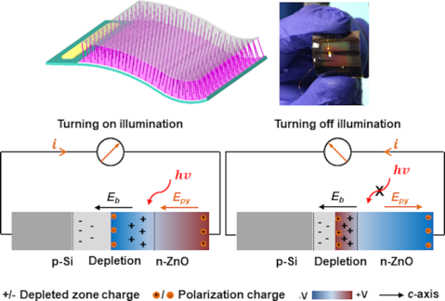
- light from ultraviolet to near-infrared have attracted widespread attention in recent years for a variety of applications in industry and technology, such as optical sensing/communication, environmental monitoring, biomedicine, and the “internet of things” [1][2][3][4]. Especially full-spectrum PDs
- full-spectrum optical sensing or optical communication. Powering external circuits as a PENG In structure design of the device, ultra-thin (45 μm) p-Si is prepared by isotropic chemical etching to fabricate flexible electronic devices and enhance the performance of the PDs. The structure diagram of a
- that the p-Si/n-ZnO NWs heterojunction device not only can realize self-powered full-spectrum (UV–visible–NIR) optical sensing but can also serve as a power source (PENG) transforming thermal energy into electrical energy to power other loads. Conclusion We have fabricated a high-performance self


Walking energy harvesting and self-powered tracking system based on triboelectric nanogenerators
Beilstein J. Nanotechnol. 2020, 11, 1590–1595, doi:10.3762/bjnano.11.141
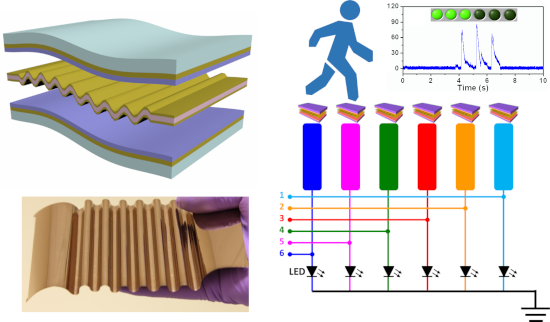
- ][23], rotation [24][25][26][27], sound wave [28], air flow [29][30][31], water wave, and rain drops [32][33][34]. Furthermore, since they are able to convert mechanical motion into electrical energy, TENGs have been widely used to successfully construct reliable self-powered sensing systems with an
- , including men, women and children. In addition, integrated with six sensing channels along a public aisle, a self-powered location-tracking system was constructed for pedestrian volume counting and passenger tracing. This work paves the way for the application of triboelectric sensors in intelligent cities




Optically and electrically driven nanoantennas
Beilstein J. Nanotechnol. 2020, 11, 1542–1545, doi:10.3762/bjnano.11.136

- , Germany 10.3762/bjnano.11.136 Keywords: active plasmonics; electrically driven nanoantenna; gap antenna; nanoantenna; nanofabrication; nanospectroscopy; nano-photonics; optical antenna; second harmonic generation; sensing; scanning tip; surface-enhanced infrared absorption (SEIRA); surface-enhanced Raman
- or TERS) [6][7][8][9][10][11][12][13][14][15], as well as for (bio-)sensing applications [16][17][18]. The integration of nanoantennas can lead to enhanced functionality for optoelectronic devices, nano-light sources, light amplification, or hybrid systems in combination with nanoemitters or two
- ultrahigh sensitivity sensing the central feature for tightly confining and enhancing the optical near-field is a narrow gap between two metallic nanoparticles or tips. Creating such gaps to obtain a controlled distribution of hotspots, for example, on a chip, is no trivial task. This has been pursued using
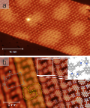
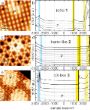
Self-assembly and spectroscopic fingerprints of photoactive pyrenyl tectons on hBN/Cu(111)
Beilstein J. Nanotechnol. 2020, 11, 1470–1483, doi:10.3762/bjnano.11.130
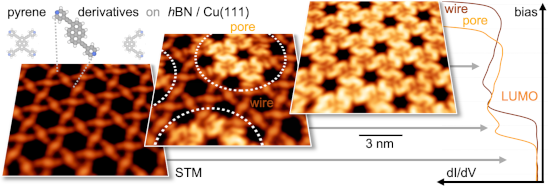
- ; Introduction Atomic-level control of molecular materials at interfaces is crucial to fully exploit the materials’ potential in electronic, optoelectronic, spintronic, and sensing applications [1][2]. Specifically, the effects of adsorption, conformation, and supramolecular organization on the resulting
- anchor for noncovalent functionalization, e.g., to develop graphene platforms to be used in sensing applications [65][66][67] and to employ hBN monolayers for capturing aromatic organic pollutants [68]. On bulk insulators, it was, for instance, demonstrated how the optical properties of an adsorbed




Wafer-level integration of self-aligned high aspect ratio silicon 3D structures using the MACE method with Au, Pd, Pt, Cu, and Ir
Beilstein J. Nanotechnol. 2020, 11, 1439–1449, doi:10.3762/bjnano.11.128
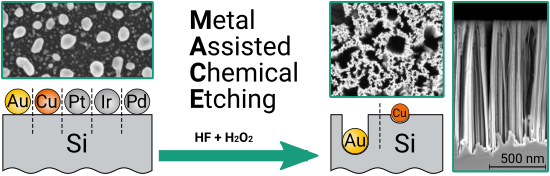
- metal–insulator–semiconductor or metal–insulator–metal capacitors with a high effective area on a small footprint. The high surface area of a silicon nanowire array can be used to fabricate ion-sensitive field-effect transistors (ISFETs) with a high signal-to-noise ratio. An ISFET is a pH sensing
- platform and can be adapted to detect biomolecules [9]. Silicon nanowires are used as template for cancer sensors. The nanowires are implemented as gate in integrated sensing FETs [10][11]. A wide range of chemical sensors and biosensors benefit from porous silicon structures [12]. All these presented


Triboelectric nanogenerator based on Teflon/vitamin B1 powder for self-powered humidity sensing
Beilstein J. Nanotechnol. 2020, 11, 1394–1401, doi:10.3762/bjnano.11.123
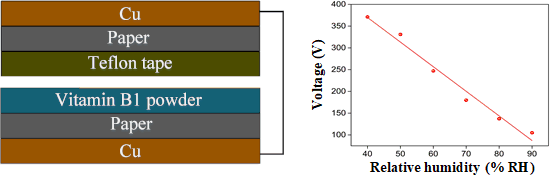
- -emitting diodes (LEDs) integrated in the TVB-TENG system. The TVB-TENG proposed in this study illustrates a cost-effective method for portable power supply and sensing devices. Keywords: humidity sensor; self-powered system; triboelectric nanogenerators (TENGs); triboelectrification; vitamin B1
- ; Introduction Recently, there has been unprecedented advancement in the internet of things (IoT) technology, which includes environmental monitoring and intelligent community applications. Particularly, humidity sensing has been investigated in environmental monitoring, and in other sectors, such as agriculture
- for humidity sensing is hindered by the high costs involved in their complex production and the high facility costs for particular manufacturing process. Thus, intensive research is required for the design of TENGs based on commercially available, cost-effective and feasible materials. Furthermore




An atomic force microscope integrated with a helium ion microscope for correlative nanoscale characterization
Beilstein J. Nanotechnol. 2020, 11, 1272–1279, doi:10.3762/bjnano.11.111
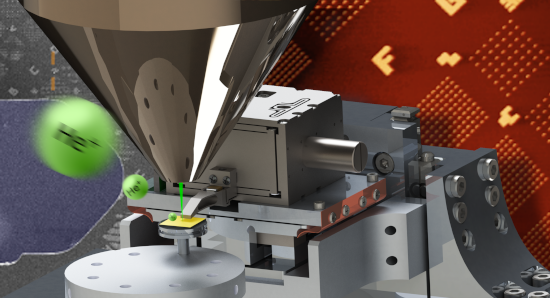
- integration. Keywords: atomic force microscopy (AFM); combined setup; correlative microscopy; helium ion microscopy (HIM); self-sensing cantilevers; Introduction Shortly after the invention of the atomic force microscope (AFM) in 1986 [1], efforts were made towards combining this scanning probe microscopy
- correlative imaging on electrically insulating samples. In this first attempt, the readout of cantilever deflection was achieved using the electron beam itself. Shortly after, better performing combined setups were described utilizing more conventional self-sensing [5] and optical [6] techniques for the
- seamlessly between the pole piece and the sample. The assembly is made from grade-5 titanium (Ti-6Al-4V) and the three axes of motion are actuated by stack-piezo actuators, offering an achievable scan range of 30 × 30 × 12 µm. The reported AFM uses a self-sensing readout for measuring cantilever deflection


Ultrasensitive detection of cadmium ions using a microcantilever-based piezoresistive sensor for groundwater
Beilstein J. Nanotechnol. 2020, 11, 1242–1253, doi:10.3762/bjnano.11.108
- disadvantages during operation in water when the refractive index of water changes [30][31]. Many authors have proposed electrode-based approaches for the selective sensing of Cd(II) [32], but the limits of detection were always in the micromolar to nanomolar ranges. Some of the authors used fluorescent [5][33
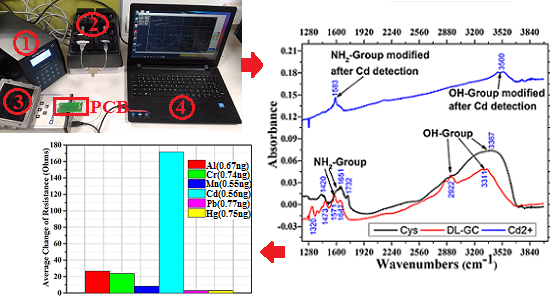
- it also requires a lab instrument for measurement. We have previously investigated SAMs of homocysteine (HCys) and pyridinedicarboxylic acid (PDCA) for the selective sensing of Hg(II) ions using a portable piezoresistive platform [39][40]. Experimental results confirmed that proposed setup is capable
- of sensing in the picomolar range. In this paper, we have used the previously designed portable piezoresistive platform for the selective capture Cd(II) in the picomolar range. Preliminary results show that the fabricated device has an excellent response within 20–23 minutes with 0.56 ng/mL (2.78 pM




Applications of superparamagnetic iron oxide nanoparticles in drug and therapeutic delivery, and biotechnological advancements
Beilstein J. Nanotechnol. 2020, 11, 1092–1109, doi:10.3762/bjnano.11.94
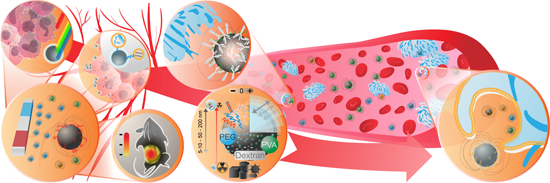
- on the environment. Many nanoparticles showed great potential and proved their utility in biology and medicine. There are multiple types of nanoparticles routinely used in biology and related sciences for sensing, targeting or imaging, including quantum dots for fluorescence applications and electron
- been extensively examined regarding biocompatibility, targeted or intended cytotoxicity (ferroptosis), local hyperthermia treatments, photothermal or photodynamic therapy, and MRI. Also, there are increasingly more studies reporting on combinations with in vivo fluorescence imaging, sensing and


Highly sensitive detection of estradiol by a SERS sensor based on TiO2 covered with gold nanoparticles
Beilstein J. Nanotechnol. 2020, 11, 1026–1035, doi:10.3762/bjnano.11.87
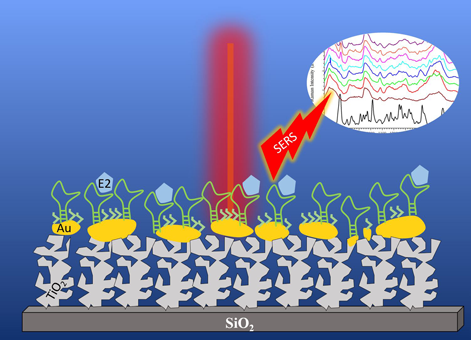
- (SERS); TiO2 nanostructures; Introduction Surface-enhanced Raman scattering (SERS) as a sensing tool requires the optimization of a surface and its functionalization. The surface should provide a good enhancement over a large range of wavelengths, to detect molecules with various fingerprints, while it



Gas-sensing features of nanostructured tellurium thin films
Beilstein J. Nanotechnol. 2020, 11, 1010–1018, doi:10.3762/bjnano.11.85
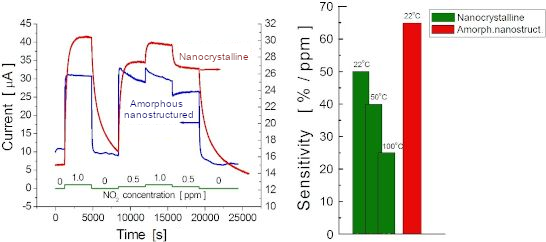
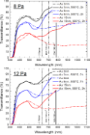
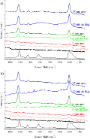
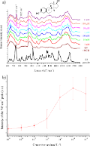
- Dumitru Tsiulyanu CIMAN Research Centre of Department of Physics, Technical University, bul. Dacia 41, MD-2060 Chisinau, Moldova 10.3762/bjnano.11.85 Abstract Nanocrystalline and amorphous nanostructured tellurium (Te) thin films were grown and their gas-sensing properties were investigated at
- were interpreted in terms of an increase in disorder (amorphization), leading to an increase in the surface chemical activity of chalcogenides, as well as an increase in the active surface area due to substrate porosity. Keywords: gas-sensing properties; NO2; tellurium thin films; nanocrystalline
- development of thin films in chemical-sensing applications, especially for toxic gas sensing. Szaro [4] pioneered the studies regarding the effects of oxygen and nitrogen, diluted in either dry or wet air, on the electrical properties of Te films. The results showed an increase in the hole concentration


Band tail state related photoluminescence and photoresponse of ZnMgO solid solution nanostructured films
Beilstein J. Nanotechnol. 2020, 11, 899–910, doi:10.3762/bjnano.11.75
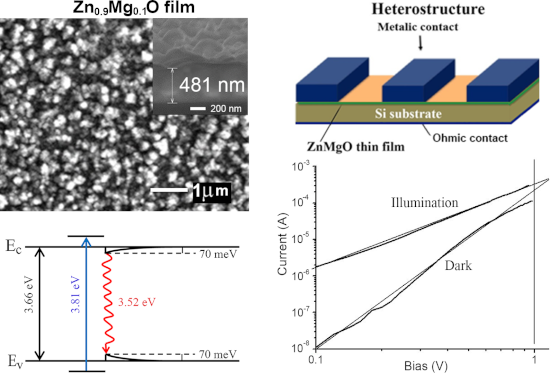
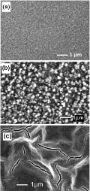
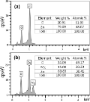
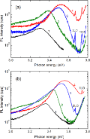
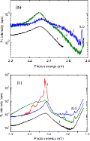
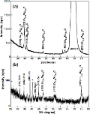
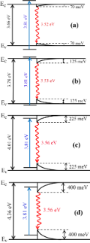
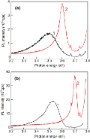
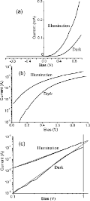
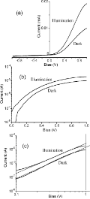
- photodetectors developed on ZnMgO films, including correlations between PL and sensing properties, is in progress in our laboratory, but the results will be published in a separate paper. Conclusion The results of this study demonstrate the preparation of ZnMgO thin films by spin-coating on Si substrates with

Simulations of the 2D self-assembly of tripod-shaped building blocks
Beilstein J. Nanotechnol. 2020, 11, 884–890, doi:10.3762/bjnano.11.73
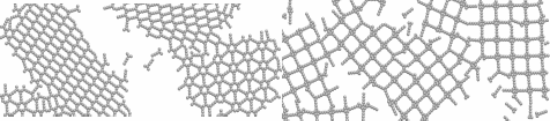
- problems in the chemical industry such as gas storage, chemical sensing, and drug delivery [1][2][3]. Thus, this field has very recently gained particular interest in both experimental and theoretical studies, which was followed by a vast amount of papers devoted to investigating these phenomena. Thanks to


Hexagonal boron nitride: a review of the emerging material platform for single-photon sources and the spin–photon interface
Beilstein J. Nanotechnol. 2020, 11, 740–769, doi:10.3762/bjnano.11.61
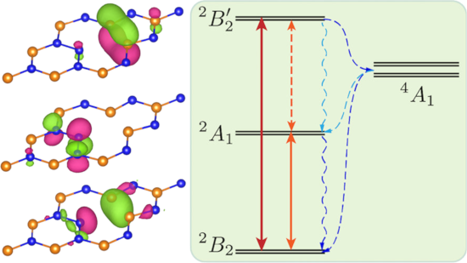
- , quantum computation, and quantum sensing. Their integration in photonic structures such as photonic crystals, microdisks, microring resonators, and nanopillars is essential for their deployment in quantum technologies. While there are currently only two material platforms (diamond and silicon carbide
- applications, such as quantum information science [1], quantum sensing [2], quantum cryptography [3], and quantum computing [4][5]. After the discovery and assessment of their quantum properties, some of these defects became prominent examples of material platforms for quantum photonics [6][7][8][9][10] and
- in diamond is currently the preferred platform for implementing quantum sensing and quantum computing approaches, the recent emergence of other interesting color centers in diamond itself [16][30][31] and in other materials indicates that indeed NV is not optimal for many applications, neither it is


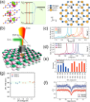


Soybean-derived blue photoluminescent carbon dots
Beilstein J. Nanotechnol. 2020, 11, 606–619, doi:10.3762/bjnano.11.48
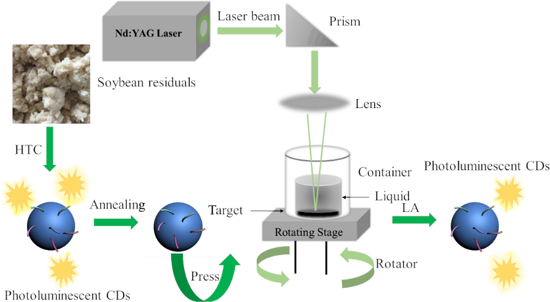
- wavelength [7], and low cost [8]. CDs have been considered as a group of important nanomaterials with potential applications in nanotechnology [9], electrocatalysis [10], metal-ion detection [2], thermal sensing [11], drug delivery [12], and biosensing and bioimaging [1]. Several methods are available for


Luminescent gold nanoclusters for bioimaging applications
Beilstein J. Nanotechnol. 2020, 11, 533–546, doi:10.3762/bjnano.11.42
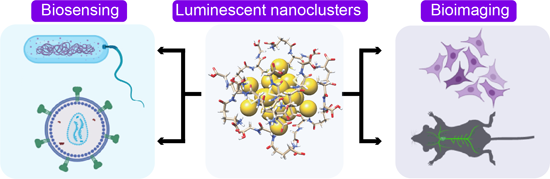
- emerged as attractive candidates for sensing, catalysis and bioimaging applications in recent years. For practical use in bioimaging, nanomaterials with high photoluminescence, quantum yield, photostability and large Stokes shifts are needed. While offering high photoluminescence and quantum yield
- optoelectronic properties make them suitable for bioimaging and biosensing applications. In this review, an overview of the sensing of pathogens, and of in vitro and in vivo bioimaging using luminescent gold nanoclusters along with the limitations with selected examples are discussed. Keywords: bioimaging
- complexes primarily rely on chelation of metal ions with carboxylic groups, therefore the diversity of ligand design is limited. The discovery of green fluorescent protein (GFP) led to remarkable progress in bioimaging including protein quantification, tracking, sensing as well as imaging various


Multilayer capsules made of weak polyelectrolytes: a review on the preparation, functionalization and applications in drug delivery
Beilstein J. Nanotechnol. 2020, 11, 508–532, doi:10.3762/bjnano.11.41
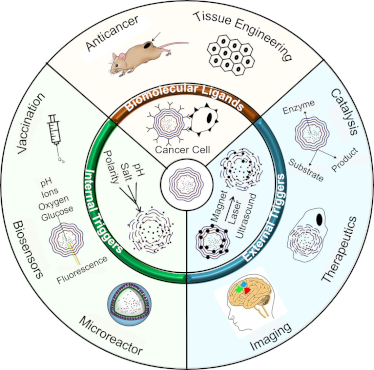
- Nanotechnology, SRM Institute of Science and Technology, Kattankulathur, Tamil Nadu 603203, India 10.3762/bjnano.11.41 Abstract Multilayer capsules have been of great interest for scientists and medical communities in multidisciplinary fields of research, such as drug delivery, sensing, biomedicine


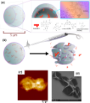

Nanoarchitectonics: bottom-up creation of functional materials and systems
Beilstein J. Nanotechnol. 2020, 11, 450–452, doi:10.3762/bjnano.11.36
- [14][15], sensing [16][17], catalysis [18], energy [19], environmental [20], devices [21][22], and bio-related [23][24] applications. Accordingly, the goal of the thematic issue “Nanoarchitectonics: bottom-up creation of functional materials and systems” was to collect leading research examples that

Formation of nanoripples on ZnO flat substrates and nanorods by gas cluster ion bombardment
Beilstein J. Nanotechnol. 2020, 11, 383–390, doi:10.3762/bjnano.11.29
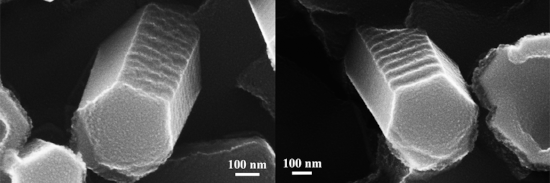
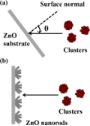
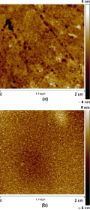
- of semiconductor quantum dots [2]. Arrays of metallic nanoparticles or nanowires aligned on dielectric surfaces with nanoripples are ideal for research on plasmonics [3]. Ag nanoparticle arrays created on rippled silicon surfaces have demonstrated excellent sensing of molecules through surface
- , suggesting a small influence of the sort of material or the crystal orientation of the substrate on the ripple formation. Recently, Saleem et al. have proposed to use the nanoripple structures formed by GCIB for plasmonic and biomolecular sensing applications [16][17]. In all above-mentioned studies planar
- discussed. The results obtained in this study are of interest in the application of ZnO nanostructures for, e.g., gas sensing, solar cells, or field emitters, where controlled surface morphologies are required. Experimental We have grown ZnO nanorods on Si(100) substrates (HF-Kejing Materials Technology Co



Poly(1-vinylimidazole) polyplexes as novel therapeutic gene carriers for lung cancer therapy
Beilstein J. Nanotechnol. 2020, 11, 354–369, doi:10.3762/bjnano.11.26
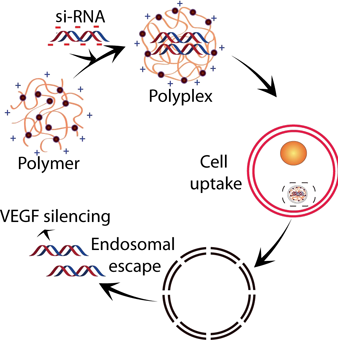
- and the enzyme glucose oxidase for glucose-sensing applications [11]. A hydrogel of xanthan gum and poly(1-vinylimidazole) was recently explored for protein encapsulation and delivery. The system exerted no toxic effects on cells and maintained the functionality of the protein [12]. A pyrrole


Using gold nanoparticles to detect single-nucleotide polymorphisms: toward liquid biopsy
Beilstein J. Nanotechnol. 2020, 11, 263–284, doi:10.3762/bjnano.11.20
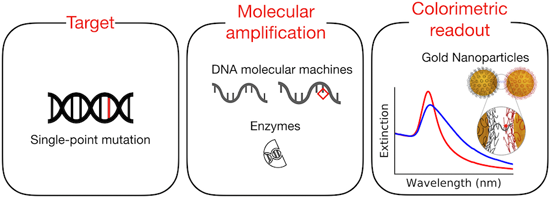
- the use of emergent nanomaterials. Over the last decade, a number of novel and optically active nanomaterials involving semiconductor or metal nanocrystals enabled the development of sensing devices with rather simple transduction mechanisms [3]. For example, the aggregation-induced color change of a
- solution containing plasmonic nanoparticles (from red to blue) in the presence of molecules offers an excellent tool for colorimetric sensing without the need of using advanced techniques. Similarly, selective fluorescence quenching of organic dyes or semiconducting nanoparticles by plasmonic nanoparticles
- identification of indicators for disease recurrence and progression and the evaluation of a given treatment in nearly real-time. In the context of the present review, the early-stage diagnosis of cancer by novel sensing devices is prioritized in the subsequent discussion. Circulating tumor DNA and single




Molecular architectonics of DNA for functional nanoarchitectures
Beilstein J. Nanotechnol. 2020, 11, 124–140, doi:10.3762/bjnano.11.11
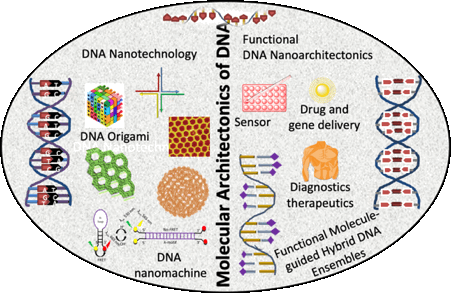
- geometries, patterns, or crystals that facilitate the positional assembly of nanoparticles along the DNA nanostructures [42]. The dynamic DNA nanotechnology includes DNA nanomachines with potential applications ranging from sensing to delivery and robotics [43]. Inspired by the complementary base pairing
- condition, and therefore monitoring physiological pH values with high sensitivity is required. Our group designed a molecular beacon (LMB) DNA device appended with a FRET pair as pH sensing probe in cells [19]. The remarkable feature of the LMB probe was the structural transition from a closed (molecular
- altered the FRET response, which was exploited for sensing of acidic pH (3–5.5) with a low step size (0.2–0.3) within synthetic vesicles that mimicked the intracellular environment. The in cellulo study in HeLa cells demonstrated the efficient cellular uptake of the DNA device without the need for a


A review of demodulation techniques for multifrequency atomic force microscopy
Beilstein J. Nanotechnol. 2020, 11, 76–91, doi:10.3762/bjnano.11.8

- sensing the interaction between a sharp microcantilever probe and the sample [2]. Initial operation was in constant-force contact-mode, where a static deflection is maintained through a constant contact force [3]. In dynamic imaging modes [4], the cantilever is driven at, or near, a resonance frequency