Search results
Search for "spectroscopy" in Full Text gives 1445 result(s) in Beilstein Journal of Nanotechnology. Showing first 200.
Synthesis, characterization and anticancer effect of doxorubicin-loaded dual stimuli-responsive smart nanopolymers
Beilstein J. Nanotechnol. 2024, 15, 1189–1196, doi:10.3762/bjnano.15.96
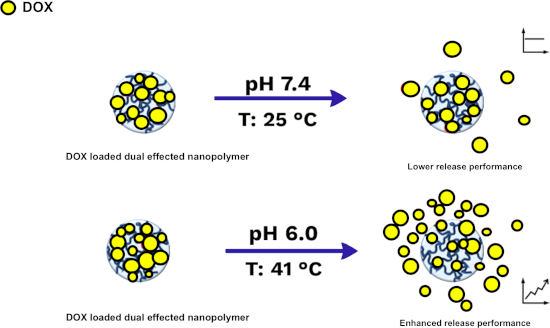
- . Characterizations of the synthesized nanostructures were carried out including zeta potential measurements, Fourier-transform infrared spectroscopy, and scanning electron microscopy. The loading capacity of the nanopolymers for DOX was investigated, and encapsulation and release studies were carried out. In a final
- Centrifugen, USA). The precipitated nanostructures were redispersed in distilled water utilizing a sonicator and dried with a lyophilizer. Then, the nanostructures were stored at 4 °C. Characterization studies Functional group analysis was carried out by Fourier-transform infrared (FTIR) spectroscopy


Direct electron beam writing of silver using a β-diketonate precursor: first insights
Beilstein J. Nanotechnol. 2024, 15, 1117–1124, doi:10.3762/bjnano.15.90

- in a field-emission Hitachi S-4800 SEM. The chemical composition of the deposits was determined using energy-dispersive X-ray (EDX) spectroscopy using a Hitachi S-4800 SEM equipped with an EDAX Genesis 4000 detector and a Tescan Mira dual-beam instrument with an EDAX EDX system. To prove for
- the formation mechanism of the interfacial silver layer deserves further in-depth studies, which are beyond the scope of this article. These studies would involve surface science approaches using mass spectrometry and/or other spectroscopic techniques, such as X-ray photoelectron spectroscopy, and
- Raman or FTIR spectroscopy [5][8][37], to study the nature of the desorbed and incorporated molecular fragments ideally during the irradiation process. Up to now, only silver pentafluoropriopionate allowed for three-dimensional growth [30]. However, the use of this compound required relatively high


Unveiling the potential of alginate-based nanomaterials in sensing technology and smart delivery applications
Beilstein J. Nanotechnol. 2024, 15, 1077–1104, doi:10.3762/bjnano.15.88
- a monolayer of gas coverage. The surface area of nanomaterials can also be determined by X-ray photoelectron spectroscopy and secondary ion mass spectroscopy [64][65]. Zeta potential: The zeta potential of nanoparticles can be calculated from the electrophoretic mobility of particles in a particular
- solvent using the Doppler approach, which measures particle velocity as a function of voltage. The determination of the zeta potential is crucial in understanding the mechanism of drug–nanoparticle interactions [66]. In addition to the methods described above, Fourier-transform infrared spectroscopy is


Effect of wavelength and liquid on formation of Ag, Au, Ag/Au nanoparticles via picosecond laser ablation and SERS-based detection of DMMP
Beilstein J. Nanotechnol. 2024, 15, 1054–1069, doi:10.3762/bjnano.15.86

- -dispersive X-ray spectroscopy. Furthermore, NPs of various sizes ranging from 6 to 35 nm were loaded onto a filter paper by a simple and effective drop-casting approach to achieve flexible surface-enhanced Raman spectroscopy (SERS) substrates/sensors. These substrates were tested using a simple, portable
- interest in many applications, such as photoelectronic devices, biochemical sensors, and surface-enhanced Raman spectroscopy (SERS) substrates, due to their high purity NPs as well as an easy method for altering the structures, NPs/NSs sizes, and morphology by tuning the laser parameters and surrounding
- imaging due to the nonconductive nature of the FP substrate. FESEM energy-dispersive X-ray spectroscopy (EDX) mapping investigations were conducted on Ag/Au alloy NPs deposited on a Si substrate by drop casting 10 µL to avoid confusion in the data caused by the Au coating. Transmission electron microscopy


Interface properties of nanostructured carbon-coated biological implants: an overview
Beilstein J. Nanotechnol. 2024, 15, 1041–1053, doi:10.3762/bjnano.15.85
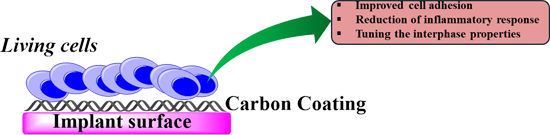
- spectroscopy. The authors observed a drastically reduction of passivation in the coated samples compared with the original specimens. Similar results can be achieved by using CNT-containing polymeric layers [163] or CNT-based hydroxyapatite coatings [164][165]. Remarkably, neat CNTs coatings are not the best



Recent progress on field-effect transistor-based biosensors: device perspective
Beilstein J. Nanotechnol. 2024, 15, 977–994, doi:10.3762/bjnano.15.80
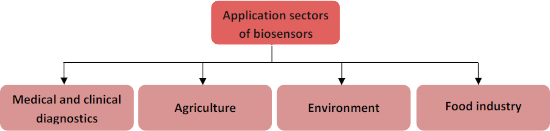
- [27][28], surface-enhanced Raman spectroscopy [29][30], microfluidic-coupled biochip [31], electrochemical [32], and field-effect transistor (FET)-based biosensors [33]. Biosensors offer several distinct benefits for virus recognition, including higher selectivity through improved target receptors and




Facile synthesis of Fe-based metal–organic frameworks from Fe2O3 nanoparticles and their application for CO2/N2 separation
Beilstein J. Nanotechnol. 2024, 15, 897–908, doi:10.3762/bjnano.15.74
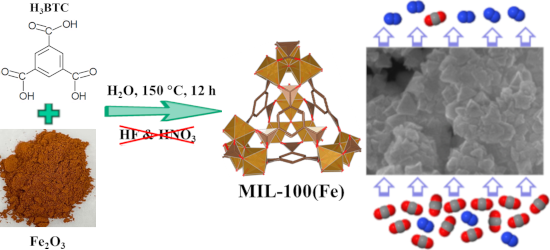
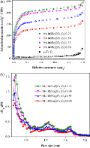
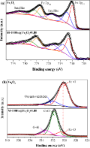
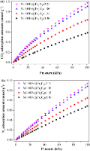
- and yield of the as-prepared MIL-100(Fe) materials, including thermogravimetric analysis (TGA), Fourier-transform infrared (FTIR) spectroscopy, powder X-ray diffraction (PXRD) measurements, determination of textural properties, scanning electron microscopy (SEM), and X-ray photoelectron spectroscopy





Intermixing of MoS2 and WS2 photocatalysts toward methylene blue photodegradation
Beilstein J. Nanotechnol. 2024, 15, 817–829, doi:10.3762/bjnano.15.68
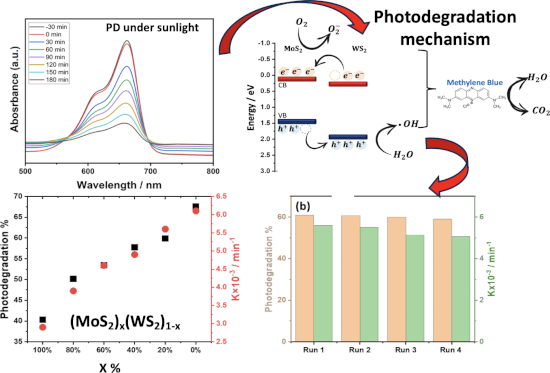
- yield, their physical properties, and their evolving microstructures. Results and Discussion Structural analysis Raman spectroscopy analysis of the exfoliated samples revealed prominent vibrational modes of hexagonal 2H-MoS2, 2H-WS2, and mixture of both phases, represented by E12g at 382 cm−1 and A1g at
- additional peaks observed in all XRD diagrams at ≈37° and ≈69° positions are due to the silicon substrate. The X-ray photoelectron spectroscopy (XPS) survey scans and high-resolution scans for all samples are presented in Figure 3a–j. All XPS analyses were first calibrated using the C 1s peak of carbon at
- with energy-dispersive spectroscopy (EDS) mapping were carried out on the MoS2/WS2 composite. High-annular angle dark-field (HAADF-STEM) allowed the identification of atomic positions with Z differences [35][36], and in particular here, the W sites as shown in Figure 5g. This is confirmed by EDS maps


Synthesis of silver–palladium Janus nanoparticles using co-sputtering of independent sources: experimental and theorical study
Beilstein J. Nanotechnol. 2024, 15, 808–816, doi:10.3762/bjnano.15.67
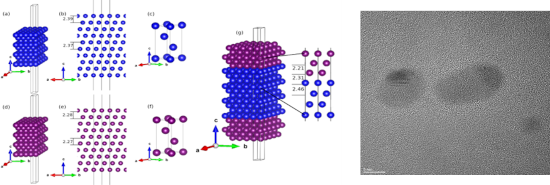
- promote the synthesis of bimetallic Janus nanoparticles. The structural properties of the resulting nanoparticles were investigated by transmission electron microscopy (TEM), and the chemical composition was analyzed by TEM energy dispersive spectroscopy (TEM-EDS), which, together with structural analysis




Electron-induced ligand loss from iron tetracarbonyl methyl acrylate
Beilstein J. Nanotechnol. 2024, 15, 797–807, doi:10.3762/bjnano.15.66
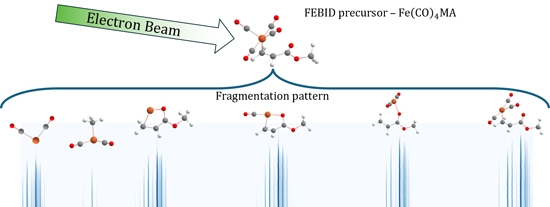
- surface-based investigations, where the electron-induced ligand loss has been probed by XPS [13], ion desorption [14], IR spectroscopy [15], or cluster-beam studies [16][17][18]. The ligand loss has also been probed by ion impact, both in the gas phase [19] and on the surface [13], and, theoretically, by
- resulting crude solid product was sublimed at room temperature at 700 mTorr to yield the crystalline yellow product. Yield: 140 mg, 40%. Purity of the product was assessed using 1H NMR and IR spectroscopy. IR (hexane) νCO (cm−1): 2100, 2034, 2020, 1997. 1H NMR (400 MHz, CDCl3) δ 3.71 (s, 3H), 3.25 (dd, J



Electrospun polysuccinimide scaffolds containing different salts as potential wound dressing material
Beilstein J. Nanotechnol. 2024, 15, 781–796, doi:10.3762/bjnano.15.65
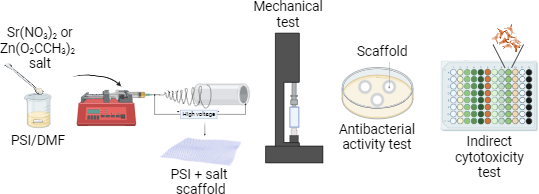
- polymer-based systems (<500 nm). Fourier-transform infrared spectroscopy was applied to verify the presence of salts in the scaffolds and to determine the interaction between the salt and the polymer. Another analysis, energy-dispersive X-ray spectroscopy, was carried out to determine strontium and zinc
- scanning electron microscopy (SEM), Fourier-transform infrared spectroscopy (FTIR), mechanical tests, investigation of salt dissolution from the scaffolds, examination of their antibacterial activity against four different bacterial strains (Escherichia coli, Pseudomonas aeruginosa, Bacillus subtilis, and
- , which was placed on a slow rotary drum (10 rpm). The distance between the needle of the syringe and the collector was 15 cm in all cases. The applied voltages (direct current power supply, ES 30 Model, Gamma High Voltage Inc., USA) and flow rates are in Table 1. Fourier-transform infrared spectroscopy



Exploring surface charge dynamics: implications for AFM height measurements in 2D materials
Beilstein J. Nanotechnol. 2024, 15, 767–780, doi:10.3762/bjnano.15.64
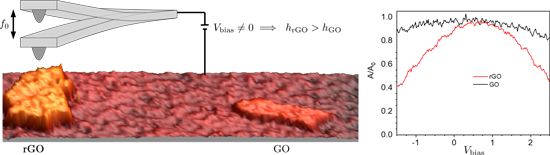
- addition, it can be integrated with classical optical spectroscopy methods such as Raman and fluorescence [20][28][29], enabling a multidimensional characterization approach. A well-recognized issue within the AFM community is the inaccurate height determination derived from topography images on
- capacitance signal was also recorded, as explained in [61]. Spectroscopy data were acquired using a variant of the 3D-mode dynamic force spectroscopy [62], explained in detail in [63]. Briefly, force, frequency shift, amplitude, and phase channels are recorded simultaneously at a fixed sample point as a
- the local properties of the material. To gain a deeper understanding of this voltage-dependent dissipative interaction, we conducted 3D spectroscopy measurements on rGO. The amplitude vs Vbias as a function of tip–sample distance images (A(Vbias, z)) for two different free oscillation amplitudes (A0


Green synthesis of biomass-derived carbon quantum dots for photocatalytic degradation of methylene blue
Beilstein J. Nanotechnol. 2024, 15, 755–766, doi:10.3762/bjnano.15.63
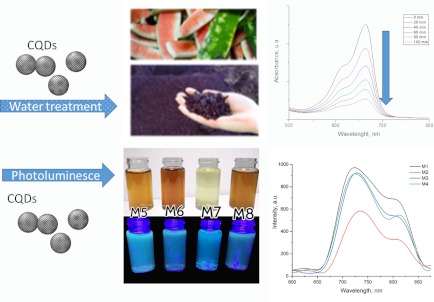
- 24 h, CQDs were successfully synthesized. A comprehensive characterization of the CQDs was performed using UV–visible spectroscopy, Fourier-transform infrared spectroscopy, dynamic light scattering, Raman spectroscopy, and luminescence spectroscopy, confirming their high quality. The photocatalytic
- catalytic activity in MB degradation, while those prepared with water as a solvent did not show significant catalytic activity. The samples were also characterized using UV–visible spectra, Fourier-transform infrared spectroscopy (FTIR), Raman spectroscopy, dynamic light scattering (DLS), and
- photoluminescence spectroscopy (PL). The utilization of biomass as a carbon source offers great opportunities due to its abundance in nature and the wide range of sources available, which exhibit good luminescent and catalytic properties. Focusing on the hydrothermal synthesis method using biomass-derived


Effect of repeating hydrothermal growth processes and rapid thermal annealing on CuO thin film properties
Beilstein J. Nanotechnol. 2024, 15, 743–754, doi:10.3762/bjnano.15.62
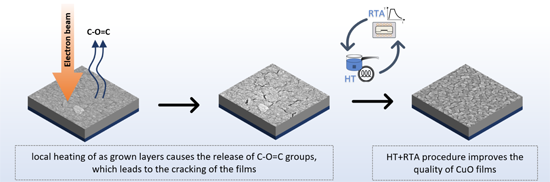
- underwent structural analysis using a high-resolution X-ray diffractometer X’Pert Pro MRD (Panalytical) equipped with a Cu anode (λ = 1.54060 Å). X-ray photoelectron spectroscopy (XPS) measurements were conducted utilizing a Scienta R4000 hemispherical analyzer with a pass energy of 200 eV and monochromatic
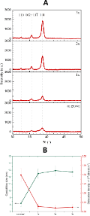
- procedure. It demonstrates homogeneity without a notable dominance of hills or valleys. The structural properties of the CuO films were evaluated using XRD and Raman spectroscopy. The XRD diffractograms (Figure 4A) exhibit well-defined reflections that correspond to the polycrystalline monoclinic structure
- thin films. Consequently, it has a favorable impact on both electrical and thermal stability. Moreover, as evidenced by XRD and Raman spectroscopy analyses, the sequencing enhances the crystal quality of the films, which remain free from other copper compound phases regardless of the preparation




Level set simulation of focused ion beam sputtering of a multilayer substrate
Beilstein J. Nanotechnol. 2024, 15, 733–742, doi:10.3762/bjnano.15.61
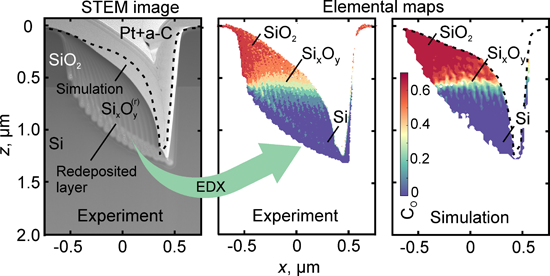
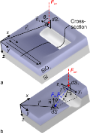
- STEM micrographs were obtained by means of the high-angle annular dark-field detector of a Titan Themis 200 transmission electron microscope at 200 kV accelerating voltage. Chemical analysis of the selected specimen areas was carried out by energy-dispersive X-ray spectroscopy with the use of a four

![[Graphic 55]](/bjnano/content/inline/2190-4286-15-61-i68.svg?max-width=637&scale=1.18182)


Simultaneous electrochemical determination of uric acid and hypoxanthine at a TiO2/graphene quantum dot-modified electrode
Beilstein J. Nanotechnol. 2024, 15, 719–732, doi:10.3762/bjnano.15.60
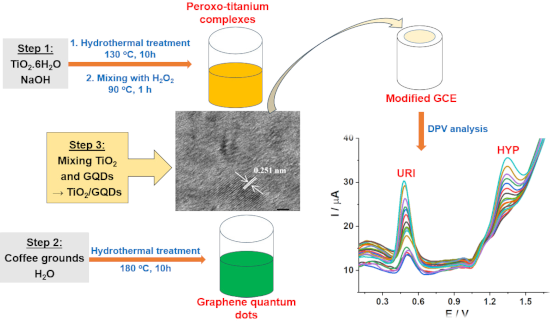
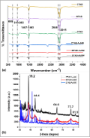
- diffraction, Raman spectroscopy, high-resolution transmission electron microscopy, and energy-dispersive X-ray mapping. The TiO2/GQDs-GCE exhibits better electrochemical activity for uric acid and hypoxanthine than GQDs/GCE or TiO2/GCE in differential pulse voltammetry (DPV) measurements. Under optimized
- GQDs were observed by using a JEM 2100 high-resolution transmission electron microscopy (HRTEM), Joel, Japan. Raman spectroscopy measurements were performed on a WiTec, Alpha 300R with a 532 nm laser. Surface analyses of the obtained materials were carried out using a S-4800 scanning electron
- microscope (SEM), Hitachi (Japan). UV–vis absorption spectroscopy measurements was carried out on an 8453 UV–vis spectrophotometer, Agilent, USA. Photoluminescence (PL) spectroscopy measurements were performed on a FL3C-22 spectrophotometer, Horiba, USA. Synthesis of TiO2/GQDs Peroxo titanium complexes were


Gold nanomakura: nanoarchitectonics and their photothermal response in association with carrageenan hydrogels
Beilstein J. Nanotechnol. 2024, 15, 678–693, doi:10.3762/bjnano.15.56

- diffraction (XRD), and FTIR, respectively, to establish physicochemical properties of the synthesized nanomaterials. Results Synthesis, optical spectroscopy, and zeta potential Anisotropic gold nanoparticles of makura shape were synthesized using seed-mediated approach as shown in Figure 1a. The Au seeds were
- , respectively. The observed trend in decreasing aspect ratio is CTAB-AuNM > MTAB-AuNM > DTAB-AuNM. Fourier-transform infrared spectroscopy and X-ray diffraction analysis The CTAB-, MTAB-, and DTAB-capped gold nanoparticles exhibited strong peaks at 2848 and 2915 cm−1 due to symmetric and asymmetric C–H
- scanning electron microscopy with energy-dispersive X-ray spectroscopy (SEM/EDX) of the powdered form of AuNM, as shown in Supporting Information File 1, Figure S4. Growth mechanism in AuNMs during seed-mediated synthesis Seed-mediated synthesis approach has been adopted in the present work which is quite






Laser synthesis of nanoparticles in organic solvents – products, reactions, and perspectives
Beilstein J. Nanotechnol. 2024, 15, 638–663, doi:10.3762/bjnano.15.54
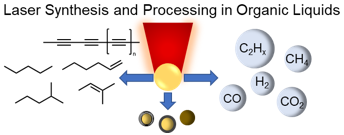
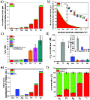
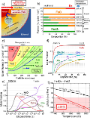
- tetrahydrofurane (THF) at a total energy input of 2250 J comparing fs-, ps-, and ns-pulsed lasers using FTIR spectroscopy. They found a significant decrease in the dominant C–O–C bond at 1070 cm−1 after ablation, which indicates cleavage of the C–O–C bonds in THF. C–H and C–C bonds were detected before and after





Exfoliation of titanium nitride using a non-thermal plasma process
Beilstein J. Nanotechnol. 2024, 15, 631–637, doi:10.3762/bjnano.15.53
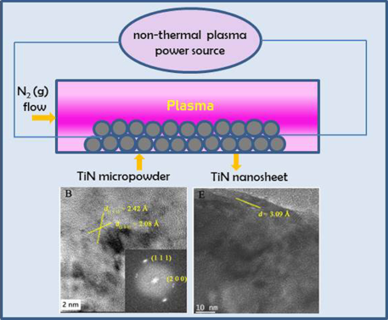
- temperature to generate ionized particles. These ionized species interact with the ceramic crystal of TiN, resulting in a pronounced structural expansion. The exfoliated TiN products were comprehensively characterized using transmission electron microscopy, X-ray diffraction, and Raman spectroscopy



AFM-IR investigation of thin PECVD SiOx films on a polypropylene substrate in the surface-sensitive mode
Beilstein J. Nanotechnol. 2024, 15, 603–611, doi:10.3762/bjnano.15.51
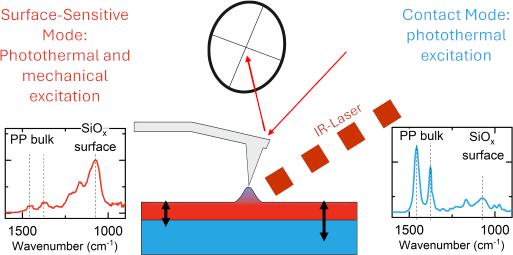
- Photothermal AFM-IR nanospectroscopy is a technique that combines the chemical information from infrared (IR) spectroscopy with the high spatial resolution of atomic force microscopy (AFM). For this, the sample is illuminated with a tunable IR laser [1]. When a suitable IR wavelength is chosen, resonant
- correlation between the IR wavelength of the laser and the thermal expansion of the material enables the recording of IR absorption spectra with this technique which correspond to the spectra of bulk IR spectroscopy [2][3][4]. Compared to ATR-FTIR spectroscopy, AFM-IR provides a drastic improvement in terms
- of spatial resolution. In ATR-IR spectroscopy, the resolution is theoretically limited by λ/2, which corresponds to several µm [3]. In contrast, the development of new and powerful tunable IR laser sources, such as optical parametric oscillator (OPO) and quantum cascade lasers (QCL), enabled a


Stiffness calibration of qPlus sensors at low temperature through thermal noise measurements
Beilstein J. Nanotechnol. 2024, 15, 580–602, doi:10.3762/bjnano.15.50
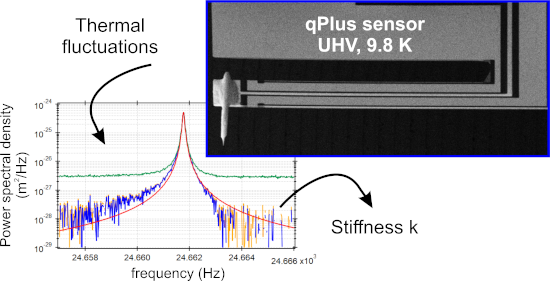
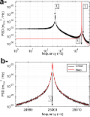
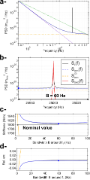
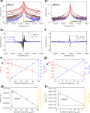
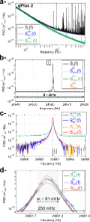
- to perform frequency shift spectroscopy to quantitatively evaluate the tip–sample interaction forces and potentials above individual atoms or molecules. The stiffness of the probe, k, is then required to perform the frequency shift-to-force conversion. However, this quantity is generally known with
- used for imaging. At 15 kV, the resolution is 0.6 nm. Energy-dispersive X-ray spectroscopy (EDS) chemical analyses have been performed too, for which an EDAX Octane Silicon Dri Detector (129 eV energy resolution for manganese) coupled to the SEM was used at 15 kV. A large side view (cf. Figure 1a

Radiofrequency enhances drug release from responsive nanoflowers for hepatocellular carcinoma therapy
Beilstein J. Nanotechnol. 2024, 15, 569–579, doi:10.3762/bjnano.15.49
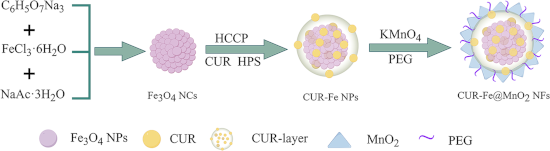
- measured by a Malvern Zetasizer Nano ZS instrument (Nano ZS90, Malvern, UK). A 2 mg NF sample was added into 1 mL of deionized water and directly detected by ZS90. The detection angle was 90 degrees. The compositions were also analyzed using Fourier-transform infrared spectroscopy (Nicolet iS50, Thermo


Electron-induced deposition using Fe(CO)4MA and Fe(CO)5 – effect of MA ligand and process conditions
Beilstein J. Nanotechnol. 2024, 15, 500–516, doi:10.3762/bjnano.15.45
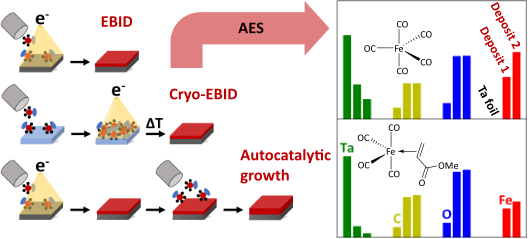
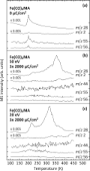
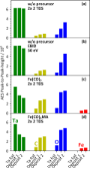
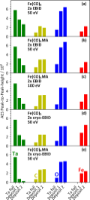
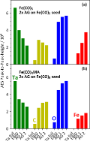
- new precursor for focused electron beam-induced deposition (FEBID), was investigated by surface science experiments under UHV conditions. Auger electron spectroscopy was used to monitor deposit formation. The comparison between Fe(CO)4MA and Fe(CO)5 revealed the effect of the modified ligand
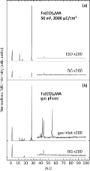
- . Iron deposits were produced from Fe(CO)4MA and Fe(CO)5 using an electron gun that irradiates the entire Ta surface. Therefore, we refer to our experiments as EBID and not as FEBID. Deposit compositions were monitored by Auger electron spectroscopy (AES). Using this approach, different processes were



Aero-ZnS prepared by physical vapor transport on three-dimensional networks of sacrificial ZnO microtetrapods
Beilstein J. Nanotechnol. 2024, 15, 490–499, doi:10.3762/bjnano.15.44
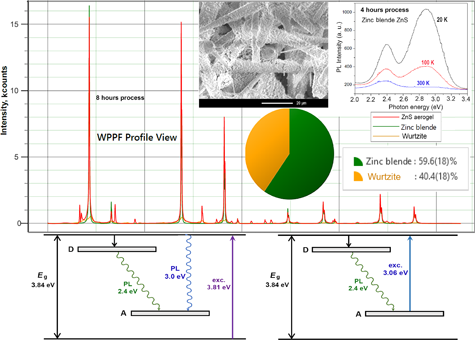
- produced material is investigated by scanning electron microscopy (SEM), while its crystalline and optical qualities are assessed by X-ray diffraction (XRD) analysis and photoluminescence (PL) spectroscopy, respectively. We demonstrate possibilities for controlling the composition and the crystallographic



Photocatalytic degradation of methylene blue under visible light by cobalt ferrite nanoparticles/graphene quantum dots
Beilstein J. Nanotechnol. 2024, 15, 475–489, doi:10.3762/bjnano.15.43
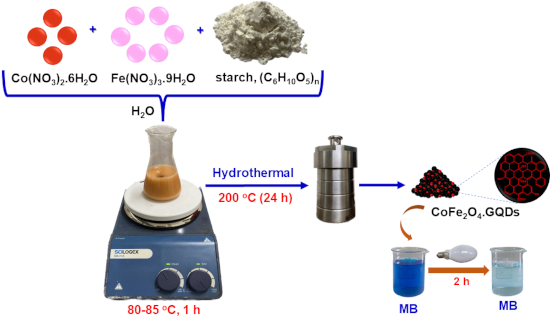
- electron microscopy, transmission electron microscopy, ultraviolet–visible diffuse reflectance spectroscopy, Fourier-transform infrared spectroscopy, photoluminescence spectroscopy, vibrating-sample magnetometry, and nitrogen adsorption/desorption isotherms. Cobalt ferrite crystals of around 8–10 nm and
- the supernatant, the MB concentration was determined via absorption spectroscopy at a wavelength of 664 nm. The photochemical degradation efficiency of MB was calculated according to formula where C0 and Ct are the MB concentration at the beginning and at time t, respectively. Effect of pH value The
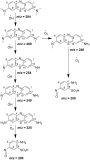
- time intervals, 10 mL of the sample was taken and centrifuged to separate the material from the solution. The concentration of remaining MB in the solution was determined by using UV–vis spectroscopy. Identification of intermediates Intermediate products and mineralization level of the MB