


Search results
Search for "stainless steel" in Full Text gives 152 result(s) in Beilstein Journal of Nanotechnology.
Recrystallization of tubules from natural lotus (Nelumbo nucifera) wax on a Au(111) surface
Beilstein J. Nanotechnol. 2011, 2, 261–267, doi:10.3762/bjnano.2.30
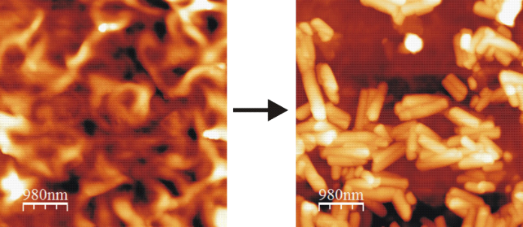
- applied onto the central part of both the Au(111) and a HOPG surface. The total area of wax crystallization was about 20 mm2 for both substrates. The chloroform took ca. 30 seconds to evaporate from the surface leaving the wax molecules on the substrate. The substrates were then fixed to the AFM stainless
- steel base plate, and the first image acquisition started as soon as possible after the chloroform evaporation, typically after 8–10 minutes. AFM images were taken consecutively from the same substrate area over a period of several hours applying a constant scan rate (as denoted in the respective figure


Zirconium nanoparticles prepared by the reduction of zirconium oxide using the RAPET method
Beilstein J. Nanotechnol. 2011, 2, 198–203, doi:10.3762/bjnano.2.23
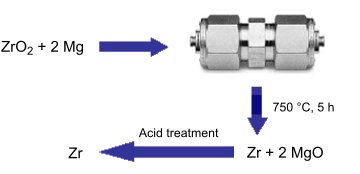
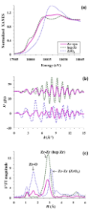
- reaction of commercial ZrO2 with Mg powder was carried out in a closed stainless steel cell, at 750 °C. On completion of the reaction, the additionally formed MgO is removed by treatment with acid. The characterization of the product was performed by XRD, X-ray absorption spectroscopy, SEM, TEM and
- Temperatures), and is described elsewhere in detail [11]. In general, a stainless steel cell is filled with a single reactant (or a combination of reactants) and heated at an appropriate temperature under its autogenic pressure. The pressure is generated by the thermal dissociation of reactants and the Let-Lok
- observed in the XRD pattern. In addition, XANES measurements found that in the Zr sample at least 75% of the Zr atoms are in the fully reduced Zr0 state. Experimental Chemicals, ZrO2, and Mg, were obtained from Aldrich. A 3 mL closed vessel cell was assembled from stainless steel (made by HAM-LET, Israel



Other Beilstein-Institut Open Science Activities



