


Search results
Search for "REACH" in Full Text gives 726 result(s) in Beilstein Journal of Nanotechnology. Showing first 200.
Ciprofloxacin-loaded dissolving polymeric microneedles as a potential therapeutic for the treatment of S. aureus skin infections
Beilstein J. Nanotechnol. 2022, 13, 517–527, doi:10.3762/bjnano.13.43
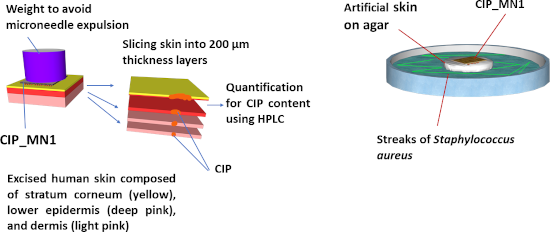
- layer of Parafilm, which means that the microneedles can reach 130 µm, as shown in Figure 5 and Table 1. However, CIP_MN2 showed significantly fewer perforations compared to the CIP_MN1; the first layer of Parafilm was perforated only by 85 needles. Although PVA hydrogel has shown satisfactory
- generally less than 10–80 µm. Microneedles that can reach deeper than 80 µm can potentially deliver the incorporated drug for the treatment of local and systemic infections [55]. The dermis is a viable layer that is rich in water, blood capillaries, and connective tissues including collagen and elastin [56


Design and characterization of polymeric microneedles containing extracts of Brazilian green propolis
Beilstein J. Nanotechnol. 2022, 13, 503–516, doi:10.3762/bjnano.13.42
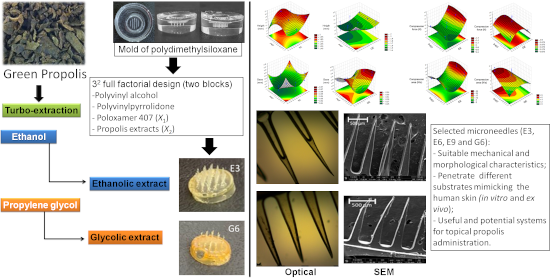
- viable epidermis, without reaching the nerve endings that are in the dermis [4][5]. The perforation of the stratum corneum enables the release of bioactive molecules in the epidermis, which then reach the dermis and blood capillaries by diffusion [6]. This entire process occurs in a non-invasive
- with the depth of the master mold. This is related to solvent evaporation as described in the literature for other biopolymeric MNs prepared by solvent casting [37][38]. The above sizes allow the MNs to rupture the stratum corneum but not reach the blood vessels, creating ducts that facilitate the flow


Ethosomal (−)-epigallocatechin-3-gallate as a novel approach to enhance antioxidant, anti-collagenase and anti-elastase effects
Beilstein J. Nanotechnol. 2022, 13, 491–502, doi:10.3762/bjnano.13.41
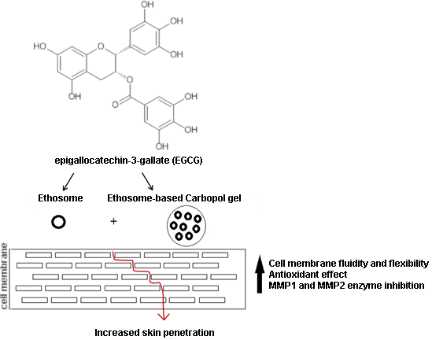
- high amounts of ethanol that can carry both hydrophilic and lipophilic drug molecules. They are also highly deformable and reach deep skin layers [18][19]. ETHs are similar to the lipid bilayer composition of cells in the epidermis, due to the presence of phospholipids in their structure, and thus
- synergistic effect of phospholipids and ethanol enables the ETHs and drug molecules to reach the deeper layers of the skin [19][22][23]. The skin penetration mechanism of drug-loaded ETHs is explained by both the ETH effect and the ethanol effect. While ethanol increases drug penetration by increasing the



Zinc oxide nanostructures for fluorescence and Raman signal enhancement: a review
Beilstein J. Nanotechnol. 2022, 13, 472–490, doi:10.3762/bjnano.13.40
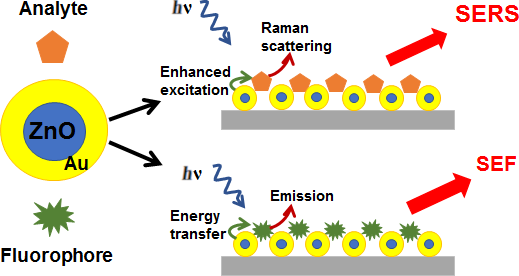
- chemical enhancement from the electronic interaction between the analyte and the nanosurface [59]. The electromagnetic enhancement factor (EF) can reach up to eleven orders of magnitude in the “hot spots” of the nanosubstrate [60][61], while the chemical EF usually has a value between 10 and 103. Since the




Investigation of electron-induced cross-linking of self-assembled monolayers by scanning tunneling microscopy
Beilstein J. Nanotechnol. 2022, 13, 462–471, doi:10.3762/bjnano.13.39
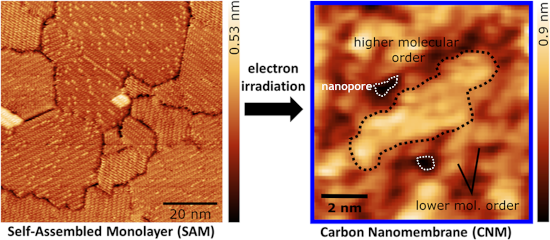
- beam current was measured by using a Faraday cup. The SAMs were irradiated with beam currents ranging from 200–600 pA. Prior to electron irradiation, the STM tip was retracted and moved away from the surface location of interest, such that the electrons could pass the tip and reach the surface location


A chemiresistive sensor array based on polyaniline nanocomposites and machine learning classification
Beilstein J. Nanotechnol. 2022, 13, 411–423, doi:10.3762/bjnano.13.34
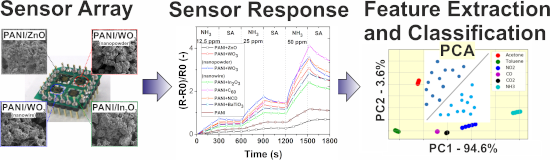
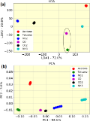
- data by principal component analysis to be a highly accurate method reach to 99% of the classification of six different gases. Keywords: feature extraction; gas sensor; pattern recognition; sensor array; Introduction The control and monitoring of toxic gaseous substances, such as ammonia, nitrogen
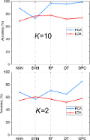
- been used for the classification of gas sensor data using a 10-fold cross-validation to reach the highest classification rate. Results and Discussion The sensors layers were investigated by scanning electron microcopy (SEM), Raman spectroscopy, current–voltage and temperature analysis, and gas sensing




Micro- and nanotechnology in biomedical engineering for cartilage tissue regeneration in osteoarthritis
Beilstein J. Nanotechnol. 2022, 13, 363–389, doi:10.3762/bjnano.13.31


Selected properties of AlxZnyO thin films prepared by reactive pulsed magnetron sputtering using a two-element Zn/Al target
Beilstein J. Nanotechnol. 2022, 13, 344–354, doi:10.3762/bjnano.13.29
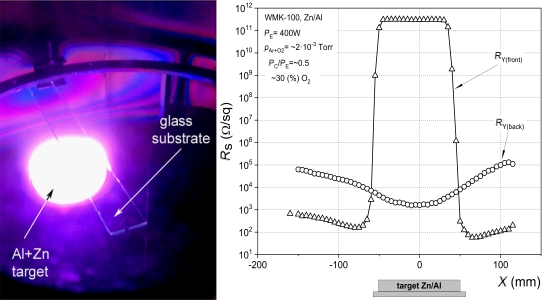
- the results of the electrical measurements as thin films deposited at X ≥ 50 mm are conducting, with resistivities as low as ca. 10−3 Ω·cm. The results of the Al content in the deposited thin films showed that the Al/Zn ratio can even reach ca. 0.16 depending on X. Typically, AZO thin films consist of
- . Clearly, only a limited number of particles reach the back surface (some condense on the front substrate surface, some on the inside of the deposition chamber), which leads to the observed lower thickness of the deposited film (Figure 6). Because of the reduced effect of the destructive bombardment with



A broadband detector based on series YBCO grain boundary Josephson junctions
Beilstein J. Nanotechnol. 2022, 13, 325–333, doi:10.3762/bjnano.13.27
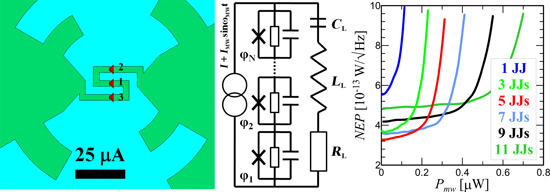
- received power Pabsorbed/Pincident as function of the frequency for the three different antenna geometries from Figure 1. It can be seen that this value does not reach 1 due to the mismatch of the antenna impedance (about 50 Ω) and the port impedance. The differences in the results for the three antenna



Plasma modes in capacitively coupled superconducting nanowires
Beilstein J. Nanotechnol. 2022, 13, 292–297, doi:10.3762/bjnano.13.24
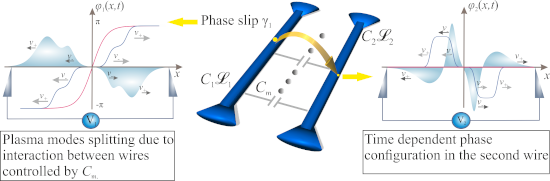
- ultrathin superconducting wires are typically much smaller than kinetic ones and, hence, can be safely neglected as compared to . On the contrary, the mutual capacitance Cm can easily reach values comparable with C1,2 and for this reason it needs to be explicitly accounted for within the framework of our


Photothermal ablation of murine melanomas by Fe3O4 nanoparticle clusters
Beilstein J. Nanotechnol. 2022, 13, 255–264, doi:10.3762/bjnano.13.20
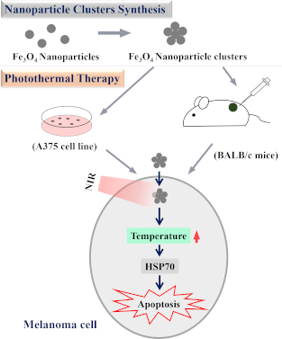
- viability to 39.3%. NPCs alone tended to decrease cell viability at higher dosages but did not reach statistical significance, whereas cells exposed to saline + NIR remained unchanged. In this sense, the PTT efficiency of the current NPCs was greater than that of our previously synthesized Fe3O4


A comprehensive review on electrospun nanohybrid membranes for wastewater treatment
Beilstein J. Nanotechnol. 2022, 13, 137–159, doi:10.3762/bjnano.13.10
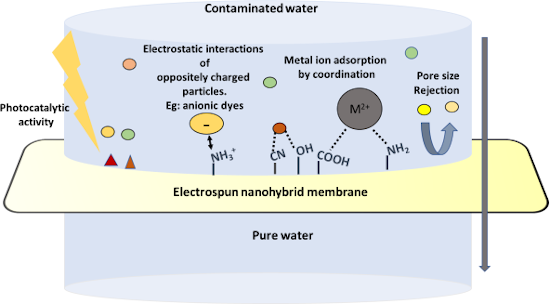
- dominant. When the voltage is high enough for the electrostatic forces of the Taylor cone to overcome the surface tension and viscous force, jet initiation happens, and a polymer jet will reach the ground collector completing the circuit. Polymers with high molecular weight will form ultrafine fibers due




Effect of lubricants on the rotational transmission between solid-state gears
Beilstein J. Nanotechnol. 2022, 13, 54–62, doi:10.3762/bjnano.13.3
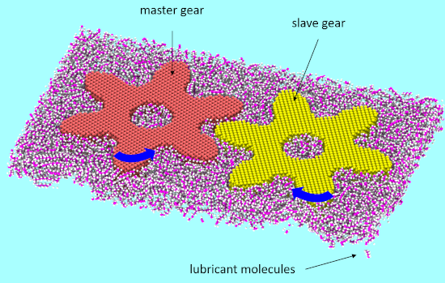
- MD simulations. For the force fields, we choose the adaptive intermolecular reactive empirical bond order (AIREBO) potential [59]. This potential was designed for hydrocarbon systems and can reach reasonable densities for the molecules we will use later. We have used two different protocols. For


Sputtering onto liquids: a critical review
Beilstein J. Nanotechnol. 2022, 13, 10–53, doi:10.3762/bjnano.13.2

- the number of species that will reach the substrate surface per time unit and unit area, but also the kinetic energy of the sputtered species, as well as other parameters (e.g., flux and wavelength of the light emitted by the plasma). Because all research groups carry out experiments in different






Heating ability of elongated magnetic nanoparticles
Beilstein J. Nanotechnol. 2021, 12, 1404–1412, doi:10.3762/bjnano.12.104
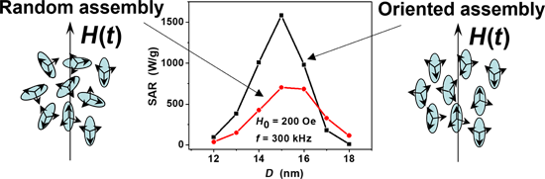
- demonstrates that for assemblies of both types the shape of the hysteresis loops depends significantly on the transverse particle diameter D = 2b. It is interesting to note that the areas of the hysteresis loops reach a maximum at the same value of the transverse particle diameter, D = 15 nm. However, the
- cluster, η = 0.04–0.2, in comparison with an oriented assembly of non-interacting nanoparticles, η = 0. According to Figure 4a, for given ac magnetic field parameters the SAR of the oriented assembly of non-interacting nanoparticles can reach a maximum of about 1500–1600 W/g. However, with an increase in


Identifying diverse metal oxide nanomaterials with lethal effects on embryonic zebrafish using machine learning
Beilstein J. Nanotechnol. 2021, 12, 1297–1325, doi:10.3762/bjnano.12.97
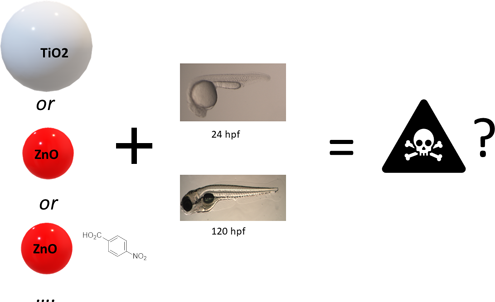
- models developed here for excess lethality at 120 hpf and improved models for mortality at 24 hpf.) It is possible that our findings reflect the fact that toxicity up to 24 hpf requires dermal penetration to reach the site of biological action, since swallowing does not start until around 72 hpf [31


Nonmonotonous temperature dependence of Shapiro steps in YBCO grain boundary junctions
Beilstein J. Nanotechnol. 2021, 12, 1279–1285, doi:10.3762/bjnano.12.95
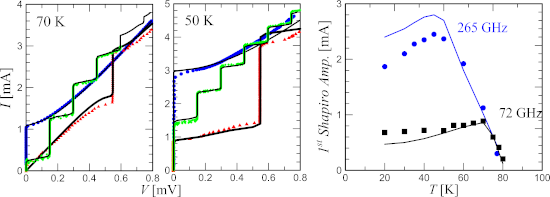
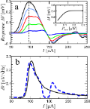
- ), the optimal signal detection regime is shifted. That is, for temperatures of 80 K and 70 K and the frequency of 72 GHz, the condition ωmw ≈ ωc is satisfied, and the step heights reach ≈Ic and ≈0.9 Ic, respectively. At 50 K, maxΔI1 ≈ Icωmw/ωc = IcFmw/Fc = 3 mA × 72 GHz/330 GHz = 0.65 mA, and at 20 K


A review on slip boundary conditions at the nanoscale: recent development and applications
Beilstein J. Nanotechnol. 2021, 12, 1237–1251, doi:10.3762/bjnano.12.91
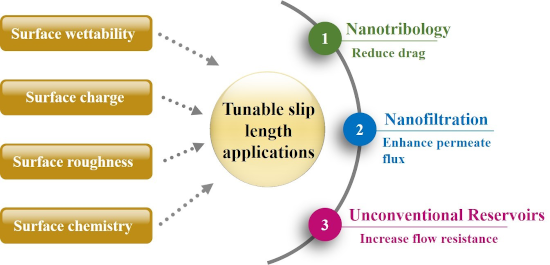
- the no-slip boundary condition is no longer valid. The slip length, a quantity that reflects the amount of slip at a given surface, can reach orders of magnitude of many microns [13]. The impetus to investigate flow boundary conditions, which are valid in nanoscale fluidic systems, lies in the
- force [39][40][41][42]. However, compared with experimental methods, numerical simulations, such as the lattice Boltzmann method and molecular dynamics (MD) simulation, are more attractive in many aspects. First, numerical simulations can readily reach the system sizes and timescales of practical


Two dynamic modes to streamline challenging atomic force microscopy measurements
Beilstein J. Nanotechnol. 2021, 12, 1226–1236, doi:10.3762/bjnano.12.90
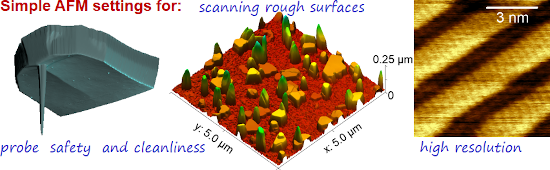
- , and in order to reach the A1 level, it is necessary to bring the probe closer to the surface. Let us consider the main advantages of this method. One is the adaptive scanning speed. The levels of A1 and A2 may be very close. Their difference should only be much higher than the noise level. In our
- steep topography. Likewise, when descending a steep edge, parachuting will not happen, as the probe will remain over each point as long as necessary to reach the reference level of the amplitude. Thus, the actual time taking to acquire a scan is determined both by the speed of movement between the
- the lateral and vertical movement times on all lines, as well as the ascent and descent times when switching the direct and return passes. Next, we enter two levels of height. A bottom level Hbot limits the depth at which the probe must reach the surface. If, during the measurement, at Hbot the


Morphology-driven gas sensing by fabricated fractals: A review
Beilstein J. Nanotechnol. 2021, 12, 1187–1208, doi:10.3762/bjnano.12.88
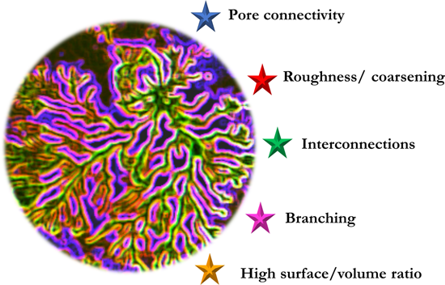
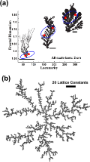
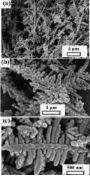
- this origin location. The second particle diffuses via random walk, reaches a site close to the seed particle, and subsequently comes to a stop. In a similar way, other particles are added one by one and allowed to move randomly or guided by diffusion [54]. The added particles eventually reach their
- hyperbranched morphologies of fractals, offering high surface area and numerous transport channels for gas analytes to reach the electrode of a sensor more quickly, also form a good object of basic science. This review article gives an overview of fractal geometries that have been successfully applied as gas








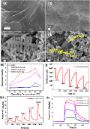


The effect of cobalt on morphology, structure, and ORR activity of electrospun carbon fibre mats in aqueous alkaline environments
Beilstein J. Nanotechnol. 2021, 12, 1173–1186, doi:10.3762/bjnano.12.87
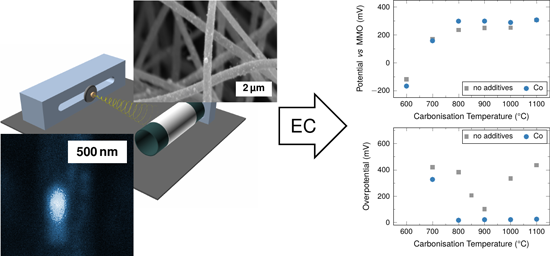
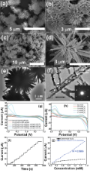
- these particular measurements, while at 700 and 1000 °C the difference is within the margin of error. In general, the fibres with cobalt reach higher current densities, except for very negative potentials vs MMO for the fibres carbonised at 900 °C. The overall current densities seem to increase with


Irradiation-driven molecular dynamics simulation of the FEBID process for Pt(PF3)4
Beilstein J. Nanotechnol. 2021, 12, 1151–1172, doi:10.3762/bjnano.12.86
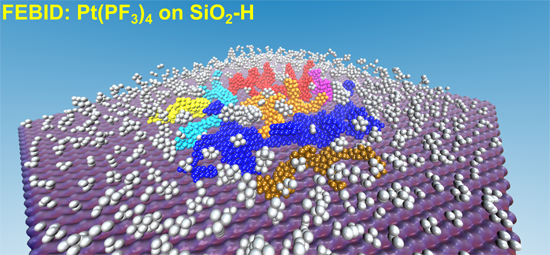
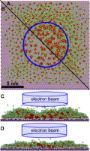
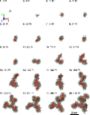
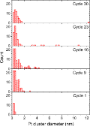
- steps with a velocity quenching time step of 0.5 fs. After that, the precursor molecules are pulled down to the surface and thermalized at the specified temperature to reach thermal equilibrium. In the simulations the substrate atoms are frozen while all the atoms in precursor molecules are freely








Self-assembly of amino acids toward functional biomaterials
Beilstein J. Nanotechnol. 2021, 12, 1140–1150, doi:10.3762/bjnano.12.85
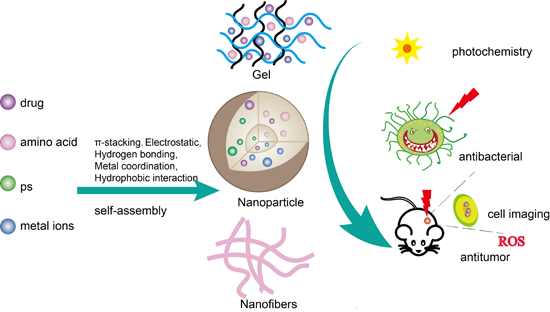
- nanoparticles (PWG) capable of spontaneous assembly under physiological conditions. Interestingly, since glycine provides carboxyl groups and is acid-sensitive, when the nanoparticles reach the tumor site, the acidity increases and the protonation of PWG promotes the formation of intermolecular hydrogen bonds

pH-driven enhancement of anti-tubercular drug loading on iron oxide nanoparticles for drug delivery in macrophages
Beilstein J. Nanotechnol. 2021, 12, 1127–1139, doi:10.3762/bjnano.12.84
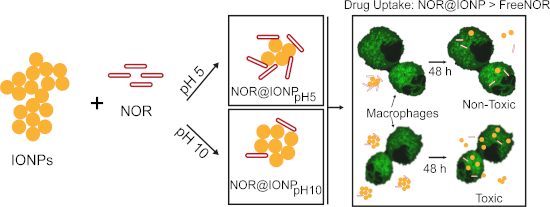
- @IONPpH5 however, attains the desired extracellular drug levels with a much lower nanoparticle concentration (0.625 mg/mL), thus proving it to be non-toxic. Since increasing the drug loading (achieved in case of NOR@IONPpH5) enables the use of a reduced nanoparticle concentration (to reach the desired



First-principles study of the structural, optoelectronic and thermophysical properties of the π-SnSe for thermoelectric applications
Beilstein J. Nanotechnol. 2021, 12, 1101–1114, doi:10.3762/bjnano.12.82
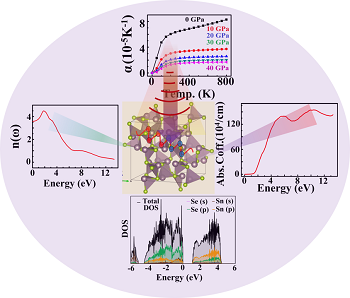
- from Figure 6a that for a fixed pressure, the CV curve grows sharply up to 300 K then the value of CV gradually raises. Afterward, at a higher temperature range, the CV curve keeps a continuing pace and tends to reach the Dulong–Petit limit, revealing that at a high-temperature range all the phonon
- remarkably high value of ZT ≈ 2.6 at 773 K along the b axis has been reported, which is the world record so far [1][5]. Also, for the SnSe thin films and 2D sheets, the experimental ZT values were relatively low; the maximum value can only reach 0.28 at 675 K [67][68]. One recent study shows that the Gd





