Search results
Search for "aggregate" in Full Text gives 194 result(s) in Beilstein Journal of Nanotechnology.
Challenges in realizing ultraflat materials surfaces
Beilstein J. Nanotechnol. 2013, 4, 875–885, doi:10.3762/bjnano.4.99
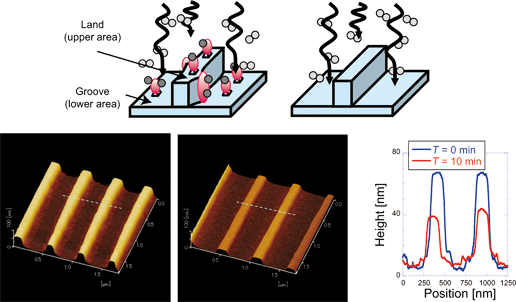
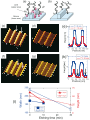
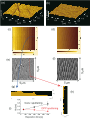
- migration length is short near the scratches because the Schwöbel barrier is high at their rims. Thus, the rate of deposition of the Al2O3 nanoparticles is higher at ridge sites than in flat areas. Hence, since the Al2O3 nanoparticles preferentially aggregate at the ridges, repairing the scratches by

Probing the plasmonic near-field by one- and two-photon excited surface enhanced Raman scattering
Beilstein J. Nanotechnol. 2013, 4, 834–842, doi:10.3762/bjnano.4.94
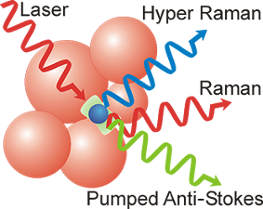
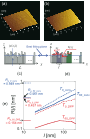
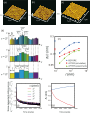
- forming the aggregate [22][33][43]. In general, enhanced local fields and “chemical” enhancement can contribute to such enormous non-resonant total enhancement factors. SEPARS experiments provide us with information about the total effective SERS cross section (see Equation 2). In the following section
- 5 × 10⁻¹² M, i.e., which are at least two orders of magnitude below the concentration of the nanoaggregates. In this concentration range with canalyte << Cnanoagggregate, it is statistically unlikely that two molecules are attached to the same aggregate. Each molecule finds its own enhancing




Spin relaxation in antiferromagnetic Fe–Fe dimers slowed down by anisotropic DyIII ions
Beilstein J. Nanotechnol. 2013, 4, 807–814, doi:10.3762/bjnano.4.92
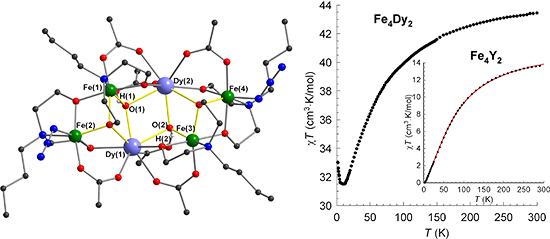
- with Z = 2; each Fe4Dy2 aggregate (Figure 1) occupies a general site with no crystallographically imposed symmetry. The central core of the aggregate possesses a {FeIII4Dy2(µ3-OH)2(µ3-OR)2} architecture, in which two of the FeIII (Fe(1) and Fe(3)) and the two DyIII ions, together with the two hydroxo
- opposite faces of the Fe2Dy2 plane. In contrast, in 1 the Fe2Dy2 butterfly is not planar; the two FeDy2 triangles show a dihedral angle of 43.8°, and the two hydroxo ligands are on the same face of the Fe2Dy2 unit. Each of the four FeIII ions in the aggregate is chelated by a fully-deprotonated (n-butyl
- described as distorted bicapped trigonal prisms. The molecular structure of the Fe4Y2 aggregate in 2 is very similar to that of the Fe4Dy2 in 1, and differs only in the replacement of the n-butyl groups in 1 by methyl groups and the replacement of DyIII by YIII. At temperatures higher than 20 K the



Controlled synthesis and tunable properties of ultrathin silica nanotubes through spontaneous polycondensation on polyamine fibrils
Beilstein J. Nanotechnol. 2013, 4, 793–804, doi:10.3762/bjnano.4.90
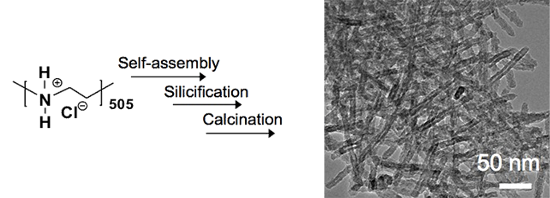
- the template to form silica gel. In comparison, in our LPEI aggregate-based silica deposition, the hydrolysis and polycondensation of alkoxysilane occurs simultaneously and selectively on the surface of the LPEI templates. This characteristic hydrolytic polycondensation process gives a homogeneously
- , respectively. TEM images of silica/carbon composite mats with a nanofibrous network prepared by calcining LPEI@silica nanotubes under N2 atmosphere after PSS adsorption of one layer (A) and two layers (B). Proposed formation mechanism of the polyamine-aggregate template for silica nanotubes and nanowires


Lithium peroxide crystal clusters as a natural growth feature of discharge products in Li–O2 cells
Beilstein J. Nanotechnol. 2013, 4, 758–762, doi:10.3762/bjnano.4.86
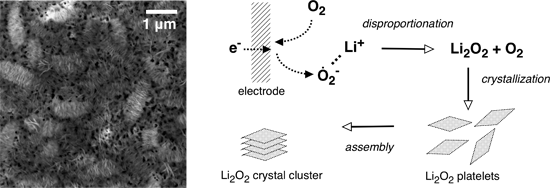
- crystals growth upon the discharge of aprotic lithium–oxygen cells. We show that lithium peroxide plate-like crystals are likely to be formed in the liquid electrolyte phase rather than directly on the electrode surface. Li2O2 particles aggregate to produce finally submicron crystal clusters with different
- to be formed as observed recently for carbon electrodes [12]. The generated pristine platelets produce a colloidal system under the conditions of their continuous homogeneous nucleation. Most of the layered colloidal systems tend to aggregate if no sufficient electrostatic or steric stabilization is


Digging gold: keV He+ ion interaction with Au
Beilstein J. Nanotechnol. 2013, 4, 453–460, doi:10.3762/bjnano.4.53
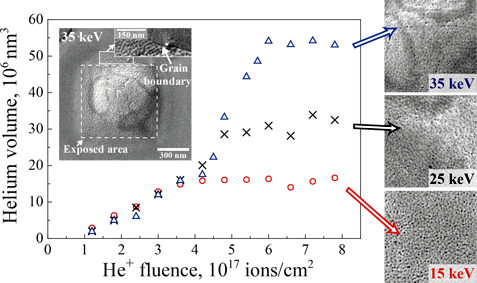
- well-known phenomenon [32][33][34]. After entering the crystal, an energetic He+ ion creates vacancy–interstitial pairs. These vacancies can aggregate into bigger voids. Since helium is hardly solvable in metals, it is effectively trapped at open-volume defects and has a tendency to agglomerate into


Molecular dynamics simulations of mechanical failure in polymorphic arrangements of amyloid fibrils containing structural defects
Beilstein J. Nanotechnol. 2013, 4, 429–440, doi:10.3762/bjnano.4.50
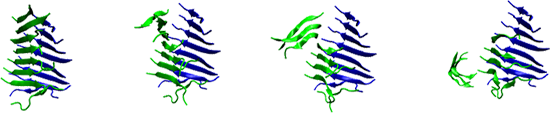
- related to the peptide packing arrangements and the number and nature of the defects present within the models. The small model fibrils investigated in this study are rich in structural defects, because they lack the stabilisation from crystal packing within a larger aggregate. Consequently, we have been


Near-field effects and energy transfer in hybrid metal-oxide nanostructures
Beilstein J. Nanotechnol. 2013, 4, 306–317, doi:10.3762/bjnano.4.34
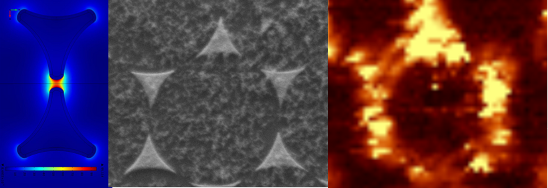
- of the sample. Figure 17 shows the intensities taken from a region with a large aggregate (red line), a point near the gap of a bowtie nanoantenna (blue line), and a region without nanoantennas (background intensity, black line). It is observed that the intensity of the large aggregate is higher than




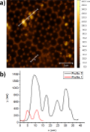


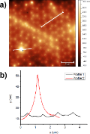


Grain boundaries and coincidence site lattices in the corneal nanonipple structure of the Mourning Cloak butterfly
Beilstein J. Nanotechnol. 2013, 4, 292–299, doi:10.3762/bjnano.4.32
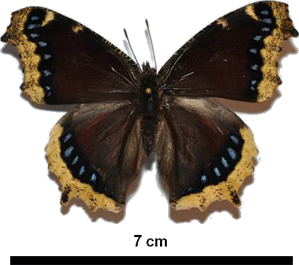
- θ = 60° about the <111> crystallographic axis, together with the corresponding deviation angles Δθ according to the Brandon criterion. For a polycrystalline aggregate with crystals in random crystallographic orientations it has been shown that the fraction of grain boundaries with low Σ values is on


Nanoscopic surfactant behavior of the porin MspA in aqueous media
Beilstein J. Nanotechnol. 2013, 4, 278–284, doi:10.3762/bjnano.4.30
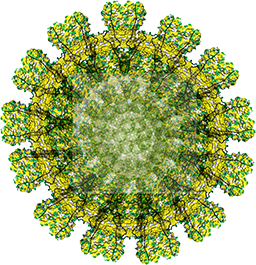
- aggregation of individual MspA in aqueous solutions ((5 × 10⁻⁵)× PBS and 1× PBS) as a function of temperature. The results are summarized in Figure 2. MspA shows a distinct tendency to aggregate independently of the ionic strength of the surrounding medium. The maxima in hydrodynamic diameter of the
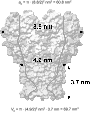
- aggregate interface and I0 the tail length. Using the geometric parameters of MspA, we calculated V0 = 69.7 nm3 (the geometric dimensions of the “docking region” are 3.7 nm in length (I0) and 4.9 nm in diameter [2], see Figure 3), and a0 = 60.8 nm2. The packing parameter of MspA is 0.31, which is indicative
- hydrophilic vestibule (the “head” of the surfactant) can potentially be deformed when single MspA proteins aggregate. Protein deformation is often observed during crystallization [26]. The formation of a bilayer is evidence for attractive interactions between MspA units. Predicting the geometry of




An NC-AFM and KPFM study of the adsorption of a triphenylene derivative on KBr(001)
Beilstein J. Nanotechnol. 2012, 3, 221–229, doi:10.3762/bjnano.3.25
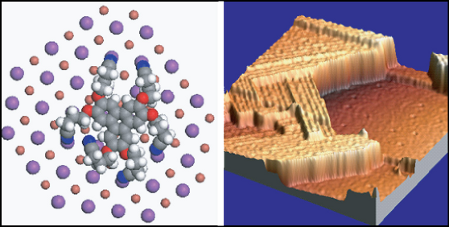
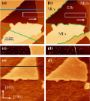
- responsible for the nucleation of the aggregates. Note that the density of aggregates observed in Figure 2 and 3 is much higher than the density of defects that are observed on the clean KBr surface before adsorption. Associating each aggregate with one or several defects implies that the molecules are able




Surface functionalization of aluminosilicate nanotubes with organic molecules
Beilstein J. Nanotechnol. 2012, 3, 82–100, doi:10.3762/bjnano.3.10
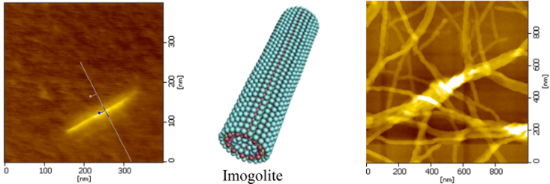
- to P3HT and was ascribed to a larger amount of the P3HT/HT3P-imogolite aggregate. Upon hybridization, HT3P-imogolite greatly restricts the rotational motion of the P3HT backbone, such that it produces a much longer conjugation length than pure P3HT. Dynamic force microscopy (DFM) has proved to be a
- polymer-grafting process. Furthermore, the assembly of conjugated molecules, HT3P and HT3OP, on the imogolite nanotube surface was described. UV–vis spectra indicate that both HT3P and HT3OP exhibit an H-aggregate formation on the imogolite surface. An increase in the conductivity of imogolite is detected


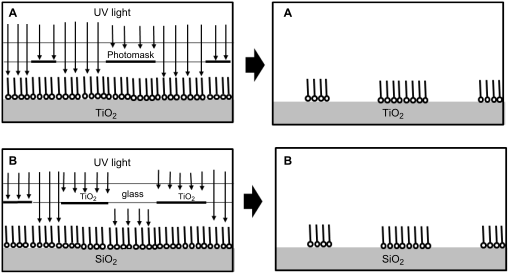
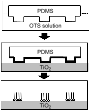
Self-assembled monolayers and titanium dioxide: From surface patterning to potential applications
Beilstein J. Nanotechnol. 2011, 2, 845–861, doi:10.3762/bjnano.2.94



Synthesis and catalytic applications of combined zeolitic/mesoporous materials
Beilstein J. Nanotechnol. 2011, 2, 785–801, doi:10.3762/bjnano.2.87
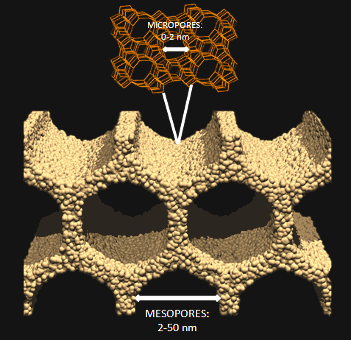
- pores [20]. The first option was applied to reduce the intracrystalline diffusion path length [21]. However, separation of these nanozeolites is difficult, since they tend to aggregate and form colloidal solutions. Moreover, nanozeolites often have different properties compared to their larger




Investigation on structural, thermal, optical and sensing properties of meta-stable hexagonal MoO3 nanocrystals of one dimensional structure
Beilstein J. Nanotechnol. 2011, 2, 585–592, doi:10.3762/bjnano.2.62
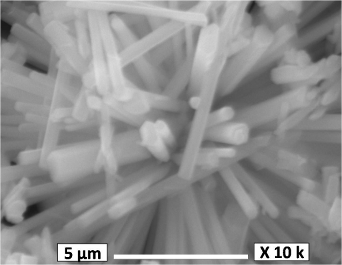
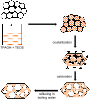
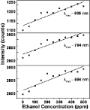
- crystallites aggregate and promote rapid growth of the particle. Hence, crystallite size in the nanometer range is difficult to control in the case of α-MoO3. The present work demonstrates the synthesis of metastable h-MoO3 material through a solution-based chemical precipitation technique. The structure


Surface induced self-organization of comb-like macromolecules
Beilstein J. Nanotechnol. 2011, 2, 569–584, doi:10.3762/bjnano.2.61
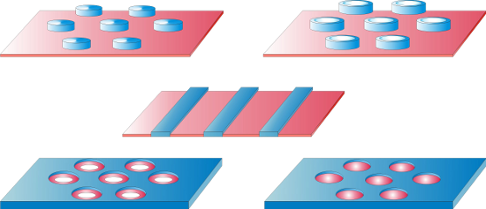
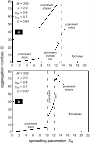
- , but still larger than that for the isolated molecules. One possible explanation is the idea of “memory” of the intermediate conformation in the collapsed state. Another explanation takes into account the balance between the surface energy of 3D aggregate and the stretching free energy of combs in the




Self-organizing bioinspired oligothiophene–oligopeptide hybrids
Beilstein J. Nanotechnol. 2011, 2, 525–544, doi:10.3762/bjnano.2.57
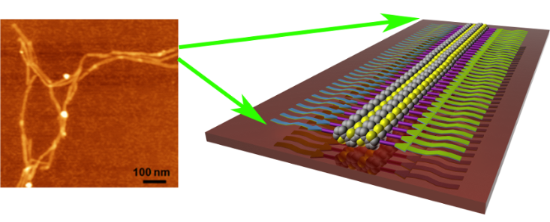
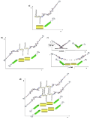
- behavior of biological moieties, thus opening up opportunities for the design of smart materials at the nanoscale. An example of a hypothetical fibrillar aggregate structure, formed by a bithiophene covalently linked to peptide sequences, is illustrated in Figure 1d. Several reviews [7][8][9][15] summarize
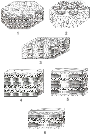
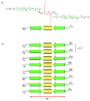
- double-layer organization of the fibrils makes them stiffer and conformationally more stable. Further we will examine the evolution of different aggregate types. The simulations of single layer fibrils based on the parallel arrangement of β-strands (Figure 15a), revealed that the fibril undergoes certain




Characterization of protein adsorption onto FePt nanoparticles using dual-focus fluorescence correlation spectroscopy
Beilstein J. Nanotechnol. 2011, 2, 374–383, doi:10.3762/bjnano.2.43
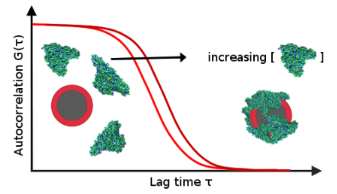
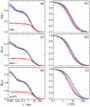
- effectively decreases as more HSA molecules adsorb onto the NPs. This finding can be explained by mutual repulsion of the HSA molecules on the NP surface. Note that HSA exists in blood serum in high concentrations and, thus, should not have a tendency to aggregate. For apoA-I, we found n = 1, the non


Magnetic nanoparticles for biomedical NMR-based diagnostics
Beilstein J. Nanotechnol. 2010, 1, 142–154, doi:10.3762/bjnano.1.17
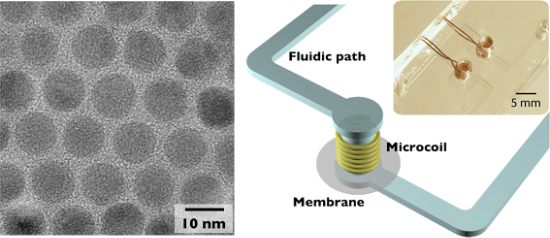
- thermal decomposition of precursors. Above a supersaturation level, these monomers then aggregate to induce nucleation and nanoparticle growth. By tuning the growth conditions during this procedure (such as precursor choice, monomer concentration, growth temperature and time), it is possible to control
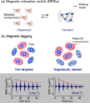
- the sample is inversely proportional to the cross-sectional area of the particles [35][36]. Thus, the same amount of magnetized material is much more effective when dispersed as fewer large nanoparticles than as a greater number of smaller ones [35]. In MRSw, nanoparticles aggregate to form self
- disassembly of pre-formed clusters (reverse switching) using an enzyme or competitive binding. When dispersed MNPs aggregate upon binding to targets, the self-assembled magnetic clusters become more efficient at dephasing nuclear spins of surrounding water protons, leading to a decrease in T2 relaxation time