


Search results
Search for "biomolecules" in Full Text gives 228 result(s) in Beilstein Journal of Nanotechnology. Showing first 200.
Biological responses to nanoscale particles
Beilstein J. Nanotechnol. 2015, 6, 380–382, doi:10.3762/bjnano.6.37

- . The key differences are (i) an increased relative surface area and (ii) quantum size effects. Since the growth, catalytic activity and the various interactions with molecules (including biomolecules) occur at the surface of nanoparticles, a given mass of material in nanoparticle form will be much more
- potential biomolecules and cells, thus creating a large parameter space to be examined. With these shortcomings in mind, we initiated a national Priority Program (Schwerpunktprogramm SPP1313) in Germany in 2007 at the Deutsche Forschungsgemeinschaft (DFG) entitled, “Biological Responses to Nanoscale
- conjugates of biomolecules, magnetism, radioactivity, Janus particles and core–shell particles were combined. In particular, the use of fluorescently labeled particles has become one of the preferred tools to track nanoparticles inside cells and tissue. When nanoparticles are exposed to biological fluids
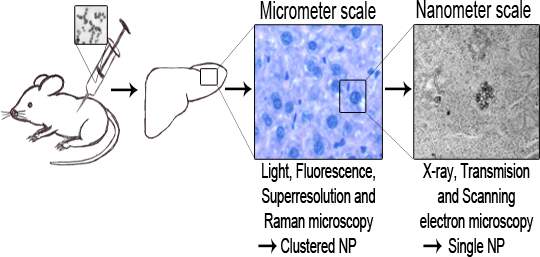
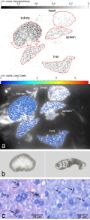
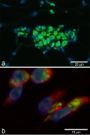
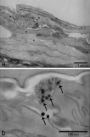
Overview about the localization of nanoparticles in tissue and cellular context by different imaging techniques
Beilstein J. Nanotechnol. 2015, 6, 263–280, doi:10.3762/bjnano.6.25
- bioapplications are typically composed of a semiconductor core (e.g., cadmium sulfide), an outer shell of a higher band semiconducting material (e.g., zinc sulfide) and a surface functionalization which may consist of various hydrophilic organic molecules including biomolecules or polymers [86]. QD with their
- [126]. However, one disadvantage is that only low signal intensities are emitted by biomolecules themselves [132]. Advanced Raman techniques, such as surface-enhanced Raman spectroscopy (SERS), coherent anti-Stokes Raman spectroscopy (CARS), and stimulated Raman spectroscopy (SRS) have been used in the



Tailoring the ligand shell for the control of cellular uptake and optical properties of nanocrystals
Beilstein J. Nanotechnol. 2015, 6, 232–242, doi:10.3762/bjnano.6.22
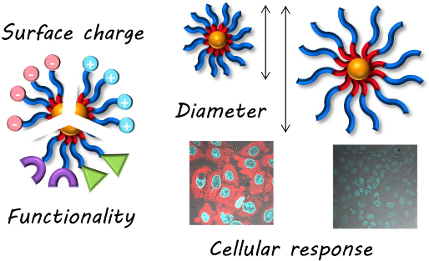
- based on specific chemical groups like amines, carboxyl and hydroxyl functions [31]. Functional groups are not only useful for typical coupling strategies of biomolecules, but also for the determination of the surface properties of the final nanocontainers. Differently charged particles show different






Functionalization of α-synuclein fibrils
Beilstein J. Nanotechnol. 2015, 6, 124–133, doi:10.3762/bjnano.6.12
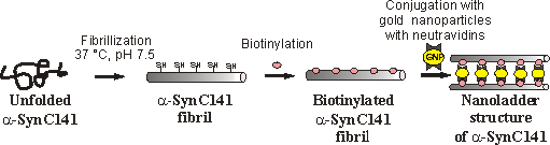
- factors including temperature, pH, and ionic strength. An incubation temperature of 4 °C was chosen to preserve the neutravidin-conjugated nanoparticles. Discussion Self-assembling biomolecules such as DNA, peptides or proteins are of special interest in the design and construction of nanoscale materials


Proinflammatory and cytotoxic response to nanoparticles in precision-cut lung slices
Beilstein J. Nanotechnol. 2014, 5, 2440–2449, doi:10.3762/bjnano.5.253
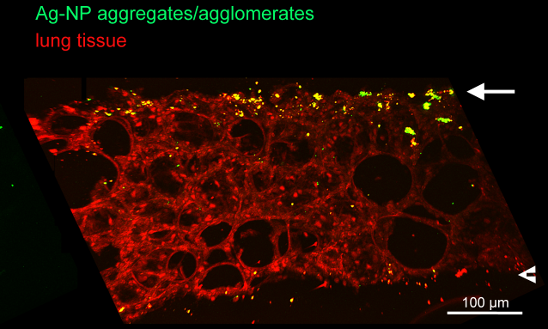
- -NPs were shown to dissolve after immersion in water in the presence of oxygen under the release of Ag+ ions [30][41]. However, their dissolution in biological environments is still poorly understood and will be influenced by the presence of biomolecules such as proteins [42][43]. Taken together, the


Functionalized polystyrene nanoparticles as a platform for studying bio–nano interactions
Beilstein J. Nanotechnol. 2014, 5, 2403–2412, doi:10.3762/bjnano.5.250
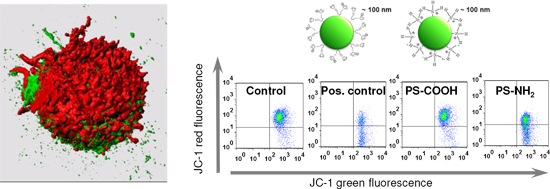
- effects on cell growth [4]. Nanoparticles Nanoparticles, limited in size to 100 nm in either two or three dimensions [18], fill the gap between molecules and bulk material and between biomolecules and cells. The atoms located at the surface of a nanoparticle have less neighbors than atoms of a bulk


Nanoparticle interactions with live cells: Quantitative fluorescence microscopy of nanoparticle size effects
Beilstein J. Nanotechnol. 2014, 5, 2388–2397, doi:10.3762/bjnano.5.248
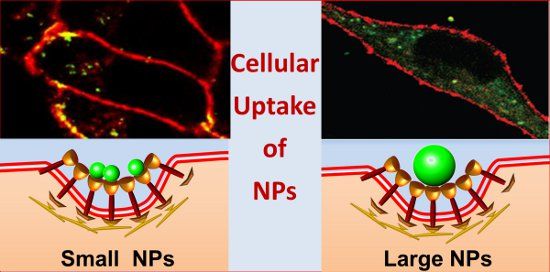
- machinery. An interesting aspect in this process is that, in the biological milieu, the NPs typically adsorb dissolved biomolecules, so that they are enshrouded by a so-called ‘protein corona’ [6][7][8]. NPs interact with cells via this layer of biomolecules, at least during the initial encounter, so that
- vesicle contains receptor proteins that recognize specific chemical groups on the biomolecules to be internalized. It is finally pinched off so as to generate a vesicle in the cytoplasm that contains the internalized material (Figure 1). Different pinocytosis mechanisms are being distinguished, depending


Inorganic Janus particles for biomedical applications
Beilstein J. Nanotechnol. 2014, 5, 2346–2362, doi:10.3762/bjnano.5.244
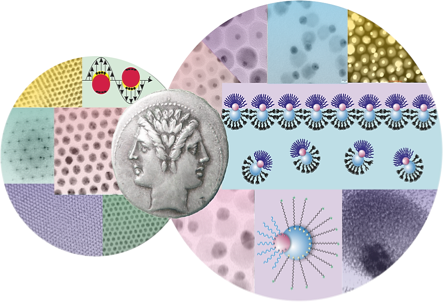
- solvents [2], specificity towards small molecules or larger biomolecules [3], suppression of nonspecific adsorption [4], adjustment of net electric charge [5], to electrochemical activity [6]. Although it has been shown that synthetic and natural systems share a number of similarities, the degree of
- based on the little two photon-cross-section of most biomolecules leading to less auto-fluorescence, enhanced penetration depth within biological samples by tuning the excitation light to the biological window, near IR range 700–1000 nm. Furthermore, the effect of photobleaching can be reduced by
- an aqueous environment. This is a key point regarding the use of nanoparticles for biomedical applications for sensing biomolecules, cells, and diagnosis of diseases, and intracellular delivery [99][100][101]. There are different surface modification strategies, such as ligand exchange to bind




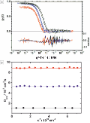


Nanobioarchitectures based on chlorophyll photopigment, artificial lipid bilayers and carbon nanotubes
Beilstein J. Nanotechnol. 2014, 5, 2316–2325, doi:10.3762/bjnano.5.240
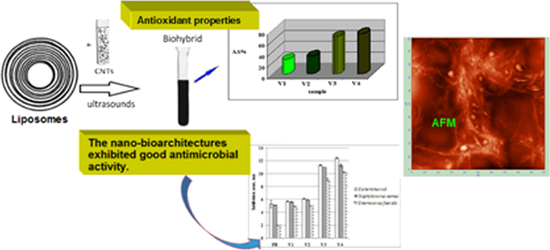
- pristine and f-CNTs do not induce toxicity in mice [14][15][16][17]. On the other hand, biocoating SWCNTs with biomolecules such as phospholipids conveys biocompatibility and less toxicity to carbon nanotubes. Moreover, SWCNTs are characterized by less accumulation in body as compared to multi-walled


Localized surface plasmon resonances in nanostructures to enhance nonlinear vibrational spectroscopies: towards an astonishing molecular sensitivity
Beilstein J. Nanotechnol. 2014, 5, 2275–2292, doi:10.3762/bjnano.5.237
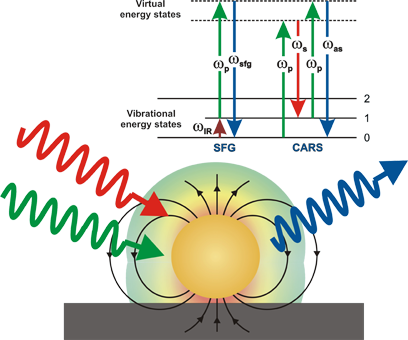
- enhancement. Nonetheless, these results underlined that the TIR configuration offers undisputable advantages for surface-enhanced SFG spectroscopy. To go further, Tourillon et al. applied this hybrid configuration to demonstrate the label-free recognition of biomolecules, namely in the case of the avidin




Advances in NO2 sensing with individual single-walled carbon nanotube transistors
Beilstein J. Nanotechnol. 2014, 5, 2179–2191, doi:10.3762/bjnano.5.227
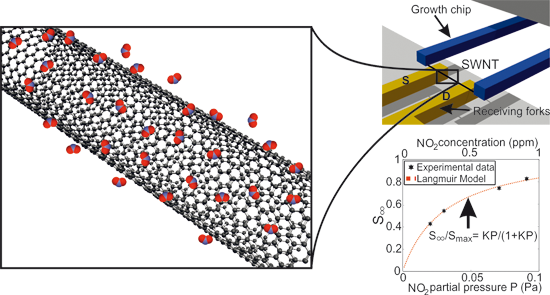
- attached to their surface. This property has generated interest for their application in sensing gases, chemicals and biomolecules. With over a decade of research, a clearer picture of the interactions between the carbon nanotube and its surroundings has been achieved. In this review, we intend to


Modification of a single-molecule AFM probe with highly defined surface functionality
Beilstein J. Nanotechnol. 2014, 5, 2122–2128, doi:10.3762/bjnano.5.221
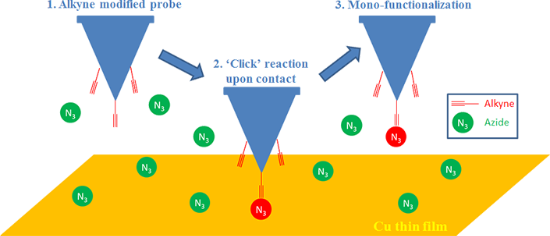
- is also called a ‘click’ reaction, has been widely used for surface functionalization and linking of biomolecules [17]. The reaction is compatible with a wide variety of polar functional groups that commonly exist in biomolecules and is highly efficient in various solvents. Chen and co-authors


Sequence-dependent electrical response of ssDNA-decorated carbon nanotube, field-effect transistors to dopamine
Beilstein J. Nanotechnol. 2014, 5, 2113–2121, doi:10.3762/bjnano.5.220
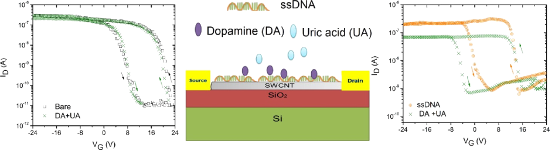
- sensors [1][2][3]. Of the numerous biomolecules, detection of dopamine (DA) is critical because of its high clinical importance in various brain functions such as learning, memory formation, message transfer in the central nervous system and understanding the pathological processes of Parkinson’s disease


Effect of channel length on the electrical response of carbon nanotube field-effect transistors to deoxyribonucleic acid hybridization
Beilstein J. Nanotechnol. 2014, 5, 2081–2091, doi:10.3762/bjnano.5.217
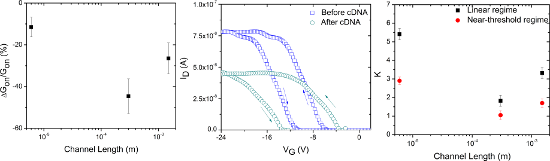
- comparable to the size of single biomolecules, and to the electrostatic screening length in physiological solutions, which offers high sensitivity because of their large specific area; ii) their tubular structure allows fabrication of ultrasensitive, single nanotube-based devices; and iii) their excellent


Effect of silver nanoparticles on human mesenchymal stem cell differentiation
Beilstein J. Nanotechnol. 2014, 5, 2058–2069, doi:10.3762/bjnano.5.214
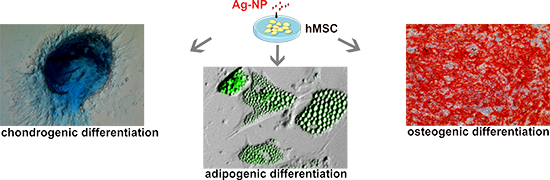
- rapidly to biomolecules, such as DNA [27], negatively charged cell-wall components and the sulfhydryl groups of metabolic enzymes [7][28][29], which results in the inhibition of DNA-replication, an increase in membrane permeability and the disturbance of different metabolic pathways [30]. In contrast to


Effects of surface functionalization on the adsorption of human serum albumin onto nanoparticles – a fluorescence correlation spectroscopy study
Beilstein J. Nanotechnol. 2014, 5, 2036–2047, doi:10.3762/bjnano.5.212
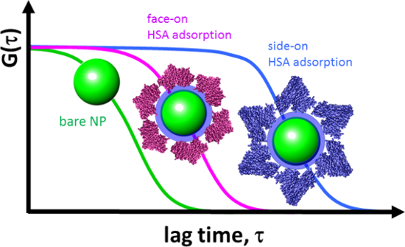
- contact with extracellular fluids such as blood plasma or lung epithelial lining fluid, which contain a huge variety of dissolved biomolecules including lipids and proteins. These can adsorb onto the NP surface and completely enshroud the NP, forming the so-called “protein corona” [11][12][13][14][15
- approaches involve a separation of NPs with adsorbed proteins and proteins free in solution, such as (ultra)centrifugation [36] or size exclusion chromatography [11]. Such approaches will inevitably modify the composition of only loosely adsorbed biomolecules in the corona because these will immediately



Electrostatic interplay: The interaction triangle of polyamines, silicic acid, and phosphate studied through turbidity measurements, silicomolybdic acid test, and 29Si NMR spectroscopy
Beilstein J. Nanotechnol. 2014, 5, 2026–2035, doi:10.3762/bjnano.5.211
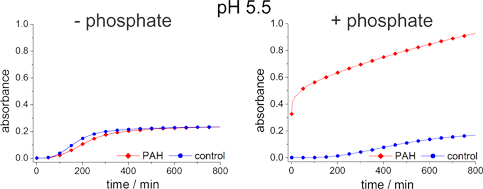
- Anne Jantschke Katrin Spinde Eike Brunner TU Dresden, Fachrichtung Chemie und Lebensmittelchemie, Bioanalytische Chemie, 01062 Dresden, Germany 10.3762/bjnano.5.211 Abstract The discovery of long-chain polyamines as biomolecules that are tightly associated to biosilica in diatom cell walls has
- silica. Keywords: phosphate; self-assembly; silica–polyamine interactions; silicomolybdic acid test; 29Si NMR; turbidity measurements; Introduction Long-chain polyamines (LCPAs) were previously found biomolecules that are tightly associated to the biosilica of various diatom species [1][2][3][4][5


Carbon nano-onions (multi-layer fullerenes): chemistry and applications
Beilstein J. Nanotechnol. 2014, 5, 1980–1998, doi:10.3762/bjnano.5.207
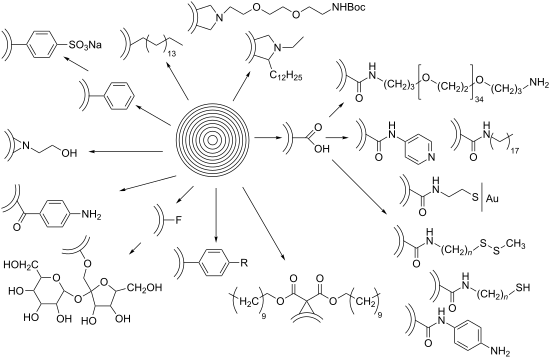
- with biomolecules was reported by the groups of Plonska-Brzezinska, Simionescu and Echegoyen in 2010 [36]. In the first step, small CNOs (6–8 shells) were oxidized by using conc. H2SO4/HNO3 and subsequently functionalized with PEG to study their cytotoxicity on rat dermal fibroblasts. The result was
- amidation reaction. In another amidation step, some of the unreacted carboxylic acid groups on the CNO surface were functionalized with biotin, which allows the attachment of biomolecules such as avidin. This first covalent functionalization of CNOs with biomolecules, promoted by biotin–avidin interactions
- imaging that the CNOs were deposited in the lysosomes of the cells. Biological sensing: In the aforementioned study of Luszczyn et al. [36], CNOs were covalently functionalized with biomolecules and studied for the first time as biosensors by using avitin–biotin interactions. The CNO served as linking


PVP-coated, negatively charged silver nanoparticles: A multi-center study of their physicochemical characteristics, cell culture and in vivo experiments
Beilstein J. Nanotechnol. 2014, 5, 1944–1965, doi:10.3762/bjnano.5.205
- model is discussed in detail in [20]. It mainly involves an oxidative dissolution of silver nanoparticles, typically by dissolved oxygen, and a passivation of the surface by chloride and sulfur-containing biomolecules. So far, there are no quantitative data on the dissolution of silver nanoparticles in
- complex biological media. Considering the available literature data (see [1][12][20][31][42][43]), it can be assumed that silver ions are complexed by biomolecules and that silver nanoparticles are passivated in the presence of sulfide, sulfur-containing components and chloride. This passivation slows


Real-time monitoring of calcium carbonate and cationic peptide deposition on carboxylate-SAM using a microfluidic SAW biosensor
Beilstein J. Nanotechnol. 2014, 5, 1823–1835, doi:10.3762/bjnano.5.193
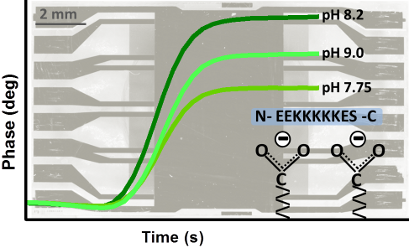
- , especially from native shell extracts [40], but even from recombinant sources [41][42]. The aim of the present study was to evaluate the suitability of microfluidic SAW biosensor systems with respect to elucidating the interaction between small biomolecules and calcium carbonate, one of the most common
- organic biomolecules and calcium carbonate in the presence of carboxylate surfaces could be reproducibly quantified in real-time assays. Here, we report a case study with calcium carbonate, both in pure aqueous systems and in the presence of citric acid. We also investigated the two cationic peptides ES9


The surface properties of nanoparticles determine the agglomeration state and the size of the particles under physiological conditions
Beilstein J. Nanotechnol. 2014, 5, 1774–1786, doi:10.3762/bjnano.5.188
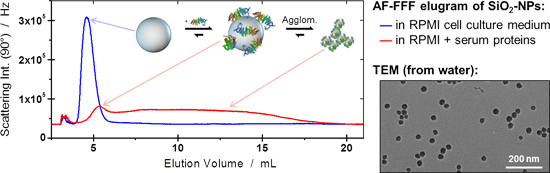
- fact that the silica particles are sufficiently stabilized in the absence of biomolecules, these proteins induce the agglomeration of silica NPs yielding an average hydrodynamic radius of 91 nm for the agglomerates. To derive agglomerate sizes in the cases in which proteins were present, DLS data were


Non-covalent and reversible functionalization of carbon nanotubes
Beilstein J. Nanotechnol. 2014, 5, 1675–1690, doi:10.3762/bjnano.5.178
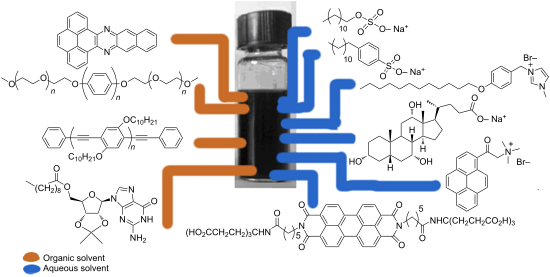
- , temperature, light and redox conditions. Interestingly, many biomolecules have this capability, providing a viable alternative when reversibility of these processes is preferred. Solvent variation. The first and easiest method to remove the non-covalent functionalization is to change the solvent system [82



Donor–acceptor graphene-based hybrid materials facilitating photo-induced electron-transfer reactions
Beilstein J. Nanotechnol. 2014, 5, 1580–1589, doi:10.3762/bjnano.5.170
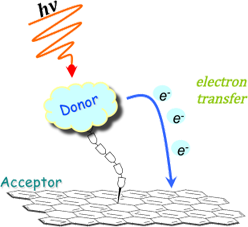
- , although graphene-based biomaterials are out of the scope of this mini-review, GO has been covalently functionalized with peptides, antibodies and other biomolecules for applications in diagnostics, novel therapeutic approaches and near infrared (NIR) photo-thermal therapies [53]. A representative work


Current state of laser synthesis of metal and alloy nanoparticles as ligand-free reference materials for nano-toxicological assays
Beilstein J. Nanotechnol. 2014, 5, 1523–1541, doi:10.3762/bjnano.5.165
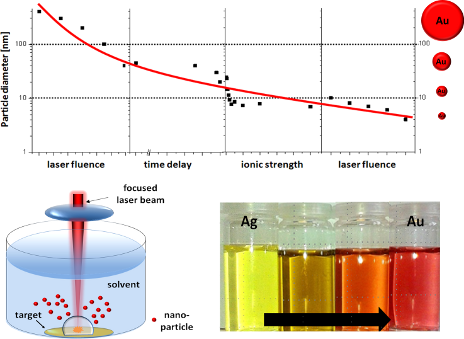
- particle properties, e.g., by inducing aggregation processes in the presence of biomolecules [20], and hence complicating bio-response studies. The removal of surfactants or residual ligands from colloidal nanoparticles is possible, e.g., by centrifugation [21], diafiltration [22] or tangential-flow
- formation of ZnO-SMS [71]. However, the reader should note that in case of ZnO, biocompatibility of these SMS may be further compromised due to the possibility of elevated Zn2+ ion release upon laser irradiation. Zn2+ ions are known to have adverse effects on biological systems by chelating biomolecules and
- control. Several groups could actually demonstrate that the presence of organic ligands during the PLAL-process (in situ conjugation) may be used for size control, predominantly yielding reduced particle sizes and narrowed size distributions [84][85]. This was also shown for biomolecules like


A sonochemical approach to the direct surface functionalization of superparamagnetic iron oxide nanoparticles with (3-aminopropyl)triethoxysilane
Beilstein J. Nanotechnol. 2014, 5, 1472–1476, doi:10.3762/bjnano.5.160
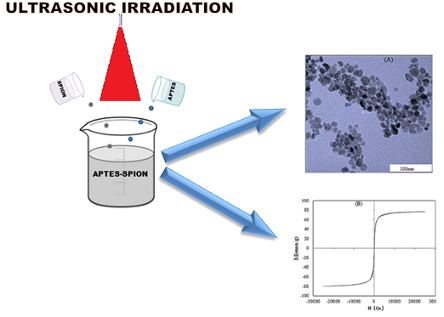
- cause them to agglomerate in ionic solution [1]. In addition, SPION exhibit a lack of affinity for biomolecules. One of the methods used to minimize these effects is through surface modification or functionalization of the SPION. Organic compounds, such as (3-aminopropyl)triethoxysilane (APTES), are





