Search results
Search for "carbon" in Full Text gives 1261 result(s) in Beilstein Journal of Nanotechnology. Showing first 200.
Vinorelbine-loaded multifunctional magnetic nanoparticles as anticancer drug delivery systems: synthesis, characterization, and in vitro release study
Beilstein J. Nanotechnol. 2024, 15, 256–269, doi:10.3762/bjnano.15.24
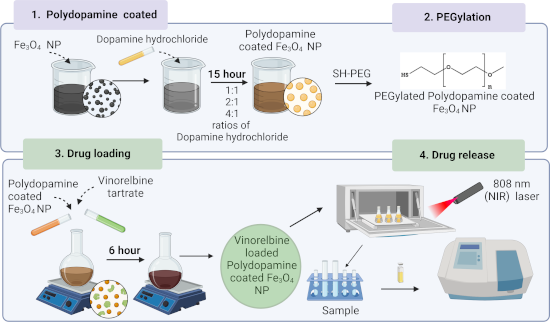
- ]. Many well-designed agents have been developed for photothermal therapy, including carbon, metal, and organic nanocomposites [21]. Due to their superparamagnetic and heating potential, Fe3O4 nanoparticles have recently garnered attention, particularly in photothermal therapy research. Dopamine (DA) is a
- visible in the nanostructures as N–H peaks located at 3500–3000 cm−1 (Figure 4b). This result demonstrates the effective incorporation of VNB into the nanostructure. As a result, the VNB compound exhibits a prominent peak attributed to the presence of a carbon–carbon (C–C) group at 1573 cm−1 and a


Multiscale modelling of biomolecular corona formation on metallic surfaces
Beilstein J. Nanotechnol. 2024, 15, 215–229, doi:10.3762/bjnano.15.21
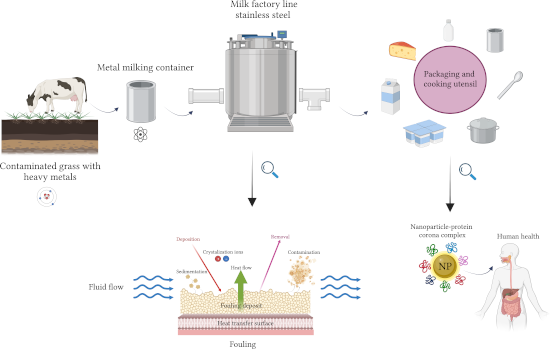
- (TiO2, SiO2, and Fe2O3), carbonaceous NPs (graphene, carbon nanotubes, and carbon black), semiconductors (CdSe) [26], and polymers [27], it lacks the set of short-range potentials required for calculating milk protein-aluminum adsorption energies. Here, we compute potentials of mean force (PMF) for Al





Ion beam processing of DNA origami nanostructures
Beilstein J. Nanotechnol. 2024, 15, 207–214, doi:10.3762/bjnano.15.20
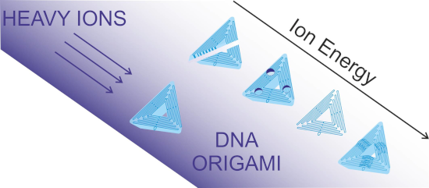
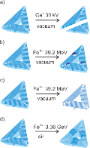
- × 5 cm; ion fluence accuracy: ∼5%; horizontal frequency: 400 Hz; vertical frequency: 40 Hz) and dedicated dosimetry [37]. At the lower-energy beamline, a 0.7 MeV/u 56Fe10+ beam was used. Dry samples were adhered onto an aluminum plate using a double-sided carbon tape (which also removes accumulated


Graphene removal by water-assisted focused electron-beam-induced etching – unveiling the dose and dwell time impact on the etch profile and topographical changes in SiO2 substrates
Beilstein J. Nanotechnol. 2024, 15, 190–198, doi:10.3762/bjnano.15.18
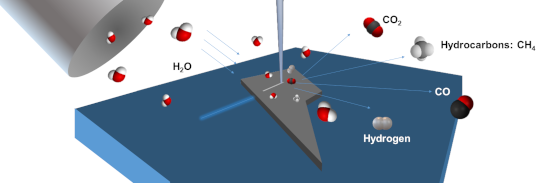
- -beam bombardment, which initially introduces defects into the graphene structure and then knocks out carbon atoms, although the edges of the fabricated nanostructures remain rough after the process [11]. Other direct techniques, such as focused ion beam (FIB) milling with heavy Ga+ ions, are not
- al. [13]. A direct graphene etching was proposed using a thin ice layer on top of the graphene surface. Upon interaction with electrons, the ice is dissociated into the reactive ions H+ or OH−, which subsequently interact with carbon atoms and form volatile species [14]. This method is modified based
- on the direct delivery of water molecules into the scanning electron microscope chamber. This process is called focused electron-beam-induced etching (FEBIE) and was already demonstrated for thin amorphous carbon membranes a decade ago [15]. Oxygen or water vapor can be used for etching graphene [16


Modification of graphene oxide and its effect on properties of natural rubber/graphene oxide nanocomposites
Beilstein J. Nanotechnol. 2024, 15, 168–179, doi:10.3762/bjnano.15.16
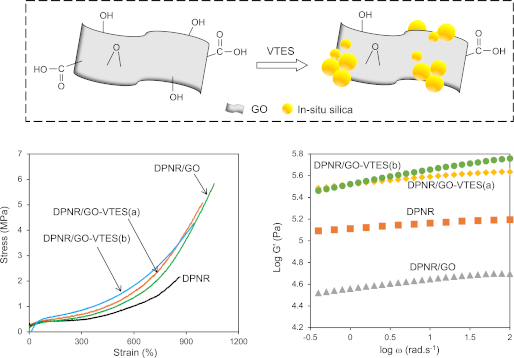
- to vulcanized NR. Moreover, nanoscale carbon-derived materials such as graphene and GO pose limitations in traditional NR vulcanization due to their associated high production costs. However, when ultilized in small quantities, nanoscale carbon-derived materials demonstrate potential in graft
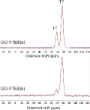
- carbon-containing compounds occurs. The weight loss of GO-VTES(a) and GO-VTES(b) were quite similar, approx. 52% and 42%, respectively. After 800 °C, the residual ash was silica. The ash content was 8% for GO-VTES(a) and 42% for GO-VTES(b). From the ash content, it could be confirmed that the VTES was






CdSe/ZnS quantum dots as a booster in the active layer of distributed ternary organic photovoltaics
Beilstein J. Nanotechnol. 2024, 15, 144–156, doi:10.3762/bjnano.15.14
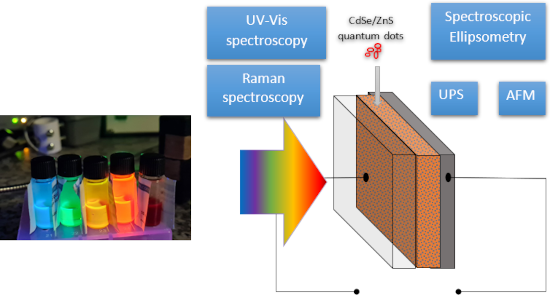
- are used in opto- and nanoelectronics. QDs establish a class of materials transitional between subatomic and mass types of matter. The classification of QDs according to the core material is divided into cadmium [7][8], silver [9][10], indium [9], carbon [11][12], and silicon [13][14]. Numerous




Development and characterization of potential larvicidal nanoemulsions against Aedes aegypti
Beilstein J. Nanotechnol. 2024, 15, 104–114, doi:10.3762/bjnano.15.10
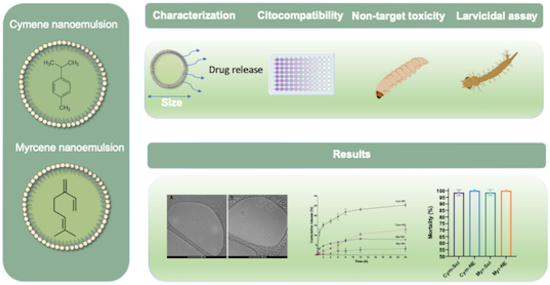
- deviation. Cryogenic transmission electron microscopy The nanoemulsions were mounted onto a copper grid with lacy carbon film (300 mesh). The acquisition was carried out with a MET Talos Arctica G2 apparatus. In vitro terpene release profile The in vitro release assays were conducted assuring sink


Influence of conductive carbon and MnCo2O4 on morphological and electrical properties of hydrogels for electrochemical energy conversion
Beilstein J. Nanotechnol. 2024, 15, 57–70, doi:10.3762/bjnano.15.6
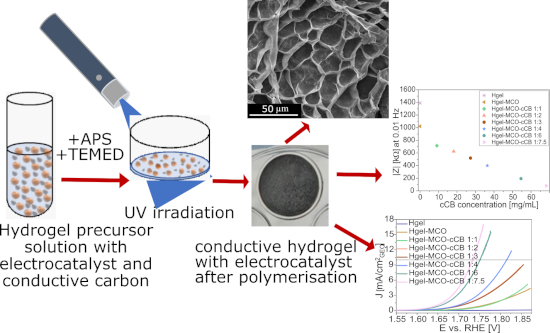
- -stage synthesis of polymer composites based on PNIPAAm hydrogel was presented. Both conductive particles in the form of conductive carbon black (cCB) and MnCo2O4 (MCO) spinel particles were suspended in the three-dimensional structure of the hydrogel. The MCO particles in the resulting hydrogel
- , drugs, metal nanoparticles, metal oxide nanoparticles, carbon nanotubes, or biomolecules. This is a very important advantage that opens ways of designing composite hydrogels with various properties and applications such as biomedical [8][9][10], biosensors [11][12][13], wearable electronics [14][15][16
- appropriate electrical conductivity [22]. Suspension of conductive fillers in the hydrogel structure, such as metallic particles (gold nanoparticles, silver nanoparticles) [23][24][25], carbon-based materials (GO graphene oxide, CNT carbon nanotubes) [26][27][28], and conductive polymers (polyaniline


Determination of the radii of coated and uncoated silicon AFM sharp tips using a height calibration standard grating and a nonlinear regression function
Beilstein J. Nanotechnol. 2023, 14, 1200–1207, doi:10.3762/bjnano.14.99
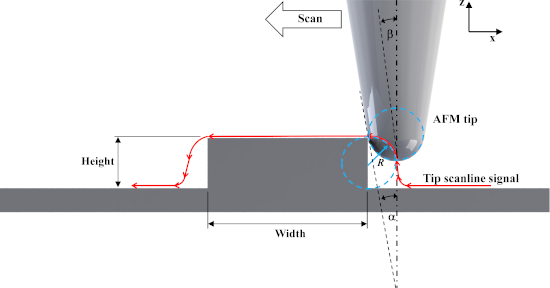
- nanostructured materials, for example, graphene, carbon nanotubes, nanoscale semiconductors, biomaterials, and molecules. Mechanical properties such as surface stiffness, adhesion, friction, electrostatics, and electrowetting can be measured [1][2][3][4]. In contact mode scanning, the contact area between the


A combined gas-phase dissociative ionization, dissociative electron attachment and deposition study on the potential FEBID precursor [Au(CH3)2Cl]2
Beilstein J. Nanotechnol. 2023, 14, 1178–1199, doi:10.3762/bjnano.14.98
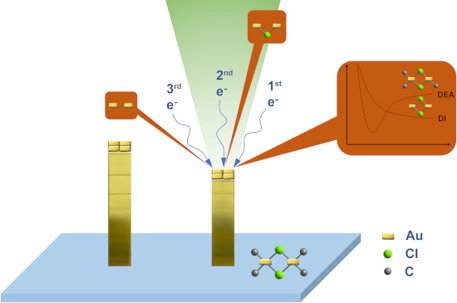
- composition and morphology of FEBID deposits fabricated in an ultrahigh-vacuum (UHV) chamber were explored on different surfaces and at varied beam currents. In the gas phase, dissociative ionization was found to lead to significant carbon loss from this precursor, and about 50% of the chlorine was on average
- amorphous matrixes of carbon with embedded metal crystallites and a gold content of 2–3 atom % [19], 10–40 atom % [20], and 8–20 atom % [21], respectively. This is most likely due to the fact that the CVD process is thermally driven, while in FEBID, the precursor fragmentation is primarily electron driven
- precursor in the UHV setup. A close-to-complete phosphorous removal was observed and the Au/C ratio of the deposit was found to be 1:2. This corresponds to the average carbon loss per incident beam found in the DI gas-phase experiment, and was consistent with the dominating reaction pathways as determined



Sulfur nanocomposites with insecticidal effect for the control of Bactericera cockerelli
Beilstein J. Nanotechnol. 2023, 14, 1106–1115, doi:10.3762/bjnano.14.91
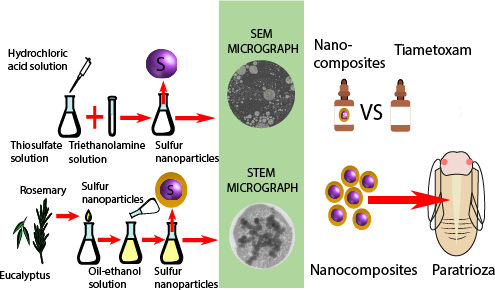
- , and O, corresponding to the by-products of the reduction of sodium thiosulfate to sulfur (see Experimental section), were found [19][31][34]. Carbon is from the substrate used in the EDS analysis [35][36]. The TEM micrograph in Figure 3a reveals the formation of spherical SNPs that agglomerate into


Properties of tin oxide films grown by atomic layer deposition from tin tetraiodide and ozone
Beilstein J. Nanotechnol. 2023, 14, 1085–1092, doi:10.3762/bjnano.14.89
- nanocomposite layer. ZrO2–SnO2 stacked layers have been shown to perform as mechanically elastic and magnetizable films [6]. SnO2-coated carbon nanotubes have been studied as catalysts [7] and ZnO–SnO2 as functional composite in Li-ion batteries [8]. A recent review article from 2022 lists 27 different


Experimental investigation of usage of POE lubricants with Al2O3, graphene or CNT nanoparticles in a refrigeration compressor
Beilstein J. Nanotechnol. 2023, 14, 1041–1058, doi:10.3762/bjnano.14.86
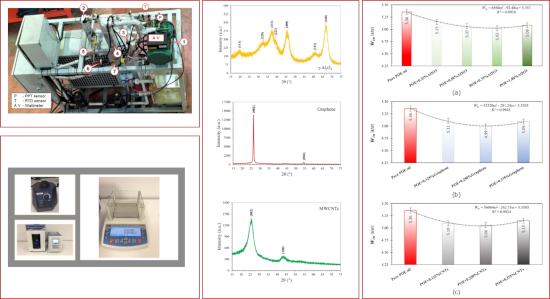
- Kayhan Dagidir Kemal Bilen Department of Mechanical Engineering, Tarsus University, Mersin, Turkey Department of Mechanical Engineering, Ankara Yıldırım Beyazıt University, Ankara, Turkey 10.3762/bjnano.14.86 Abstract In this study, the use of nanolubricants containing Al2O3, graphene, and carbon
- : Al2O3; carbon nanotubes; graphene; nanolubricant; polyolester oil; refrigeration compressor; Introduction Compressor performance is directly related to the thermophysical properties of the lubricant. Improving the thermophysical properties of lubricants can be tried as a method to improve compressor
- to the fact that heat transfer is fundamentally a surface-related process [5]. Nanolubricants have been widely used in recent years to improve the performance of refrigeration compressors [6][7][8]. Singh et al. [9] experimentally verified the effect of addition of multiwalled carbon nanotube (MWCNT





Nanoarchitectonics of photothermal materials to enhance the sensitivity of lateral flow assays
Beilstein J. Nanotechnol. 2023, 14, 988–1003, doi:10.3762/bjnano.14.82
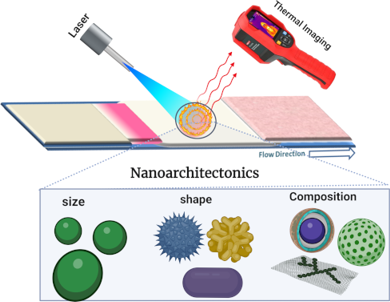
- additional peroxidase substrates in LFAs increased the detection limit from the nanogram to the picogram level [16][17]. Various tracer elements have been developed to increase the sensitivity of an assay, including noble metal nanomaterials, metal oxides, plasmonic nanostructures, carbon-based materials
- nanomaterials, including noble metal nanomaterials, semiconductor nanomaterials, carbon-based nanomaterials, and polymeric nanomaterials. Then, we review the unique nanoscale architecture of nanomaterials responsible for their photothermal properties. Finally, we explore the current status of photothermal LFA
- properties, that is, plasmonic materials (e.g., Au, Ag, and Pt), semiconductor materials (e.g., transition metal oxides, transition metal chalcogenides, and transition metal dichalcogenides), carbon-based nanomaterials (such as graphene oxide and carbon nanotubes), and polymer nanomaterials [33][34] (Figure


Fragmentation of metal(II) bis(acetylacetonate) complexes induced by slow electrons
Beilstein J. Nanotechnol. 2023, 14, 980–987, doi:10.3762/bjnano.14.81
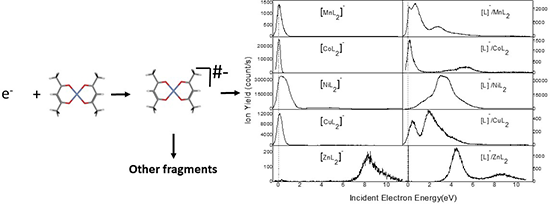
- electron beam with an organometallic target (e.g., focused electron beam-induced deposition, FEBID) is a promising technique for direct 3D deposition of high-purity materials with minimum residual carbon in the product on the surface [4][5]. The FEBID precursor molecules adsorb and diffuse on the surface
- . Metal bis(acetylacetonate) complexes are of interest for many thin film fabrication techniques (e.g., chemical vapor deposition [9], atomic layer epitaxy [10], or atomic layer etching [11]) and as precursors for carbon materials, such as carbon nanotubes and carbon onion particles [12], or metal oxide
- nanocrystals [13][14]. The popularity of these compounds is related to their volatile nature, ease of preparation, and often lower air sensitivity and toxicity in comparison to organometallic compounds containing carbon–metal bonds (e.g., metallocenes). In the context of a potential use of these organometallic


Isolation of cubic Si3P4 in the form of nanocrystals
Beilstein J. Nanotechnol. 2023, 14, 971–979, doi:10.3762/bjnano.14.80
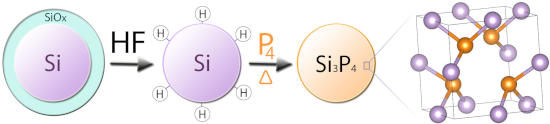
- “WinXPow”. Elemental analysis was carried out on an X-ray fluorescence spectrometer S2 Picofox (Bruker) with total external reflection. Transmission electron microscopy (TEM) samples were dispersed in an ultrasonic bath with hexane and then deposited on copper grids with lacey carbon film (SPI Supplies


Metal-organic framework-based nanomaterials for CO2 storage: A review
Beilstein J. Nanotechnol. 2023, 14, 964–970, doi:10.3762/bjnano.14.79
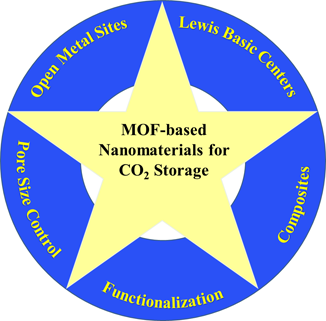
- , directly linked to the rise in global temperature, has raised significant attention. Carbon capture and storage, particularly in association with adsorbents, has occurred as a pivotal approach to address this pressing issue. Large surface area, high porosity, and abundant adsorption sites make metal
- tackle this issue is the advancement of carbon capture and storage (CCS) methods, particularly those involving highly efficient adsorbents [6][7]. The CCS process has the capability to effectively treat substantial volumes of CO2 emissions originating from conventional fossil fuel sources [8][9][10
- ]. Therefore, identification and development of durable and efficient adsorbents are critical to the successful implementation of CCS. Until now, various classes of materials have been investigated for CO2 adsorption, such as covalent organic frameworks, molecular sieves, activated carbon, and metal-organic




Low temperature atomic layer deposition of cobalt using dicobalt hexacarbonyl-1-heptyne as precursor
Beilstein J. Nanotechnol. 2023, 14, 951–963, doi:10.3762/bjnano.14.78
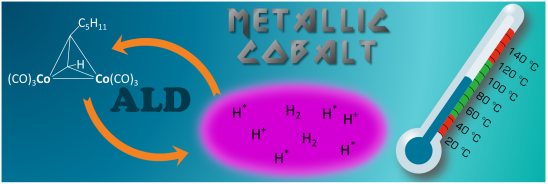
- dicobalt hexacarbonyl tert-butylacetylene (CCTBA) can be used to deposit metallic cobalt in the temperature range from 125 to 200 °C [15]. As an exception, Kim et al. have reported the ALD of Co with Co2(CO)8 in the temperature range of 70 to 110 °C. However, this process resulted in a significant carbon
- overview spectrum is given in Supporting Information File 1, Figure S1. The film mainly consists of the three elements carbon (63.1 atom %), oxygen (20.8 atom %), and cobalt (16.1 atom %). The main carbon 1s feature is located at 285.0 eV binding energy (Figure 5). This is the typical value for carbon in
- alkyls [33]. It is likely that this correlates to the carbon bonded as −CH2− within the n-heptyne group of the used precursor. The second peak at 285.6 eV matches the bonding state of the terminating −CH3 groups. The third peak at 289.1 eV is likely correlated to −C=O bonds, especially originating from


Prediction of cytotoxicity of heavy metals adsorbed on nano-TiO2 with periodic table descriptors using machine learning approaches
Beilstein J. Nanotechnol. 2023, 14, 939–950, doi:10.3762/bjnano.14.77
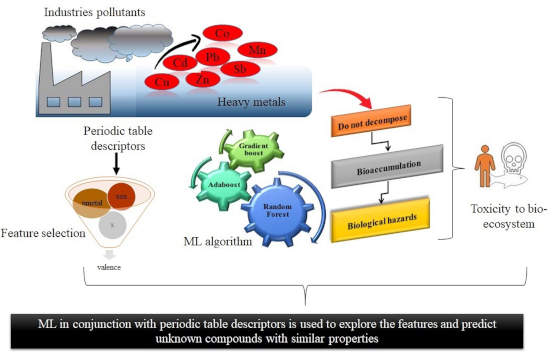
- derivatives [15], 51 manufactured nanoparticles with varying core metals, coatings, and surface attachments [16], and 80 surface-modified multiwall carbon nanotubes have been reported. Another approach, namely nano-read-across (nano-RA) [17], has been used to determine the cytotoxicity of unknown
- was added to HK-2 cells in Hyclone DMEM medium supplemented with 10% fetal bovine serum (FBS) and 100 mg penicillin/streptomycin and maintained at 37 °C in the presence of 5% carbon dioxide. Nine concentrations of heavy metal salts were added to a constant amount of nano-TiO2 (25 µmol/L). The details


Upscaling the urea method synthesis of CoAl layered double hydroxides
Beilstein J. Nanotechnol. 2023, 14, 927–938, doi:10.3762/bjnano.14.76
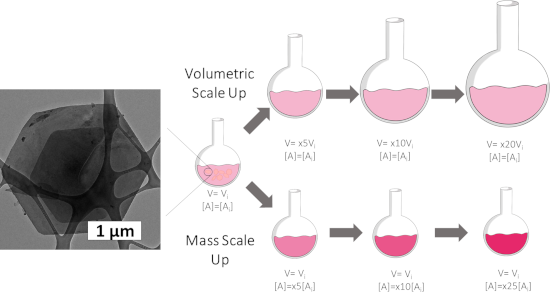
- prepared by paint spraying on carbon paper. The optimum amount of material for the measurements was calculated by the program “Hephaestus”, which is part of the Demeter package [77]. A Si(111) double-crystal monochromator was used to obtain a monochromatic incident beam, and the intensities of incident and
- corresponding structure. Microscopy Sample preparation The dried solids were suspended in ethanol and drop cast onto Au TEM grids covered with a lacy carbon film, and the solvent was left to evaporate. SEM samples were prepared from the same solution after 5 min of ultrasonication. The sonicated suspension was


Ni, Co, Zn, and Cu metal-organic framework-based nanomaterials for electrochemical reduction of CO2: A review
Beilstein J. Nanotechnol. 2023, 14, 904–911, doi:10.3762/bjnano.14.74
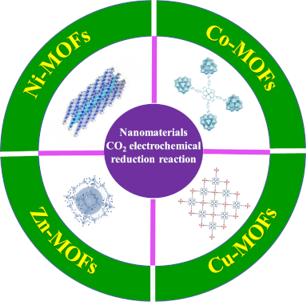
- of Technology, Van Lang University, Ho Chi Minh City, Vietnam 10.3762/bjnano.14.74 Abstract The combustion of fossil fuels has resulted in the amplification of the greenhouse effect, primarily through the release of a substantial quantity of carbon dioxide into the atmosphere. The imperative pursuit
- CO2 conversion. Finally, a meticulous discourse encompasses the challenges encountered and the prospects envisioned for the advancement of MOF-based nanomaterials in the realm of electrochemical reduction of CO2. Keywords: carbon capture; CO2 reduction; electrocatalysis; metal-organic frameworks
- ; nanomaterials; Introduction The emission of carbon dioxide resulting from the utilization of fossil fuels has been identified as a primary cause of the greenhouse effect, ultimately contributing to the severity of climate change [1]. To mitigate these detrimental consequences, numerous strategies have been


Two-dimensional molecular networks at the solid/liquid interface and the role of alkyl chains in their building blocks
Beilstein J. Nanotechnol. 2023, 14, 872–892, doi:10.3762/bjnano.14.72
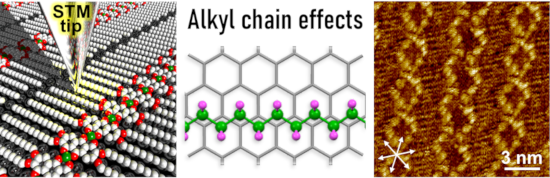
- ][54][55]. Recently, dispersion-corrected DFT calculations have quantitatively revealed the interactions between n-alkanes and circumcoronene as models of molecular adsorption on HOPG [47]. As the number of carbon atoms in the n-alkane increased, the adsorption energy increased by −1.85 kcal/mol per
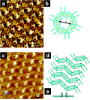
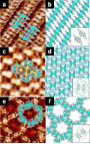
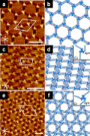
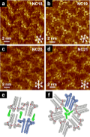
- ) exhibited different 2D structures in which the core unit of PBTP was surrounded by branched alkyl chains (Figure 9c,d). When PBTP was substituted with eight butyl ester groups at the 3, 4, 9, and 10 carbon positions of the two perylene motifs (Scheme 7c), porous honeycomb networks were created (Figure 9e,f
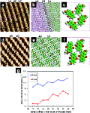
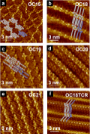
- patterns (7 × 10⁻⁴ M, Figure 10e,f) at the HOPG/TCB interface. By reducing the number of alkyl chains, the DBA derivative can adopt various conformations on the surface, forming polymorphic structures. 5 Odd–even effect In addition to simple changes in the intermolecular distance, the number of carbon









N-Heterocyclic carbene-based gold etchants
Beilstein J. Nanotechnol. 2023, 14, 865–871, doi:10.3762/bjnano.14.71
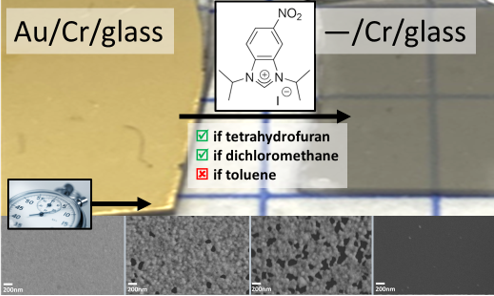
- water and carbon dioxide so that there was no need for a strong base for deprotonation or for air-free conditions [13][14]. Camden and co-workers have used CO2 adducts of benzimidazolium to produce NHC films by melting the solid CO2 adduct directly onto a gold surface under vacuum. They have also



Biomimetics on the micro- and nanoscale – The 25th anniversary of the lotus effect
Beilstein J. Nanotechnol. 2023, 14, 850–856, doi:10.3762/bjnano.14.69

- their model for “Atmospheric water harvesting using functionalized carbon nanocones”. The challenge of harvesting water directly from air of varying humidity is a tantalizing one. There are several biological examples in both the animal and plant kingdoms which could serve as archetypes for
- dehumidifiers or water purifiers. The authors here present a model based on a carbon nanotube structure that might finally provide a route to the breakthrough in this field. Their archetype, the Namibian desert beetle, uses a geometric separation of hydrophilic and hydrophobic regions to harvest and drive water
- along its body. The authors built on this inspiration to develop carbon nanotube cones which similarly separate the regions. Their model predicts the specific geometry and surface properties that will be required to create a low-pressure system for harvesting water vapour. Rebora et al. [19], in the


Ultralow-energy amorphization of contaminated silicon samples investigated by molecular dynamics
Beilstein J. Nanotechnol. 2023, 14, 834–849, doi:10.3762/bjnano.14.68
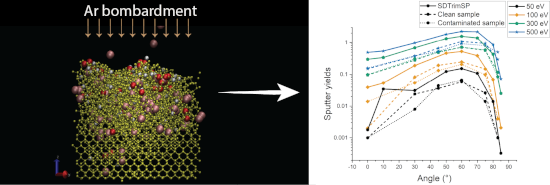
- planned to reach down to 50 eV, which would be correspondingly surface sensitive, in the near future. In the two above cases, contaminations in the experimental chamber play an important role during the sputtering processes. Typical contaminations are (in the order of frequency) water, nitrogen, carbon
- and carbonated components that can be found in the atmosphere [22][23][24], and residuals from past experiments in the chamber, which can include silicon, carbon, or any type of particles that were sputtered previously and adsorbed on the walls of the sample chamber [24][25]. The work in this paper
- renewal of the water layer. Future simulations could include other types of contaminants, such as nitrogen or carbon-containing impurities that are very often found in instrument chambers, and the renewal of the contamination layer during the sputtering process. Representations of the contaminated sample