Search results
Search for "contaminants" in Full Text gives 196 result(s) in Beilstein Journal of Nanotechnology.
Polymer blend lithography: A versatile method to fabricate nanopatterned self-assembled monolayers
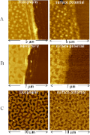
Beilstein J. Nanotechnol. 2012, 3, 620–628, doi:10.3762/bjnano.3.71
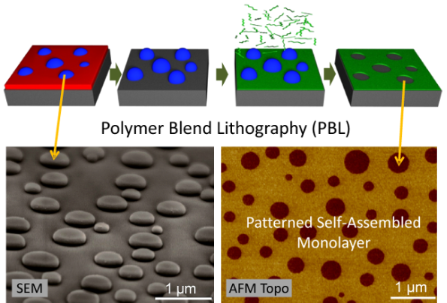
- ]: The wafers were exposed to a jet of CO2 ice crystals, which were produced by expanding CO2 through a nozzle (Snow Jet model K4-05, Tectra Frankfurt/Germany). In this way, surface contaminants are removed either by mechanical impact or by dissolution in CO2. Preparation of a polymer-blend lithographic


Nano-structuring, surface and bulk modification with a focused helium ion beam
Beilstein J. Nanotechnol. 2012, 3, 579–585, doi:10.3762/bjnano.3.67
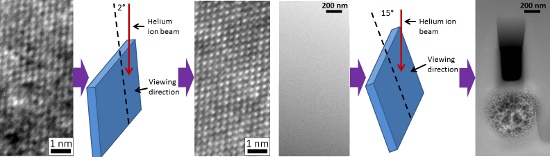
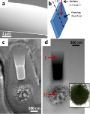
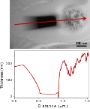
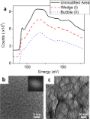
- silicon lamella leaving the subsurface structure intact for further analysis. Surface roughness and contaminants were both reduced by the irradiation process. Fabrication is also realized with a high level of patterning acuity. Implantation of helium beneath the surface of the sample is visualized in
- quality; however the HIM polishing step has many benefits over the relatively broad beam of low energy FIB due to the its small probe size and the ion species used. The helium ion beam is non-contaminating and can even be used to selectively remove surface contaminants, such as the gallium contamination


FTIR nanobiosensors for Escherichia coli detection
Beilstein J. Nanotechnol. 2012, 3, 485–492, doi:10.3762/bjnano.3.55
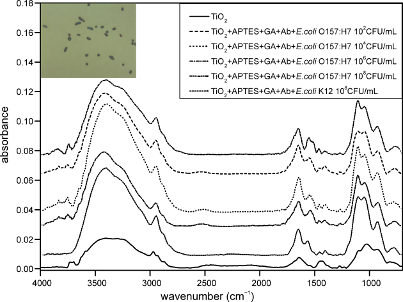
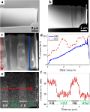
- contaminants in food systems. Microscopically ordered structure of a mesoporous titania film observed by AFM analysis. (a) FTIR spectrum of mesoporous titania thin films (solid line) and films functionalized with APTES (dashed line). The reference spectrum of APTES is reported in the inset. (b) FTIR spectrum


Models of the interaction of metal tips with insulating surfaces
Beilstein J. Nanotechnol. 2012, 3, 329–335, doi:10.3762/bjnano.3.37
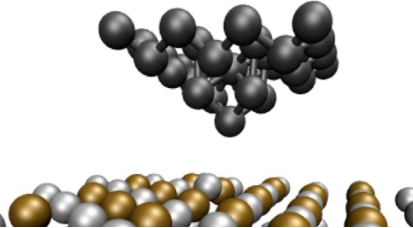
- contaminants. This layer can be removed in situ inside the ultrahigh vacuum chamber, by sputtering and/or annealing. However there is no guarantee that the tip apex is pure silicon, and contaminant atoms or molecules may remain. The tip can also be contaminated by material from the surface during imaging; in
- to more freedom in choosing the tip material, as a tip can be manually attached to the tuning-fork prong [5]. However, the problem of keeping the tip apex free of contaminants remains. One approach to deal with the problem of tip–apex control is to employ a tip material that is easy to prepare and
- layer) [6], resulting in a high confidence that the metallic tip apex is free from airborne contaminants. Secondly, it is possible to judge based on the conductivity of the tip as to whether the tip apex is metallic or terminated with contaminant atoms. This can be achieved by recording the resonant


Dipole-driven self-organization of zwitterionic molecules on alkali halide surfaces
Beilstein J. Nanotechnol. 2012, 3, 285–293, doi:10.3762/bjnano.3.32
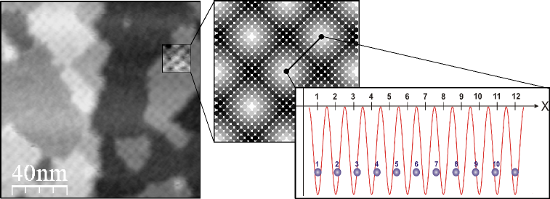
- constants of ≈50 N/m, and quality factors of ≈35,000. Typical oscillation amplitudes were 5–10 nm (10–20 nm peak-to-peak). The cantilevers were heated in situ to ≈150 °C for one hour in order to remove contaminants from the tip. In NC-AFM, the oscillation amplitude of the cantilever is kept constant by an


Variations in the structure and reactivity of thioester functionalized self-assembled monolayers and their use for controlled surface modification
Beilstein J. Nanotechnol. 2012, 3, 213–220, doi:10.3762/bjnano.3.24
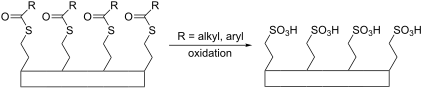
- , the surfaces achieved were not as hydrophilic as expected. The unexpectedly high contact angles after oxidation, and their possible relationship to solvent induced surface reorganization and/or residual long-chain contaminants, will be addressed in the Discussion section. The irradiation with 254 nm


Molecular-resolution imaging of pentacene on KCl(001)
Beilstein J. Nanotechnol. 2012, 3, 186–191, doi:10.3762/bjnano.3.20
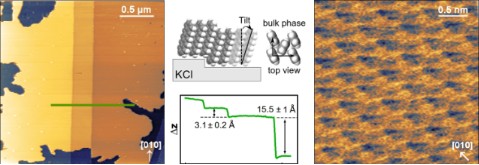
- the surface was kept at room temperature. The rate was approximately 1 Å/min and was monitored by a quartz microbalance. Supersharp silicon cantilevers provided by Nanosensors (Neuchatel, Switzerland) were heated in vacuum to about 390 K to remove contaminants. Frequency-modulation dynamic SFM


Quantitative multichannel NC-AFM data analysis of graphene growth on SiC(0001)
Beilstein J. Nanotechnol. 2012, 3, 179–185, doi:10.3762/bjnano.3.19
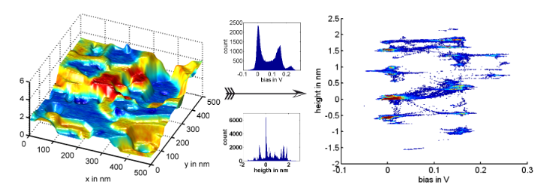
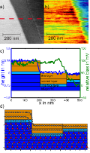
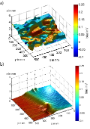
- in good agreement with previous studies[10]. Graphene was grown by first heating the sample to 1000 °C for 6 min to remove contaminants and also to reduce the pressure burst during the subsequent graphenization step of heating to 1300 °C for 30 s [3]. This treatment changes the topography



Self-assembly of octadecyltrichlorosilane: Surface structures formed using different protocols of particle lithography
Beilstein J. Nanotechnol. 2012, 3, 114–122, doi:10.3762/bjnano.3.12
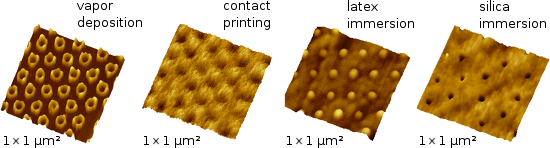
- latex were cleaned by centrifugation to remove surfactants or contaminants. Approximately 300 µL of the latex solution was placed into a microcentrifuge tube and centrifuged at 15,000 rpm for 15 min. A solid pellet was formed, and the supernatant was removed and replaced with deionized water. The latex




Surface functionalization of aluminosilicate nanotubes with organic molecules
Beilstein J. Nanotechnol. 2012, 3, 82–100, doi:10.3762/bjnano.3.10
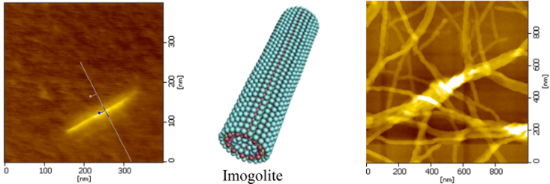
- be separated from imogolite by purification as described in the literature [31]. In the typical purification procedure, the imogolite mineral collected from Kitakami, Iwate, Japan is suspended in water by ultrasonication. Occluded organic contaminants are removed by treating the mineral with hot 1.8


Self-assembled monolayers and titanium dioxide: From surface patterning to potential applications
Beilstein J. Nanotechnol. 2011, 2, 845–861, doi:10.3762/bjnano.2.94
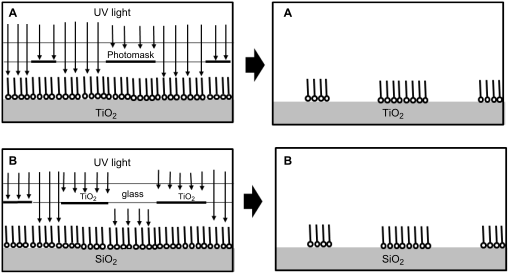
- many ways, from the study of fundamental issues in TiO2 photocatalysis to the growth of supramolecular structures; from serving as a tool for patterning to suggesting means to obtain the selective photocatalytic degradation of highly toxic contaminants. This potential for synergism between self



An MCBJ case study: The influence of π-conjugation on the single-molecule conductance at a solid/liquid interface
Beilstein J. Nanotechnol. 2011, 2, 699–713, doi:10.3762/bjnano.2.76
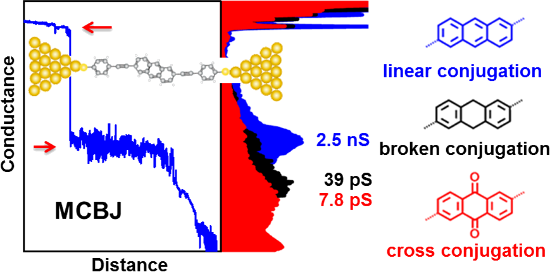
- remove absorbed contaminants. The sample sheet was first mounted on the sample holder of the MCBJ setup. Subsequently, the liquid cell was installed on top of the sample with a Kalrez O-ring attached to prevent leakage of the solution. The closed liquid cell was flushed with argon through an inert-gas




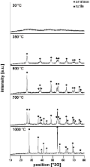
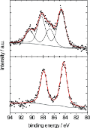
Nanostructured, mesoporous Au/TiO2 model catalysts – structure, stability and catalytic properties
Beilstein J. Nanotechnol. 2011, 2, 593–606, doi:10.3762/bjnano.2.63
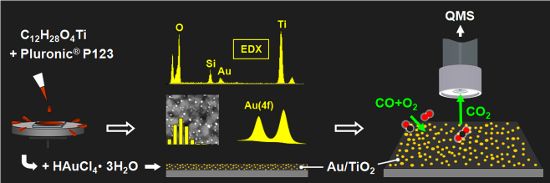
- , spinning speeds of 2000 rpm (for 420 nm thickness) and 6000 rpm (for 190 nm thickness) were used instead for 30 s. The Si(100) wafer was cut into small pieces (9 mm × 9 mm) prior to the coating procedure. To remove possible organic contaminants, the wafer was cleaned with acetone, rinsed with distilled






Terthiophene on Au(111): A scanning tunneling microscopy and spectroscopy study
Beilstein J. Nanotechnol. 2011, 2, 561–568, doi:10.3762/bjnano.2.60
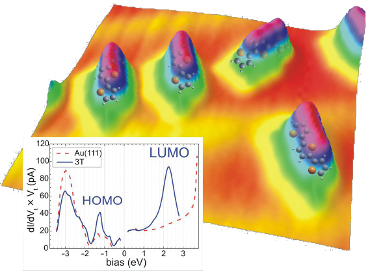
- 250 nm, Arrandee, Germany) on glass were flame annealed in a butane flame to develop extended (111) facets. After introduction into ultra-high vacuum (UHV), these films were further annealed at temperatures up to 700 °C to remove contaminants from the surface. After a routine check of the gold surface



Plasmonic nanostructures fabricated using nanosphere-lithography, soft-lithography and plasma etching
Beilstein J. Nanotechnol. 2011, 2, 448–458, doi:10.3762/bjnano.2.49

- determined, but it may be due to residual contaminants on the quartz surface. Deep etched structures (500 nm) exhibited rough side walls near the triangular Cr pattern (Figure 6a). Increasing the thickness of the Cr film produced patterns that were not terminated by vertical sidewalls but instead with tails
- shown revealing sharp corners and edges of the holes within the gold film. The roughness at the edges of the particles after the etching process, due to residual contaminants on the surface of the quartz, remains a problem. Preliminary sputtering with Ar+ ions improved the quality of the samples, as


Superhydrophobicity in perfection: the outstanding properties of the lotus leaf
Beilstein J. Nanotechnol. 2011, 2, 152–161, doi:10.3762/bjnano.2.19
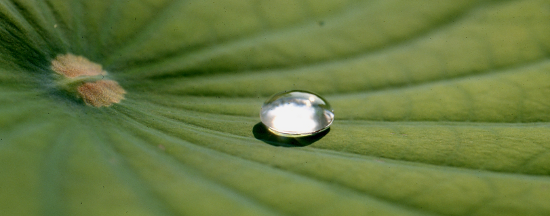
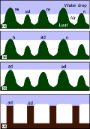
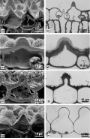
- optimal architecture for superhydrophobicity. In biological surfaces, several different strategies can be found. The lotus leaf with the largely reduced contact area seems optimal for low adhesion of contaminants and water, observable as small roll-off angles. A disadvantage is the relatively soft wax







Manipulation of gold colloidal nanoparticles with atomic force microscopy in dynamic mode: influence of particle–substrate chemistry and morphology, and of operating conditions
Beilstein J. Nanotechnol. 2011, 2, 85–98, doi:10.3762/bjnano.2.10
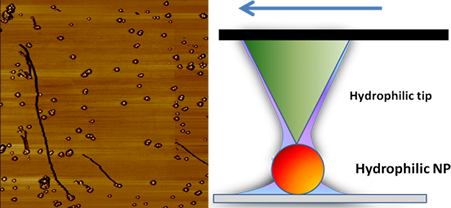
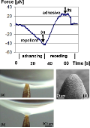
- and vacuum environment A. Effect of relative humidity The presence of surface contaminants (dust or water) affects the mobility of nanoparticles as this directly changes the intermolecular interactions between the nanoparticles and the surface. As it has been discussed in subsection 2, a contribution


Biomimetics inspired surfaces for drag reduction and oleophobicity/philicity
Beilstein J. Nanotechnol. 2011, 2, 66–84, doi:10.3762/bjnano.2.9
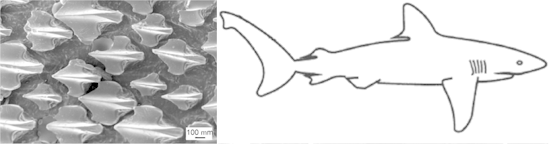
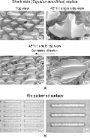
- created, and in this article the influence of structure on drag reduction efficiency is reviewed. Biomimetic-inspired oleophobic surfaces can be used to prevent contamination of the underwater parts of ships by biological and organic contaminants, including oil. The article also reviews the wetting
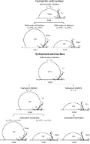
- and oleophilic surfaces (solid–air–water interface and solid–air–oil interface) can switch to an oleophobic surface in water (solid–water–oil interface). As a result, oil contaminants are washed away when immersed in water. This effect can be employed for underwater oleophobicity and self-cleaning
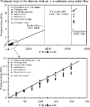
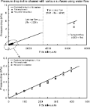
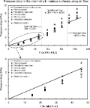
- end of the ribs in turbulent flow as compared to the theoretical pressure drop. Modeling, Fabrication and Characterization of Oleophobic/philic Surfaces Oleophobic surfaces have the potential for self-cleaning and anti-fouling from biological and organic contaminants both in air and underwater









Single-pass Kelvin force microscopy and dC/dZ measurements in the intermittent contact: applications to polymer materials
Beilstein J. Nanotechnol. 2011, 2, 15–27, doi:10.3762/bjnano.2.2
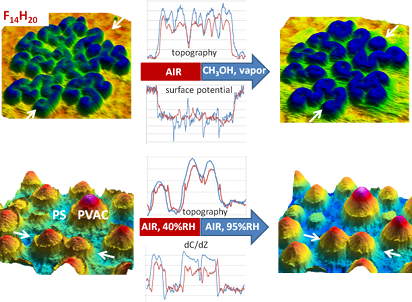
- ambient conditions in the intermittent contact mode on different samples shows that absolute values of surface potential might be influenced by a presence of occasional contaminants or modifications of the tip and the sample. This should be taken into account in comparing the surface potential data in





Defects in oxide surfaces studied by atomic force and scanning tunneling microscopy
Beilstein J. Nanotechnol. 2011, 2, 1–14, doi:10.3762/bjnano.2.1
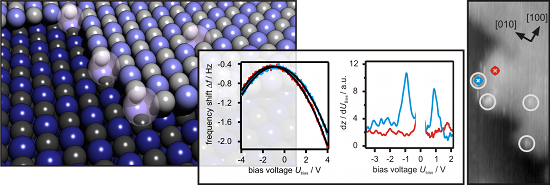
- tunneling current, making it a powerful tool for high resolution real space analysis at the atomic level and merging the strengths of both techniques. The combination of both techniques enables the detection of contaminants on the tip. For instance, insulating contaminants cause a shift of the minimum of


Magnetic nanoparticles for biomedical NMR-based diagnostics
Beilstein J. Nanotechnol. 2010, 1, 142–154, doi:10.3762/bjnano.1.17
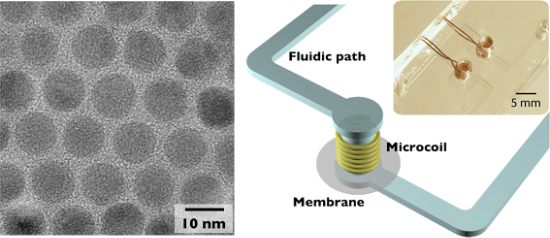
- smaller contaminants such as unbound MNPs [16]. This configuration enables both the concentration of scant samples from large volumes, as well as the performance of on-chip washing steps. The NMR electronics generate versatile RF pulse sequences to measure the longitudinal (T1) and transverse (T2