


Search results
Search for "development" in Full Text gives 1368 result(s) in Beilstein Journal of Nanotechnology. Showing first 200.
Investigation of Hf/Ti bilayers for the development of transition-edge sensor microcalorimeters
Beilstein J. Nanotechnol. 2024, 15, 1353–1361, doi:10.3762/bjnano.15.108

- of Hf is lower than that of Ti, another widely used TES material. This means that the same amount of energy will give a higher temperature change in hafnium than in titanium-based TES. The listed points make hafnium a promising material for TES development. In this work, Hf/Ti bilayer bridges of
- compared to the full-size films. This is because at the edges of the structure, the film thickness may differ from that at the center. Smooth edges are also necessary for good contact with subsequent layers. For this reason, special attention is paid to the development of technology for creating structures
- would lead to an even larger increase of δE with volume. Conclusion Bridges made of bilayers of hafnium with a thin top layer of titanium were fabricated and measured. The formation of such bridges by a photolithographic lift-off process is the next step in the development of TES microcalorimeters after


Hymenoptera and biomimetic surfaces: insights and innovations
Beilstein J. Nanotechnol. 2024, 15, 1333–1352, doi:10.3762/bjnano.15.107
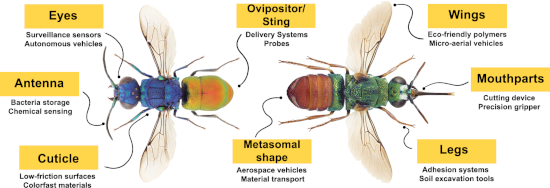
- of some species reduce friction and wear, inspiring the development of low-friction materials and coatings. By mimicking these natural textures, it is possible to create synthetic materials that exhibit similar friction-reducing properties, leading to significant advancements in mechanical efficiency
- modulus [61]. Understanding the mechanical properties and composition of leafcutter ant mandibles could offer valuable insights into biomimetic design principles, potentially inspiring the development of innovative tools and instruments with enhanced performance and adaptability for various applications
- sizes using different regions of the mandible [70]. This ingenious natural design could inspire the development of multifunctional robotic grippers, offering improved stability and adaptability in handling diverse objects [70]. The specialized mandibular morphology and task-specific bite mechanics





Nanoarchitectonics with cetrimonium bromide on metal nanoparticles for linker-free detection of toxic metal ions and catalytic degradation of 4-nitrophenol
Beilstein J. Nanotechnol. 2024, 15, 1312–1332, doi:10.3762/bjnano.15.106
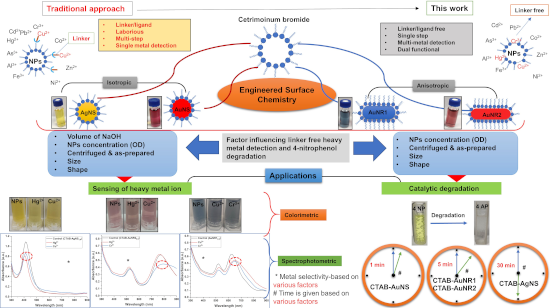
- degradation, requiring additional surface modifications using linker molecules, thereby increasing process complexity and cost. To overcome these limitations, there is a critical need for the development of an easy-to-use, dual-functional, linker-free nanosystem capable of simultaneous detection of heavy




Interaction of graphene oxide with tannic acid: computational modeling and toxicity mitigation in C. elegans
Beilstein J. Nanotechnol. 2024, 15, 1297–1311, doi:10.3762/bjnano.15.105
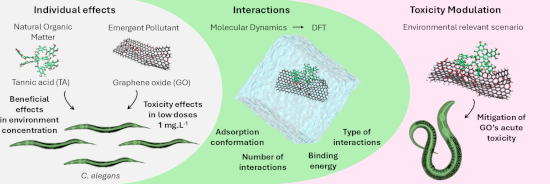
- toxicity and highlight the potential of tannic acid for the synthesis and surface functionalization of graphene-based nanomaterials, offering insights into safer nanotechnology development. Keywords: biodistribution; density functional theory; ecotoxicity; molecular dynamics; surface interactions
- to GO causes significant damage to intestinal microvilli cells . Furthermore, Dou et al. [53] showed that GO triggers cell autophagy as a protective response to the material. Apoptosis was observed in germline cells, indicating that GO can damage gonad development and reduce the reproduction rate of
- contained ≈20 young adult C. elegans, that is worms between the stages L2 and L3 of development, approximately 30 h of age, obtained through the synchronization procedure described in [14][84]. The worms were exposed to GO at final concentrations of 0.0001, 0.001, 0.01, 0.1, 1.0, 5.0, and 10 mg·L−1 in EPA


Mn-doped ZnO nanopowders prepared by sol–gel and microwave-assisted sol–gel methods and their photocatalytic properties
Beilstein J. Nanotechnol. 2024, 15, 1283–1296, doi:10.3762/bjnano.15.104
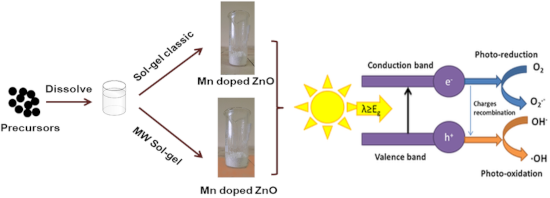
- semiconductor with many versatile and attractive applications in optical, optoelectronic, and photocatalytic fields [35][36][37]. The doping of ZnO with Mn can lead to the development of multifunctional nanostructures, such as room-temperature ferromagnetic materials with potential applications in spintronics


New design of operational MEMS bridges for measurements of properties of FEBID-based nanostructures
Beilstein J. Nanotechnol. 2024, 15, 1273–1282, doi:10.3762/bjnano.15.103
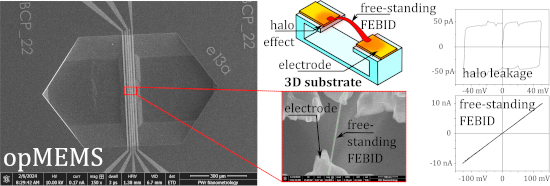
- Photonics, Łukasiewicz Research Network, Lotników 32/46, 02-668, Warsaw, Poland 10.3762/bjnano.15.103 Abstract Focused electron beam-induced deposition (FEBID) is a novel technique for the development of multimaterial nanostructures. More importantly, it is applicable to the fabrication of free-standing
- implantation can occur [45][48], leading to the development of a strained layer. All in all, FIB straining becomes an indispensable tool in the case of opMEMS. The Helios NanoLab 600i was supplemented with additional measuring equipment. A sample connector was placed inside the vacuum chamber. Coaxially


The role of a tantalum interlayer in enhancing the properties of Fe3O4 thin films
Beilstein J. Nanotechnol. 2024, 15, 1253–1259, doi:10.3762/bjnano.15.101

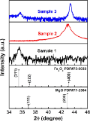
- indicates the potential to facilitate the development of novel magnetic and spintronic architectures. Results and Discussion AFM and line-cut method were used to examine the surface morphology and grain sizes of the Fe3O4 films that were formed on SiO2/Si(100), MgO(100), and MgO/Ta/SiO2/Si(100) multilayer


Dual-functionalized architecture enables stable and tumor cell-specific SiO2NPs in complex biological fluids
Beilstein J. Nanotechnol. 2024, 15, 1238–1252, doi:10.3762/bjnano.15.100
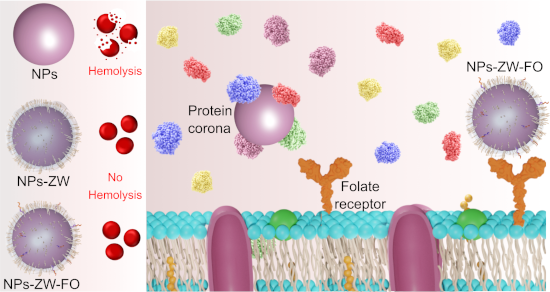
- nanoparticles are not hemolytic. Remarkably, the functionalized SiO2NPs are more internalized by tumor cells than their healthy counterparts. Investigations of this nature play a crucial role in garnering results with greater reliability, allowing the development of nanoparticle-based pharmaceutical drugs that
- . One-way and two-way analysis of variance (ANOVA) and Tukey’s test were used to compare three or more parametric data. Differences were considered significant when p < 0.05. All statistical calculations were carried out using the R program version 3.6.2 (R Development Core Team, 2019). Results and


Realizing active targeting in cancer nanomedicine with ultrasmall nanoparticles
Beilstein J. Nanotechnol. 2024, 15, 1208–1226, doi:10.3762/bjnano.15.98
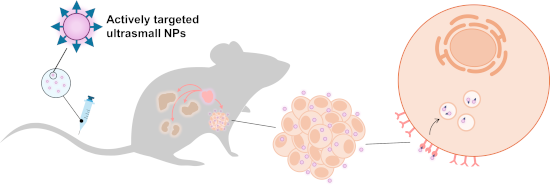
- with AuNC-DOX-cRGD-AS1411. 5.6 Chemokine receptor ligands/chemokine receptors Recently, Zhao et al. reported the development of a chemokine receptor 2 (CCR2)-targeted and renal clearable radiolabeled gold nanocluster, 64Cu-AuNCs-ECL1i, for triple negative breast cancer (TNBC) PET imaging [135] (Figure
- signaling axis plays a crucial role in cancer development by facilitating the proliferation and invasion of tumor cells and recruiting immunosuppressive cells, thus representing a significant opportunity for targeted therapy [160]. Results from a mouse model of TNBC showed improved tumor uptake of 64Cu
- ][168]. The prevalence of silica-based NPs in these trials is justified by their FDA approval as an investigational new drug for oncologic applications since 2011. Table 3 lists the usNPs in clinical development, as found on the website https://ClinicalTrials.gov. Conclusion Ultrasmall NPs represent a


A low-kiloelectronvolt focused ion beam strategy for processing low-thermal-conductance materials with nanoampere currents
Beilstein J. Nanotechnol. 2024, 15, 1197–1207, doi:10.3762/bjnano.15.97

- community. This is partly due to the increased use of FIB-SEMs in biology as well as the development of complex materials, such as polymers, which need to be analyzed. The work presented here looks at the physics behind the ion beam–sample interactions and the effect of the incident ion energy (set by the



Introducing third-generation periodic table descriptors for nano-qRASTR modeling of zebrafish toxicity of metal oxide nanoparticles
Beilstein J. Nanotechnol. 2024, 15, 1142–1152, doi:10.3762/bjnano.15.93
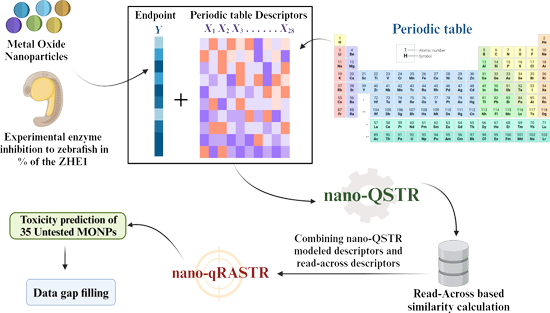
- development of nanotechnology, more and more MONPs including zinc, iron, titanium, and copper are being explored in therapeutic applications such as drug delivery, bioimaging, biosensing, bioelectronics, and tissue engineering applications [4][5][6]. Simultaneously, many of these particles also presented
- newly created MONPs, particularly those used in biomedical applications, necessitates the implementation of safety-by-design strategies for these materials. The potential to lower development timeframes, costs associated with experiments, and late-stage attrition, in addition to ethical, societal, and
- found in Supporting Information File 1. nano-QSTR model development The best subset selection (BSS) approach was used to identify the optimal combination of descriptors. The BSS tool can be accessed at https://teqip.jdvu.ac.in/QSAR_Tools/. It systematically evaluates all possible subsets of descriptors


Photocatalytic methane oxidation over a TiO2/SiNWs p–n junction catalyst at room temperature
Beilstein J. Nanotechnol. 2024, 15, 1132–1141, doi:10.3762/bjnano.15.92
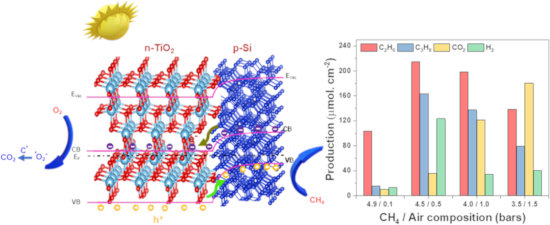
- configuration advantages [34][35][36]. However, the wetness impregnation synthesis of those powder co-catalysts faces the issues of low surface area, low reproducibility, and difficult control of large-scale production. Therefore, the development of novel catalysts with unique morphologies by using precise


Direct electron beam writing of silver using a β-diketonate precursor: first insights
Beilstein J. Nanotechnol. 2024, 15, 1117–1124, doi:10.3762/bjnano.15.90

- without the need for a resist or development step. Here, we employ for the first time a silver β-diketonate precursor for focused electron beam-induced deposition (FEBID). The used compound (hfac)AgPMe3 operates at an evaporation temperature of 70–80 °C and is compatible with commercially available gas


Recent updates in applications of nanomedicine for the treatment of hepatic fibrosis
Beilstein J. Nanotechnol. 2024, 15, 1105–1116, doi:10.3762/bjnano.15.89
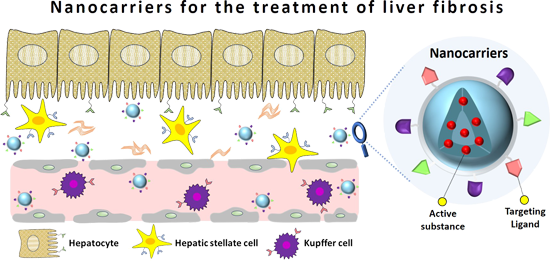
- ]. The EPR effect has been a cornerstone for cancer nanomedicine development, and various types of nanocarrier drug delivery systems have been developed to take advantage of this passively targeted strategy. Moreover, active targeting strategies have been developed to further improve the drug
- their derivatives, and inorganic NPs. We also discuss the underlying mechanisms of some nanocarriers to yield selective liver accumulation and enhance therapeutic action. In the final section, we mention the future perspective of the development of nanomedicine-based drug delivery for liver fibrosis
- metabolic-associated fatty liver disease [13]. Currently, numerous therapeutic strategies are under development. The antifibrotic strategies either target HSCs or use non-HSC antifibrotic targets. The non-HSC-mediated therapies focus on anti-inflammatory approaches, including the removal of the cause of


Unveiling the potential of alginate-based nanomaterials in sensing technology and smart delivery applications
Beilstein J. Nanotechnol. 2024, 15, 1077–1104, doi:10.3762/bjnano.15.88
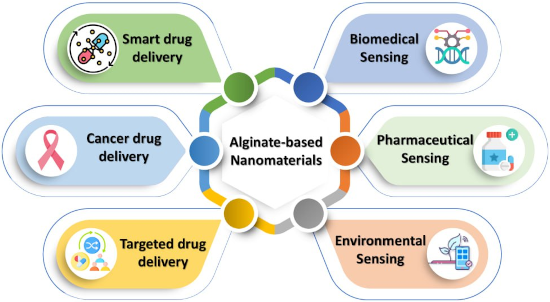
- disease diagnosis, quick detection of diverse drugs and chemicals, and long-term monitoring [9]. In the recent decade, sensor technology has seen breakthroughs thanks to the usage of nanomaterials with superior physicochemical properties [10][11][12][13]. Nowadays, the development of sensors based on
- several hours for results. The development of compact and portable miniaturized sensors has enabled the detection of different biomarkers for continuous, real-time human health monitoring [1][2]. Temperature, heart rate, electrical conductivity, dehydration, and glucose are some of the indicators that
- aldehydes is widely awaited. Coating fluorescent alginate-modified surfactants (APGF and APOF) on ZIF-8 metal-organic frameworks (MOFs) resulted in the development of novel APGF@ZIF-8 and APOF@ZIF-8 sensing materials, which are porous fluorescent sensors (SBET up to 1519 m2/g). The developed sensors


Effect of wavelength and liquid on formation of Ag, Au, Ag/Au nanoparticles via picosecond laser ablation and SERS-based detection of DMMP
Beilstein J. Nanotechnol. 2024, 15, 1054–1069, doi:10.3762/bjnano.15.86

- irradiation laser wavelengths than those obtained at higher laser wavelengths. The subsequent development of flexible SERS substrates, utilizing the diverse NPs produced, showcased the superior performance of substrates containing NPs generated at the 1064 nm wavelength, characterized by enhanced yield and


Interface properties of nanostructured carbon-coated biological implants: an overview
Beilstein J. Nanotechnol. 2024, 15, 1041–1053, doi:10.3762/bjnano.15.85
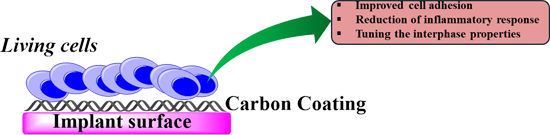
- principles laying behind the structure of materials were discovered. The discovery of the atom-based nature of matter has revolutionized the approach to natural science, leading to the development of nanoscience. Noble laureate Richard Feynman first proposed the concept of nanomaterials in his well-known
- materials coatings for mitigation of biofilm formation Biofilm formation represents a major concern because of the severe actions needed to restore or remove the damaged implant [107]. Prevention of biofilm proliferation can be achieved through the development of coatings changing the hydrophobicity of the
- material coatings for the prevention of corrosion Corrosion of metallic implants is still a major concern regarding loss of integrity, thrombosis, and inflammatory processes [150]. To date, the development of highly corrosion-resistant alloys has not been satisfactorily achieved, although coating is a



Entry of nanoparticles into cells and tissues: status and challenges
Beilstein J. Nanotechnol. 2024, 15, 1017–1029, doi:10.3762/bjnano.15.83
- Food and Drug Administration (FDA) in 1995 [2]; this product has a similar therapeutic effect and less side effects than those obtained with the free drug. Later on, also other NPs have been approved for clinical use [1], but there is still a large need for new products. In addition to the development
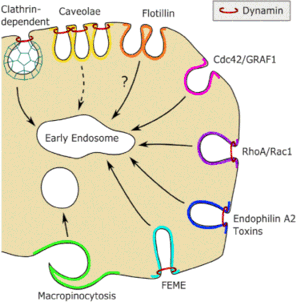
- Nanoparticle Uptake The complexity of endocytosis The field of endocytosis has undergone a remarkable development during the last decades. Today it is clear that there is a variety of uptake mechanisms in cells, and adding to the complexity, they are partially cell-type specific [7][8][9][10]. In Figure 1, we
- , exposure to various types of NPs (Au, Ag, SiO2, and Fe3O4) was found to change the content of EV-containing miRNAs [72]. It is important to understand the mechanisms involved to analyze exosome markers with and without incubation with NPs. Nanoparticles under development for drug delivery are made from


Recent progress on field-effect transistor-based biosensors: device perspective
Beilstein J. Nanotechnol. 2024, 15, 977–994, doi:10.3762/bjnano.15.80
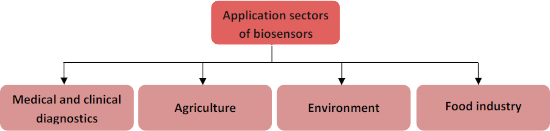
- widespread frequency of the disease, high mortality rate, and recurrence after treatment. In addition, biosensors are applied to monitor blood glucose levels in diabetics, identify infections, and track cancer growth [14]. The development of biosensor technologies for cancer screening is crucial and
- biosensors for accurate detection of viruses [25], cancer [15], proteins [36], DNA, glucose [17], and nucleic acids has been strongly developed [37]. On the other hand, specific biomolecule classifications by microbiologists has led to the realization and development of different biosensors, significantly
- ). 1.1 Motivation of this review The development of advanced bioelectronic technologies involves exploration of novel material systems as well as emerging device architectures. However, an accurate assessment of different device architectures and their design criteria requires a systematic modeling of




Beyond biomimicry – next generation applications of bioinspired adhesives from microfluidics to composites
Beilstein J. Nanotechnol. 2024, 15, 965–976, doi:10.3762/bjnano.15.79
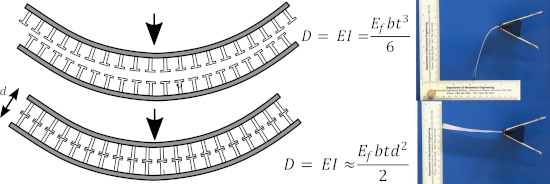
- terms of new applications for biomimetic adhesives for truly substantial industrial impacts to be made. These new application areas are my primary research focus today; it makes the efforts of all those who have participated in the academic and industrial development of the field more valuable. How can
- have been applied to previously, and a very promising application is the development of shape- and stiffness-tunable composites. Anyone familiar with the movies “The Terminator” or “Big Hero 6” has seen a sci-fi version of robots that can change their shape, size, or function. Science fiction offers
- adaptability, sustainability, and product performance. The future of reversible adhesives will come from looking within, and going beyond, biomimicry. Chronological development of different gecko adhesive manufacturing processes that were developed by the author and then adapted by future students. Process (A


Therapeutic effect of F127-folate@PLGA/CHL/IR780 nanoparticles on folate receptor-expressing cancer cells
Beilstein J. Nanotechnol. 2024, 15, 954–964, doi:10.3762/bjnano.15.78
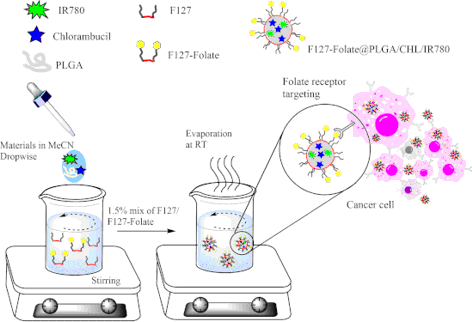
- Minh City, 700000, Vietnam Institute of Chemical Technology – VAST, Ho Chi Minh City, 700000, Vietnam Institute of Applied Technology and Sustainable Development, Nguyen Tat Thanh University, Ho Chi Minh City 700000, Vietnam 10.3762/bjnano.15.78 Abstract Theragnostic platforms, which integrate
- therapeutic and diagnostic capabilities, have gained significant interest in drug research because of to their potential advantages. This study reports the development of a novel multifunctional nanoparticle carrier system based on poly(ᴅ,ʟ-lactic-co-glycolic acid) (PLGA) for the targeted delivery of the
- folate on the surface of nanoparticles promotes the internalization of nanoparticles by cancer cells. Within the cell, the CHL released from the nanoparticles would bind to DNA and halt the development of cancer cells. Without CHL, the nanoparticles had no cytotoxic impact on the cells (data not shown



Electrospun nanofibers: building blocks for the repair of bone tissue
Beilstein J. Nanotechnol. 2024, 15, 941–953, doi:10.3762/bjnano.15.77
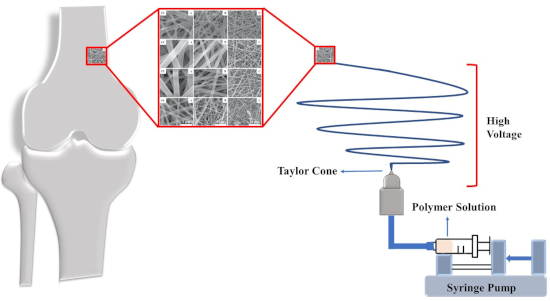
- and lamellar bone. Woven bone is a transitional bone type observed in embryonic skeletons or growing bones, as well as during pathological conditions such as fracture repair or tumor. It gradually transforms into lamellar bone during the remodeling process in normal development or healing. In this
- both trigger the bone healing process and provide mechanical support to damaged bone. Currently, research on bone healing has focused on the development of biomaterials that can be used as economic, biocompatible, and controllable bone substitutes. Studies have centered on biomaterials that can imitate
- hard bone-like tissues. Calcified bone tissue shows different mechanical properties depending on the collagen sequence in the natural structure. The polymers used in the development of polymeric nanofibers should have mechanical and biological properties suitable for calcified hard tissue structures


Identification of structural features of surface modifiers in engineered nanostructured metal oxides regarding cell uptake through ML-based classification
Beilstein J. Nanotechnol. 2024, 15, 909–924, doi:10.3762/bjnano.15.75
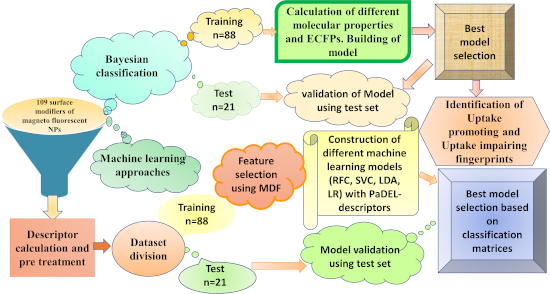
- using the fivefold cross-validation procedure. Additionally, the model’s quality was evaluated by looking at the receiver operating characteristic (ROC) plot as well as specificity, sensitivity, and accuracy values [40][41][42]. Development of other machine learning models Calculation of descriptors and
- data pre-treatment The training set of 88 and the test set of 21 surface modifiers from Bayesian classification analysis were used for the development of other machine learning models. Different classes of 2D descriptors were calculated using PaDEL-Descriptor [43]. The data pre-treatment tool (Data Pre
- had an absolute difference greater than or equal to 0.39 and 0.19, respectively. The specific values were determined through empirical analysis, ensuring that the selected descriptors provide the best predictive performance for each cell line. ML model development and analysis Four classification


A review on the structural characterization of nanomaterials for nano-QSAR models
Beilstein J. Nanotechnol. 2024, 15, 854–866, doi:10.3762/bjnano.15.71
- approaches. Furthermore, when they are developed complying strictly with the rules established by the Organization for Economic Co-operation and Development (OECD) for their scientific validation, QSARs are accepted for regulatory purposes, thus ensuring their applicability at the regulatory level by
- active field and, recently, a comprehensive review about this topic and the future perspectives was published [7]. Scientific, industrial, and national institutions should harmonize their efforts for the development and application of nano-QSARs at the regulatory level [9]. From a regulatory point of
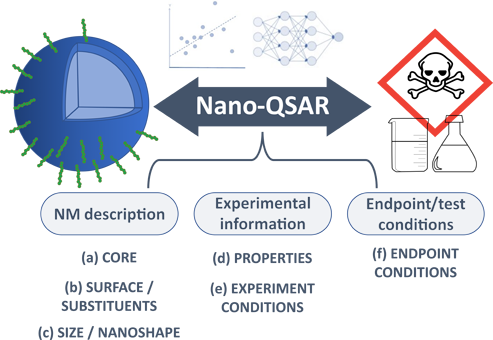
- preparation and handling) will lead to different structural configurations and to different properties. Thus, the reported experimental conditions are significant, and they often need to be included in a predictive model. Finally, the quality of data is a key component in the development of QSAR models


When nanomedicines meet tropical diseases
Beilstein J. Nanotechnol. 2024, 15, 830–832, doi:10.3762/bjnano.15.69

- Eder Lilia Romero Katrien Van Bocxlaer Fabio Rocha Formiga Nanomedicine Research and Development Centre (NARD), Science and Technology Department, National University of Quilmes, Roque Saenz Peña 352, B1876 Bernal, Provincia de Buenos Aires, Argentina Skin Research Centre, Hull York Medical School
- those diseases. However, apart from the symbolism behind the World Neglected Tropical Diseases Day, research initiatives fighting NTDs have been conducted over the last years, paving the way for the development of new programs for prevention, diagnosis, and treatment of NTDs. A number of institutions
- important contribution to this thematic issue focused on development of nanoemulsions containing plant-based insecticides for vector control. In this work, Duarte and colleagues developed and characterized nanoemulsions encapsulating monoterpenes, which exhibited significant lethality against third-instar



