


Search results
Search for "dynamic light scattering" in Full Text gives 231 result(s) in Beilstein Journal of Nanotechnology. Showing first 200.
Surface coating affects behavior of metallic nanoparticles in a biological environment
Beilstein J. Nanotechnol. 2016, 7, 246–262, doi:10.3762/bjnano.7.23
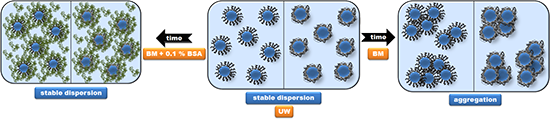
- ability [3][45]. In addressing the effects of surface coating on the stability and behavior of NPs in selected model biological environments, three types of widely used measurement techniques were employed: dynamic light scattering (DLS), electrophoretic light scattering (ELS) and transmission electron

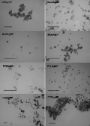



pH-Triggered release from surface-modified poly(lactic-co-glycolic acid) nanoparticles
Beilstein J. Nanotechnol. 2015, 6, 2504–2512, doi:10.3762/bjnano.6.260
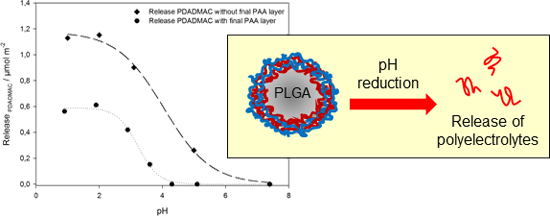
- calculated with respect to the monomeric unit of the corresponding compound. If needed, pH was adjusted by addition of 1 molar hydrochloric acid (HCl) and 1 molar sodium hydroxide solution (NaOH). Dynamic light scattering (DLS): Average particle size, polydispersity, and zeta potential were determined using


Fabrication of hybrid graphene oxide/polyelectrolyte capsules by means of layer-by-layer assembly on erythrocyte cell templates
Beilstein J. Nanotechnol. 2015, 6, 2310–2318, doi:10.3762/bjnano.6.237
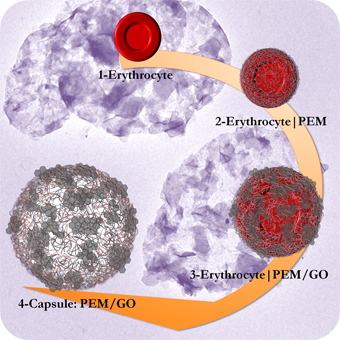
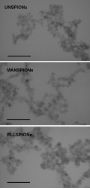
- polyallylamine hydrochloride (PAH) and polystyrenesulfonate sodium salt (PSS). Capsules where characterized by transmission electron microscopy (TEM), atomic force microscopy (AFM), dynamic light scattering (DLS) and Raman microscopy, the constituent layers by zeta potential and GO by TEM, XRD, and Raman and


Silica-coated upconversion lanthanide nanoparticles: The effect of crystal design on morphology, structure and optical properties
Beilstein J. Nanotechnol. 2015, 6, 2290–2299, doi:10.3762/bjnano.6.235
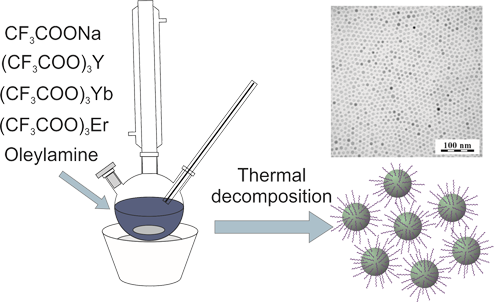
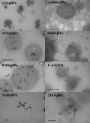
- and time on the properties of the particles was investigated. The nanoparticles were characterized by transmission electron microscopy (TEM), electron diffraction (ED), energy dispersive spectroscopy (EDX), dynamic light scattering (DLS), thermogravimetric analysis (TGA), elemental analysis and X-ray
- particle size (Dh) was measured using dynamic light scattering (DLS) on a ZEN 3600 Zetasizer Nano Instrument (Malvern Instruments; Malvern, UK) at pH 1. Thermogravimetric analysis (TGA) was performed in air using a Perkin Elmer TGA 7 analyzer (Norwalk, CT, USA) from 30 to 850 °C at a heating rate of 10






An ISA-TAB-Nano based data collection framework to support data-driven modelling of nanotoxicology
Beilstein J. Nanotechnol. 2015, 6, 1978–1999, doi:10.3762/bjnano.6.202
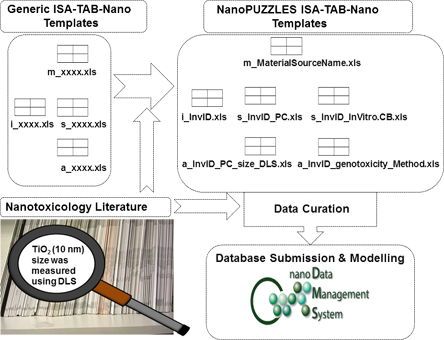
- identifier (“Material Source Name”) is reported in an appropriate “Factor Value [factor name]” column (e.g., “Factor Value [nanomaterial]). If the assay measures nanomaterial physicochemical parameters (e.g., size by dynamic light scattering, zeta potential), the originally sourced nanomaterial sample is
- [17][39].) The corresponding data points are presented in “Measurement Value [statistic(measurement name)]” columns, e.g., “Measurement Value [z-average(hydrodynamic diameter)]” for an Assay file describing dynamic light scattering (DLS) size measurements [41][42]. External files “External” files [17
- […]”) would need to be created to record the (meta)data of interest. Indeed, the Investigation file is designed to associate a given “Study Assay Measurement Type” (e.g., size) and “Study Assay Technology Type” (e.g., dynamic light scattering) with a given “Study Assay File Name”. Hence, specific templates



Temperature-dependent breakdown of hydrogen peroxide-treated ZnO and TiO2 nanoparticle agglomerates
Beilstein J. Nanotechnol. 2015, 6, 1897–1903, doi:10.3762/bjnano.6.193
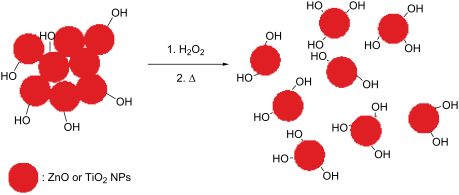
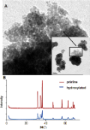
- influence of heating on the dispersion of H2O2-treated ZnO and TiO2 NPs is investigated using dynamic light scattering. The untreated and H2O2-treated ZnO and TiO2 NP suspensions were heated from 30 °C to 90 °C at 5 °C intervals to monitor the breakdown of large aggregates into smaller aggregates and




NanoE-Tox: New and in-depth database concerning ecotoxicity of nanomaterials
Beilstein J. Nanotechnol. 2015, 6, 1788–1804, doi:10.3762/bjnano.6.183
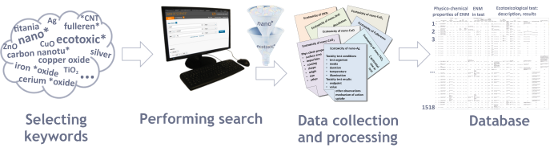
- size (59% of all the entries) that usually (in 82% of the entries) was measured using dynamic light scattering (DLS) method. The data on hydrodynamic sizes indicated that ENMs tend to agglomerate in test conditions as 69% of the reported sizes were larger than 100 nm (in comparison, nearly all


A facile method for the preparation of bifunctional Mn:ZnS/ZnS/Fe3O4 magnetic and fluorescent nanocrystals
Beilstein J. Nanotechnol. 2015, 6, 1743–1751, doi:10.3762/bjnano.6.178
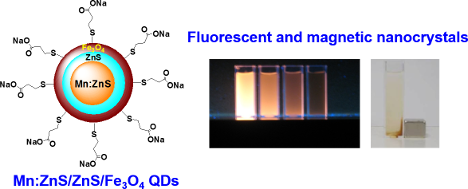
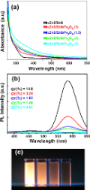
- heterostructures were characterized by X-ray diffraction (XRD), dynamic light scattering (DLS), transmission electron microscopy (TEM), UV–vis spectroscopy and photoluminescence (PL) spectroscopy. The PL spectra of Mn:ZnS/ZnS/Fe3O4 quantum dots (QDs) showed marked visible emission around 584 nm related to the 4T1
- is approximately 0.6 nm for Mn:ZnS/ZnS/Fe3O4 (1.5) QDs. The nanoparticles were characterized by their hydrodynamic diameter before and after the Fe3O4 coating using dynamic light scattering (DLS) (Table 1). The average hydrodynamic diameters, dH, are larger than the particles sizes determined using




Synthesis, characterization and in vitro biocompatibility study of Au/TMC/Fe3O4 nanocomposites as a promising, nontoxic system for biomedical applications
Beilstein J. Nanotechnol. 2015, 6, 1677–1689, doi:10.3762/bjnano.6.170
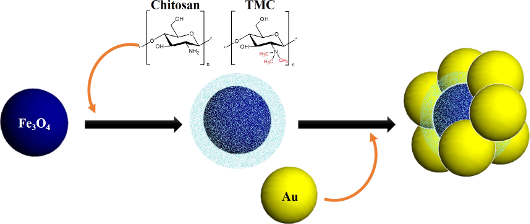
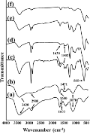
- (VSM), energy dispersive X-ray diffraction (EDXD), dynamic light scattering (DLS), and thermogravimetric analysis (TGA). Results and Discussion In this study we successfully designed, synthesized, and compared two hybrid magnetic–gold nanocomposites by applying chitosan and one of its well-known




The eNanoMapper database for nanomaterial safety information
Beilstein J. Nanotechnol. 2015, 6, 1609–1634, doi:10.3762/bjnano.6.165
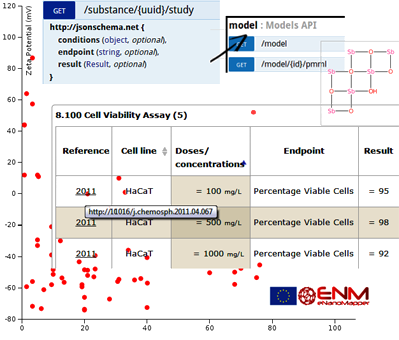
- , modes of action), interactions (cell lines, assays) and a wide variety of measurements. A number of analytic techniques have been proposed and developed to characterise the physicochemical properties of nanomaterials, including the commonly used dynamic light scattering to measure the particle size


PLGA nanoparticles as a platform for vitamin D-based cancer therapy
Beilstein J. Nanotechnol. 2015, 6, 1306–1318, doi:10.3762/bjnano.6.135
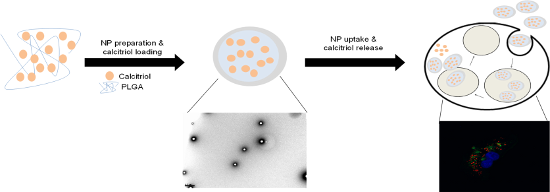
- parameters used to characterize the produced nanoparticles. The size distribution and zeta potential were determined by dynamic light scattering (DLS) and electrophoretic light scattering (ELS), respectively, using a ZetaSizer Nano ZS (Malvern Instruments, Worcestershire, UK). The size distribution was given


Synthesis, characterization and in vitro effects of 7 nm alloyed silver–gold nanoparticles
Beilstein J. Nanotechnol. 2015, 6, 1212–1220, doi:10.3762/bjnano.6.124
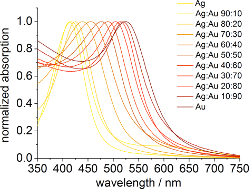
- important factor for subsequent in vitro experiments) was carried out by multiple ultracentrifugation steps. Characterization by transmission electron microscopy (TEM), differential centrifugal sedimentation (DCS), dynamic light scattering (DLS), UV–vis spectroscopy and atomic absorption spectroscopy (AAS
- size and morphology of the nanoparticles were determined by transmission electron microscopy (TEM), differential centrifugal sedimentation (DCS) and dynamic light scattering (DLS). TEM showed that the nanoparticles were nearly monodisperse, quasi-spherical, polycrystalline, and had a uniform diameter
- exchange with PVP. Dynamic light scattering also showed a monomodal particle size distribution without agglomerates. The polydispersity index between 0.1 and 0.3 confirmed a good degree of monodispersity. Note that the hydrodynamic radius, dH, as probed by DLS, is slightly larger (10–12 nm) than the radius


Microwave assisted synthesis and characterisation of a zinc oxide/tobacco mosaic virus hybrid material. An active hybrid semiconductor in a field-effect transistor device
Beilstein J. Nanotechnol. 2015, 6, 785–791, doi:10.3762/bjnano.6.81
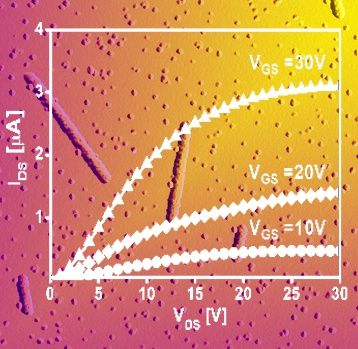
- using Tecnai F20 G20 (FEI) electron microscope working at 200 kV, using lacey carbon coated copper grids. Dynamic light scattering (DLS) measurements for the ZnO suspensions were carried out using a Zetasizer Nano (Malvern). Atomic force microscopy was performed with CP-II (Bruker-Veeco) microscope
- display the optimum conditions leading to the formation of nanocrystalline ZnO. Dynamic light scattering measurements indicate the formation of stable ≈5 nm particles, after a synthesis period of 30 min (see Supporting Information File 1, Figure S1). The indicated particle size is in good agreement with
- light scattering (DLS), transmission electron microscopy (TEM), grazing incidence X-ray diffractometry (GI-XRD) and atomic force microscopy (AFM). TEM and DLS data confirm the formation of crystalline ZnO nanoparticles tethered on top of the virus template. GI-XRD investigations exhibit an orientated


Pulmonary surfactant augments cytotoxicity of silica nanoparticles: Studies on an in vitro air–blood barrier model
Beilstein J. Nanotechnol. 2015, 6, 517–528, doi:10.3762/bjnano.6.54
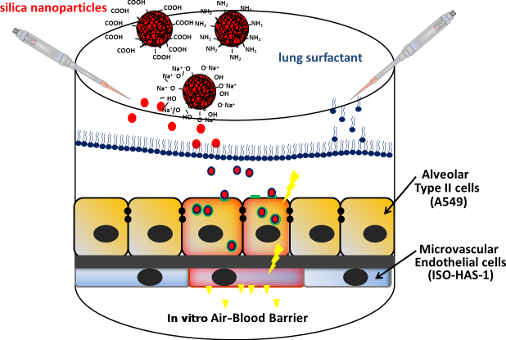
- nanoparticles. Particle size was determined using the method of dynamic light scattering (DLS). Thus, the reported sizes are z-weighted mean values of the hydrodynamic diameter. Particle diameters were measured in cell culture medium (RPMI 1640) and, for reference, in water (containing 2 mmol/L sodium bromide
- highly complex and requires the use of multi-angle dynamic light scattering instrumentation and sophisticated data analysis methods [14]. Therefore, it will not be discussed within the scope of this publication. Alveolar surfactant: Alveofact® is a commercially available (Lyomark Pharma) neonatal


Tailoring the ligand shell for the control of cellular uptake and optical properties of nanocrystals
Beilstein J. Nanotechnol. 2015, 6, 232–242, doi:10.3762/bjnano.6.22
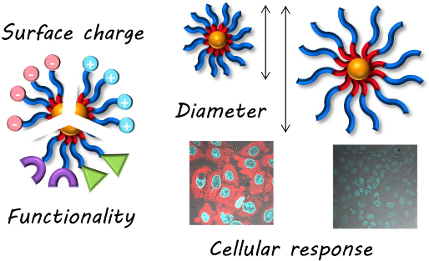
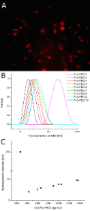
- -b-PEGs in water was investigated and showed the expected behavior depending on the size and block length ratio of the polymer [19]. The analytical data of the used characterization methods like dynamic light scattering (DLS) and fluorescence microscopy are summarized in Figure 1. As can be seen from






Caveolin-1 and CDC42 mediated endocytosis of silica-coated iron oxide nanoparticles in HeLa cells
Beilstein J. Nanotechnol. 2015, 6, 167–176, doi:10.3762/bjnano.6.16
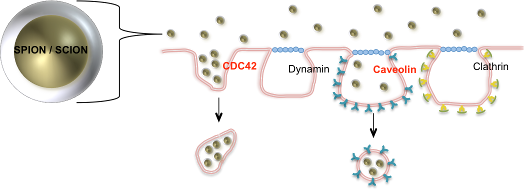
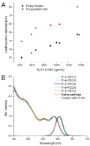
- hydrodynamic diameter in physiological environment were measured by dynamic light scattering (Zetasizer, Malvern Instruments Ltd). Due to the synthesis route, often more than one iron core was enclosed during growth of the silica shells. This caused aggregation and therefore the nanoparticle suspensions were
- = dynamic light scattering). Sequences of siRNAs used for transfection with Lipofectamine™ 2000 transfection reagent. siRNA-pools used to transfect HeLa cells (Dharmacon SMARTpool®). Primary antibodies with source and dilution used for detection of target proteins. Acknowledgements The authors would like


The fate of a designed protein corona on nanoparticles in vitro and in vivo
Beilstein J. Nanotechnol. 2015, 6, 36–46, doi:10.3762/bjnano.6.5
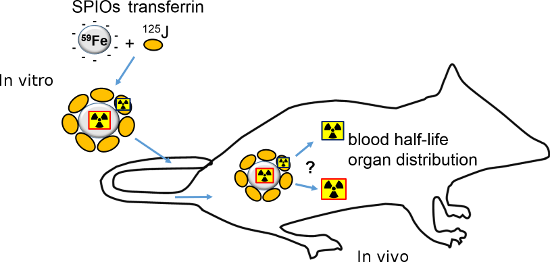
- measured using the large volume Hamburg whole body radioactivity counter [39]. 125I was measured with an automatic gamma counter (Perkin Elmer 2470 Wizard). DLS measurement Dynamic light scattering of SPIOs or proteins solutions in PBS-buffer was performed using a Malvern Zen1690. In vivo studies All


Intake of silica nanoparticles by giant lipid vesicles: influence of particle size and thermodynamic membrane state
Beilstein J. Nanotechnol. 2014, 5, 2468–2478, doi:10.3762/bjnano.5.256

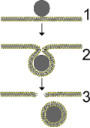
- . This is to prevent osmotic tension of the vesicle membrane at the beginning of an experiment. The colloidal stability of the particles under these conditions was confirmed by dynamic light scattering (DLS). Figure 9 describes the easy experimental procedure. Due to the slight density difference between


Proinflammatory and cytotoxic response to nanoparticles in precision-cut lung slices
Beilstein J. Nanotechnol. 2014, 5, 2440–2449, doi:10.3762/bjnano.5.253
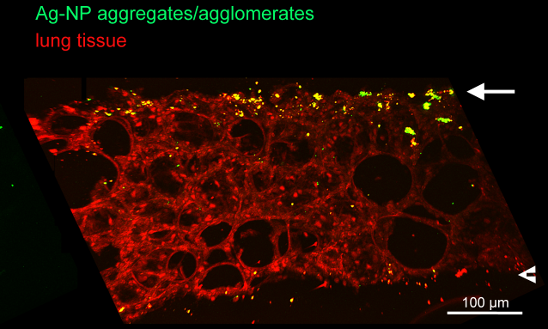
- vitro as well as in vivo assays. Results Particle characterization The mean hydrodynamic diameter of the Ag-NPs as determined by dynamic light scattering (DLS) was 116 nm and the polydispersity index (PDI) was below 0.3 for all measurements. The mean diameter of the metallic core as determined by


Nanoparticle interactions with live cells: Quantitative fluorescence microscopy of nanoparticle size effects
Beilstein J. Nanotechnol. 2014, 5, 2388–2397, doi:10.3762/bjnano.5.248
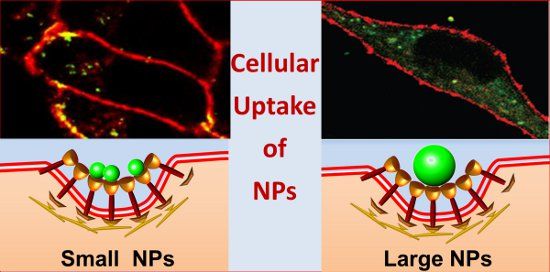
- adsorbed amphiphiles, the anionic surfactant SDS or cetyltrimethylammonium (CTMA) chloride to yield negatively (PS−) and positively (PS+) charged NPs, respectively. The hydrodynamic diameters of these NPs suspended in PBS, pH 7.4, were determined by dynamic light scattering (DLS) (Table 1). Furthermore


Inorganic Janus particles for biomedical applications
Beilstein J. Nanotechnol. 2014, 5, 2346–2362, doi:10.3762/bjnano.5.244
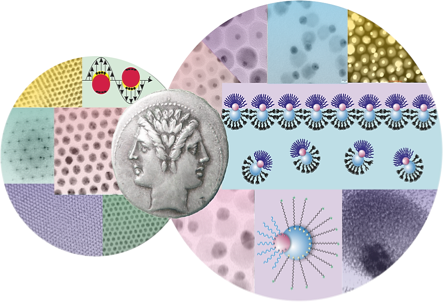
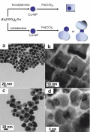
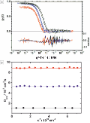
- ]. Copyright 2014 American Chemical Society. TEM micrographs of silica encapsulated Janus particles; (a,b) Au@MnO@SiO2 (10@20 nm), and (c,d) Au@Fe3O4@SiO2 (9@15 nm). Dynamic light scattering results of Au (red dots), Au@Fe3O4 (blue dots) dispersed in n-heptane, and Au@Fe3O4@SiO2 (black dots) in water (λ






Nanobioarchitectures based on chlorophyll photopigment, artificial lipid bilayers and carbon nanotubes
Beilstein J. Nanotechnol. 2014, 5, 2316–2325, doi:10.3762/bjnano.5.240
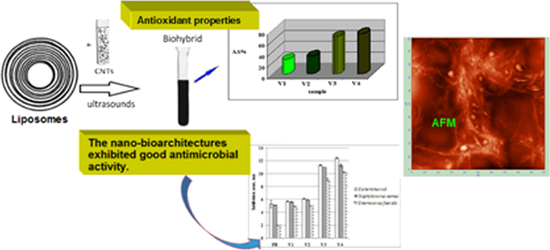
- . Dynamic light scattering (DLS) measurements The size of the liposomes represented by the hydrodynamic diameter, Zaverage (the particle diameter plus the double layer thickness) was measured using DLS (Zetasizer Nano ZS, Malvern Instruments Ltd., U.K.) at 25 °C at a scattering angle of 90°. The average


Anticancer efficacy of a supramolecular complex of a 2-diethylaminoethyl–dextran–MMA graft copolymer and paclitaxel used as an artificial enzyme
Beilstein J. Nanotechnol. 2014, 5, 2293–2307, doi:10.3762/bjnano.5.238
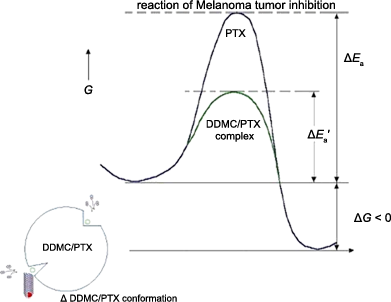
- measured by dynamic light scattering and particle electrophoretic mobility. Furthermore, scanning electron microscopy (SEM) was used to determine the size and shape of the freeze-dried DDMC/PTX complex (DDMC/PTX5), which revealed that the complex formed uniform cubic particles with a diameter of 200–300 nm
- measured by dynamic light scattering. Particle size determined by SEM was 300–500 nm. The ζ-potential of the particles was +36 mV, which helps to stabilize the dispersion of the DDMC/PTX complex. To investigate the physical properties of these products, thermal and infrared analyses were also performed
- complex. From the above, Figure 3b shows the presence of a large hydrophobic bond in the DDMC/PTX complex. Particle size distribution and ζ-potential The particle size distribution and the ζ-potential of the DDMC/PTX complex were measured by dynamic light scattering and particle electrophoretic mobility


Nanoencapsulation of ultra-small superparamagnetic particles of iron oxide into human serum albumin nanoparticles
Beilstein J. Nanotechnol. 2014, 5, 2259–2266, doi:10.3762/bjnano.5.235
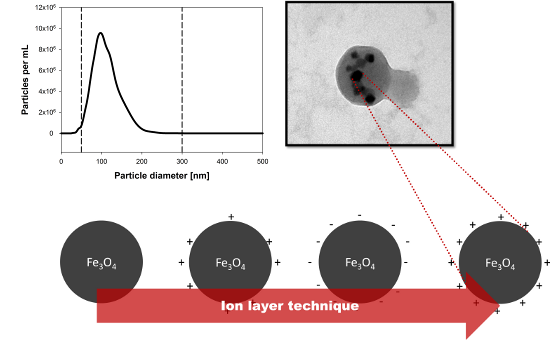
- (TMAH). The positive surface charge of the particles enabled a strong interaction with the negatively charged protein matrix [13] provided by the HSA molecules. Formulation design and characterization of USPIO HSA hybrid particles by dynamic light scattering Nanoparticles were prepared by ethanolic
- desolvation in absence and in presence of USPIO. The particle size and zeta potential observed by dynamic light scattering (DLS) measurements significantly increased with the amount of iron oxide particles present during the desolvation process (ANOVA). Particles with the highest content of iron oxide were
- , polydispersity, and zeta potential were determined by dynamic light scattering using a Malvern Zetasizer Nano (Malvern Instruments, Malvern, UK). For determination of the zeta potential a Malvern Dip Cell was used. All samples were diluted 1:50 with purified water before the measurement. The nanoparticle content


Influence of stabilising agents and pH on the size of SnO2 nanoparticles
Beilstein J. Nanotechnol. 2014, 5, 2192–2201, doi:10.3762/bjnano.5.228
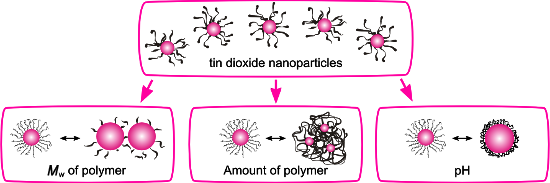
- . Dynamic light scattering (DLS): The diameter distribution of the resulting nanoparticles was determined by DLS. The studies were performed using a Nicomp 380ZLS Particle Sizing System with an excitation wavelength of 532 nm at 50 mW. The frequency of the photon counting was fixed at about 200 kHz, and
- consists of: 8.24 mL of water, 3 mL of PEI Mw = 750 000 with a concentration of 1.0 mol/L, 6.56 mL of Triton X-100 with a concentration of 0.08 mol/L, 0.1 mL of SnCl4 with a concentration of 0.375 mol/L, and 0.21 mL of ammonium hydroxide with a concentration of 0.0714 mol/L. Analysis of the dynamic light
- scattering (DLS) results revealed that in the solution of standard composition, nanoparticles of average diameter of approximately 8 nm are formed (Figure 2). For statistical analysis, a proprietary, high resolution, multimodal deconvolution analysis for proper measurement of the nanoparticle diameter was





