Search results
Search for "modeling" in Full Text gives 337 result(s) in Beilstein Journal of Nanotechnology. Showing first 200.
The electrical conductivity of CNT/graphene composites: a new method for accelerating transmission function calculations
Beilstein J. Nanotechnol. 2018, 9, 1254–1262, doi:10.3762/bjnano.9.117
- investigated single-layer composite films and the results of modelling. Data of investigated two-layer composite films and the results of modeling. Acknowledgements The research described in this paper was supported by the grant of the Russian Science Foundation #15-29-01025 and by the Russian Presidential


Atomistic modeling of tribological properties of Pd and Al nanoparticles on a graphene surface
Beilstein J. Nanotechnol. 2018, 9, 1239–1246, doi:10.3762/bjnano.9.115
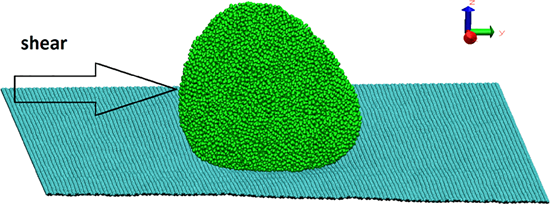
- the friction dynamics of metallic nanoparticles [14] makes it virtually impossible to construct a general and reliable analytical theory of the phenomena under consideration. Therefore, computer modeling, in particular molecular dynamics (MD), is a useful tool for the theoretical study of friction and
- , morphology and orientation [10][11][13][14][17]. For atomistic modeling the material-dependent potential energy is needed. Here we use empirical potentials where the potential energy can be represented as a function of the atomic positions. For aluminum and palladium an empirical many-body potential is


A novel copper precursor for electron beam induced deposition
Beilstein J. Nanotechnol. 2018, 9, 1220–1227, doi:10.3762/bjnano.9.113
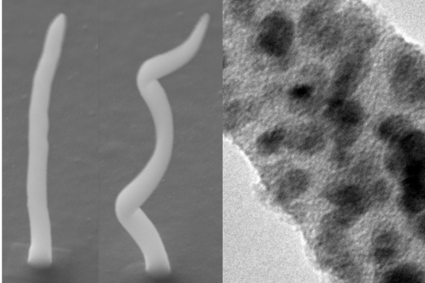
- case the metal particles are treated quasistatically as dipole scatterers. The analytical formula for dipole scatterers in a dielectric matrix is given by the Maxwell–Garnett (MG) approach. A large uncertainty in modeling the dielectric function of the FEBID composite stems from the unknown optical


Circular dichroism of chiral Majorana states
Beilstein J. Nanotechnol. 2018, 9, 1194–1199, doi:10.3762/bjnano.9.110
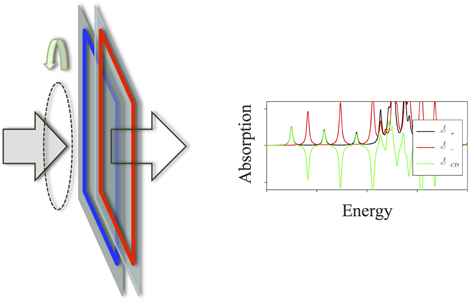
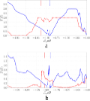
- (λ) is modeling a coupled bilayer system in which quasiparticles move. The set of Hamiltonian parameters is m0, m1, ΔB, μ, α, Δp and Δm. The latter two are given in terms of the pairing interaction in the two layers, Δt and Δb, by Hybridization of the two surfaces is represented by parameters m0 and


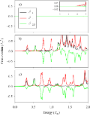
![[Graphic 14]](/bjnano/content/inline/2190-4286-9-110-i18.svg?max-width=637&scale=1.18182) . Panels a) and b) correspond to the phases in Figure 1d with one (ΔB = 2...
. Panels a) and b) correspond to the phases in Figure 1d with one (ΔB = 2...
![[Graphic 15]](/bjnano/content/inline/2190-4286-9-110-i19.svg?max-width=637&scale=1.18182) ,
, ![[Graphic 16]](/bjnano/content/inline/2190-4286-9-110-i20.svg?max-width=637&scale=1.18182) and
and ![[Graphic 17]](/bjnano/content/inline/2190-4286-9-110-i21.svg?max-width=637&scale=1.18182) defined in the main text. The shown results correspond to the spe...
defined in the main text. The shown results correspond to the spe...

![[Graphic 19]](/bjnano/content/inline/2190-4286-9-110-i23.svg?max-width=637&scale=1.18182) ,
, ![[Graphic 20]](/bjnano/content/inline/2190-4286-9-110-i24.svg?max-width=637&scale=1.18182) and
and ![[Graphic 21]](/bjnano/content/inline/2190-4286-9-110-i25.svg?max-width=637&scale=1.18182) for (a) a square of Lx = Ly = 20 LU), and for (b) a rectangle of L...
for (a) a square of Lx = Ly = 20 LU), and for (b) a rectangle of L...
Thermoelectric current in topological insulator nanowires with impurities
Beilstein J. Nanotechnol. 2018, 9, 1156–1161, doi:10.3762/bjnano.9.107
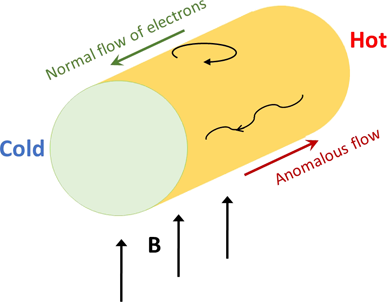
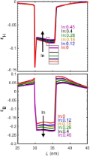
- experimental reach. Modeling of impurities The anomalous current introduced above relies on non-monotonic steps in the transmission function. For ballistic nanowires the steps are sharp, but in the presence of impurities the steps will get distorted. In order to simulate transport in a realistic nanowires, we


P3HT:PCBM blend films phase diagram on the base of variable-temperature spectroscopic ellipsometry
Beilstein J. Nanotechnol. 2018, 9, 1108–1115, doi:10.3762/bjnano.9.102
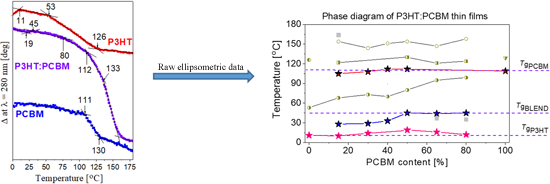
- temperature changes. Characteristic temperatures determined from the slope changes of the Δ(T) plot appeared to be very good guess values for the phase transition temperatures. Keywords: non-linear optics; organic semiconductors; spectroscopic ellipsometry; theoretical modeling; thin films; Introduction The


Theoretical study of strain-dependent optical absorption in a doped self-assembled InAs/InGaAs/GaAs/AlGaAs quantum dot
Beilstein J. Nanotechnol. 2018, 9, 1075–1084, doi:10.3762/bjnano.9.99
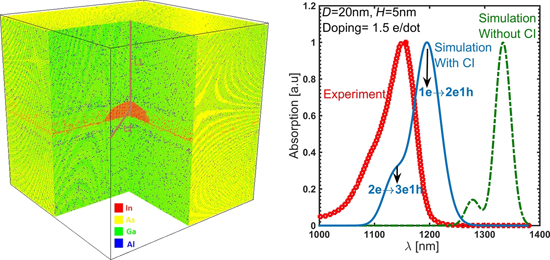
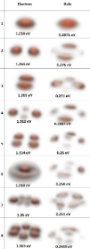
- MOdeling tool in version 5 (“NEMO5”) [16][17][18][19][20][21][22]. Theoretical Model Atomistic strain model The Harmonic Keating strain model, introduced in [6], has the elastic energy given by where rmn is the displacement vector from atom m to atom n for the strained crystal as shown in Figure 3, while




An implementation of spin–orbit coupling for band structure calculations with Gaussian basis sets: Two-dimensional topological crystals of Sb and Bi
Beilstein J. Nanotechnol. 2018, 9, 1015–1023, doi:10.3762/bjnano.9.94
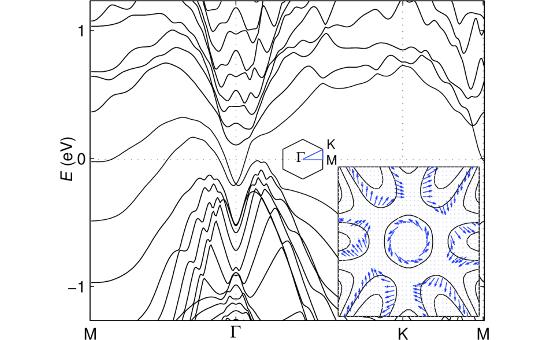
- , however, are usually restricted to the description of valence electrons, implicitly by assuming a minimal basis set of spd orbitals. The SOC is included by adding the matrix elements of the operator where λ is taken as an atomic parameter [8]. Although the simplicity of TB modeling is appealing, this


Dynamics and fragmentation mechanism of (C5H4CH3)Pt(CH3)3 on SiO2 surfaces
Beilstein J. Nanotechnol. 2018, 9, 711–720, doi:10.3762/bjnano.9.66
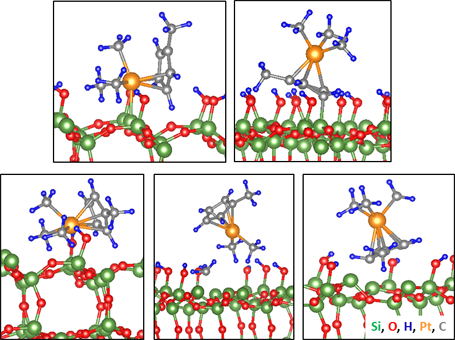
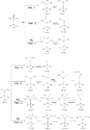
- the equations of motion. For these simulations, we have used a reduced (2 × 2 × 2) SiO2 supercell in order to reduce the computational time. For reaction modeling studies, all species (transition states (TS) and intermediates (INT)) in the proposed reaction paths given below in Scheme 1 were traced at
- , it can be speculated that a design of suitable precursors for electron beam induced deposition might be more efficient than the use of traditional ALD precursors. With our reaction modeling studies, possible pathways by which the precursor molecule can fragment on SiO2 surfaces were also explored



Facile phase transfer of gold nanorods and nanospheres stabilized with block copolymers
Beilstein J. Nanotechnol. 2018, 9, 616–627, doi:10.3762/bjnano.9.58
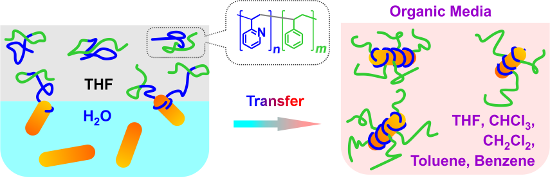
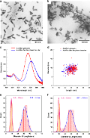
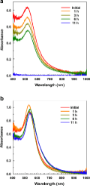
- , while PS blocks form coronas preventing nanorod aggregation. Modeling the extinction spectra of Au nanorods Two bands in the optical absorbance spectra (Figure 1b) of the Au nanorods are attributed to the transverse (TE) and longitudinal (TM) plasmon modes, respectively [40]. The position of the former


Lyapunov estimation for high-speed demodulation in multifrequency atomic force microscopy
Beilstein J. Nanotechnol. 2018, 9, 490–498, doi:10.3762/bjnano.9.47
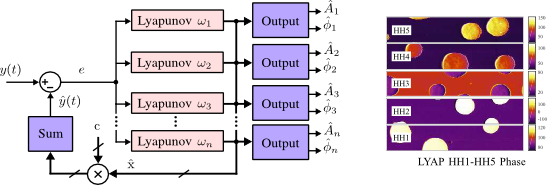
- harmonic imaging with amplitude and phase on both a stiff and compliant sample. Lyapunov Filter System modeling A single-frequency cantilever deflection signal is modeled as a sine wave with carrier frequency fc, time-varying amplitude A(t) and phase (t) of the form For readability, explicit dependencies





Optimal fractal tree-like microchannel networks with slip for laminar-flow-modified Murray’s law
Beilstein J. Nanotechnol. 2018, 9, 482–489, doi:10.3762/bjnano.9.46
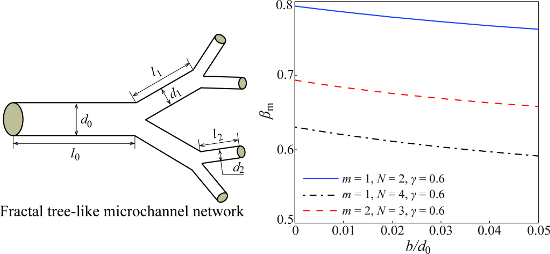
- studied. Modeling Generation of fractal tree-like microchannel networks For different applications of a fractal tree-like branched network, a typical structure similar to that shown in Figure 2 has been widely used [6][7][8][9][10][11][12][13][14][15][16][17][18]. In the present work, a similar structure
- -like branched network generated in this manner is a symmetric and self-similar network. Theoretical model In this section, the pressure-driven flow in the fractal tree-like microchannel network generated in the last section will be modeled. Before the modeling, the following assumptions are made. (1


Growth model and structure evolution of Ag layers deposited on Ge films
Beilstein J. Nanotechnol. 2018, 9, 66–76, doi:10.3762/bjnano.9.9
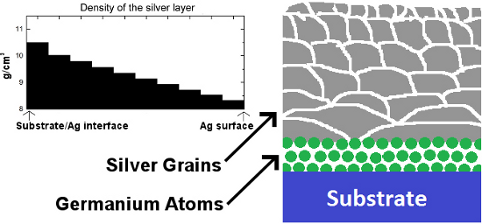
- the grain boundary voids, thus increasing the effective density (Figure 2, right). It is also worth noting, that in the case of modeling results of XRR measurements performed 3 days after the deposition (Figure 3a,c,e,g), it was necessary to consider a separate Ge interlayer between SiO2 substrate and
- very large grains (see Figure 2c), which taken into account the increase of the surface roughness of that sample to over 4 nm, which is similar to the value extracted from the XRR model. More information about XRR modeling can be found in [32] and references therein. The wide-angle X-ray diffraction






Study of the vertically aligned in-plane switching liquid crystal mode in microscale periodic electric fields
Beilstein J. Nanotechnol. 2018, 9, 11–19, doi:10.3762/bjnano.9.2
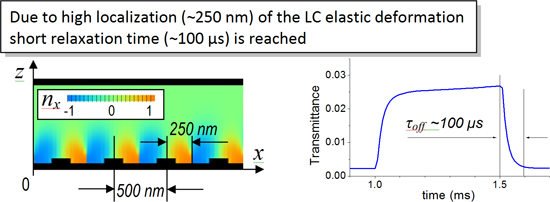
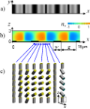
- studied various geometries using our modeling software and report the results for E7 LC material in the next section. In the polarized-light microscopy photos of VA-IPS cells in Figure 5 thin black stripes in the middle between the electrodes are clearly seen [9]. In Figure 5a the black stripes are quite
- faint compared to the black chromium electrodes, while in Figure 5b with a larger gap between the electrodes they are around 1 μm in width. Numerical modeling of the VA-IPS mode The simulations are done using LCD TDK software developed by one of the authors (S. P. Palto). The software is based on
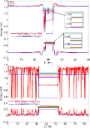
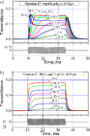
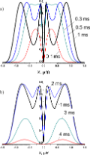
- used for modeling. Experimental LC cell geometry. Experimentally measured electrooptical response for (a) E7 and (b) ZLI 1957/5 LC cells with chromium electrodes: w/g = 0.5 (p = 6 μm), d ≈ 3.5 μm; the driving voltage waveform is shown in the bottom graphs. The response curves show the transmittance






Material discrimination and mixture ratio estimation in nanocomposites via harmonic atomic force microscopy
Beilstein J. Nanotechnol. 2017, 8, 2771–2780, doi:10.3762/bjnano.8.276
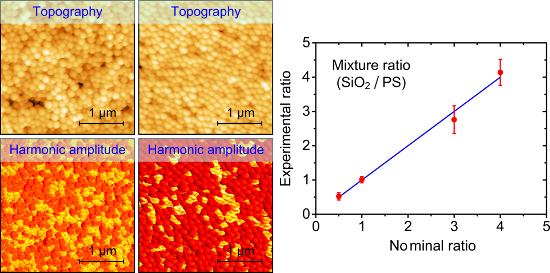
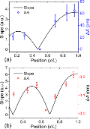
- utilization of reference materials may reduce the difficulty in mathematical modeling. However, this subject requires further numerical and experimental studies and is beyond the scope of current work. Effect of laser spot position In most AFM instruments, the cantilever deflection is measured by the optical




Inelastic electron tunneling spectroscopy of difurylethene-based photochromic single-molecule junctions
Beilstein J. Nanotechnol. 2017, 8, 2606–2614, doi:10.3762/bjnano.8.261
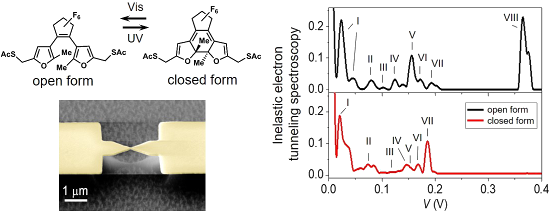
- contributions in the early phase of this project. We are also indebted to the members of the SFB discussion group on molecular electronics for stimulating discussions and insightful remarks on the manuscript. An important part of the numerical modeling was carried out on the computational resources of the bwHPC


Refractive index sensing and surface-enhanced Raman spectroscopy using silver–gold layered bimetallic plasmonic crystals
Beilstein J. Nanotechnol. 2017, 8, 2492–2503, doi:10.3762/bjnano.8.249
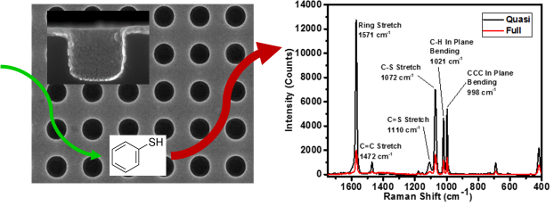
- theoretical modeling. Finite-difference time-domain modeling FDTD calculations provide theoretical understanding of how the electromagnetic field interacts with the PC [51][52][53]. The transmission spectra of the periodic nanohole arrays in each of the PCs have multiple optical responses, such as localized
- -sized features of the metallic structures. The appropriate optical constants for each material and the geometrical model of the periodic nanohole array are crucial for FDTD modeling because all of the plasmonic modes are highly sensitive to the structural details and dielectric properties of the
- from theoretical modeling. This work demonstrates the feasibility of Ag/Au bimetallic PCs for analytical applications, further establishing that bimetallic systems markedly surpass the quantitative performance of monometallic systems reported previously. With FDTD calculations, the nature of the


Numerical investigation of the tribological performance of micro-dimple textured surfaces under hydrodynamic lubrication
Beilstein J. Nanotechnol. 2017, 8, 2324–2338, doi:10.3762/bjnano.8.232
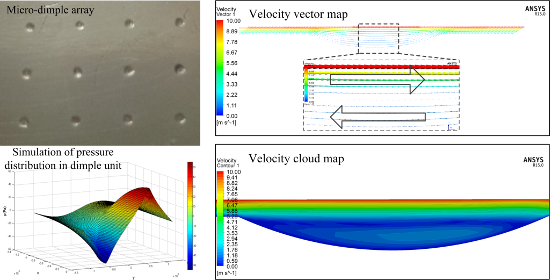
- texturing is investigated and the optimum combination of texture density and aspect ratio for a given Reynolds number is discussed. Modeling Geometrical modeling In this study, the lubricant is filled between the upper flat surface and the lower surface in each compartment of the micro-dimple array. Because
- is the characteristic length of a micro-dimple unit, h0 is the thickness of lubricant film, which is identical to the gap between the friction pairs, h is the depth of the micro-dimple and d is the diameter of dimple. Mathematical modeling Governing equations In order to solve the hydrodynamic
- conservation. For the purpose of facilitating modeling and analysis, the following assumptions were made: 1) The body force is considered negligible (e.g., gravity or magnetic force); 2) No slip of lubricant is supposed to occur on the boundary, which means the velocity of lubricant close to the friction pair




The interplay between spin densities and magnetic superexchange interactions: case studies of mono- and trinuclear bis(oxamato)-type complexes
Beilstein J. Nanotechnol. 2017, 8, 2245–2256, doi:10.3762/bjnano.8.224
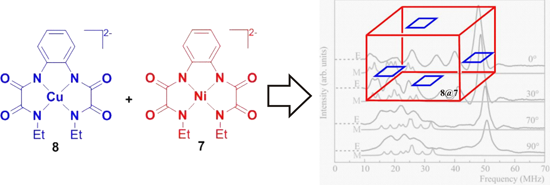
- have been determined by the modeling of the spectra. For the modeling, the Hamiltonian in Equation 1 was adopted and the following assumptions have been made [43][45]: The respective tensor axes of g, ACu and AN are shown in Figure 4. Furthermore, pulse Davies electron nuclear double resonance (ENDOR


![[Graphic 15]](/bjnano/content/inline/2190-4286-8-224-i20.svg?max-width=637&scale=1.18182) molecular plan...
molecular plan...


Au55, a stable glassy cluster: results of ab initio calculations
Beilstein J. Nanotechnol. 2017, 8, 2221–2229, doi:10.3762/bjnano.8.222
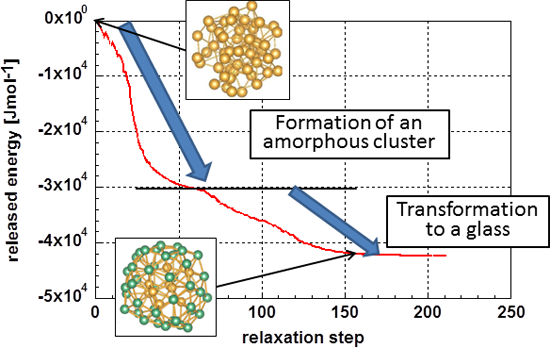
- means of molecular dynamics or ab initio modeling. These studies resulted in puzzling and often contradictory conclusions regarding the nanoparticle structure: crystalline vs non-crystalline, icosahedral vs cuboctahedral or even unspecific shapes. Doye and Wales [16] described their resulting Au55


Velocity dependence of sliding friction on a crystalline surface
Beilstein J. Nanotechnol. 2017, 8, 2186–2199, doi:10.3762/bjnano.8.218
- of the atomic force microscope (AFM) and its friction force microscope (FFM) variant [6][7][8], as well as the extensive usage of atomistic molecular dynamics (MD) simulations and modeling made possible by the vastly increased computing power availability [9][10][11][12][13][14][15][16]. Despite this
- ; (iv) adopt, rather than a harmonic crystal, a realistic force field modeling a specific substrate, with the target of predicting the frictional dynamic features of a specific interface as was done, e.g., in [49][65]; (v) energy dissipation implemented through suitably remote boundary-atom thermostats



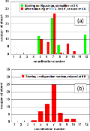
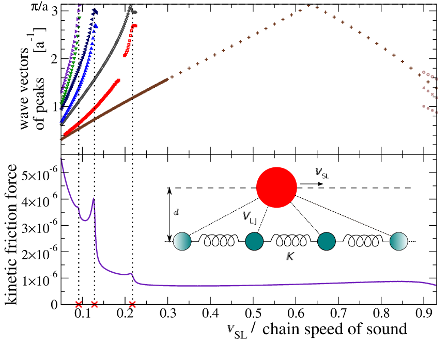
![[Graphic 31]](/bjnano/content/inline/2190-4286-8-218-i50.svg?max-width=637&scale=1.18182) as functions of vSL. Panels (c) and (d): detail ...
as functions of vSL. Panels (c) and (d): detail ...

![[Graphic 34]](/bjnano/content/inline/2190-4286-8-218-i53.svg?max-width=637&scale=1.18182) , with the dynamic friction Fd as a function of vSL...
, with the dynamic friction Fd as a function of vSL...


![[Graphic 40]](/bjnano/content/inline/2190-4286-8-218-i59.svg?max-width=637&scale=1.18182) (symbols), compared with the values of k of the phonons who...
(symbols), compared with the values of k of the phonons who...


Evaluating the toxicity of TiO2-based nanoparticles to Chinese hamster ovary cells and Escherichia coli: a complementary experimental and computational approach
Beilstein J. Nanotechnol. 2017, 8, 2171–2180, doi:10.3762/bjnano.8.216
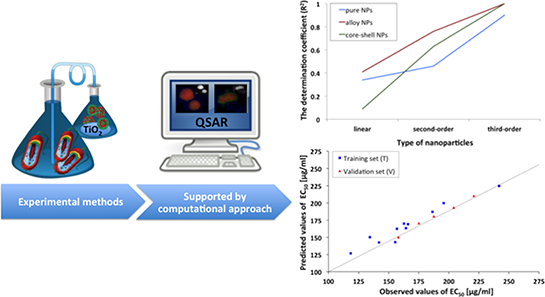
- that can lead to non-apoptotic cell death [6]. Li et al. [4] demonstrated that bacterial activity of hybrid Ag-TiO2 materials based on Degussa P25 TiO2 NPs is related to the enhanced ROS generation and release of Ag+ ions. Quantitative structure–activity relationship modeling of cytotoxicity The data
- (Figure 4). The RMSE values for both randomized training and bagging sets were higher than 50. Bearing in mind the nature of modeling nonlinear relationships, one should remember that the contribution of each descriptor to the studied biological activity cannot be individually interpreted, unlike in
- linear modeling. On the other hand, as we set a polynomial kernel for nano-QSAR modeling, it became possible to investigate set of polynomials separately. For this purpose, separate equations were obtained directly from the experimental data. As summarized in Table 4 and Figure 5, linear modeling failed


High-stress study of bioinspired multifunctional PEDOT:PSS/nanoclay nanocomposites using AFM, SEM and numerical simulation
Beilstein J. Nanotechnol. 2017, 8, 2069–2082, doi:10.3762/bjnano.8.207
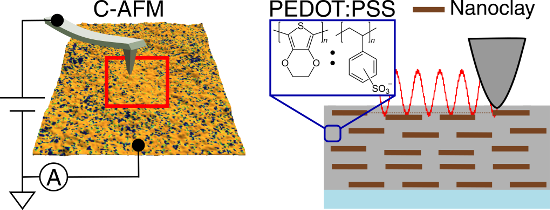
- increases and decreases in conductivity can occur for the Laponite RD composites. We offer a possible mechanism to explain the changes in conductivity by modeling the coating as a 1-dimensional multibarrier potential for electron transport, and show that conductivity can change when the separation between


Collembola cuticles and the three-phase line tension
Beilstein J. Nanotechnol. 2017, 8, 1714–1722, doi:10.3762/bjnano.8.172
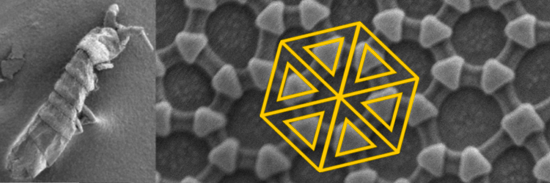
- explain the observed contact angles. The wetted area fraction can be demonstrated by experimental methods, as shown here, as well as through mathematical modeling of the energy needed to transition from composite wetting to non-composite wetting [4]. This yields a wetted area that is determined by the


![[Graphic 16]](/bjnano/content/inline/2190-4286-8-172-i22.png?max-width=637&scale=1.18182) . A system with θ0 = 105°, S = 0.1 μm a...
. A system with θ0 = 105°, S = 0.1 μm a...

Effect of the fluorination technique on the surface-fluorination patterning of double-walled carbon nanotubes
Beilstein J. Nanotechnol. 2017, 8, 1688–1698, doi:10.3762/bjnano.8.169
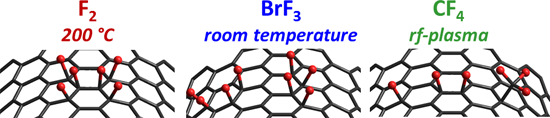
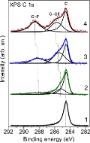
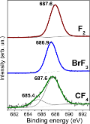
- possibility of different patterning of carbon surfaces through choosing the fluorination method. Keywords: double-walled carbon nanotubes; fluorination; NEXAFS; quantum-chemical modeling; Introduction Even after surface chemical functionalization, due to their inner shell double-walled carbon nanotubes
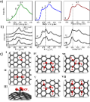
- C106H28 composition, where hydrogen atoms saturated dangling bonds of boundary carbon atoms. Central part of the convex segment surface was decorated with fluorine atoms for modeling possible addition patterns in DWCNTs. Positions of carbon and hydrogen atoms at the segment edges were frozen during