


Search results
Search for "nanoparticles (NPs)" in Full Text gives 239 result(s) in Beilstein Journal of Nanotechnology. Showing first 200.
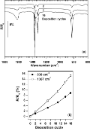
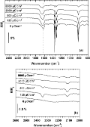
Efficient electron-induced removal of oxalate ions and formation of copper nanoparticles from copper(II) oxalate precursor layers
Beilstein J. Nanotechnol. 2016, 7, 852–861, doi:10.3762/bjnano.7.77
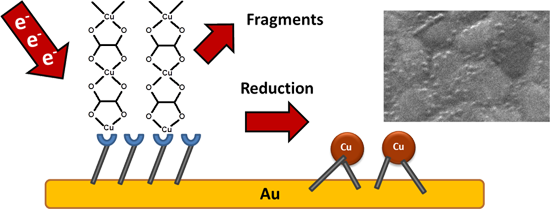
- smaller structures, namely, when electron exposure leads to formation of nanoparticles (NPs) in the irradiated surface area. Hierarchical surface patterns are thus accessible. In fact, the formation of metal NPs under electron irradiation has been observed in diverse precursor materials such as solid [11


Reorientation of single-wall carbon nanotubes in negative anisotropy liquid crystals by an electric field
Beilstein J. Nanotechnol. 2016, 7, 825–833, doi:10.3762/bjnano.7.74
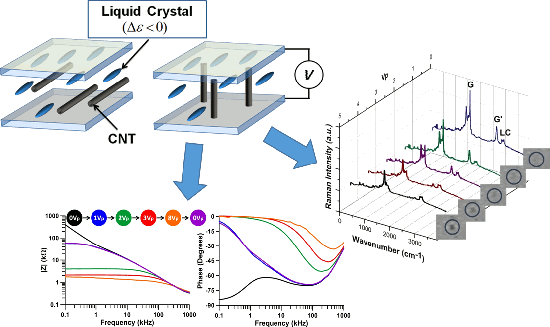
- ; Introduction Single-wall carbon nanotubes (SWCNTs) are highly anisotropic nanoparticles (NPs) formed from a single, wrapped graphene sheet. SWCNTs may be metallic or semiconductive, depending on the rolling angle (chirality) and diameter [1]. The SWCNT one-dimensional structure leads to an anisotropic


Tight junction between endothelial cells: the interaction between nanoparticles and blood vessels
Beilstein J. Nanotechnol. 2016, 7, 675–684, doi:10.3762/bjnano.7.60
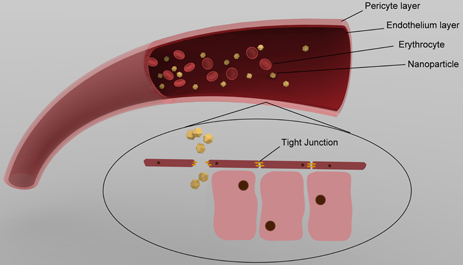
- approach for nanoparticles to penetrate endothelial layers and then have an impact on other tissues and organs. Keywords: blood vessels; endothelial cells; nanoparticles; oxidative stress; tight junction; Introduction Products related to nanoparticles (NPs) are increasingly growing in number. We can

Orientation of FePt nanoparticles on top of a-SiO2/Si(001), MgO(001) and sapphire(0001): effect of thermal treatments and influence of substrate and particle size
Beilstein J. Nanotechnol. 2016, 7, 591–604, doi:10.3762/bjnano.7.52
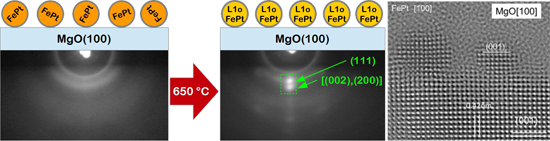
- films and oriented growth of nanoparticles (NPs) on single crystal supports are of general interest for improved physical and chemical properties especially of anisotropic materials. In the case of FePt, the main focus lies on its highly anisotropic magnetic behavior and its catalytic activity, both due
- (MAE), which promises application for next-generation magnetic data storage [3][4][5], improved fabrication processes of FePt alloy films and nanoparticles (NPs) with approximately equiatomic composition are a prerequisite in pursuit of optimized functionality. Additional attractiveness of this


Sonochemical co-deposition of antibacterial nanoparticles and dyes on textiles
Beilstein J. Nanotechnol. 2016, 7, 1–8, doi:10.3762/bjnano.7.1
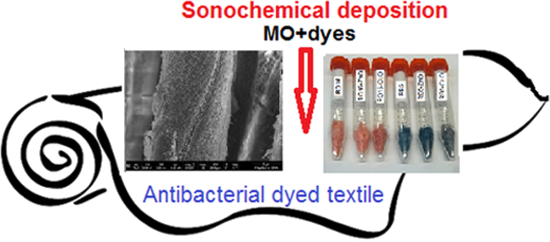
- properties and the dye fastness was studied for 72 h in saline solution aiming at medical applications. Keywords: antibacterial nanoparticles; coating stability; dyes; sonochemical coating; Introduction The preferred technique for coating with nanoparticles (NPs) in most scientific and industrial examples
- . Functional nanoparticles (NPs) were deposited on polymers [2], glass [3], metals [4], textile [5][6] and even paper [7], imparting to the solid substrate the properties of the immobilized particles. These include magnetic, catalytic, fluorescing, antibacterial, and antibiofilm properties. The sonochemical
- antibacterial CuO or ZnO nanoparticles (NPs) from an aqueous solution. The solution contains both the dye and the corresponding M(CH3COO)2 (M = Zn or Cu) precursor, which undergoes hydrolysis under alkaline conditions (ammonia) to form ZnO or CuO. The cotton was colored with the dye and showed good




Chemiresistive/SERS dual sensor based on densely packed gold nanoparticles
Beilstein J. Nanotechnol. 2015, 6, 2498–2503, doi:10.3762/bjnano.6.259
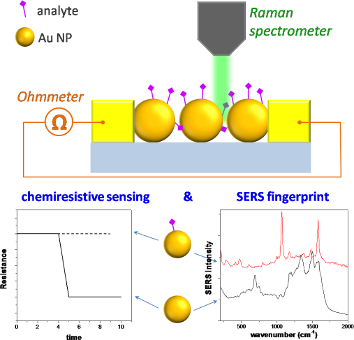
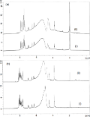
- type of optical sensor must be able to identify and quantify the investigated analyte, ideally by the use of a low-cost chip made by simple manufacturing procedures. Noble metal nanoparticles (NPs) demonstrated repeatedly their effectiveness as transducing elements in optical sensors based on surface


Green and energy-efficient methods for the production of metallic nanoparticles
Beilstein J. Nanotechnol. 2015, 6, 2354–2376, doi:10.3762/bjnano.6.243
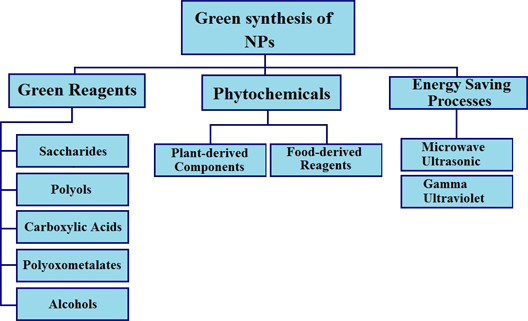
- -Lincoln, N104 SEC PO Box 886105, Lincoln, NE 68588-6105, USA 10.3762/bjnano.6.243 Abstract In the last decade, researchers paid great attention to the concept of “Green Chemistry”, which aims at development of efficient methods for the synthesis of nanoparticles (NPs) in terms of the least possible
- structures, such as nanoparticles (NPs), nanolayers (NLs) and nanotubes (NTs) that have greatly influenced all aspects of human life [9][10][11]. Currently, a vast number of nanostructured materials with different properties are produced at the lab-scale that may be implemented in different applications. It


Green synthesis, characterization and catalytic activity of natural bentonite-supported copper nanoparticles for the solvent-free synthesis of 1-substituted 1H-1,2,3,4-tetrazoles and reduction of 4-nitrophenol
Beilstein J. Nanotechnol. 2015, 6, 2300–2309, doi:10.3762/bjnano.6.236
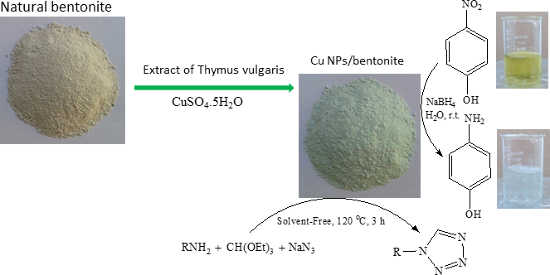
- their interesting structures and properties [2][3][4][5][6]. The extremely small scale of nanoparticles (NPs) is the main factor leading to their surprising reactivity as compared to their corresponding bulk metals [7]. However, most of these supports suffer from inefficiency to achieve highly


Influence of wide band gap oxide substrates on the photoelectrochemical properties and structural disorder of CdS nanoparticles grown by the successive ionic layer adsorption and reaction (SILAR) method
Beilstein J. Nanotechnol. 2015, 6, 2252–2262, doi:10.3762/bjnano.6.231
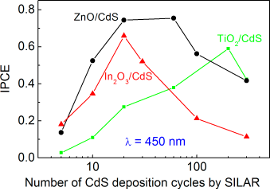
- ][7][8][9][10]. In the last decade, the SILAR method, based on specific ionic adsorption and reaction of cations and anions [11][12][13], has been widely used to form chalcogenide semiconductor nanoparticles (NPs) in such structures [14][15]. This technique involves successive immersion of the


Fabrication of hybrid nanocomposite scaffolds by incorporating ligand-free hydroxyapatite nanoparticles into biodegradable polymer scaffolds and release studies
Beilstein J. Nanotechnol. 2015, 6, 2217–2223, doi:10.3762/bjnano.6.227
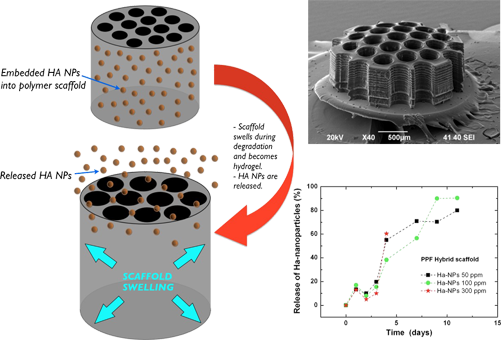
- great importance with regard to the promotion and enhancement of biological fixation (firm bonding of the implant to the host bone by on-growth or ingrowth). Hydroxyapatite (HA) nanoparticles (NPs) are one of the most commonly used materials in osteochondral tissue engineering, since they bear chemical


Electrochemical behavior of polypyrrol/AuNP composites deposited by different electrochemical methods: sensing properties towards catechol
Beilstein J. Nanotechnol. 2015, 6, 2052–2061, doi:10.3762/bjnano.6.209
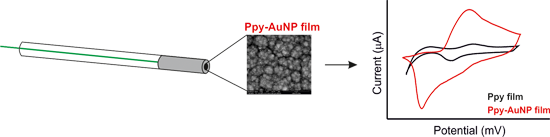
- the appropriate selectivity, reproducibility and sensibility towards a particular application. Recently, composite nanomaterials based on conducting polymers and metal nanoparticles (NPs) of different metals have been developed. Gold nanoparticles (AuNPs) have attracted considerable interest because


NanoE-Tox: New and in-depth database concerning ecotoxicity of nanomaterials
Beilstein J. Nanotechnol. 2015, 6, 1788–1804, doi:10.3762/bjnano.6.183
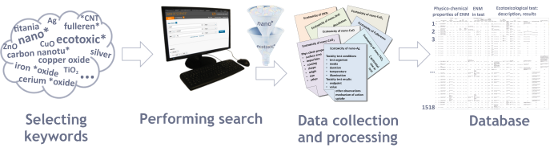
- Information File 1) revealed that the majority of the papers concerned the applications of carbon nanotubes (36,609 papers, 40%), followed by Ag nanoparticles (NPs; 16,970, 19%), TiO2 NPs (11,802, 13%), and iron oxide NPs (10,479, 11%) while the most common fields of application were sensors (28,027 papers


In situ SU-8 silver nanocomposites
Beilstein J. Nanotechnol. 2015, 6, 1661–1665, doi:10.3762/bjnano.6.168
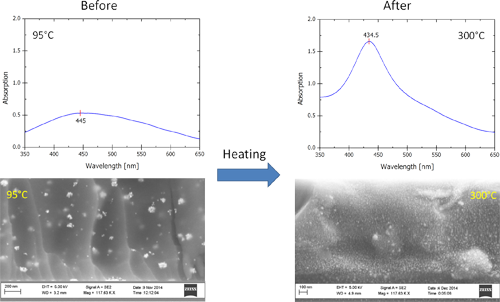
- photoresist; in situ synthesis; metal nanoparticles; micro and nanofabrication; nanocomposite; Findings Noble metal nanoparticles (NPs) have been of high interest for many years as their unique properties make them useable in a large variety of applications [1]. The application of these NPs ranges from


Structural and magnetic properties of iron nanowires and iron nanoparticles fabricated through a reduction reaction
Beilstein J. Nanotechnol. 2015, 6, 1652–1660, doi:10.3762/bjnano.6.167
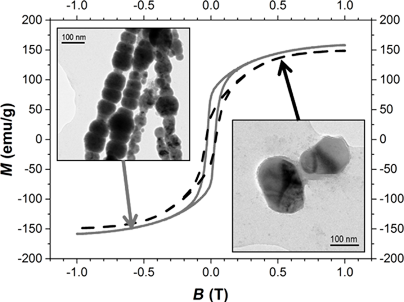
- higher value of magnetic moment than nanoparticles (NPs) of comparable volume [10][11]. But they have not taken into account that the compared materials have not been exactly the same in terms of their chemical compositions. Besides that, as far as we know, nobody has reported any experimental results



PLGA nanoparticles as a platform for vitamin D-based cancer therapy
Beilstein J. Nanotechnol. 2015, 6, 1306–1318, doi:10.3762/bjnano.6.135
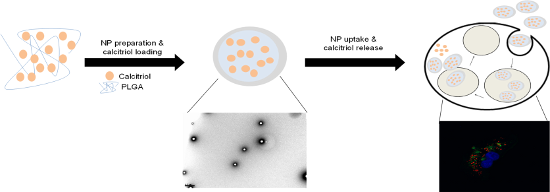
- discussed drawbacks continue to be highlighted as major challenges in developing formulations for clinical use. To overcome some of these limitations, we propose drug delivery systems for new calcitriol formulations. These nanosystems, namely nanoparticles (NPs), must meet several requirements such as


Heterometal nanoparticles from Ru-based molecular clusters covalently anchored onto functionalized carbon nanotubes and nanofibers
Beilstein J. Nanotechnol. 2015, 6, 1287–1297, doi:10.3762/bjnano.6.133
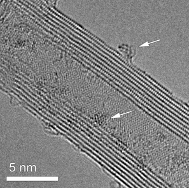
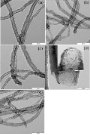
- and atmospheric pressure with very low Ru loading. Keywords: ammonia synthesis; cluster; nanofibers; nanoparticles; nanotubes; Introduction Metal nanoparticles (NPs) supported on nanoscopic forms of carbon (nanotubes, nanofibers) are an important class of nanostructured materials that find




The convenient preparation of stable aryl-coated zerovalent iron nanoparticles
Beilstein J. Nanotechnol. 2015, 6, 1192–1198, doi:10.3762/bjnano.6.121
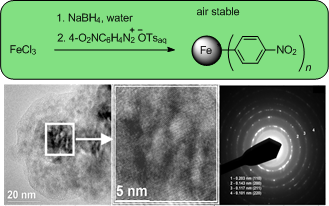
- Federation, Institute of Semiconductor Physics, Novosibirsk 630090, Russian Federation Novosibirsk State University, Novosibirsk 630090, Russian Federation 10.3762/bjnano.6.121 Abstract A novel approach for the in situ synthesis of zerovalent aryl-coated iron nanoparticles (NPs) based on diazonium salt
- analysis were performed in order to characterize the resulting material. Keywords: arenediazonium salts; chemical reduction; covalent modification; surface-modified nanoparticles; zerovalent iron nanoparticles; Introduction Functionalized magnetic nanoparticles (NPs) have aroused great interest recently


Interaction of electromagnetic radiation in the 20–200 GHz frequency range with arrays of carbon nanotubes with ferromagnetic nanoparticles
Beilstein J. Nanotechnol. 2015, 6, 1056–1064, doi:10.3762/bjnano.6.106
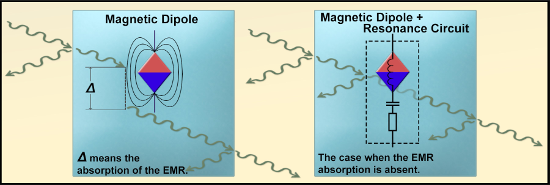
- catalytic iron-based nanoparticles (NPs). Under standard FCCVD conditions (i.e., synthesis temperature: 1150 K, ferrocene concentration: 5–10 wt %, injection rate of the Ar carrier gas: 100 cm3/min, growth duration: 1 min), the multiwall CNTs are formed. The height of the structure is approximately 50 μm


Protein corona – from molecular adsorption to physiological complexity
Beilstein J. Nanotechnol. 2015, 6, 857–873, doi:10.3762/bjnano.6.88
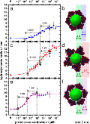
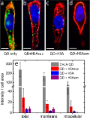
- composition; dynamics; nanoparticles; protein corona; Introduction In biological environments, proteins adsorb to the surfaces of nanoparticles (NPs), thus, forming a protein layer around the particles: the protein corona. Subsequent interactions between the NP and biological entities are mediated by the





Novel ZnO:Ag nanocomposites induce significant oxidative stress in human fibroblast malignant melanoma (Ht144) cells
Beilstein J. Nanotechnol. 2015, 6, 570–582, doi:10.3762/bjnano.6.59
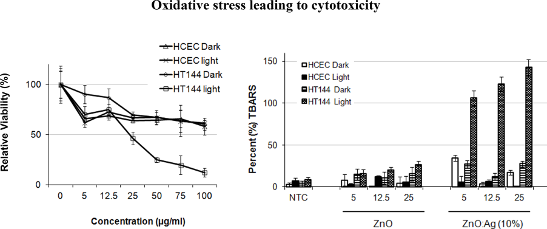
- .6.59 Abstract The use of photoactive nanoparticles (NPs) such as zinc oxide (ZnO) and its nanocomposites has become a promising anticancer strategy. However, ZnO has a low photocatalytic decomposition rate and the incorporation of metal ions such as silver (Ag) improves their activity. Here different
- nanocomposites could provide a new therapeutic option to selectively target cancer cells. Keywords: cancer therapy; cytotoxicity; photo-oxidation; ZnO:Ag nanocomposites; Introduction Zinc oxide (ZnO) nanoparticles (NPs) exhibit an excellent photo-oxidation activity [1] and are considered as potential
- rate 30 sccm) with a temperature rise of 4 °C/min and then kept at 100 °C for 4 h. In order to get rid of excess oxygen in the composite material, samples were further treated under reducing atmosphere (5% hydrogen in Ar) for 6 h at 450 °C (flow rate 30 sccm). Afterwards, the nanoparticles (NPs) were


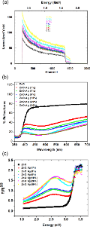


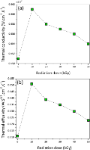
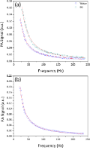
Structural, optical, opto-thermal and thermal properties of ZnS–PVA nanofluids synthesized through a radiolytic approach
Beilstein J. Nanotechnol. 2015, 6, 529–536, doi:10.3762/bjnano.6.55
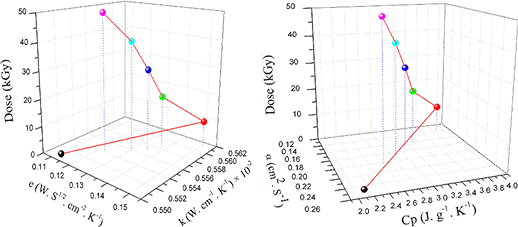
- optoelectronics [2], lasers [3] and solar cells [4]. During the fabrication of devices that utilize semiconductor nanoparticles (NPs), such as ZnS NPs, the tendency of particles to agglomerate needs to be taken into consideration. The use of organic polymers as a host can help to prevent agglomeration and


Influence of size, shape and core–shell interface on surface plasmon resonance in Ag and Ag@MgO nanoparticle films deposited on Si/SiOx
Beilstein J. Nanotechnol. 2015, 6, 404–413, doi:10.3762/bjnano.6.40
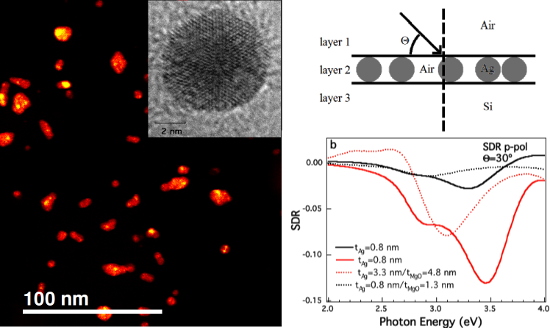
- nanoparticles (NPs) with a diameter of d = 3–10 nm were obtained by physical synthesis methods and deposited on Si with its native ultrathin oxide layer SiOx (Si/SiOx). Scanning electron microscopy and transmission electron microscopy (TEM) images of bare Ag NPs revealed the presence of small NP aggregates
- ; surface differential reflectivity; surface plasmon resonance; Introduction Nanoparticles (NPs) deposited on surfaces constitute a vast and important research field in material science having many applications in magnetic recording [1][2], catalysis [3], and photovoltaics [4][5][6][7][8][9]. For instance




Morphology, structural properties and reducibility of size-selected CeO2−x nanoparticle films
Beilstein J. Nanotechnol. 2015, 6, 60–67, doi:10.3762/bjnano.6.7
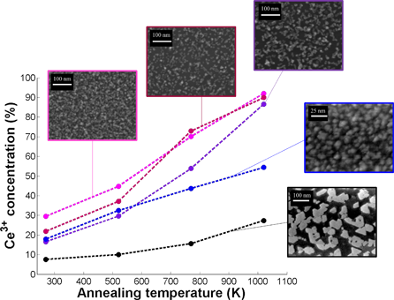
- , Parco Area delle Scienze 37/A - 43124 Parma, Italy 10.3762/bjnano.6.7 Abstract Non-stoichiometric ceria nanoparticles (NPs) were obtained by a gas aggregation source with a magnetron and were mass-selected with a quadrupole mass filter. By varying magnetron power, Ar gas flow, and the length of the
- oxygen depending on the ambient conditions [1]. In particular, ceria in the form of nanoparticles (NPs) is important in industrial catalysis [2] and in biomedical applications to prevent the oxidation of human cells [3]. Doped cerium oxide films are also promising candidates as electrolytes in solid


The fate of a designed protein corona on nanoparticles in vitro and in vivo
Beilstein J. Nanotechnol. 2015, 6, 36–46, doi:10.3762/bjnano.6.5
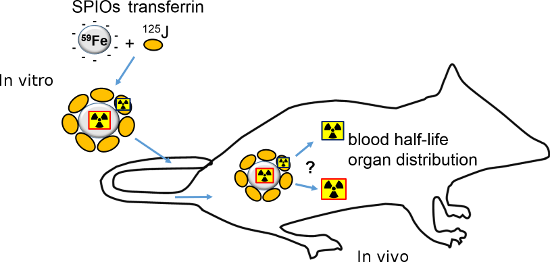
- vivo for the respective nanoparticle uptake. Keywords: albumin; 59Fe; 125I; organ uptake; protein corona; SPIOs; transferrin; Introduction Nanoparticles (NPs) have unique capabilities to interact with cells and organs which mark them as attractive working material in nanobioscience and nanomedicine


Size-dependent density of zirconia nanoparticles
Beilstein J. Nanotechnol. 2015, 6, 27–35, doi:10.3762/bjnano.6.4
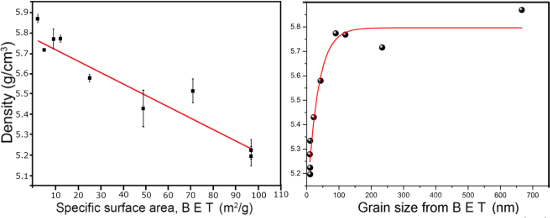
- 10.3762/bjnano.6.4 Abstract The correlation between density and specific surface area of ZrO2 nanoparticles (NPs) was studied. The NPs were produced using a hydrothermal process involving microwave heating. The material was annealed at 1100 °C which resulted in an increase in the average grain size of the





