


Search results
Search for "phase" in Full Text gives 1624 result(s) in Beilstein Journal of Nanotechnology. Showing first 200.
Photocatalytic methane oxidation over a TiO2/SiNWs p–n junction catalyst at room temperature
Beilstein J. Nanotechnol. 2024, 15, 1132–1141, doi:10.3762/bjnano.15.92
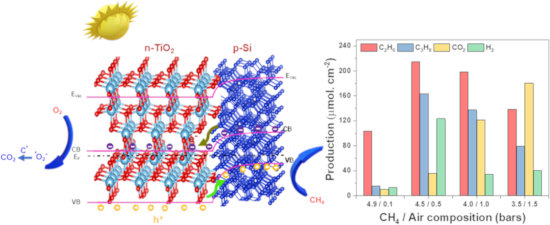
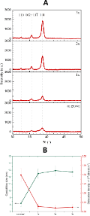
- phase (JCPDS No.27-1402) [40][41]. In the case of the as-synthesized composite, the favored growth of TiO2(101) on the surface of p-Si NWs has been noticed [42]. The minor (112), (200), (105), and (211) peaks at 2θ = 38.2°, 48.5°, 53.3°, and 55.1° indicate the formation of anatase TiO2 (JCPDS No.21-1272


Direct electron beam writing of silver using a β-diketonate precursor: first insights
Beilstein J. Nanotechnol. 2024, 15, 1117–1124, doi:10.3762/bjnano.15.90

- fragmentation of adsorbed precursor molecules on a substrate [5][6][7][8][9]. The precursor is typically supplied in gaseous phase. Exploiting the different complex pathways in electron-induced chemistry (such as formation of unstable intermediates and thermal assistance in adsorption and desorption) and the


Signal generation in dynamic interferometric displacement detection
Beilstein J. Nanotechnol. 2024, 15, 1070–1076, doi:10.3762/bjnano.15.87
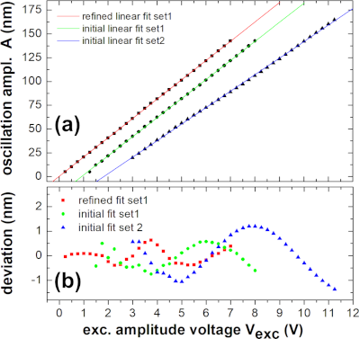
- between the light beams reflected from the fiber end (reference beam) and the cantilever (cavity beam), creating a standing wave pattern in the fiber with a spatial periodicity given by the light wavelength λ and a phase ϕ determined by the distance d between the fiber end and the cantilever. Any
- ) describes the loss of light in the gap between the fiber end and the cantilever due to beam divergence. The spatial variation of the electric field strength due to interference is governed by the path difference 2d determining the phase of the interference electric fields . Linear superposition of reference
- interferometer signal voltage, V0 the voltage amplitude of the interference signal oscillation, D = d0 + derr − qs the actual distance of the center of oscillation from the fiber end, fs the frequency referenced to the time base of the oscilloscope, and φ a phase factor covering any phase shift introduced by the


Effect of wavelength and liquid on formation of Ag, Au, Ag/Au nanoparticles via picosecond laser ablation and SERS-based detection of DMMP
Beilstein J. Nanotechnol. 2024, 15, 1054–1069, doi:10.3762/bjnano.15.86

- , and (c) 1064 nm) in DW are shown. At 355 nm, a distinctive nanochain morphology linking spherical NPs was evident, contrasting with the separated spherical morphology. The prevalent interaction at 355 nm with the liquid phase was more influential than the NP production, resulting in particles with
- detection of DMMP (1.2 ppm V) in the vapor phase using Glass_Ag_Au NPs, 3D fractal microstructure substrates developed by corner lithography and anisotropic wet etching of silicon using the 785 nm as the Raman excitation. When UV excitation was utilized during the measurements, the Raman peak intensities
- . Aligholizadeh et al. [72] detected DMMP using a handheld Raman spectrometer with an excitation of 785 nm, and the analytes were measured in a liquid-phase solution. The limit of detection (LOD) achieved for DMMP was 9 mM. Chang et al. [67] utilized a combination of cotton swabs with a Ag NP substrate along with


Interface properties of nanostructured carbon-coated biological implants: an overview
Beilstein J. Nanotechnol. 2024, 15, 1041–1053, doi:10.3762/bjnano.15.85
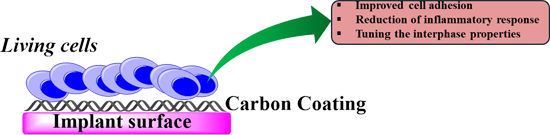
- reactions are those involving the decomposition of precursor in the gas phase forming products that condense on a target. In contrast, heterogeneous reactions are those involving the decomposition of the precursors on the solid surface of a catalyst that also acts as a support. As reported by Porro et al



Atomistic insights into the morphological dynamics of gold and platinum nanoparticles: MD simulations in vacuum and aqueous media
Beilstein J. Nanotechnol. 2024, 15, 995–1009, doi:10.3762/bjnano.15.81
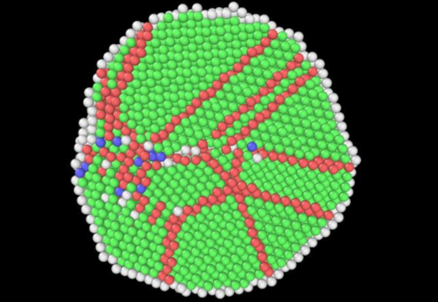
- stresses at the NP surface are crucial in phase transitions below a certain critical NP size [26]. Although it is understood that, qualitatively, the surface stress generates an effect comparable to an externally applied compressive pressure on the NP, a quantitative description is missing. While there
- signifies the occurrence of a phase transition in a cluster of atoms. Additional atomic parameters are the average potential energy, force, and coordination number per atom. These quantities have also been employed as descriptors in nano-QSAR models to successfully predict the toxicity of NPs [73][74][75
- size that would yield a behaviour comparable to bulk Au. For the last case of Au NPs with a diameter of 1 nm, we observe a smooth δ curve, and the critical δ value is reached at approximately 300 K. A similar behaviour is observed for the Pt NPs. For all Pt NPs with diameter larger than 2 nm, a phase


Beyond biomimicry – next generation applications of bioinspired adhesives from microfluidics to composites
Beilstein J. Nanotechnol. 2024, 15, 965–976, doi:10.3762/bjnano.15.79
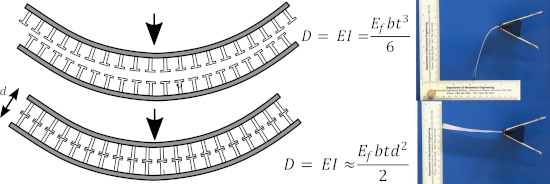
- 2010 with the advent of the modern soft robotics field. Traditional stiffness-switching mechanisms include phase change materials [39], jamming actuators [40], electrorheological fluids [41], and antagonistic actuators [42], but vacuum jamming has been the most popular in academic literature [43
- . © 2017 WILEY-VCH Verlag GmbH & Co. KGaA, Weinheim. This content is not subject to CC BY 4.0. Non-vacuum jamming based stiffness-tunable prototypes developed for use in space applications. Figure 6a–d were republished from [39] (“Controllable biomimetic adhesion using embedded phase change material


Therapeutic effect of F127-folate@PLGA/CHL/IR780 nanoparticles on folate receptor-expressing cancer cells
Beilstein J. Nanotechnol. 2024, 15, 954–964, doi:10.3762/bjnano.15.78
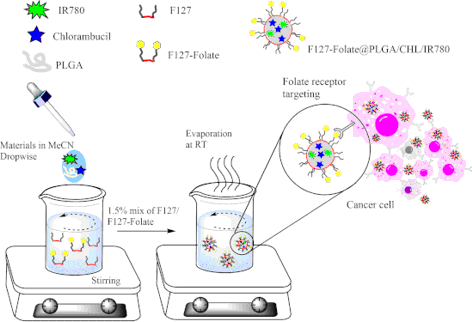
- emulsion, or nanoprecipitation [1][4], in which copolymers are dissolved in an organic solvent, called the organic phase, and then are put into an immiscible aqueous solution, called the water phase, to form the nanoparticles. Various surfactants, including poly(vinyl alcohol) (PVA), sodium cholate, or
- pluronic F127 (F127), can be used in the water phase to lower the surface tension of the organic phase and to produce the nanoemulsion during the homogenization process [5][6][7]. F127 is a copolymer made up of blocks of poly(ethylene oxide)–poly(propylene oxide)–poly(ethylene oxide), PEO100–PPO65–PEO100



Electrospun nanofibers: building blocks for the repair of bone tissue
Beilstein J. Nanotechnol. 2024, 15, 941–953, doi:10.3762/bjnano.15.77
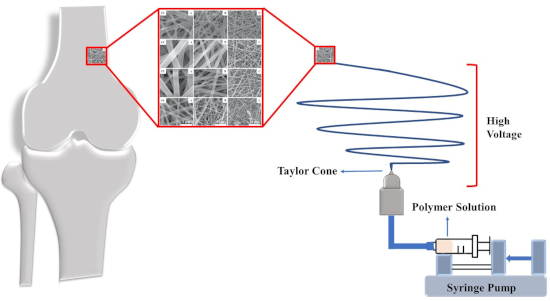
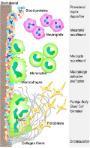
- , the mineralization phase begins, and new bone tissue is formed [9][14]. The main function of osteoclasts, which have properties similar to those of macrophages, is to resorb the mineralized bone matrix [13][18]. Another group of cells derived from osteoblasts are bone-lining cells, which cover the
- . In the repair phase, where the hematoma is replaced by fibrin-rich granulation tissue over time, the granulation tissue first evolves into fibrous tissue consisting of fibroblasts and then into soft callus. At this stage, new vessels, fibroblasts, intracellular material, and supporting cells begin to
- the literature including inter-surface polymerization, phase separation, drawing, self-assembly, melt blowing, template melt extrusion, forcespinning, and electrospinning [36][37][38][39][40]. Only electrospinning will be further explained in detail in order to remain within the scope. Electrospinning


Effects of cutting tool geometry on material removal of a gradient nanograined CoCrNi medium entropy alloy
Beilstein J. Nanotechnol. 2024, 15, 925–940, doi:10.3762/bjnano.15.76
- (NiCoCr)95V5, which achieved an excellent strength and plasticity product exceeding 86 GPa·% at low temperatures [7]. Qiu et al. investigated the effects of adding Al, Ti, Mo, and W on low-temperature phase stability, mechanical properties, and deformation behavior of CoCrNi-based MEAs [8]. Strengthening
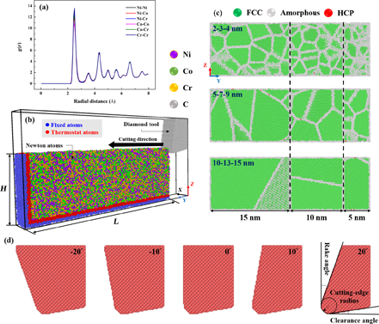
- MEA, as shown in Figure 1. FCC phase GNG CoCrNi MEA substrates with dimensions of 3 nm × 30 nm × 10 nm were used for all cases in this study. The polycrystalline samples consist of randomly oriented grains. The MEA substrates contain 25,952 Co atoms, 26,628 Cr, and 26,746 Ni atoms. Hence, the alloy
- /molecularly parallel simulator (LAMMPS) software [16][17], and the GNG model substrates were built from the ATOMSK software [18]. Deformation response, molecular structure, and atomic strain behavior were observed using the Open Visualization Tool (OVITO) software [19][20]. The mechanisms of phase transitions








Facile synthesis of Fe-based metal–organic frameworks from Fe2O3 nanoparticles and their application for CO2/N2 separation
Beilstein J. Nanotechnol. 2024, 15, 897–908, doi:10.3762/bjnano.15.74
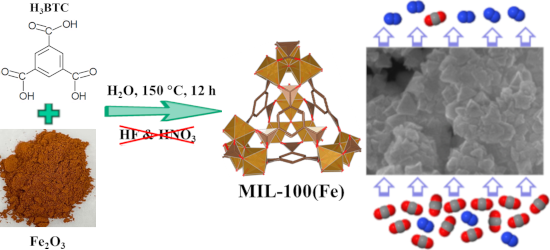
- of the MIL-100(Fe) phase in the resulting materials and to estimate the conversion of Fe2O3 into MIL-100(Fe) material. The TGA profile of Fe2O3 (Figure 6) showed only a very small weight loss in the investigated temperature range due to a small quantity of absorbed moisture in the sample. Contrarily





The effect of age on the attachment ability of stick insects (Phasmatodea)
Beilstein J. Nanotechnol. 2024, 15, 867–883, doi:10.3762/bjnano.15.72

- lipid phase [86] and, besides interfacial effects, contribute to the shape and curvature of the terminal layer of the attachment pad [43]. Another factor influencing effective stiffness of the cuticle is caused by depletion of these adhesive fluids. Several steps in quick succession were found to dry


Intermixing of MoS2 and WS2 photocatalysts toward methylene blue photodegradation
Beilstein J. Nanotechnol. 2024, 15, 817–829, doi:10.3762/bjnano.15.68
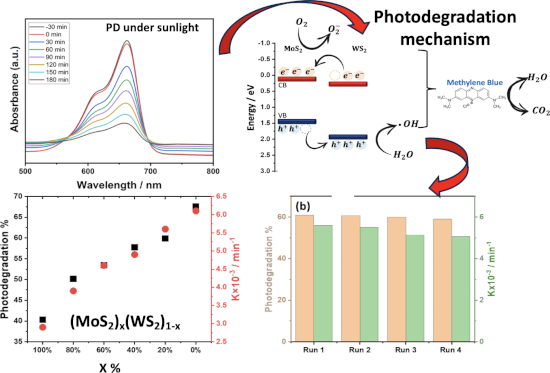
- catalyst when MoS2 and WS2 were mixed at 0.2 and 0.8 ratios, respectively. Indeed, we noticed that the phase intermixing induced a synergistic effect leading to an enhanced stability of the composite. The low-quantity catalyst loading emphasizes the economic and environmental advantages of our approach


Synthesis of silver–palladium Janus nanoparticles using co-sputtering of independent sources: experimental and theorical study
Beilstein J. Nanotechnol. 2024, 15, 808–816, doi:10.3762/bjnano.15.67
- delivery, catalysis, and sensors. The methodologies, developed for the first time in 1999 [1], for the production of bimetallic nanoparticles in the gas phase can be roughly classified as either simultaneous or sequential. In the first category, the materials that will be used to make the nanoparticles are
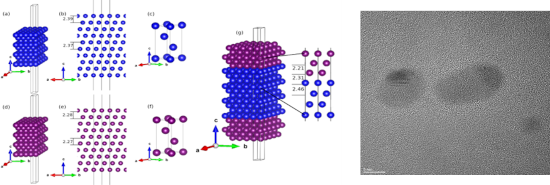
- Pd atoms. The bimetallic alloy surface was optimized (Figure 7b), and the calculated (111) interplanar distances are 2.40 Å in the bulk phase and 2.38 Å at the surface (see Figure 7c). To explore the Janus particles that involve AgPd, the Ag/AgPd and Pd/AgPd models were first optimized by




Electron-induced ligand loss from iron tetracarbonyl methyl acrylate
Beilstein J. Nanotechnol. 2024, 15, 797–807, doi:10.3762/bjnano.15.66
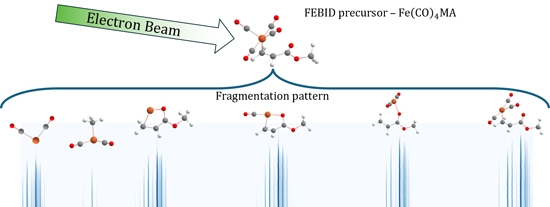
- reactions? This is basically impossible to predict a priori since several effects come into play, for example, change in bond dissociation energies, electron density at the metal, and dipole moment. Of the possible experimental approaches to address this question, a crossed-beam gas-phase experiment
- the gas phase has been probed with respect to its dissociative ionization [10] and dissociative electron attachment [11][12]; there is even information available on its electronic excitation, which is the first step towards neutral dissociation [11]. The gas-phase studies have been complemented by
- surface-based investigations, where the electron-induced ligand loss has been probed by XPS [13], ion desorption [14], IR spectroscopy [15], or cluster-beam studies [16][17][18]. The ligand loss has also been probed by ion impact, both in the gas phase [19] and on the surface [13], and, theoretically, by



Electrospun polysuccinimide scaffolds containing different salts as potential wound dressing material
Beilstein J. Nanotechnol. 2024, 15, 781–796, doi:10.3762/bjnano.15.65
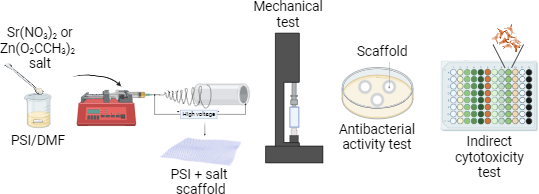
- cells were investigated under a phase-contrast microscope (Nikon Eclipse TS100, Nikon, Japan), and photomicrographs were taken using a CCD camera (COHU, USA) to track any changes in cell morphology. Then, 100 µL of old medium was replaced in each well with 200 µL of media: positive or negative control
- , extracts from the scaffolds, or media with the same salt concentrations. After 24 and 72 h treatments, phase-contrast microscopy images were taken. The relative cell viability was determined using the WST-1 reagent (diluted in medium without phenol red (colorless) at 1:20). A volume of 200 µL of old medium
- elastic deformation phase is shortened and the Young’s modulus is increased. Therefore, the fibrous samples become more fragile. The elongation at breakpoint values (Figure 4 and Supporting Information File 1, Figure S4) show the rigidity of the scaffolds. The Sr(NO3)2 salt-containing samples



Exploring surface charge dynamics: implications for AFM height measurements in 2D materials
Beilstein J. Nanotechnol. 2024, 15, 767–780, doi:10.3762/bjnano.15.64
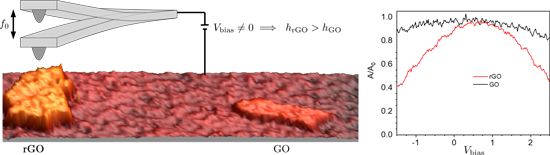
- invasive mode, the driving excitation frequency can be fixed at, or near, the free resonance frequency of the cantilever, or tracked by using a phase-locked loop (PLL) to keep the system always in resonance. If the driving excitation frequency is kept fixed, the phase variations contain information about
- capacitance signal was also recorded, as explained in [61]. Spectroscopy data were acquired using a variant of the 3D-mode dynamic force spectroscopy [62], explained in detail in [63]. Briefly, force, frequency shift, amplitude, and phase channels are recorded simultaneously at a fixed sample point as a


Effect of repeating hydrothermal growth processes and rapid thermal annealing on CuO thin film properties
Beilstein J. Nanotechnol. 2024, 15, 743–754, doi:10.3762/bjnano.15.62
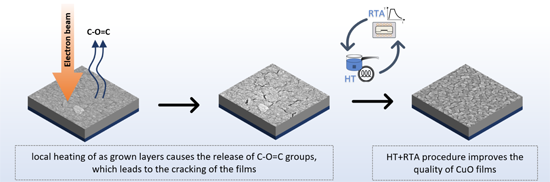
- hydrothermal method ensures homogeneous single-phase films initially. However, their electrical instability and susceptibility to cracking under the influence of temperature have posed a challenge to their utilization in electronic devices. To address this limitation, the HT+RTA procedure has been developed
- and Discussion The as-grown films are uniform and consist of single-phase CuO. However, they exhibit a notably high content of organic compounds, which are residues from the growth process. These residues contribute to the films’ low electrical stability and their susceptibility to temperature-induced
- , cupric CuO, cuprous Cu2O and the intermediate phase paramelaconite Cu4O3. The aforementioned phases of copper oxide have different physical and electrical properties, different colors, and crystal structures [55]. By examining the Raman spectra of copper oxide compounds, phase as well as chemical




Simultaneous electrochemical determination of uric acid and hypoxanthine at a TiO2/graphene quantum dot-modified electrode
Beilstein J. Nanotechnol. 2024, 15, 719–732, doi:10.3762/bjnano.15.60
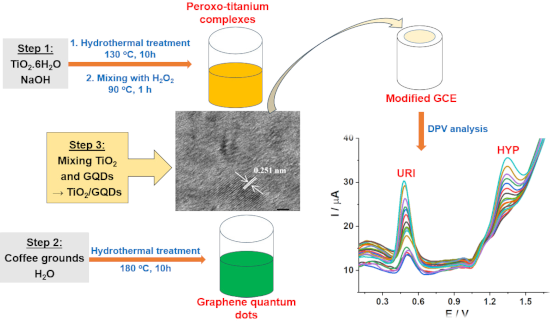
- = 26°, corresponding to the (101) plane of the anatase phase (JCPDS file 73-1764) (Figure 2a). As the XRD measurements were made in liquids instead of solid powders, the diffraction peaks are found to be broad and weak. The diffraction peaks of the GQDs at 2θ = 30.4° can be assigned to the (002) plane


Elastic modulus of β-Ga2O3 nanowires measured by resonance and three-point bending techniques
Beilstein J. Nanotechnol. 2024, 15, 704–712, doi:10.3762/bjnano.15.58
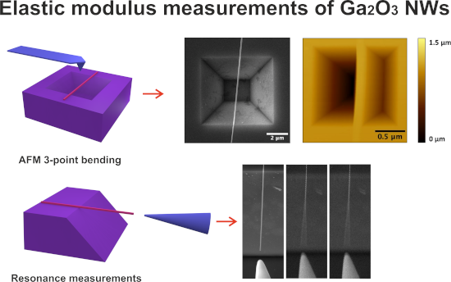
- (11−2) and (−112) planes were identified with 2.2 Å interlayer spacing, indicating [021] growth direction. The presence of NWs with various crystalline orientations suggests either the absence of one dominant preferential growth direction due to the low-symmetry monoclinic phase or other growth
- resulted in higher elastic modulus values, while NBs with higher width-to-height ratios showed a significant decrease in elastic modulus [22]. Although the variation of the cross-section geometry and the presence of different growth directions, related to the low symmetry of the monoclinic Ga2O3 phase and
- resonance and three-point bending methods, respectively. The measurements exhibited significant scattering, which was attributed to the variation of the cross-section geometry and the presence of different growth directions, related to the low symmetry of the monoclinic Ga2O3 phase and thus anisotropy in


Enhancing higher-order modal response in multifrequency atomic force microscopy with a coupled cantilever system
Beilstein J. Nanotechnol. 2024, 15, 694–703, doi:10.3762/bjnano.15.57

- , approaching an integer value. This reduction in frequency ratio enhances the high harmonic oscillations and improves the phase contrast during imaging [15]. The macroscale cantilever model (6 × 1 × 0.18 cm) is 266 times the size (within the error range) of the microscale cantilever dimensions. Considering the


Laser synthesis of nanoparticles in organic solvents – products, reactions, and perspectives
Beilstein J. Nanotechnol. 2024, 15, 638–663, doi:10.3762/bjnano.15.54
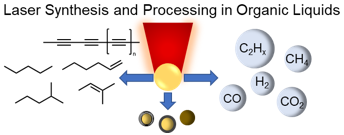
- to the formation of nanoparticles and can be performed in either aqueous media [4][5][14] or organic solvents [14][15][16][17][18]. Further, it is possible to synthesize metastable phase nanomaterials (NMs) that are hardly obtainable by conventional, chemical methods [19][20][21][22][23][24]. LFL
- nanocomposites based on sp-hybridized carbon chains [64]. Liang et al. specified the conditions for inhibition of phase crystallization and, hence, the formation of metallic glass nanoparticles in organic solvents, which was attributed to the carbon doping of the amorphous phase as well as carbon shell formation
- synthesis of HCN [79]. The oxidation and phase change of the target surface during LAL was initially published by Ogale et al. [80] in 1987, and nanoparticle oxidation has been addressed in the literature frequently afterwards [53][54][68][69][70]. During the plasma and cavitation bubble phase, reactive





Exfoliation of titanium nitride using a non-thermal plasma process
Beilstein J. Nanotechnol. 2024, 15, 631–637, doi:10.3762/bjnano.15.53
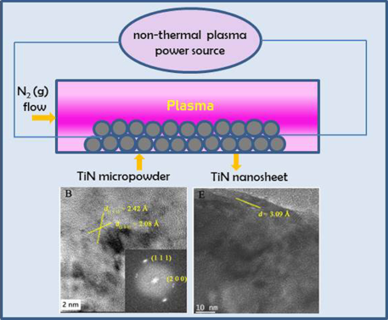
- flow. The arc was generated between a 316 L steel electrode and another electrode composed of graphite. The process lasted 60 min. Subsequently, the resultant material was collected, rinsed in a 1:1 mixture of water and isopropanol, and decanted for 24 h. Then, the liquid phase was filtered using a



Comparative analysis of the ultrastructure and adhesive secretion pathways of different smooth attachment pads of the stick insect Medauroidea extradentata (Phasmatodea)
Beilstein J. Nanotechnol. 2024, 15, 612–630, doi:10.3762/bjnano.15.52
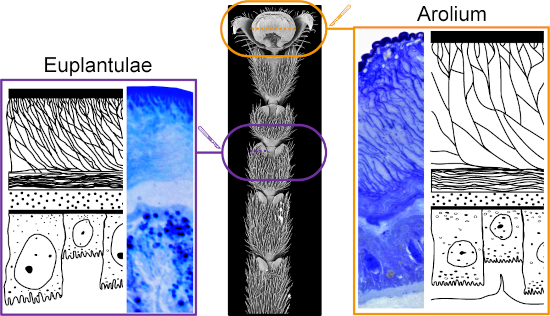
- but mostly contains water-soluble and lipid-soluble substances [31][32][33][34][35] creating lipid droplets in an aqueous fluid [27][36] or hydrophilic nanodroplets embedded in an oily continuous phase [23][37]. Additionally, the tarsal secretion could be a mixture of multiple substances that are




AFM-IR investigation of thin PECVD SiOx films on a polypropylene substrate in the surface-sensitive mode
Beilstein J. Nanotechnol. 2024, 15, 603–611, doi:10.3762/bjnano.15.51
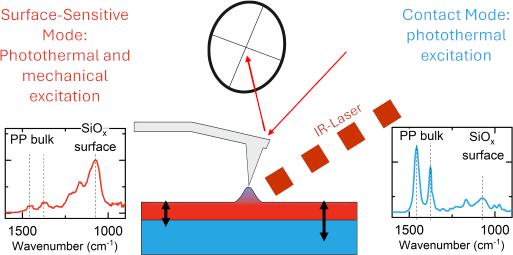
- of the cantilever was used as detection mode at 205 kHz. The drive mode was set to 845 kHz, which equals a higher contact resonance mode. The spectra were collected with a spectral resolution of 4 cm−1, and the phase-locked loop (PLL) was disabled for collecting the spectra. In addition to these
- deeper bulk phase of the substrate and more information of the near-surface region. In samples with a thicker layer of SiOx, this results in an improved signal-to-noise ratio. Even though the spectra of the sample with a low SiOx thickness still show sizable peaks originating from the substrate





