


Search results
Search for "physical properties" in Full Text gives 318 result(s) in Beilstein Journal of Nanotechnology. Showing first 200.
Process-specific mechanisms of vertically oriented graphene growth in plasmas
Beilstein J. Nanotechnol. 2017, 8, 1658–1670, doi:10.3762/bjnano.8.166
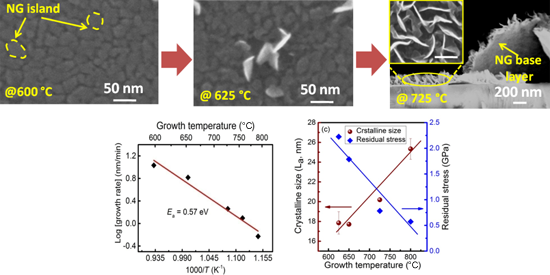
- plasma source to substrate on the morphology and structure of vertical graphene nanosheets (VGNs). Systematic microscopic and spectroscopic investigations, wetting and electrical studies ensure that the structure of the self-organized VGNs affects their physical properties. The factors contributing


Oxidative stabilization of polyacrylonitrile nanofibers and carbon nanofibers containing graphene oxide (GO): a spectroscopic and electrochemical study
Beilstein J. Nanotechnol. 2017, 8, 1616–1628, doi:10.3762/bjnano.8.161
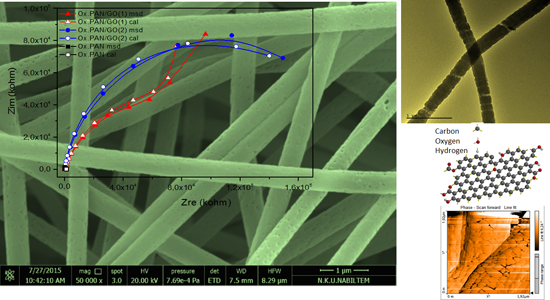
- mechanical properties because of the interaction between nanofibers and the matrix material [4]. CNF can be used as reinforcing material inside the polymer composites thanks to their enhanced mechanical and physical properties [5][6][7]. The manufacturing of CNF/polymer composites is challenging and the


Charge transfer from and to manganese phthalocyanine: bulk materials and interfaces
Beilstein J. Nanotechnol. 2017, 8, 1601–1615, doi:10.3762/bjnano.8.160
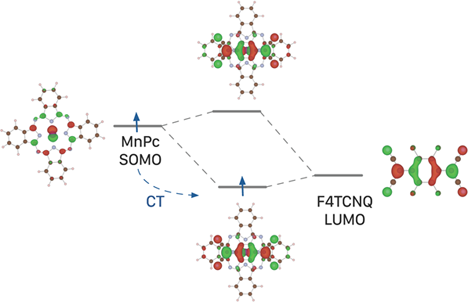
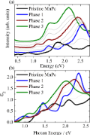
- moments. MnPc is characterized by hybrid states between the Mn 3d orbitals and the π orbitals of the ligand very close to the Fermi level. This causes particular physical properties, different from those of the other phthalocyanines, such as a rather small ionization potential, a small band gap and a
- physics as, e.g., whether there is electrical conduction along the interface. A charge and spin transfer interface: MnPc/F16CoPc A further example in which a charge transfer across an interface results in new physical properties at this interface is provided by bringing together MnPc and F16CoPc. Highly


Two-dimensional carbon-based nanocomposites for photocatalytic energy generation and environmental remediation applications
Beilstein J. Nanotechnol. 2017, 8, 1571–1600, doi:10.3762/bjnano.8.159
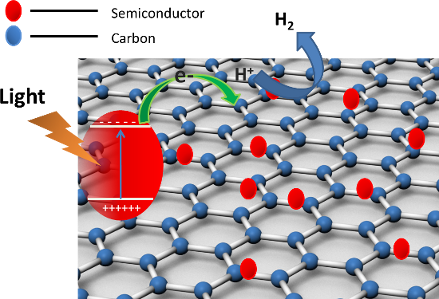
- way by using two of the most abundant natural resources, namely sunlight and water. Over the past few years, carbon-based nanocomposites, particularly graphene and graphitic carbon nitride, have attracted much attention as interesting materials in this field. Due to their unique chemical and physical
- properties, carbon-based nanocomposites have made a substantial contribution towards the generation of clean, renewable and viable forms of energy from light-based water splitting and pollutant removal. This review article provides a comprehensive overview of the recent research progress in the field of


The effect of the electrical double layer on hydrodynamic lubrication: a non-monotonic trend with increasing zeta potential
Beilstein J. Nanotechnol. 2017, 8, 1515–1522, doi:10.3762/bjnano.8.152
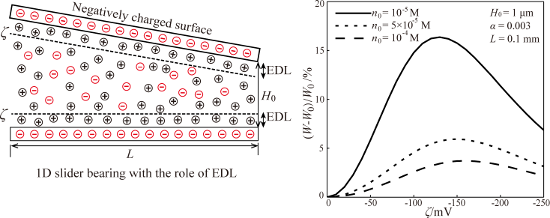
- lubrication (≈0.1–100 μm) [3][5]. Considering the small dimension of the fluid lubrication film (on the micro/nanoscale in the thickness direction), the chemical and physical properties of the solid–lubricant interface play an important role on the lubrication. Among these interfacial properties, the effect


Formation of ferromagnetic molecular thin films from blends by annealing
Beilstein J. Nanotechnol. 2017, 8, 1469–1475, doi:10.3762/bjnano.8.146
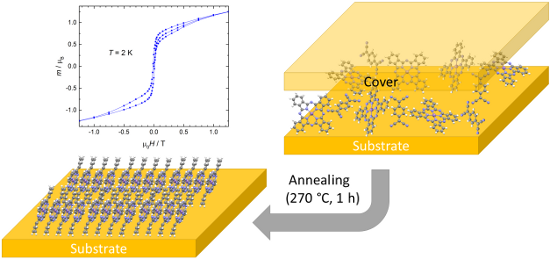
- their application in optoelectronic and spintronic devices [1][2]. One of the key physical properties determining the performance is crystallinity, which significantly influences electron/hole mobility and magnetic coupling [3][4]. We recently reported on an approach to achieve crystalline porphyrazine

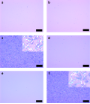


Cationic PEGylated polycaprolactone nanoparticles carrying post-operation docetaxel for glioma treatment
Beilstein J. Nanotechnol. 2017, 8, 1446–1456, doi:10.3762/bjnano.8.144
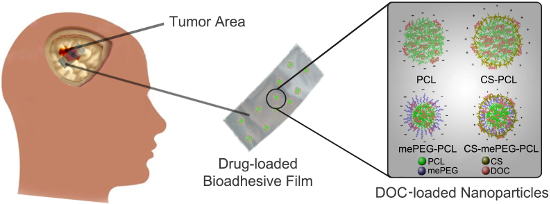
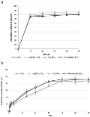
- -formulation studies Pre-formulation studies were carried out to optimize the final nanoparticle physical properties. The formulation and technological variables that are known to influence the nanoparticle properties were evaluated. Primarily, different nanoparticle preparation techniques were used to prepare




Adsorption and electronic properties of pentacene on thin dielectric decoupling layers
Beilstein J. Nanotechnol. 2017, 8, 1388–1395, doi:10.3762/bjnano.8.140
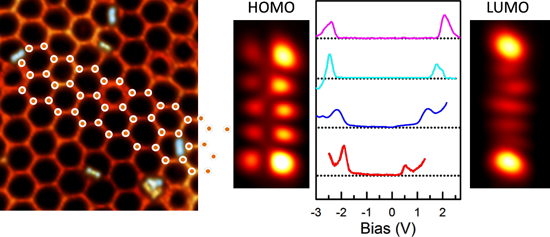
- can be observed in the relation between orbital energies and work function, which reveals the physical properties of the molecule and the substrates that are relevant to adsorption. In addition, a deviation from this trend for hBN/Rh(111) helps rationalize its enhanced trapping capacity and its


Micro- and nano-surface structures based on vapor-deposited polymers
Beilstein J. Nanotechnol. 2017, 8, 1366–1374, doi:10.3762/bjnano.8.138
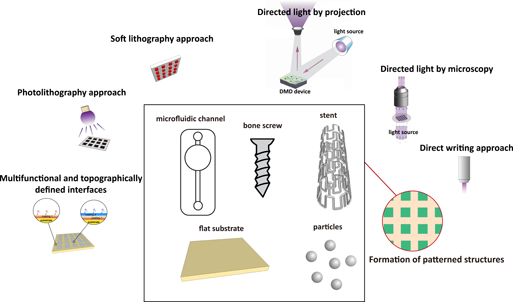
- developments focused on the fabrication of surface patterns and structures with the same physical properties as that the bulk material, interfacial coating materials, patterning processes, and the aspect ratio of formed surface patterns and structures. In addition, the surface chemistry of such patterns and
- with μCP or a photomask [49]. Gradient structures Surface gradients represent an advanced surface modification tool to exert gradient activities and/or communicate with the microenvironment using gradually altered cues. Such gradients include physical properties such as the wettability, thickness


Comprehensive Raman study of epitaxial silicene-related phases on Ag(111)
Beilstein J. Nanotechnol. 2017, 8, 1357–1365, doi:10.3762/bjnano.8.137
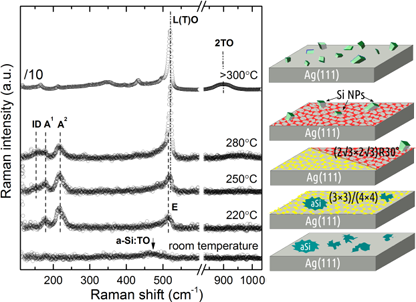
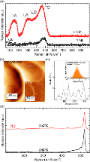
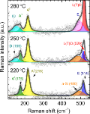
- method, highly sensitive to the structural properties of the materials [21][22]. The first results on 2D Si structures, obtained using in situ Raman spectroscopy, conclusively confirmed the 2D nature of epitaxial (3×3)/(4×4) silicene and demonstrated an easy access to its chemical and physical properties



3D continuum phonon model for group-IV 2D materials
Beilstein J. Nanotechnol. 2017, 8, 1345–1356, doi:10.3762/bjnano.8.136
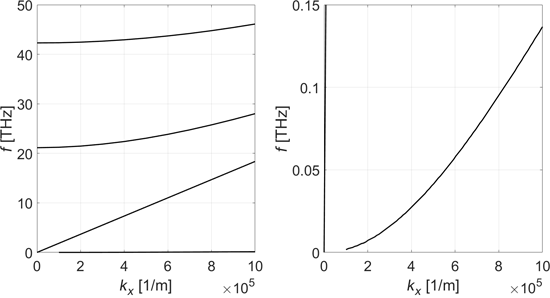
- electron–phonon scattering rates. The latter would be useful for understanding a number of physical properties as well as for applications. Dispersion relations for the phonon modes of single-layer graphene (left) and MoS2 (right), from DFT calculations. Dispersion relations for the coupled ux–uz acoustic


![[Graphic 19]](/bjnano/content/inline/2190-4286-8-136-i109.png?max-width=637&scale=1.18182) phonon modes of single-layer MoS2. The right plot is a ...
phonon modes of single-layer MoS2. The right plot is a ...
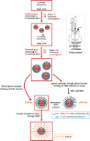
Synthesis of [Fe(Leq)(Lax)]n coordination polymer nanoparticles using blockcopolymer micelles
Beilstein J. Nanotechnol. 2017, 8, 1318–1327, doi:10.3762/bjnano.8.133
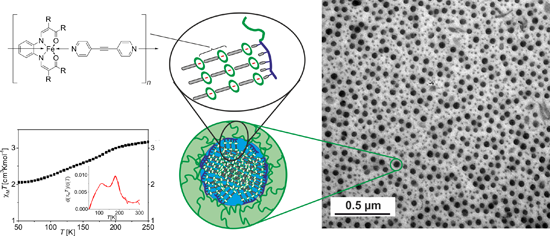
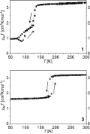
- physical properties such as magnetism, structure or colour, which make these materials interesting for sensors [2][24][25][26], display devices [27][28][29] or as functional contrast agents [30][31][32][33][34]. The SCO properties deeply depend on the precise control of size and crystallinity of the



Charge transport in organic nanocrystal diodes based on rolled-up robust nanomembrane contacts
Beilstein J. Nanotechnol. 2017, 8, 1277–1282, doi:10.3762/bjnano.8.129
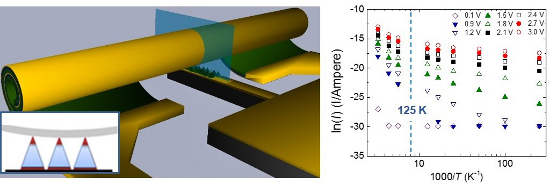
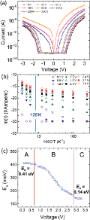
- Str. 20, 01069 Dresden, Germany 10.3762/bjnano.8.129 Abstract The investigation of charge transport in organic nanocrystals is essential to understand nanoscale physical properties of organic systems and the development of novel organic nanodevices. In this work, we fabricate organic nanocrystal
- including light-emitting diodes, transistors, sensors [1][2][3]. Because the large variety of physical properties can be conveniently tuned by manipulating the molecular structure, a clever design of the nanoscale device geometry opens up further intriguing options for novel applications in the fields of


Adsorption characteristics of Er3N@C80on W(110) and Au(111) studied via scanning tunneling microscopy and spectroscopy
Beilstein J. Nanotechnol. 2017, 8, 1127–1134, doi:10.3762/bjnano.8.114
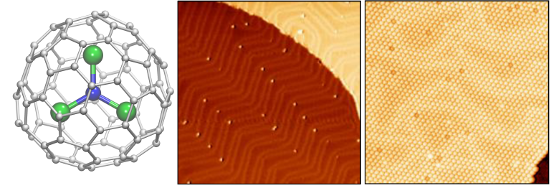
- ; scanning tunnelling microscopy; scanning tunnelling spectroscopy; W(110); Introduction Fullerenes provide the feasibility of tunable physical properties by their capacity to encapsulate atoms or clusters inside the carbon cage [1][2]. Thus since their discovery in 1985 they excite great attention of the


Assembly of metallic nanoparticle arrays on glass via nanoimprinting and thin-film dewetting
Beilstein J. Nanotechnol. 2017, 8, 1049–1055, doi:10.3762/bjnano.8.106
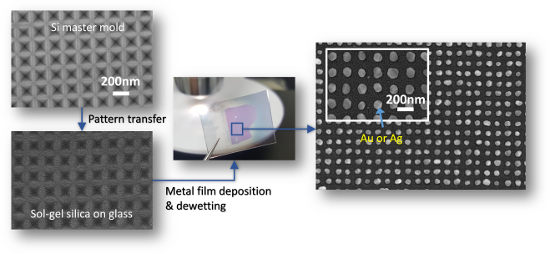
- films for gas-selective membranes and due to their superhydrophobic and low-dielectric properties [18][19][20][21]. The films are also applicable in optics and photonics because they can interact with light and actively induce changes in their physical properties [22][23]. There is increasing demand for


Structural properties and thermal stability of cobalt- and chromium-doped α-MnO2 nanorods
Beilstein J. Nanotechnol. 2017, 8, 1032–1042, doi:10.3762/bjnano.8.104
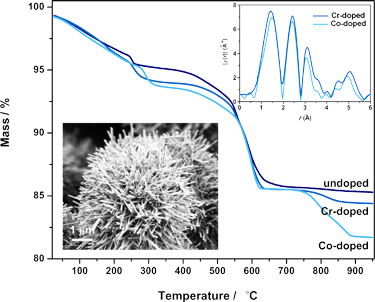
- dopant so drastically affects the physical properties of the MnO2 matrix. Because of economic reasons MnO2 is one of the most attractive cathodes for rechargable lithium batteries. Since Mn is the tenth-most abundant element in the Earth crust, lithiated MnO2 cathodes would cost around 1% of LiCoO2, the


Near-field surface plasmon field enhancement induced by rippled surfaces
Beilstein J. Nanotechnol. 2017, 8, 956–967, doi:10.3762/bjnano.8.97
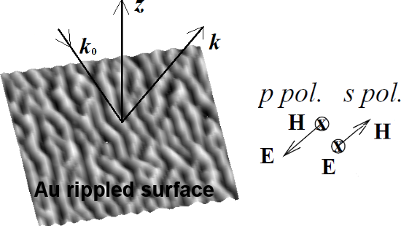
- is the Green tensor, Δωn is the spectral width of the mode and |n·E(r)|2 = I(r) its local intensity. Equation 16 summarizes the physical properties of nanogaps, showing that the electromagnetic field is enhanced when confined to a small volume. Hence, nanogaps can be considered as metal–insulator


High photocatalytic activity of Fe2O3/TiO2 nanocomposites prepared by photodeposition for degradation of 2,4-dichlorophenoxyacetic acid
Beilstein J. Nanotechnol. 2017, 8, 915–926, doi:10.3762/bjnano.8.93
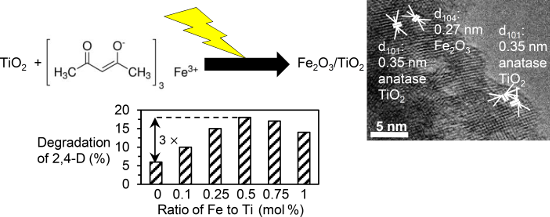
- showed that different synthesis methods lead to different photocatalytic performance. The photocatalysts prepared by photodeposition showed superior performance compared to those prepared by the impregnation method. Properties comparison The structural, optical, and physical properties of the Fe2O3/TiO2


Relationships between chemical structure, mechanical properties and materials processing in nanopatterned organosilicate fins
Beilstein J. Nanotechnol. 2017, 8, 863–871, doi:10.3762/bjnano.8.88

- of relationships between molecular structure, physical properties and material processing at the nanoscale. Numerous metrologies capable of thermal, mechanical, and electrical characterization at the nanoscale have been demonstrated over the past two decades. However, the ability to perform nanoscale



Hybrid nanomaterials: from the laboratory to the market
Beilstein J. Nanotechnol. 2017, 8, 861–862, doi:10.3762/bjnano.8.87

- components of different origin, composition, and individual chemical and physical properties. As a result, some of the most attractive materials for modern technology are materials composed of at least two (and often more) different components – these are known as hybrid materials. Indeed, biological high
- has been studied throughout the entire periodic table; countless organic molecules and polymers have been studied for their effects on structure, physical properties, and processability. Often, a “shotgun approach” towards the synthesis of new materials has been successful, and by serendipity, many
- properties than what was possible 15 or 20 years ago. As a result, we now understand some aspects of the interplay between chemical and physical properties much better, for example, between the chemical components and the macroscopic behavior of these materials. Consequently, it is also possible to make
Investigation of growth dynamics of carbon nanotubes
Beilstein J. Nanotechnol. 2017, 8, 826–856, doi:10.3762/bjnano.8.85


First examples of organosilica-based ionogels: synthesis and electrochemical behavior
Beilstein J. Nanotechnol. 2017, 8, 736–751, doi:10.3762/bjnano.8.77
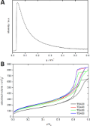
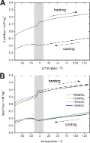
- what has been reported so far [23][24]. These data therefore show that all organosilica monoliths yield stable monolithic IGs with high IL loading. DSC data (Figure 11) and EIS analysis (Figure 12-14) show that (i) the confinement of the IL in the matrix does not affect its physical properties and (ii








Investigation of the photocatalytic efficiency of tantalum alkoxy carboxylate-derived Ta2O5 nanoparticles in rhodamine B removal
Beilstein J. Nanotechnol. 2017, 8, 604–613, doi:10.3762/bjnano.8.65
- . Aliquots of 3 mL were taken after regular intervals of exposure to UV light for recording the absorption of the remaining dye. The details of the synthesis and physical properties of the compounds 2–8 are listed in Table 1. The spectroscopic data of compounds 2–8 are as follows: Ta(OEt)4(OOCCH2Cl) (3): 1H
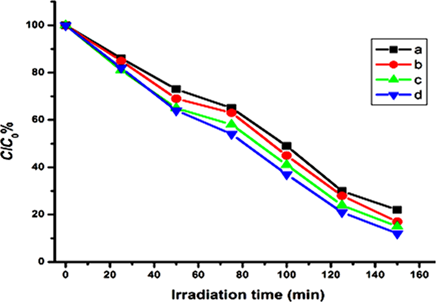
- degradation process. Graphical determination of the reaction rate of the photocatalytic degradation of RhB by Ta2O5 nanoparticles derived from (a) Ta(OEt)4(OOCCHCl2) and (b) Ta(OEt)4(OOCCCl3). Preparative details and physical properties of tantalum alkoxy carboxylates. Properties of Ta2O5 nanoparticles. Rate


Methods for preparing polymer-decorated single exchange-biased magnetic nanoparticles for application in flexible polymer-based films
Beilstein J. Nanotechnol. 2017, 8, 408–417, doi:10.3762/bjnano.8.43
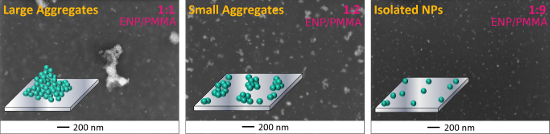
- size to exhibit the desired properties (e.g., exchange-bias for thermal stability of the magnetization) but also judiciously functionalized to ensure their stability in air and their compatibility with a polymer matrix, in order to avoid aggregation which may seriously affect their physical properties


Performance of natural-dye-sensitized solar cells by ZnO nanorod and nanowall enhanced photoelectrodes
Beilstein J. Nanotechnol. 2017, 8, 287–295, doi:10.3762/bjnano.8.31
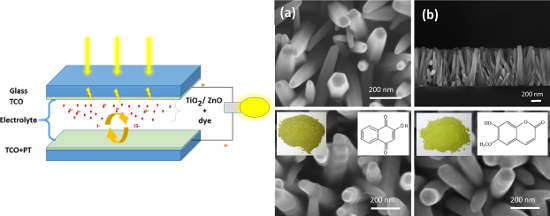
- physical properties of the photoanode. Experimental Both ZnO NRs and NWs were grown on FTO substrates (1.5 × 1.5 cm2) by CBD [8][22]. Before the ZnO NR preparation, a seed layer of ZnO crystallites was deposited by spin coating (1000 rpm, 60 s) using a solution of 5 mM zinc acetate dihydrate in ethanol





