


Search results
Search for "radicals" in Full Text gives 232 result(s) in Beilstein Journal of Nanotechnology. Showing first 200.
Two step formation of metal aggregates by surface X-ray radiolysis under Langmuir monolayers: 2D followed by 3D growth
Beilstein J. Nanotechnol. 2015, 6, 2406–2411, doi:10.3762/bjnano.6.247
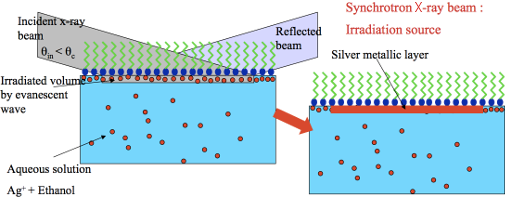
- induces the radiolysis of water. This results in the formation of various radicals (e.g., H•, HO•, e−aq). In the presence of a radical scavenger, H• and e−aq induce reduction of the metal ions into atoms that further aggregate in the solution to form metallic clusters. Usually γ rays or electrons [3] and
- (Millipore system, 18 MΩ·cm) at a silver concentration of 1.5·10−4 mol·L−1. Ethanol (CH3CH2OH) was added at a concentration of 0.2 mol·L−1 as a radical scavenger [15]. Indeed, irradiation of deoxygenated water leads to the formation of three radicals, HO•, H• and hydrated electrons, e−aq. By addition of


Green and energy-efficient methods for the production of metallic nanoparticles
Beilstein J. Nanotechnol. 2015, 6, 2354–2376, doi:10.3762/bjnano.6.243


Silica-coated upconversion lanthanide nanoparticles: The effect of crystal design on morphology, structure and optical properties
Beilstein J. Nanotechnol. 2015, 6, 2290–2299, doi:10.3762/bjnano.6.235
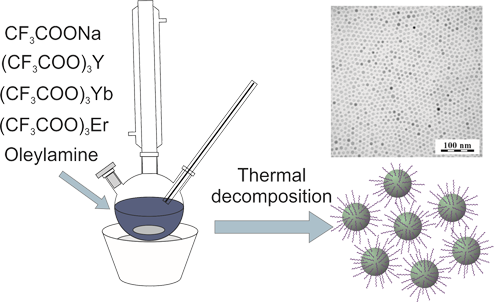
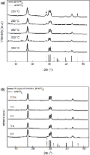
- structure. The pure hexagonal phase was obtained at reaction temperatures ≥ 350 °C and annealing times above 1 h. To generate free radicals such as singlet oxygen (destructive to cancer cells) in biological experiments, the nanoparticles should emit photons at 660 nm to excite phthalocyanine, a typical






Effect of SiNx diffusion barrier thickness on the structural properties and photocatalytic activity of TiO2 films obtained by sol–gel dip coating and reactive magnetron sputtering
Beilstein J. Nanotechnol. 2015, 6, 2039–2045, doi:10.3762/bjnano.6.207
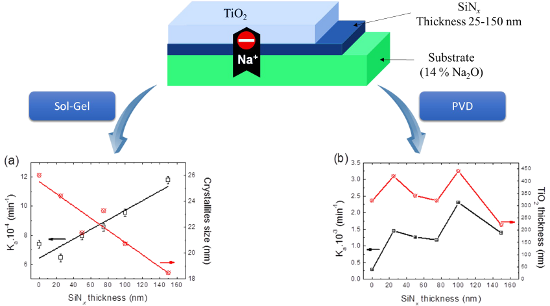
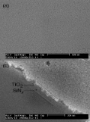
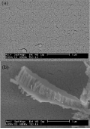
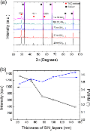
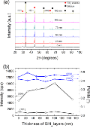
- photocatalytic efficiency. The photobleaching of the OII dye in the presence of the catalyst was performed at neutral pH 7.2 during 2 h of UV–vis illumination. At neutral pH, the bleaching of OII was caused by photo-oxidation via formation of radicals and/or a UV-induced modification of the surface, leading to
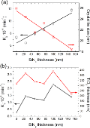
Nitrogen-doped graphene films from chemical vapor deposition of pyridine: influence of process parameters on the electrical and optical properties
Beilstein J. Nanotechnol. 2015, 6, 2028–2038, doi:10.3762/bjnano.6.206
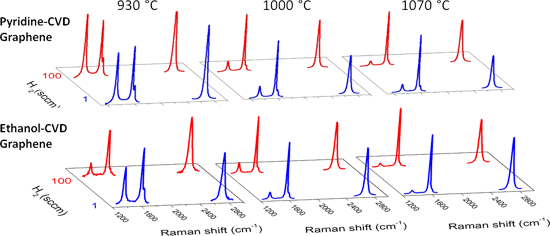
- evidence of oxidation [32]. Ethanol is known to decompose during CVD into oxygen-carrying and hydrocarbon molecules or radicals: Below a certain temperature, some of the oxygen atoms or groups might bind to defects, grains or edges [33]. Likewise, in the case of pyridine-CVD, the temperature can have a


The role of low-energy electrons in focused electron beam induced deposition: four case studies of representative precursors
Beilstein J. Nanotechnol. 2015, 6, 1904–1926, doi:10.3762/bjnano.6.194
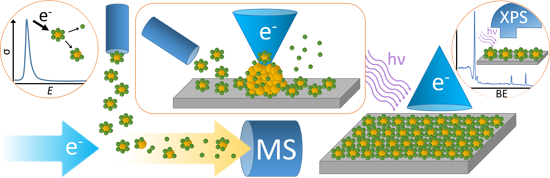
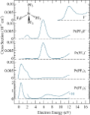
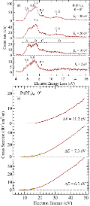
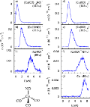
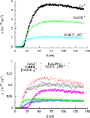
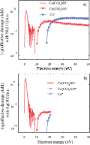
- (IV) (CpPtMe3), which produced a similar mass spectrum during electron irradiation, despite the lack of the methyl group on the Cp ring. The conversion of the dissociated methyl radicals to the methane observed in the mass spectra is less clear as it could arise either from intra- or intermolecular
- reactions at the surface or from reactions of desorbed methyl radicals at the walls of the UHV chamber. While MeCpPtMe3 was found to desorb from the surface when it was heated to room temperature prior to electron irradiation, no compounds were found to desorb from the surface after electron irradiation








Temperature-dependent breakdown of hydrogen peroxide-treated ZnO and TiO2 nanoparticle agglomerates
Beilstein J. Nanotechnol. 2015, 6, 1897–1903, doi:10.3762/bjnano.6.193
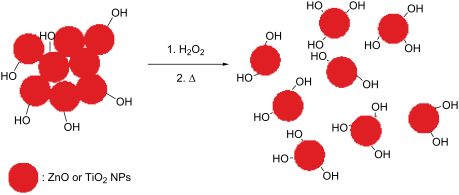
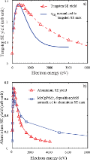
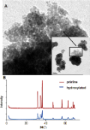
- release of OH− or HO2 radicals. These radicals can remove impurities such as carbon and carbonate present on the surface and introduce hydroxyl groups (–OH) onto the surface [20][22][24]. Figure 2 and Figure 3 show the FTIR spectra of ZnO and TiO2 NPs before and after the H2O2 process, respectively




Continuum models of focused electron beam induced processing
Beilstein J. Nanotechnol. 2015, 6, 1518–1540, doi:10.3762/bjnano.6.157
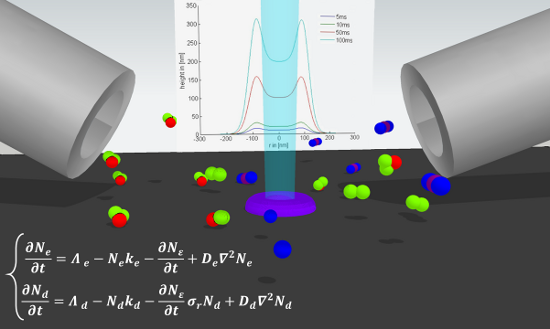
- in this case are the NF3 precursor adsorbates (denoted by “a”), F radicals (α), and the reaction products SiF, SiF2, SiF3, and SiF4: The symbols in Equation 53 and Equation 54 represent the same quantities as the corresponding symbols in Equation 12 and Equation 13 (see Table 1). In Equation 55, Nn
- models. This particular model assumes that all available F radicals generated by electron-induced dissociation of NF3 are converted to SiFn by reacting with SiFn−1, and that any surplus fluorine atoms desorb as shown in Figure 15 (the desorption is assumed instant, hence the absence of a desorption flux
- in Equation 54). The probability of a reaction between F and each species SiFn−1 is assumed equal and the total F coverage is limited to 1 ML, hence the term (Nn−1/Nη)(1 − Θη) in Equation 55 that governs the partitioning of the available F radicals illustrated by the flow chart shown in Figure 15. It


![[Graphic 37]](/bjnano/content/inline/2190-4286-6-157-i117.png?max-width=637&scale=1.18182) and chemisorbed
and chemisorbed ![[Graphic 38]](/bjnano/content/inline/2190-4286-6-157-i118.png?max-width=637&scale=1.18182) adsorbates versus pressure, calcul...
adsorbates versus pressure, calcul...


Scalable, high performance, enzymatic cathodes based on nanoimprint lithography
Beilstein J. Nanotechnol. 2015, 6, 1377–1384, doi:10.3762/bjnano.6.142
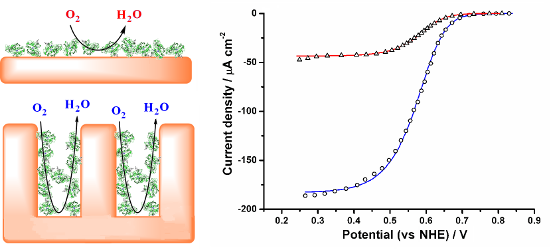
- concomitant reduction of O2 directly to H2O in a trinuclear Cu cluster (T2/T3 Cu cluster) positioned 12–13 Å away [5][6][7], without releasing reactive O2 species, such as hydrogen peroxide or superoxide radicals [8][9]. Three-dimensional electrodes for enzyme-based cathodes are usually used to design high


High photocatalytic activity of V-doped SrTiO3 porous nanofibers produced from a combined electrospinning and thermal diffusion process
Beilstein J. Nanotechnol. 2015, 6, 1281–1286, doi:10.3762/bjnano.6.132
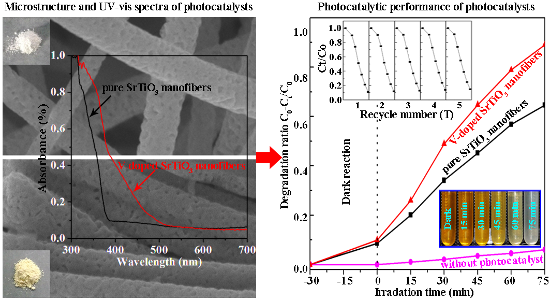
- species, such as hydroxyl radicals (·OH) and superoxide anions (O2−). Since Fujishima and Honda first reported photo-electrochemical water splitting using a TiO2 electrode [7], many studies have been carried out on photocatalytic pollutant removal and electronic structures of semiconductors containing d0


The convenient preparation of stable aryl-coated zerovalent iron nanoparticles
Beilstein J. Nanotechnol. 2015, 6, 1192–1198, doi:10.3762/bjnano.6.121
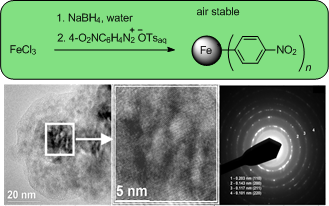
- repeatedly shown that diazonium cations give diazoates in basic media. These unstable diazotate species are able to spontaneously generate radicals [18], which react with the surface of the ZVI NPs resulting in highly stable, covalent linkages. Since the first demonstration in 1990, the formation of
- multilayer films on different surfaces (carbon, gold, iron) has been confirmed several times through the generated radicals from ADSs [32][33][34]. Since the 4-position group is an electron acceptor, the ortho positions to the substituents are chemically activated and the free radicals can perform a
- these indications of the generation of radicals from ADTs, we hypothesize that there are multilayers of 4-nitrophenyl groups that also contain thick organic layers, as illustrated by TEM. It is worth mentioning that the characteristics of the NP surface and attached functional groups have a key role for


Tattoo ink nanoparticles in skin tissue and fibroblasts
Beilstein J. Nanotechnol. 2015, 6, 1183–1191, doi:10.3762/bjnano.6.120
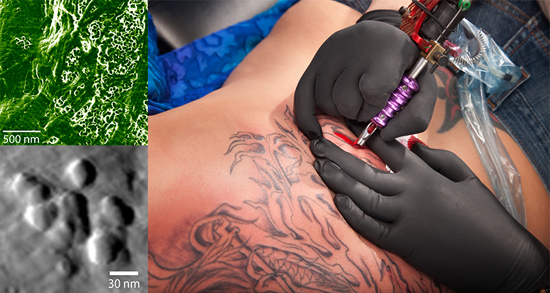
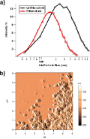
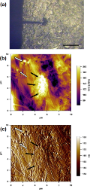
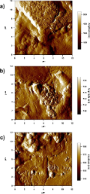
- to work was 1 in 100. Wamer and Yin found a phototoxic effect of eight decorative tattoo inks and permanent make-up inks that contained titanium dioxide on human dermal fibroblasts [38]. The phototoxic effect from the inks was attributed to the generation of hydroxyl radicals under UV excitation


Fulleropeptide esters as potential self-assembled antioxidants
Beilstein J. Nanotechnol. 2015, 6, 1065–1071, doi:10.3762/bjnano.6.107
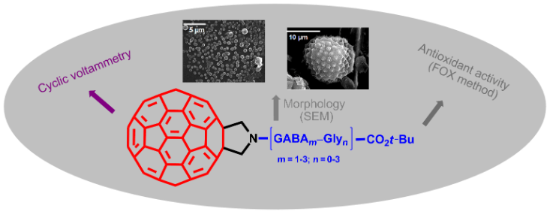
- affinities. Water-soluble fullerene–alanine adducts were tested as cytoprotective agents showing high effectiveness for removing the reactive oxygen species, such as superoxide anions and hydroxyl radicals [19][20]. The study of the penetration of fulleropeptide nanoparticles through skin represents a major
- significant antioxidant capacity to remove hydroxyl and superoxide radicals when incorporated into liposomes [23]. With respect to the design and synthesis of fulleropyrrolidine-based hybrids, we previously showed the synthesis of fullerene–steroid esters [24] and triple hybrids consisting of fullerene


Effects of swift heavy ion irradiation on structural, optical and photocatalytic properties of ZnO–CuO nanocomposites prepared by carbothermal evaporation method
Beilstein J. Nanotechnol. 2015, 6, 928–937, doi:10.3762/bjnano.6.96
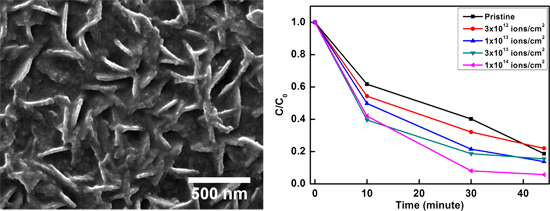
- of CuO. This helps to inhibit the recombination of photogenerated electrons and holes and improves the charge separation efficiency. The oxygen molecules adsorbed on the photocatalyst form superoxide anion radicals (•O2−) due to their interaction with electrons in the conduction band of ZnO. Surface
- hydroxyl groups produce highly reactive hydroxyl (•OH) radicals by reacting with holes in the valence band of CuO. The dye molecules are degraded by the reaction with both radicals (•OH and •O2−) [39][41]. For better understanding of the underlying mechanism, Yang et al. [42][43] have monitored the
- formation of hydroxyl radicals (•OH) and superoxide radicals (•O2−) during visible-light-induced photocatalytic degradation of acid orange and 4-nitrophenol. The formation of hydroxyl radicals (•OH) was detected by photoluminescence studies using terephthalic acid as a probe molecule, while 1,4-benzoquinone


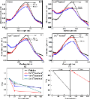

Tm-doped TiO2 and Tm2Ti2O7 pyrochlore nanoparticles: enhancing the photocatalytic activity of rutile with a pyrochlore phase
Beilstein J. Nanotechnol. 2015, 6, 605–616, doi:10.3762/bjnano.6.62
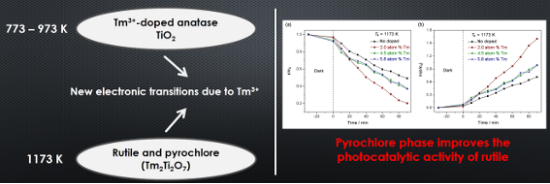
- . Surface hydroxy groups can react with photogenerated holes, inhibiting the recombination of an electron–hole pair, and thus enhancing charge transfer [33]. Additionally, they can also lead to the production of hydroxyl radicals, a highly oxidizing species in the degradation of organic compounds [34]. UV
- electrons and holes produce a reaction with attached molecules on the material surface and create reactive radicals. The electrons in the conduction band react with O2 to form superoxide anion radicals (O2−•) and the holes in the valence band react with water to form hydroxyl radicals (•OH). The activated
- radicals play a role in degrading pollutants [45]. It is generally suggested that the rate-limiting steps of the photocatalytic reaction of semiconductors are electron–hole recombination and electron transfer from the semiconductor surface to the adsorbed oxygen molecules [45][46][47][48]. In our case, the


Novel ZnO:Ag nanocomposites induce significant oxidative stress in human fibroblast malignant melanoma (Ht144) cells
Beilstein J. Nanotechnol. 2015, 6, 570–582, doi:10.3762/bjnano.6.59
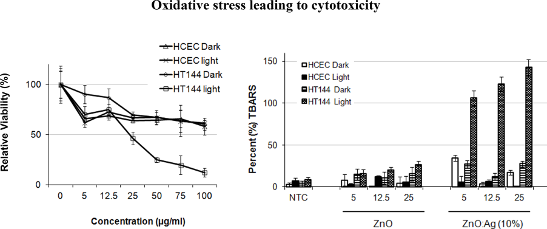
- thus exciting the photosensitizer to produce reactive oxygen species (ROS) such as singlet oxygen (1O2) and hydroxyl radicals (HO•) [6][7]. Photo-oxidation holds promises for the targeted treatment and controlled elimination of cancer cells [8]. ZnO NPs have also shown photo-oxidative anticancer




Palladium nanoparticles anchored to anatase TiO2 for enhanced surface plasmon resonance-stimulated, visible-light-driven photocatalytic activity
Beilstein J. Nanotechnol. 2015, 6, 428–437, doi:10.3762/bjnano.6.43
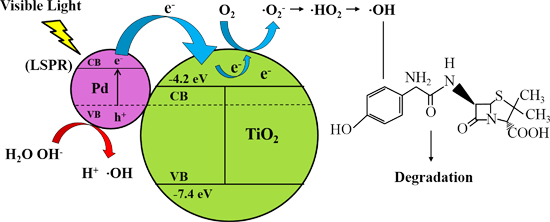
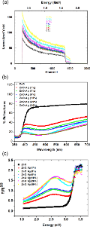
- possesses an appropriate band gap that ensure the simultaneous formation of superoxide anions (•O2−) and hydroxyl (•OH) radicals for the oxidation of organic compounds [6]. Despite all these advantages, TiO2 has two major drawbacks, which are (1) a wide band gap (ca. 3.2 eV for anatase) that restricts the
- resonance excites the electrons below the Fermi level of the Pd NPs in the VB to be transferred into the CB leaving behind the positive charges (h+) in the VB. As the CB of TiO2 is an electron acceptor, it readily accepts the electrons that are transferred from the Pd NPs to form superoxide anion radicals
- (•O2−). This is followed by protonation that yields •HO2 radicals. These instable •HO2 radicals further form H2O2 and lead to the formation of hydroxyl radicals (•OH), an active species that is responsible for the degradation of AMX. Besides that, when Pd NPs interacts with TiO2, it will form a


Nanoparticle shapes by using Wulff constructions and first-principles calculations
Beilstein J. Nanotechnol. 2015, 6, 361–368, doi:10.3762/bjnano.6.35
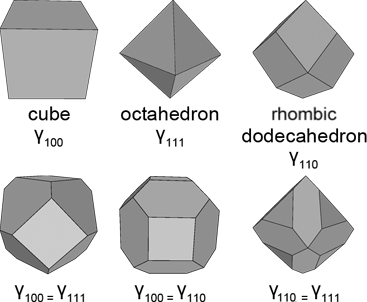
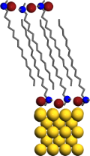
- ). Right: With adsorbed SCH3 radicals (29 nm in diameter, 502900 atoms, 10600 of which are step-edge atoms; (211) faces occupy almost 100% of the total area). Schematic representation of the adsorption of a surfactant on a gold surface. Spheres represent gold (yellow), silver (grey) and bromine (red) and



Synthesis of boron nitride nanotubes and their applications
Beilstein J. Nanotechnol. 2015, 6, 84–102, doi:10.3762/bjnano.6.9
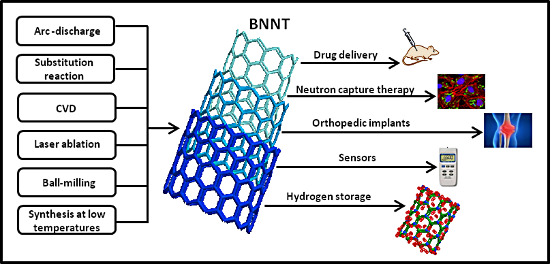
- . The most commonly preferred chemical functionalization is through the –OH on B atoms and –NH2 groups at the edges and defects, as shown in Figure 3 [15][44][63][64][65]. In one study, BNNTs were functionalized with amine groups by ammonia plasma irradiation [63]. It was predicted that NH2∙ radicals
- produced by NH3 plasma attached to B atom at the defects and edges whereas H∙ radicals attached to the N atoms of BNNTs. It was shown the amine-functionalized BNNTs (AF-BNNTs) were dispersible in chloroform. To investigate further chemical functionalization, the AF-BNNTs were coated with 3-bromopropanoyl




Formation of stable Si–O–C submonolayers on hydrogen-terminated silicon(111) under low-temperature conditions
Beilstein J. Nanotechnol. 2015, 6, 19–26, doi:10.3762/bjnano.6.3
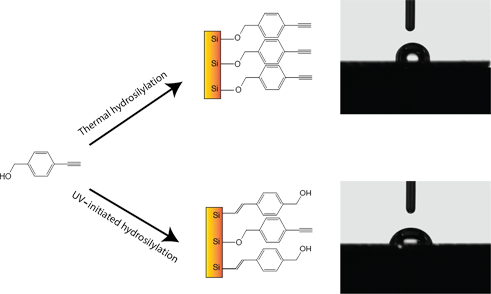
- Si–O–C bonds from ethynylbenzyl alcohol solution while the UV photochemical route ensures that the alcohol-based alkyne may also form Si–C bonds, thus producing a monolayer of mixed linkages. The results suggested the importance of surface radicals as well as the type of terminal group as being
- undisputed. However, as early as 2005, Wood et al. brought to attention that the cleavage of Si–H to form initial silyl radicals might not be the only mode for hydrosilylation to occur [12]. Typically, the commonly accepted notion is that thermal hydrosilylation requires temperatures above 150 °C in order to
- cleave the silicon–hydrogen bond at the surface to form surface radicals. However previous studies had shown that hydrosilylation could also proceed at a lower temperature (110 °C). Wood et al. further suggested a reaction mechanism in which trace oxygen is involved in the extraction of hydrogen off from


Interaction of dermatologically relevant nanoparticles with skin cells and skin
Beilstein J. Nanotechnol. 2014, 5, 2363–2373, doi:10.3762/bjnano.5.245
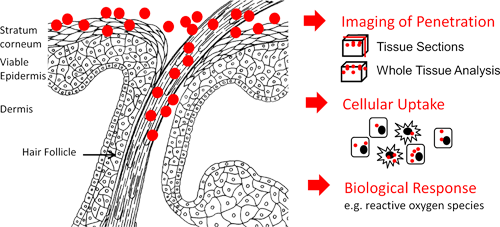
- toxicity were also shown for iron oxide nanoparticles [44]. In our group, we established protocols for the detection of free radicals in cells and in whole skin by electron paramagnetic resonance (EPR) spectroscopy. To detect nanoparticle-induced free radicals in cells, EPR on cell suspensions by using the
- spin probe TEMPO (2,2,6,6-tetramethylpiperidine-1-oxyl) was established. This semi-stable radical is a nitroxide and reacts with short-living radicals, giving the hydroxylamine which is EPR silent. The EPR signal of the spin probe decreases if radicals are present. After the addition of TEMPO to living
- cells, the EPR signal decreases slowly over time due to the metabolism of the cells. An irradiation of the cells with light in the UVB wavelength range induced additional radicals and decreased the EPR intensity of TEMPO faster and more drastically compared to untreated cells. When 75 nm silica


Liquid-phase exfoliated graphene: functionalization, characterization, and applications
Beilstein J. Nanotechnol. 2014, 5, 2328–2338, doi:10.3762/bjnano.5.242
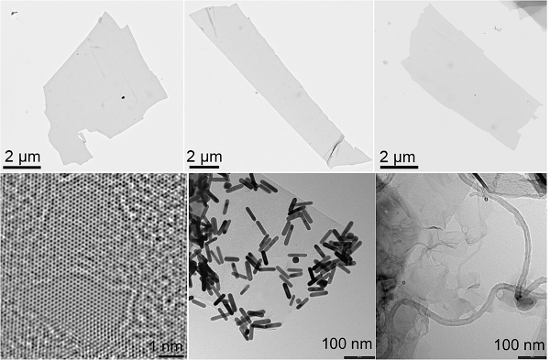
- the production of highly reactive chemical species including peroxides and radicals formed from the sonochemical reaction of the solvent in air [20]. The combined mechanochemical effects of ultrasonication prompt the exfoliation of graphite in organic solvents, surfactant solutions, or mixed organic
- linearly with the magnitude of the steric potential barrier. Production of larger graphene sheets As previously mentioned, ultrasonication is a highly energetic process that produces strongly oxidizing chemical species, such as radicals and peroxides. These radicals typically oxidize carbon atoms in
- graphene close to the defects and at the edges. Under prolonged periods of ultrasonication, the oxidation can cut graphene sheets into small pieces. A well-known strategy to mitigate the damage induced by radicals in different biological processes is through the addition of antioxidant. Following this




Nanobioarchitectures based on chlorophyll photopigment, artificial lipid bilayers and carbon nanotubes
Beilstein J. Nanotechnol. 2014, 5, 2316–2325, doi:10.3762/bjnano.5.240
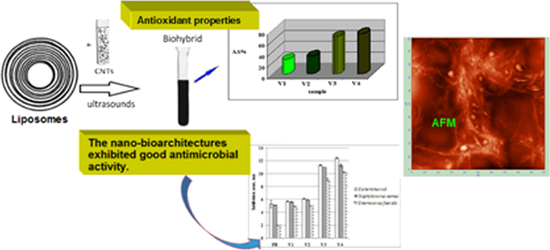
- , which has been exploited in the preparation of anti-aging cosmetics and sunscreen creams to protect skin against free radicals formed by the body or by UV sunlight [10]. The goal of this work is to achieve antioxidant and antibacterial bionanomaterials based on liposomes and carbon nanotubes, which
- samples was determined by chemiluminescence (CL) assay using a chemiluminometer (Turner Design, TD 20/20, USA). A wide range of oxygen free radicals (reactive oxygen species, ROS) [27][28] was formed by a generator system based on H2O2 in an alkaline buffer solution (Tris·HCl, pH 8.6) mimicking an
- /liposomes hybrids to scavenge free radicals. The oxygen radical scavenging ability of the samples was evaluated in terms of antioxidant activity (see Equation 2 in the section Characterization methods). The antioxidant profile of the liposomes and bio-composites displayed in Figure 8 reveals that nanocarbon


Carbon nano-onions (multi-layer fullerenes): chemistry and applications
Beilstein J. Nanotechnol. 2014, 5, 1980–1998, doi:10.3762/bjnano.5.207
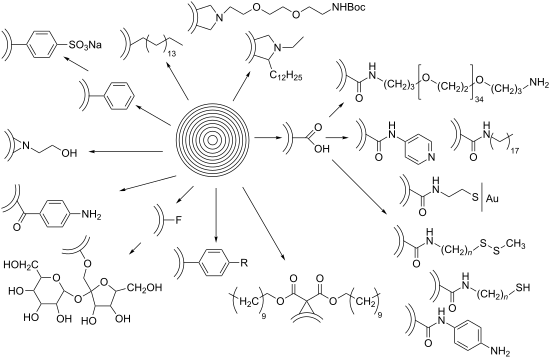
- form reactive bis-radicals [31]. After ultrasonication and heating of the CNOs and BODA in N-methyl-2-pyrrolidone (NMP) in a pressure vessel, a CNO–BODA copolymer was obtained. NMP suspensions of the CNO–BODA copolymer were found to be very stable, even at high concentrations of up to 0.67 mg·mL−1


PVP-coated, negatively charged silver nanoparticles: A multi-center study of their physicochemical characteristics, cell culture and in vivo experiments
Beilstein J. Nanotechnol. 2014, 5, 1944–1965, doi:10.3762/bjnano.5.205

- radiation induce genomic DSB, there is evidence in both cases that radicals are involved [114][115]. In the case of bleomycin, reasonable models suggest that metal ions play a role during DSB formation [116]. In the case of silver nanoparticles, it has also been proposed that DNA damage may result from
- radicals whose formation is catalyzed from silver ions generated after uptake of silver by phagocytosis [110]. In contrast to chemical modifications of genomic DNA by reactive oxygen species (ROS) which are difficult to prove, the presence of DSB that result from a radical attack are more easily to detect
- during cell culture processing. While V79B was originally isolated from lung tissue, the two other cell lines used in our study were derived from ovaries. The observed data raise the question whether tissues have a different sensitivity towards silver nanoparticles or possibly against free radicals. In





