Search results
Search for "shear" in Full Text gives 188 result(s) in Beilstein Journal of Nanotechnology.
Growth behaviour and mechanical properties of PLL/HA multilayer films studied by AFM
Beilstein J. Nanotechnol. 2012, 3, 778–788, doi:10.3762/bjnano.3.87
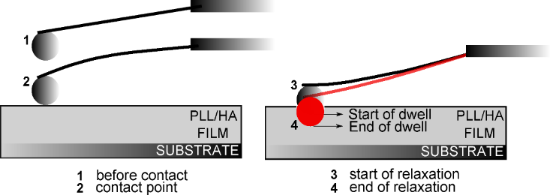
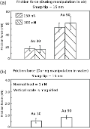
- exposed to a faster initial load and gives a hint about a non-Newtonian, shear-thinning behaviour [50]. Conclusion Mechanical properties of layer-by-layer assembled PLL/HA films with varied bilayer number were studied by scanning- and colloidal-probe atomic force microscopy. Detailed measurement and data
- . Both relaxation times decrease with increasing initial indentation velocity, suggesting a non-Newtonian, shear-thinning fluid character. Frequency-dependent AFM force [41] and quartz crystal microbalance measurements are planned for a better understanding of shear and friction effects on the mechanical


Effect of spherical Au nanoparticles on nanofriction and wear reduction in dry and liquid environments
Beilstein J. Nanotechnol. 2012, 3, 759–772, doi:10.3762/bjnano.3.85
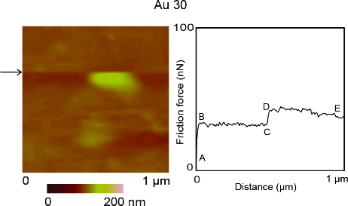
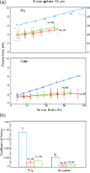
- use with Au nanoparticles suspended in DI water. In addition to the fact that Au nanoparticles are provided already suspended in DI water, the low viscosity of water and its ability to provide a surface of low shear strength [35] for sliding, makes it a good candidate as an operating fluid. Water is
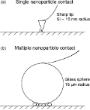
- contact pressure is reduced, leading to undeformed nanoparticles, which may roll between the surfaces. In water, the presence of a liquid film between the glass sphere and the silicon substrate provides an interface of low shear strength resulting in a lower coefficient of friction [35]. In addition
- contact pressure is reduced. This increases the chances of rolling for the undeformed nanoparticles as part of the friction-reduction mechanism. In the case of DI water without Au nanoparticles, a surface of low shear strength is obtained, which makes it easier for the sapphire ball to slide [35



Friction and durability of virgin and damaged skin with and without skin cream treatment using atomic force microscopy
Beilstein J. Nanotechnol. 2012, 3, 731–746, doi:10.3762/bjnano.3.83
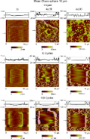
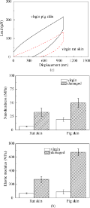
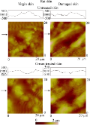
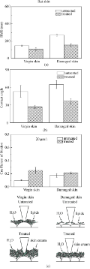
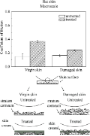
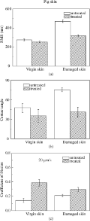
- . Liquid films (lipid and condensed water vapor) present on the skin surface reduce the interfacial shear strength leading to lower friction; however, a thicker film forms meniscus bridges at asperity contacts leading to higher friction [34][35][40]. Cream treatment moistens and softens the skin, which
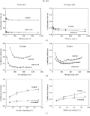
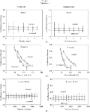
- reformation of meniscus bridges. As the velocity increases, the meniscus bridges cannot be fully reformed, resulting in a drop in adhesive force and coefficient of friction. In the case of cream-treated skin, the skin cream is typically a shear-thinning fluid, and the viscosity decreases with the increasing
- shear rate leading to a decrease in the coefficient of friction [6][36]. Figure 6b shows the coefficient of friction as a function of normal load. The data shows that the friction for untreated skin samples first decreases then levels off, whereas, for the treated skin samples, it first decreased then





Assessing the plasmonics of gold nano-triangles with higher order laser modes
Beilstein J. Nanotechnol. 2012, 3, 674–683, doi:10.3762/bjnano.3.77
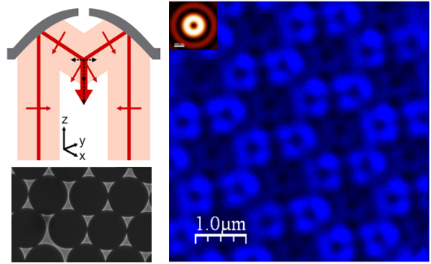
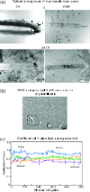
- sample surface or parallel to it. The parameters varied in the Fischer patterns were the size of the triangles, their height and the substrate material (which was either silicon or glass). Using integrated shear-force microscope, we can collect the topography from the sample surface and compare the
- denominations). Not all combinations of sphere size and film thickness could be produced since the film thickness has to be distinctly smaller than the polystyrene spheres in order to obtain flat triangles. Thicker triangles would have the form of a truncated pyramid [26]. By shear-force topographical
- . Plenty of water was used to rinse the surface in order to get rid of the physically adsorbed multilayers. Results and Discussion 1. Topography Investigating the triangle arrays with the shear-force topographical method implemented in our setup [22] and SEM characterisations, we find well aligned


Repulsive bimodal atomic force microscopy on polymers
Beilstein J. Nanotechnol. 2012, 3, 456–463, doi:10.3762/bjnano.3.52
- reported for the same sample based on the results of a resonant shear force experiment [29]. Thus, when imaging flat samples that present such varying elastic properties, topographic contrast is enhanced by the repulsive-imaging process. At a given setpoint, the softer component is substantially deformed



Conducting composite materials from the biopolymer kappa-carrageenan and carbon nanotubes
Beilstein J. Nanotechnol. 2012, 3, 415–427, doi:10.3762/bjnano.3.48
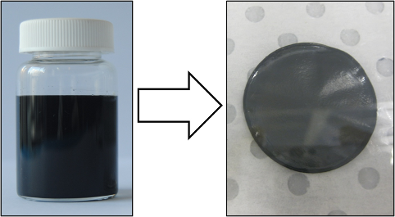
- flow-curve analysis. The viscosity was measured as a function of shear rate for KC solutions over a concentration range of 0.2–1.2% w/v at 21 °C (Figure 1a). All KC solutions displayed shear-thinning behaviour, i.e., decreasing viscosity (η) with increasing shear rate (). These flow curves were fitted
- to the well-known power-law model [44]: where K and n indicate the “consistency” and power-law index, respectively. Figure 1a shows that the viscosity of KC solutions increased with increasing concentration. For example, the apparent viscosity of the KC solution (at shear rate 21 s−1) increased from
- general [47]. Table 1 shows that KC solutions with a concentration <0.5% w/v have power-index values of ~0.8. However, for higher concentrations the solutions become more shear-thinning (n decreases), and thicker (K increases). Figure 1c shows a sharp increase in the apparent viscosity of the KC solution


Pulse-response measurement of frequency-resolved water dynamics on a hydrophilic surface using a Q-damped atomic force microscopy cantilever
Beilstein J. Nanotechnol. 2012, 3, 260–266, doi:10.3762/bjnano.3.29
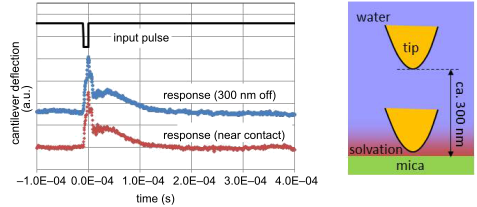
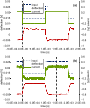
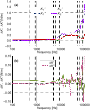
- hydration layer and its shear property, and thus complicates the data analysis [19]. In the case of the pulse-response measurement, the effect of such a flow is expected to be weaker. In the present measurement the feedback loop for regulation of the tip–sample gap must be suspended during the period of




Manipulation of gold colloidal nanoparticles with atomic force microscopy in dynamic mode: influence of particle–substrate chemistry and morphology, and of operating conditions
Beilstein J. Nanotechnol. 2011, 2, 85–98, doi:10.3762/bjnano.2.10
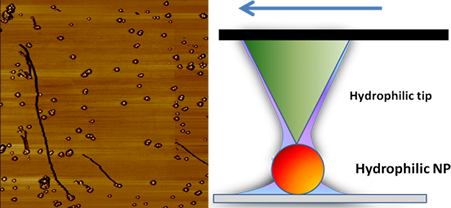
- intermittent tapping mode. The first mode used in AFM was the contact mode. Manipulation of large C60 islands on NaCl was performed by Lüthi et al. using contact AFM [11]. Even if the shear between islands and crystal surface can be derived from the frictional forces experienced by the AFM tip while scanning
- coefficient, τ is the shear strength, C the contact area, and α and β are the angles which are defined in Scheme 1. The subscripts tp and ps as of τ , C and μ represent the tip–particle and particle–substrate contacts, respectively. These results thus display the dependence of the movement of the particle on


Biomimetics inspired surfaces for drag reduction and oleophobicity/philicity
Beilstein J. Nanotechnol. 2011, 2, 66–84, doi:10.3762/bjnano.2.9
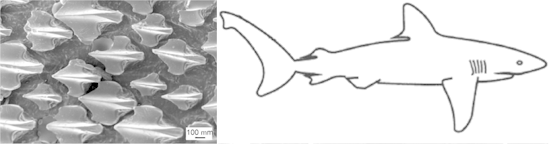
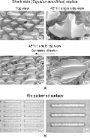
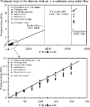
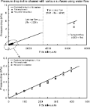
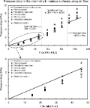
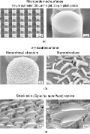
- and hierarchical structure. Bechert et al. [19] showed that a turbulent boundary layer on the shark skin surface with ribs can help to reduce turbulent shear stress (also see Dean and Bhushan [22]). The results of experimental measurements on shark skin replica showed that a reduction of pressure drop
- generally known that surfaces with a streamlined body can produce dramatic reductions of the fluid pressure drag with only a slight increase in shear stress in air flow [60]. It is also known that as the Reynolds number increases, the pressure drop becomes very large, resulting in larger pressure drag. The







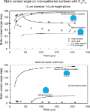


Switching adhesion forces by crossing the metal–insulator transition in Magnéli-type vanadium oxide crystals
Beilstein J. Nanotechnol. 2011, 2, 59–65, doi:10.3762/bjnano.2.8
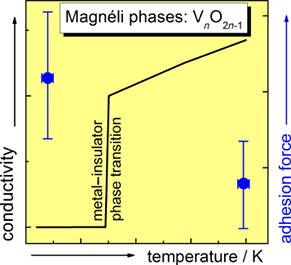
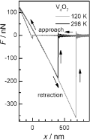
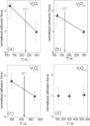
- general formulae (Ti,V)nO2n-1 or (W,Mo)nO3n-1 [4][5][6]. In a simplified way, the Magnèli phase structure can be derived from a perfect V2O5 crystal, which has one missing oxygen layer, i.e., the (121) plane, which is called the crystallographic shear (CS) plane and compensates for the non-stoichiometry



Defects in oxide surfaces studied by atomic force and scanning tunneling microscopy
Beilstein J. Nanotechnol. 2011, 2, 1–14, doi:10.3762/bjnano.2.1
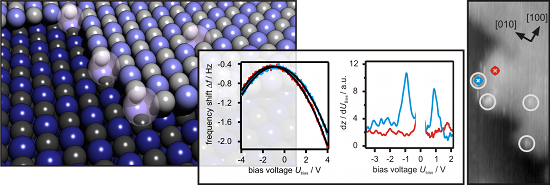
- are decoupled from the microscope. The dual mode NC-AFM/STM sensor (Figure 2c) is situated on a tripod scanner opposite the sample. The scanner, in turn, is mounted onto a coarse approach unit (walker). The microscope stage is shown in Figure 2b. The coarse approach is driven by the shear stack piezos
- defects such as color centers, which are preferably situated at lower coordinated sites, are sketched as bright clouds. Experimental setup. a) Schematic of an Eigler-style bath cryostat. b) The walker unit is situated on three shear stack piezos for the coarse approach. The x, y and z piezos are used
- ) sensor carrier, (F) tuning fork assembly, (G) sample (not fully drawn), (H) sample holder (not fully drawn), (I) sample stage (not fully drawn), (J) microscope stage, (K) walker support and (L) shear stack piezos. The base plate has a diameter of 10 cm. c) The NC-AFM/STM tuning fork sensor is glued onto


The description of friction of silicon MEMS with surface roughness: virtues and limitations of a stochastic Prandtl–Tomlinson model and the simulation of vibration-induced friction reduction
Beilstein J. Nanotechnol. 2010, 1, 163–171, doi:10.3762/bjnano.1.20
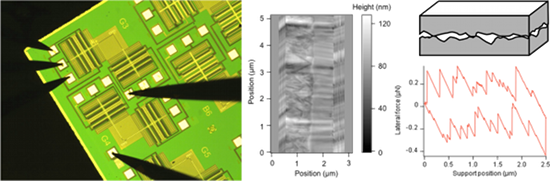
- surface asperities [26]. The static shear strength itself is determined by OH-bridging forces between the surfaces, direct chemical Si–O–Si bonds between the surfaces (the rupturing of these bonds leads to wear of the surfaces in the long run), and/or possibly liquid water meniscus strain or even gluing


Review and outlook: from single nanoparticles to self-assembled monolayers and granular GMR sensors
Beilstein J. Nanotechnol. 2010, 1, 75–93, doi:10.3762/bjnano.1.10
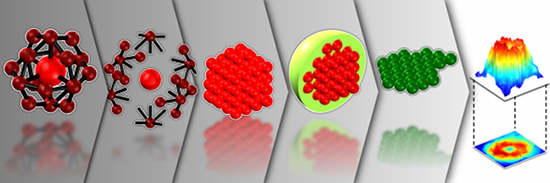
- order [49]. Additionally, friction and shear forces can arise between the particles on the one hand and between particles and substrate on the other hand [57][58]. In the latter case, the forces strongly depend on the surface properties such as structure and roughness. Thus, the choice of substrate is