


Search results
Search for "ultrahigh vacuum" in Full Text gives 180 result(s) in Beilstein Journal of Nanotechnology.
Intermolecular vs molecule–substrate interactions: A combined STM and theoretical study of supramolecular phases on graphene/Ru(0001)
Beilstein J. Nanotechnol. 2011, 2, 365–373, doi:10.3762/bjnano.2.42
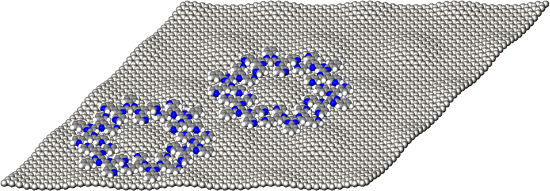
- of the adsorption potential on the graphene/Ru(0001) substrate, is of similar magnitude for both molecules. Experimental Experiments The experiments were performed in a standard ultrahigh vacuum (UHV) system (base pressure 2 × 10⁻¹⁰ mbar), equipped with a commercial variable temperature scanning


Switching adhesion forces by crossing the metal–insulator transition in Magnéli-type vanadium oxide crystals
Beilstein J. Nanotechnol. 2011, 2, 59–65, doi:10.3762/bjnano.2.8
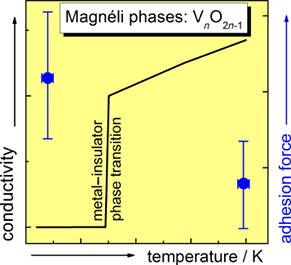
- between the cleavage planes of various vanadium oxide Magnéli phases (n = 3 … 7) and spherical titanium atomic force microscope (AFM) tips by systematic force–distance measurements with a variable-temperature AFM under ultrahigh vacuum conditions (UHV). The results show, for all investigated samples, that
- , is thus better suited for quantitative and comparative adhesion force measurements [22][23][24]. Previously, the applicability and the sensitivity of the AFM in the spherical probe configuration (i.e., with a microsphere as a probe tip) operated under ultrahigh vacuum conditions for the



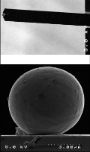
Structure, morphology, and magnetic properties of Fe nanoparticles deposited onto single-crystalline surfaces
Beilstein J. Nanotechnol. 2011, 2, 47–56, doi:10.3762/bjnano.2.6
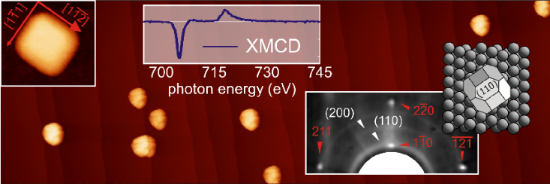
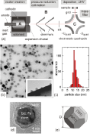
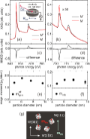
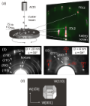
- Experiments on exposed mass-filtered Fe nanoparticles on (ferromagnetic) supports require in situ cluster deposition as well as surface sensitive analysis techniques performed under ultrahigh vacuum conditions. To motivate the need of our combined approach, we first introduce the arc cluster ion source (ACIS
- other pulsed light sources [26]. For the present experiments the PACIS design has been modified to allow a high and continuous flux of mass-filtered nanoparticles (size regime: 4 nm to 25 nm) with a moderate size distribution in surface science experiments [27][28]. The resulting ACIS is ultrahigh
- vacuum compatible, small in size to allow easy transportation and can be flexibly attached to different experimental stations, e.g., laboratory-based STM experiments, different end stations at synchrotron light sources such as BESSY (Berlin, Germany) and more recently, the Elmitech PEEM at the SIM

Oriented growth of porphyrin-based molecular wires on ionic crystals analysed by nc-AFM
Beilstein J. Nanotechnol. 2011, 2, 34–39, doi:10.3762/bjnano.2.4
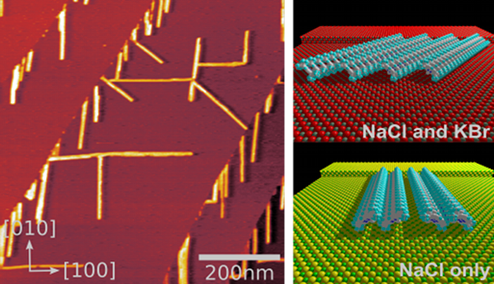
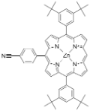
- their intermolecular π–π stacking. Experimental Experiments were performed under ultrahigh vacuum (UHV) conditions with a base pressure below 10−10 mbar using a home built non-contact atomic force microscope operated at rt [39]. In the nc-AFM mode, the tip-sample distance is usually controlled by


Defects in oxide surfaces studied by atomic force and scanning tunneling microscopy
Beilstein J. Nanotechnol. 2011, 2, 1–14, doi:10.3762/bjnano.2.1
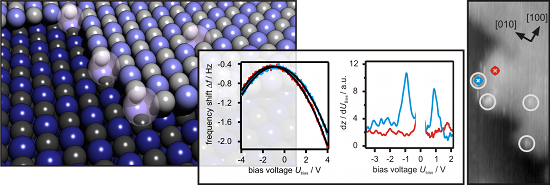
- atomic force microscopy (FM-AFM) or dynamic force microscopy (DFM). For the stability of tip and sample as well as for the reduction of piezo creep, piezo hysteresis, thermal drift and noise level, the setup was operated in ultrahigh vacuum (UHV) at low temperature (5 K). The resulting high stability


Other Beilstein-Institut Open Science Activities



