


Search results
Search for "3D models" in Full Text gives 6 result(s) in Beilstein Journal of Nanotechnology.
Comparative study on 3D morphologies of delignified, single tracheids and fibers of five wood species
Beilstein J. Nanotechnol. 2026, 17, 239–250, doi:10.3762/bjnano.17.16
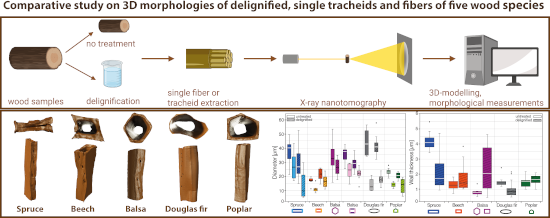
- . Scanning electron microscopy was used to compare the morphology between untreated and delignified fibers and tracheids. X-ray tomography enabled us to reconstruct high-resolution 3D models of delignified single tracheids or fibers, providing information on the pit arrangements. Moreover, delignification
- delignification. The 3D models provide a valuable resource for (1) understanding interspecies differences of fibers and tracheids, (2) optimizing the use of delignified wood in industrial applications (including bio-based and bio-inspired materials), and (3) physical modeling of wood regarding questions of wood
- biomechanics and water management. Keywords: 3D models; delignification; tracheid; wood; X-ray nanotomography; Introduction Wood fibers in hardwood and tracheids in softwood play a crucial role in the structure and function of vascular plants, particularly in water conduction and mechanical support [1][2


Towards a quantitative theory for transmission X-ray microscopy
Beilstein J. Nanotechnol. 2025, 16, 1113–1128, doi:10.3762/bjnano.16.82
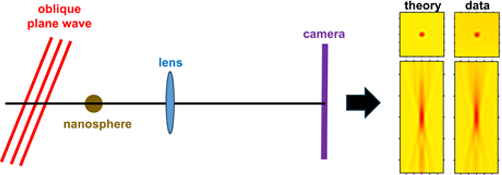
- . In the current study, we continue this effort toward further development of 3D models for TXMs. First, we introduce Mie theory as an alternate approach for light propagation through the sample. Mie theory provides an exact solution to Maxwell’s equations but limited to spheres of known refractive
- index [22] and so is well suited to the gold nanospheres that we use as test objects in this study. We therefore name our model the partially coherent Mie (pc-Mie) model. Second, we compare the theory for our model to the preceding two 3D models, providing a deeper understanding of the principles that
- by the condenser; (2) light propagation through the sample to the zone plate; and (3) light propagation from the zone plate to the camera. The key features of each model and their assumptions are summarized in Table 1. 2.1 Illumination of the sample by the condenser Neither of the preceding 3D models



A low-kiloelectronvolt focused ion beam strategy for processing low-thermal-conductance materials with nanoampere currents
Beilstein J. Nanotechnol. 2024, 15, 1197–1207, doi:10.3762/bjnano.15.97

- various ion species in bulk as well as thin samples (where ions might transmit through the sample) should be systematically investigated and evaluated with 1D and 3D models. The proposed further studies will help develop faster and more robust approaches, especially with the increase in biological and



Effects of gold and PCL- or PLLA-coated silica nanoparticles on brain endothelial cells and the blood–brain barrier
Beilstein J. Nanotechnol. 2019, 10, 941–954, doi:10.3762/bjnano.10.95
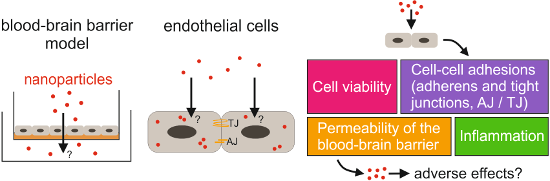
- , namely co-culture or 3D models that mimic the in vivo situation more closely. Experimental Cell culture The immortalized rat brain capillary endothelial cell line rBCEC4 was characterized and kindly provided by Dr. Ingolf E. Blasig (Leibniz-Forschungsinstitut für Molekulare Pharmakologie, Berlin, Germany
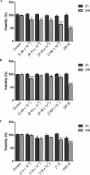

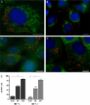


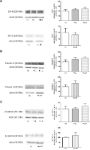
Nanoparticle delivery to metastatic breast cancer cells by nanoengineered mesenchymal stem cells
Beilstein J. Nanotechnol. 2018, 9, 321–332, doi:10.3762/bjnano.9.32
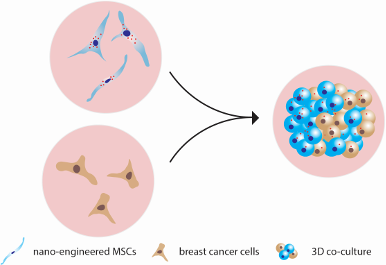
- [14][15][16]. Moreover, in vitro 3D cultures could fill the gap between 2D in vitro testing and in vivo animal models [17][18]. Spheroid-based 3D models are widely used to test cancer cell growth/proliferation, invasion, angiogenesis, and immune interactions and have been employed in drug screening



Virtual reality visual feedback for hand-controlled scanning probe microscopy manipulation of single molecules
Beilstein J. Nanotechnol. 2015, 6, 2148–2153, doi:10.3762/bjnano.6.220
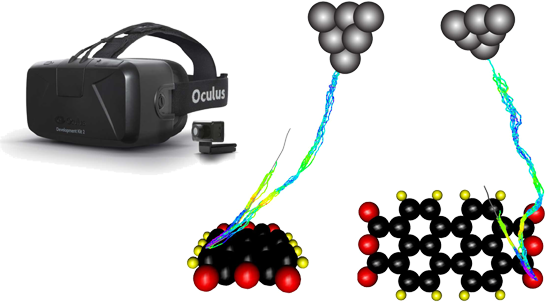
- within the monolayer. Using the described procedure we were able to contact and lift the same molecule with the same tip which, as Figure 4 shows (see also the interactive 3D models provided in Supporting Information File 2), resulted in a highly reproducible behaviour of I(x,y,z) and Δf(x,y,z
- for additional information). Supporting Information File 132: Interactive 3D models of the data shown in Figure 4. In order to view it unpack and open either ’df.html’ (frequency shift) or ’I.html’ (logarithm of the current) file.


Other Beilstein-Institut Open Science Activities



