Search results
Search for "E. coli" in Full Text gives 77 result(s) in Beilstein Journal of Nanotechnology.
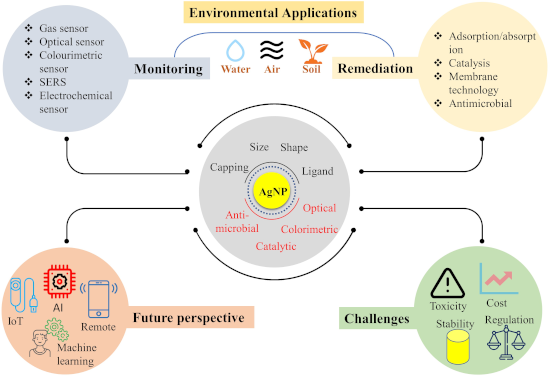
Environmental applications of silver nanoparticles: state-of-the-art review and emerging trends
Beilstein J. Nanotechnol. 2026, 17, 697–736, doi:10.3762/bjnano.17.49
- inhibition zone of 22.5 and 25 mm in chloroform and ethanol, respectively, against P. fragi. In contrast, inhibition of E. coli was achieved in methanol (23.5 mm) [74]. In another study, AgNPs stabilized with Eriobotrya japonica seed extract showed enhanced antibacterial activity compared to penicillin. The
- author found that E. coli, Klebsiella, and S. mutans showed inhibition zones of 20 and 15 mm upon exposure to 150 mg/mL AgNPs [75]. In addition, AgNPs demonstrated efficacy in inactivating viruses, including adenovirus, hepatitis B, herpes simplex, influenza A, Chikungunya virus, and Zika virus, by
- provide antibacterial properties. The results demonstrate that adding 0.5% AgNPs kills Colitinja and E. coli bacteria, while 0.5% chitosan NPs are effective against E. coli [143]. A membrane consisting of AgCl and COOH-MWCNT was used for ultrafiltration of water. An increased flux of 150% (520 L·m2·h−1


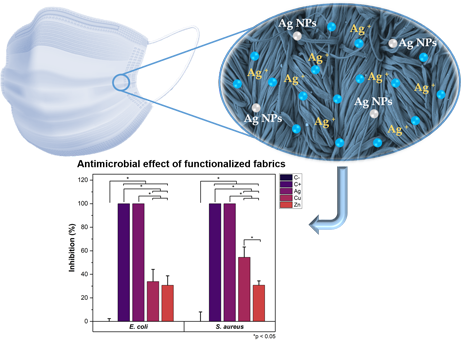
Durable antimicrobial activity of fabrics functionalized with zeolite ion-exchanged nanomaterials against Staphylococcus aureus and Escherichia coli
Beilstein J. Nanotechnol. 2026, 17, 262–274, doi:10.3762/bjnano.17.18
- ]. The antimicrobial activity of copper alloys (61–95% Cu) against E. coli O157 was tested at different temperatures (4 and 22 °C) [14]. The highest antibacterial effect was observed at 22 °C, but only alloys containing 95% of Cu completely killed E. coli. Chitosan–copper nanoparticles exhibited high
- a self-cross-linking binder. The functionalized textiles were tested against S. aureus, Escherichia coli (E. coli), Klebsiella pneumoniae, Klebsiella oxytoca, Proteus mirabilis, and Aspergillus niger. It has been shown that at concentrations of 100 and 150 μg·mL−1, Ag NP-functionalized cotton and
- the pad–dry–cure method [28]. The silver-modified fabrics display antimicrobial activity against S. aureus, E. coli, Candida albicans, Candida glabrata, and Candida parapsilosis. Copper oxide nanoparticles were deposited on the cotton fabric in two steps: first, through microencapsulation using an




Internal 3D temperature mapping in biological systems using ratiometric light-sheet imaging and lipid-coated upconversion nanothermometers
Beilstein J. Nanotechnol. 2025, 16, 2306–2316, doi:10.3762/bjnano.16.159
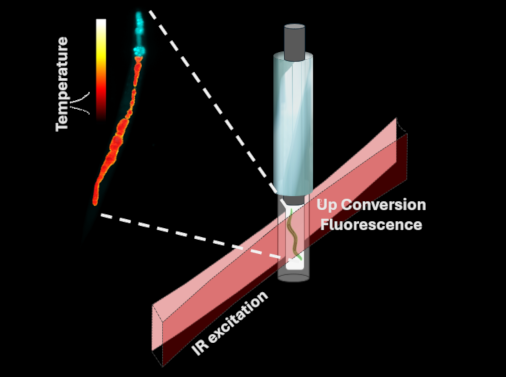
- ; however, the success of the coating is confirmed by the stable dispersion of UCNPs in water, which prevents aggregation. C. elegans culture and maintenance The nematodes used in our experiments, N2 wild-type C. elegans, were cultivated on nematode growth medium (NGM) plates previously seeded with E. coli
- OP50. Nematode transfer was performed every two days, moving a chunk of agar from a three-to-five-day-old plate to a new NGM plate seeded with E. coli. The nematodes were cultivated at room temperature (≈23 °C). C. elegans feeding with UCNPs To feed the nematodes with UCNPs, ten to twelve nematodes
- , each approximately 1 mm in length, were selected and individually transferred from a three-day-old cultivation plate to a fresh small NGM plate (35 mm in diameter) that was not seeded with E. coli OP50. The nematodes transfer was gently conducted using a stereomicroscope (ZEISS, Stemi 2000) equipped


Optical bio/chemical sensors for vitamin B12 analysis in food and pharmaceuticals: state of the art, challenges, and future outlooks
Beilstein J. Nanotechnol. 2025, 16, 2207–2244, doi:10.3762/bjnano.16.153


Rapid synthesis of highly monodisperse AgSbS2 nanocrystals: unveiling multifaceted activities in cancer therapy, antibacterial strategies, and antioxidant defense
Beilstein J. Nanotechnol. 2025, 16, 2105–2115, doi:10.3762/bjnano.16.145
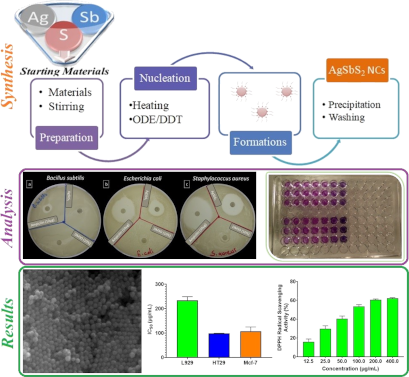
- nm) was evaluated by a disc diffusion assay [23]. In this study, overnight cultures of S. aureus, B. subtilis, and E. coli clinical pathogens were inoculated separately on Mueller–Hinton agar (MHA) plates. NCs were dissolved in 10% DMSO. Following, sterile discs (6 mm diameter) loaded with 10 µL (20
- . [26]. Bacterial suspensions (S. aureus, B. subtilis, and E. coli) were prepared in Mueller–Hinton broth (MHB; Merck, Germany) at a density equivalent to 0.5 McFarland and adjusted to 105–106 CFU/mL. Sample stock solutions (10 mg/mL in 1% DMSO) were serially diluted in 96-well plates to final
- against gram-positive (B. subtilis and S. aureus) and gram-negative bacteria (E. coli) was investigated. The measured ZOI values are given in Table 1 and Figure 3. Following a 24 h incubation period, the antimicrobial efficacy against B. subtilis, S. aureus, and E. coli bacteria was scrutinized. The NCs


Self-assembly and adhesive properties of Pollicipes pollicipes barnacle cement protein cp19k: influence of pH and ionic strength
Beilstein J. Nanotechnol. 2025, 16, 1863–1872, doi:10.3762/bjnano.16.129
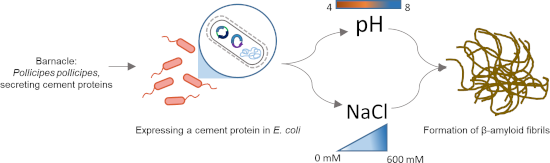
- , permanent attachment to a wide range of natural and synthetic surfaces [1][14][15]. Notably, the absence of DOPA means that several barnacle cement proteins have been produced in E. coli, providing an advantage over mussel adhesive proteins in terms of reproducibility and scalability [16][17][18][19][20][21
- work, we expressed recombinant P. pollicipes cp19k (rPpolcp19k) in E. coli and identified key environmental modulators of fibril formation by the protein. Transmission electron microscopy (TEM) was used to study the rate of fibril formation and morphology under varied pH and salt concentration
- conformation and adhesion in the protein. Results Protein expression and fibril formation Co-expression of rPolcp19k-his with E. coli GroEL-GroES chaperones to improve folding was performed as described previously [21]. Purified rPolcp19k-his protein yields of 1.8 to 2 mg per litre of E. coli culture were


Enhancing the therapeutical potential of metalloantibiotics using nano-based delivery systems
Beilstein J. Nanotechnol. 2025, 16, 1350–1366, doi:10.3762/bjnano.16.98
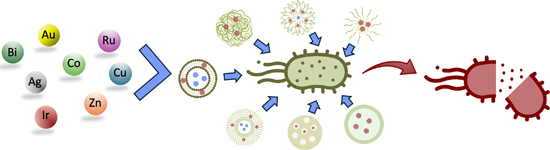
- nanofiber composites, resulting in materials with promising antimicrobial properties [119]. One of the composites exhibited a stable and continuous release of the Cu(I) complex during the first 12 h, followed by a slower but controlled release for up to 20 days. Antibacterial efficacy tests against E. coli
- , and the resulting formulation was evaluated regarding its antimicrobial activity against Gram-positive bacteria (e.g., S. aureus and B. subtilis) and Gram-negative strains (e.g., E. coli and P. aeruginosa) [121]. Unfortunately, encapsulation led to reduced immediate efficacy compared to the free Zn
- colleagues. Thus, the complex formed upon treatment of the flavonoid catechin (CAT, 17) (Figure 4) and a Zn(II) salt was encapsulated in β-CS-NPs, and the antibacterial performance against E. coli and L. innocua was subsequently investigated [123]. Nano-encapsulated systems exhibited low polydispersity and


Functional bio-packaging enhanced with nanocellulose from rice straw and cinnamon essential oil Pickering emulsion for fruit preservation
Beilstein J. Nanotechnol. 2025, 16, 1234–1245, doi:10.3762/bjnano.16.91
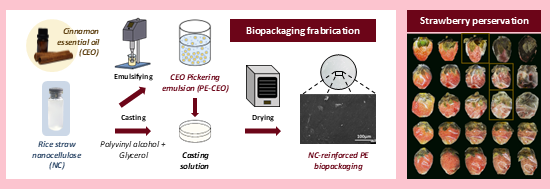
- cinnamaldehyde and other phenolic compounds in CEO, which act as natural UV absorbers [50]. The antimicrobial properties of the biopackaging were assessed by a time-kill assay against E. coli and S. aureus after 24 h of exposure (Figure 4c,e). rBP exhibited slight inhibitions of E. coli and S. aureus (<20
- the sample. (a) DPPH scavenging activity, (b) UV–vis transmittance, and (d) opacity at different PE-CEO concentrations (2%, 4%, 6%, 8%, and 10%(v/w)). (c) Counted colonies and (e) inhibition rate from time-kill analysis using rCBP samples at 10% (v/w) PE-CEO after 24 h against E. coli and S. aureus



Supramolecular hydration structure of graphene-based hydrogels: density functional theory, green chemistry and interface application
Beilstein J. Nanotechnol. 2025, 16, 806–822, doi:10.3762/bjnano.16.61
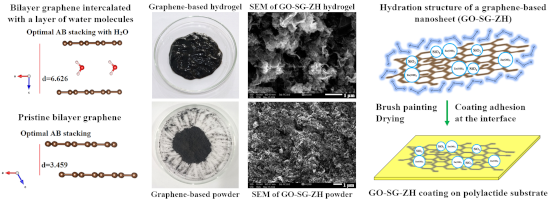
- antibacterial activity against E. coli and S. aureus (the positive control was the antibiotic penicillin). Inhibition zone assays were used to evaluate antibiofilm properties of uncoated and coated plastic films [14][25]. Coating stability of plastic films in an environment simulating aqueous food was tested
- 9). The photographic results showed inhibition zones against E. coli (Figure 9a) and S. aureus (Figure 9b). The inhibition zones resulted from the diffusion of ZH nanoparticles and Zn2+ cations from the hydrogel to the surrounding agar. As the GO-SG-ZH hydrogel is antibacterial, the brush coating of
- the GO-SG-ZH hydrogel on PLA films produced an antibacterial coating on the substrate. Antibacterial tests of uncoated and coated PLA films are described in Figure 10, where the interfaces between PLA films and agar/E. coli plates are displayed. Before the incubation process, E. coli bacteria did not


A formulation containing Cymbopogon flexuosus essential oil: improvement of biochemical parameters and oxidative stress in diabetic rats
Beilstein J. Nanotechnol. 2025, 16, 617–636, doi:10.3762/bjnano.16.48
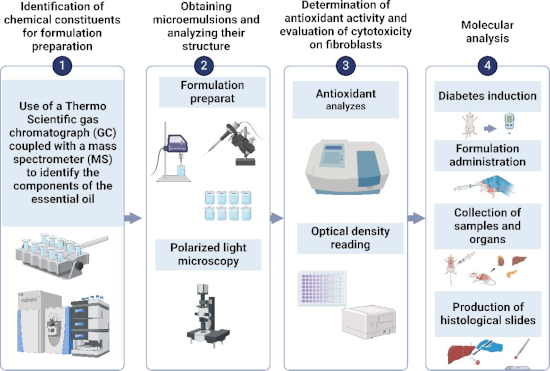
- study, room temperature was used, which may also explain why the antioxidant action was maintained. EOCF, on E. coli and S. Aureus bacteria, showed antioxidant activity and control in pathogenic species resistant to oxidative stress. The authors also emphasized that EOCF acted as a potent attenuator of




Polyurethane/silk fibroin-based electrospun membranes for wound healing and skin substitute applications
Beilstein J. Nanotechnol. 2025, 16, 591–612, doi:10.3762/bjnano.16.46



Fabrication and evaluation of BerNPs regarding the growth and development of Streptococcus mutans
Beilstein J. Nanotechnol. 2025, 16, 308–315, doi:10.3762/bjnano.16.23
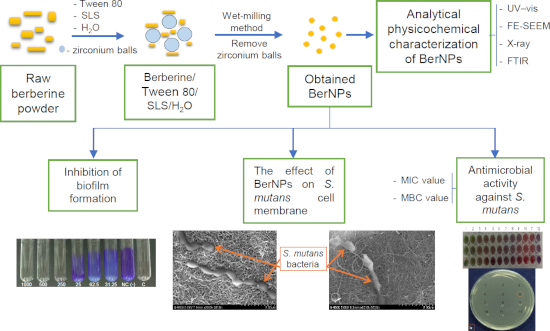
- inhibitory activity against pathogenic bacteria have been reported. In 2022, Nguyen et al. fabricated berberine nanoparticles (BerNPs) by antisolvent precipitation (ASP) using glycerol as a safe organic solvent and evaluated their antibacterial activity on S. aureus and E. coli O157:H7 [12]. Additionally


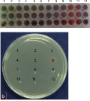


Characterization of ZnO nanoparticles synthesized using probiotic Lactiplantibacillus plantarum GP258
Beilstein J. Nanotechnol. 2025, 16, 78–89, doi:10.3762/bjnano.16.8
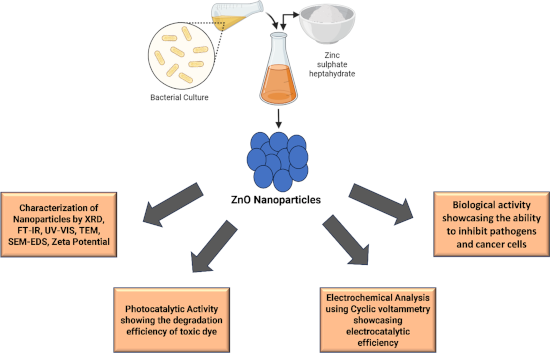
- , demonstrating inhibition against E. coli, C. perfringens, C. difficile, and Salmonella enterica serovar typhi. Similarly, Mohd Yusof et al. [23] observed antibacterial effects of ZnO NPs on pathogenic bacteria, underscoring their potential for combating bacterial infections. It is noteworthy that S. aureus has
- revealed strong antibacterial activity against both Gram-positive and Gram-negative bacteria. Inhibitory zones around the nanoparticles for S. aureus were 23.1 mm, and for E. coli 17.0 mm. These results indicate that this biogenic synthesis route may yield particles with antibacterial activity against all


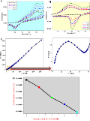

Interface properties of nanostructured carbon-coated biological implants: an overview
Beilstein J. Nanotechnol. 2024, 15, 1041–1053, doi:10.3762/bjnano.15.85
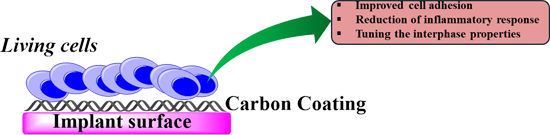
- bactericidal effects. The authors also proved the cytocompatibility of the bactericidal coatings. GO showed similar results on titanium surfaces as reported by Yang et al. [115], reporting antibacterial activity of over 99% against both E. coli or S. aureus when a small doping with copper was applied. The
- contrast, functionalized oxidized ND layers were able to inhibit the growth of E. coli comparable to the effect of ampicillin [123]. Similarly, mannose ND coatings interfered with the proliferation of uropathogenic bacteria, representing a solid choice to prevent catheterization [124][125] and targeting



A review on the structural characterization of nanomaterials for nano-QSAR models
Beilstein J. Nanotechnol. 2024, 15, 854–866, doi:10.3762/bjnano.15.71
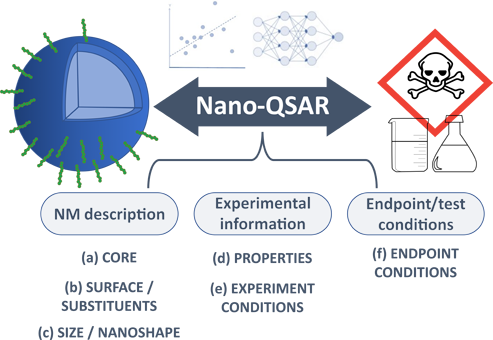
- worth to note that Pathakoti et al. [61] included the light exposure as a variable in their toxicity models of metal oxides versus E. coli, obtaining two series of toxicity data for the same set of NMs. Analogously, Basant and collaborators considered toxicity values measured under different light
- conditions in E. coli and in HaCaT cells in a multi-target QSTR model [88]. Conclusion In this review we have analyzed in depth the descriptors used in the literature in QSAR and related in silico prediction models for NMs. Our review highlights that the high degree of variability in the NM properties is a


Electrospun polysuccinimide scaffolds containing different salts as potential wound dressing material
Beilstein J. Nanotechnol. 2024, 15, 781–796, doi:10.3762/bjnano.15.65
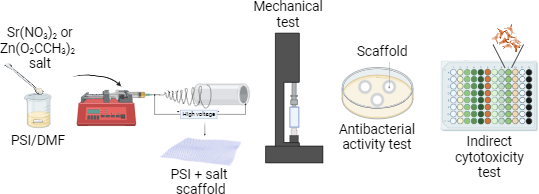
- ); strontium nitrate (Reanal, Hungary); ʟ-aspartic acid (99%, Amresco, USA); phosphoric acid (≥99.0%, Sigma-Aldrich, USA); E. coli (ATCC 25922); P. aeruginosa (ATCC 27853); B. subtilis (ATCC 6633); S. epidermidis (ATCC 14990); Mueller–Hinton agar (Biolab Zrt., Hungary); minimum essential medium (MEM, Gibco
- using four bacterial strains (American Type Culture Collection, ATCC): E. coli (Gram-negative), P. aeruginosa (Gram-negative), S. epidermidis (Gram-positive), and B. subtilis (Gram-positive). A 24 h culture was made from each strain, and an amount of inoculum was suspended into 5 mL of saline solution
- active protection. Only a few studies have demonstrated the antibacterial effects of zinc against S. mutans [64] and of strontium against S. aureus and E. coli [65]. Our work determined the inhibition and diffuse zones of four bacterial strains (E. coli, P. aeruginosa, S. epidermidis, and B. subtilis



Functional fibrillar interfaces: Biological hair as inspiration across scales
Beilstein J. Nanotechnol. 2024, 15, 664–677, doi:10.3762/bjnano.15.55
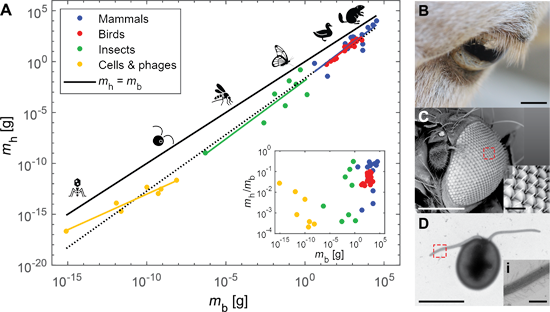
- serve multiple roles at the same time. Hence, one should avoid understanding these hairs’ existence from a single, locomotory perspective. While the flagella of E. coli is most obviously an apparatus for swimming motility, it can also help the cell to attach to a surface and act as a sensor thereafter
- [113]. Intriguingly, even after attachment, having motile flagella still matters for the cell as it appears to enable sensing of substrate stiffness [114]. In addition to flagella, other hairs of E. coli include the type-I pili (frimbriae) and type-IV pili [113]. Collaboration between these hairs also
- circular trajectories hinders the cell’s ability to explore the surface thoroughly. Thus, possibly with the help of the other hairs, E. coli near the surface can transiently attach to the surface to break the circular trajectories, thus, pushing their exploration efficiency close to the theoretical optimum


New application of bimetallic Ag/Pt nanoplates in a colorimetric biosensor for specific detection of E. coli in water
Beilstein J. Nanotechnol. 2024, 15, 95–103, doi:10.3762/bjnano.15.9
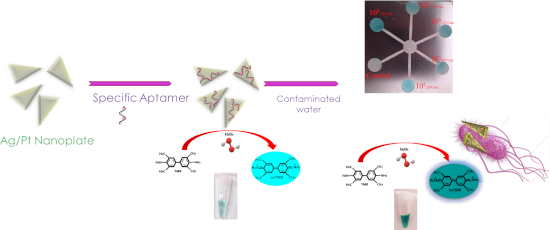
- Department of Pharmaceutical Biomaterials and Medicinal Biomaterials Research Center,Faculty of Pharmacy, Tehran University of Medical Sciences, Tehran, Iran 10.3762/bjnano.15.9 Abstract A fast and sensitive aptasensor was developed using nanoplates with peroxidase activity as a novel approach. E. coli
- . This nanobiosensor has the ability to specifically bind to E. coli, increasing the peroxidase activity of the apt-Ag/Pt NPL. Finally, the blue color of the solution in the contaminated water samples was increased in the presence of 3,3′,5,5′-tetramethylbenzidine (TMB) as a substrate and H2O2. The assay
- can be completed in 30 min and the presence of E. coli levels can be distinguished with the naked eye. The absorbance at 652 nm is proportional to pathogen concentration from 10 to 108 CFU·mL−1, with a detection limit of 10 CFU·mL−1. The percent recovery for the water samples spiked with E. coli is 95


Fluorescent bioinspired albumin/polydopamine nanoparticles and their interactions with Escherichia coli cells
Beilstein J. Nanotechnol. 2023, 14, 1208–1224, doi:10.3762/bjnano.14.100
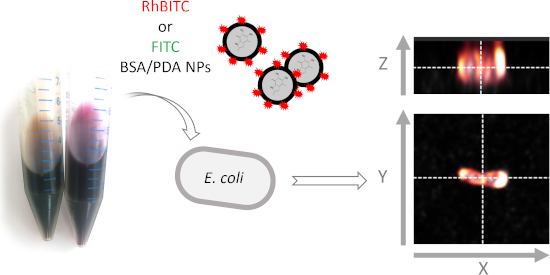
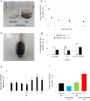
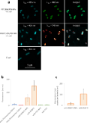
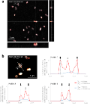
- and RhBITC-BSA/PDA NPs penetrated and accumulated in both cell wall and inner compartments of Escherichia coli (E. coli) cells. The fluorescence signals were diffuse or displayed aggregate-like patterns with both labelled NPs and free dyes. RhBITC-BSA/PDA NPs led to the most intense fluorescence in
- cells. Penetration and accumulation of NPs was not accompanied by a bactericidal or inhibitory effect of growth as demonstrated with the Gram-negative E. coli species and confirmed with a Gram-positive bacterial species (Staphylococcus aureus). Altogether, these results allow us to envisage the use of
- protein and to determine whether they can enter and accumulate in bacterial cells. The investigation has been conducted with NPs made of polydopamine (PDA) and bovine serum albumin (BSA), and Escherichia coli (E. coli) bacteria as a bacterial model. Three different types of fluorescent BSA/PDA NPs have



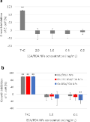
Recognition mechanisms of hemoglobin particles by monocytes – CD163 may just be one
Beilstein J. Nanotechnol. 2023, 14, 1028–1040, doi:10.3762/bjnano.14.85
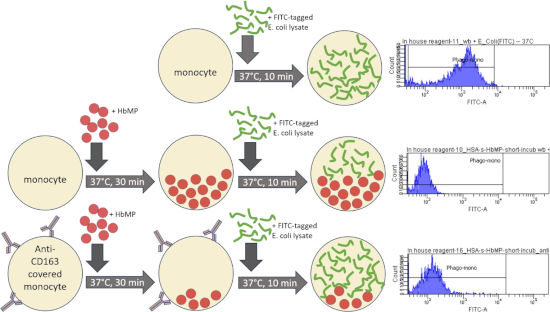
- block the monocytic membrane protein, as formerly described by Schaer and co-workers [27]. For a reference sample, the phagocytic capacity of monocytes was fully utilized for the uptake of FITC-labeled E. coli lysate over a period of 10 min at 37 °C (commercially available phagocytosis tests use lysate
- rather than whole bacteria for the higher phagocytosis efficacy of lysates). For comparison, samples were prepared in which the cells were able to phagocytose either unlabeled E. coli lysate or HbMP in a pre-feeding step (approximately 100 HbMPs per leukocyte). The incubation period here was 120 min. In
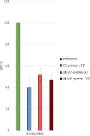
- confirmed with a reference sample, and the maximum MFI was established. Phagocytes from whole blood were able to take up FITC-labeled E. coli lysate unhindered for 10 min at 37 °C (reference). The monocyte population showed a distinct, intact phagocytosis ability (79.3% ± 9.5% FITC-positive monocytes




Nanoarchitectonics of photothermal materials to enhance the sensitivity of lateral flow assays
Beilstein J. Nanotechnol. 2023, 14, 988–1003, doi:10.3762/bjnano.14.82
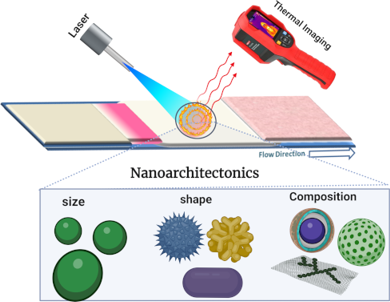
- diagnostic tools. Based on the photothermal principle, very recently, Shirshahi et al. developed LFA strips for the detection of E. coli O157:H7 strains of bacteria. They used reduced graphene oxide as both tracer and photothermal signal amplification material. After the deposition of rGO on the test line
- ], Colloids and Surfaces B: Biointerfaces, vol. 186, by V. Shirshahi; S. N. Tabatabaei; S. Hatamie; R. Saber, “Photothermal enhancement in sensitivity of lateral flow assays for detection of E-coli O157:H7”, article no. 110721, Copyright (2019), with permission from Elsevier. (This content is not subject to


Quercetin- and caffeic acid-functionalized chitosan-capped colloidal silver nanoparticles: one-pot synthesis, characterization, and anticancer and antibacterial activities
Beilstein J. Nanotechnol. 2023, 14, 362–376, doi:10.3762/bjnano.14.31
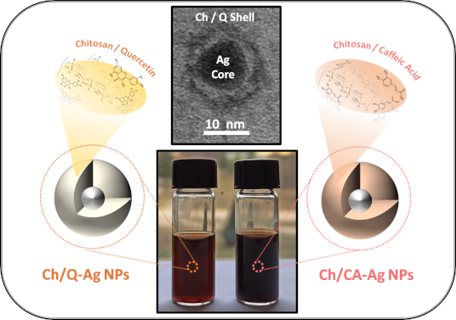
- (P. aeruginosa and E. coli) and Gram-positive (S. aureus and S. epidermidis) bacteria was determined, and dose-dependent antibacterial effects were found. Keywords: Ag NPs; anticancer and antibacterial effects; caffeic acid; chitosan; one-pot synthesis; quercetin; U-118 MG and ARPE-19 cells
- Staphylococcus aureus (S. aureus) and Staphylococcus epidermidis (S. epidermidis) and the Gram-negative Escherichia coli (E. coli) and Pseudomonas aeruginosa (P. aeruginosa) bacteria cause various infections [5]. These infections, formerly known as nosocomial infections, are now referred to as healthcare
- strains of S. aureus (ATCC 25923), S. epidermidis (ATCC 12228), P. aeruginosa (ATCC 27853), and E. coli (ATCC 8739), which are generally opportunistic pathogens, were used in the study. The antibacterial activity of diluted nanoparticle solutions was investigated by the agar disc diffusion method. The


Structural, optical, and bioimaging characterization of carbon quantum dots solvothermally synthesized from o-phenylenediamine
Beilstein J. Nanotechnol. 2023, 14, 165–174, doi:10.3762/bjnano.14.17
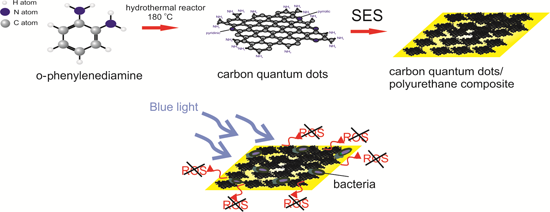
- [41]. Recently, Bing et al. observed that CQDs with different surface charges had different antibacterial activities. Positively charged CQDs damaged the membrane of E. coli completely whereas negatively charged CQDs interacted only weakly with the bacterial membrane [42]. Uncharged CQDs did not show
- any antibacterial activity against E. coli and B. suptilis. In this study, antibacterial testing of all samples was conducted against two bacterial strains, namely S. aureus and E. coli. The results presented in Table S1 (Supporting Information File 1) showed that CQDs/PU composites prepared from o
- -phenylenediamine did not exhibit any antibacterial activity against E. coli or S. aureus even after treatment under blue light for 360 min. These results agree with the results presented in the sections above. The CQDs did not generate any type of ROS. They are uncharged as well. The presence of NH2 groups on


Antimicrobial and mechanical properties of functionalized textile by nanoarchitectured photoinduced Ag@polymer coating
Beilstein J. Nanotechnol. 2023, 14, 95–109, doi:10.3762/bjnano.14.11
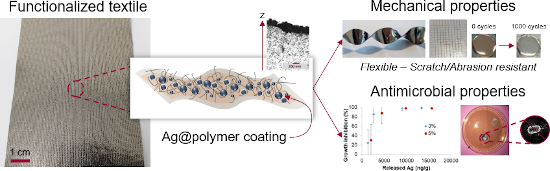
- the textile support. After assessing their optical and mechanical properties, the antimicrobial properties of the functionalized textiles were tested against Escherichia coli (E. coli) and Candida albicans (C. albicans) strains. In addition to being flexible and adherent to the textile substrates, the
- nanocomposites exhibited remarkable microbial growth inhibitory effects. Keywords: antimicrobial properties; C. albicans fungus; E. coli bacteria; photoinduced functionalized textile; silver/polymer nanomaterials; Introduction The proliferation of microorganisms is a major concern for health organizations
- and plate diffusion assays) of AgNP@polymer nanocomposites-coated textiles against Escherichia coli (E. coli) and Candida albicans (C. albicans) strains. The mechanical properties (flexibility, adhesion, abrasion) were also studied using a Mini-Martindale device, a standard scratch test kit, scanning



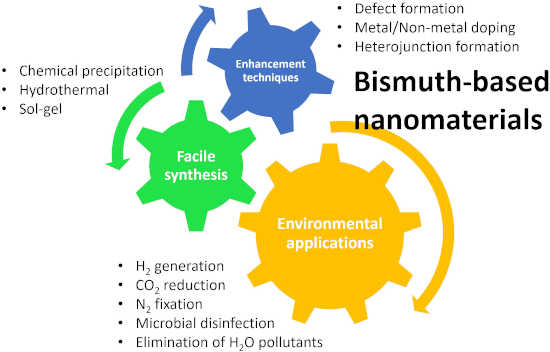
Recent trends in Bi-based nanomaterials: challenges, fabrication, enhancement techniques, and environmental applications
Beilstein J. Nanotechnol. 2022, 13, 1316–1336, doi:10.3762/bjnano.13.109