


Search results
Search for "FC-43" in Full Text gives 1 result(s) in Beilstein Journal of Nanotechnology.
Interface-engineered Caco-2 cell culture on a collagen-coated liquid–liquid interface in a microfluidic device
Beilstein J. Nanotechnol. 2026, 17, 760–768, doi:10.3762/bjnano.17.53
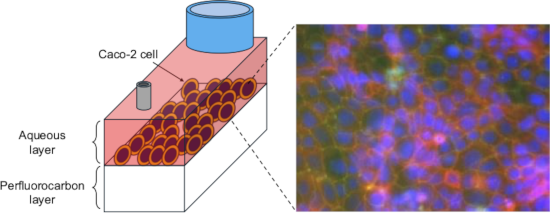
- substrates, which limit the physicochemical flexibility of the cellular microenvironment. Here, we introduce a microfluidic platform in which a collagen-coated liquid–liquid interface formed between perfluorocarbon (FC-43) and culture medium serves as a substrate for epithelial cell adhesion. By culturing
- enables the formation of stable liquid–liquid interfaces that serve as viable and flexible substrates for epithelial cell culture, offering new opportunities for multiphase microfluidic models of epithelial barriers. Keywords: Caco-2; collagen; FC-43; gut-on-a-chip; liquid–liquid interface; Introduction
- interfacial strategy into microfluidic cell culture systems may therefore offer an alternative to porous membrane-based designs and mitigate the inherent limitations of synthetic solid membranes in gut-on-a-chip platforms. Among candidate materials, perfluorocarbon liquids such as FC-43 are particularly


Other Beilstein-Institut Open Science Activities



