


Search results
Search for "adsorbent nanomaterials" in Full Text gives 1 result(s) in Beilstein Journal of Nanotechnology.
Current status of using adsorbent nanomaterials for removing microplastics from water supply systems: a mini review
Beilstein J. Nanotechnol. 2025, 16, 1837–1850, doi:10.3762/bjnano.16.127
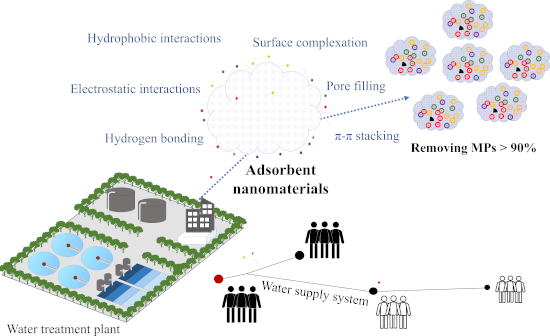
- sustainable strategies to deal with this matter. Many studies have shown that adsorbent nanomaterials have potential for the removal of MPs from water. This review evaluates the current status of using adsorbent nanomaterials in removing MPs from water supply systems. It discusses the occurrences and removal
- efficiency of MPs in water supply systems, as well as the mechanisms and performance when applying these materials for treatment. In addition, the related risk of adsorbent nanomaterials is also considered. Microplastics from land-based sources and wastewater plants persist in water supplies, with
- conventional treatments removing only 40–70%, especially struggling with smaller particles. Based mainly on mechanisms like electrostatic interactions, hydrophobic interactions, pore filling, hydrogen bonding, π–π stacking, and surface complexation, adsorbent nanomaterials achieve over 90% removal of MPs and


Other Beilstein-Institut Open Science Activities



