


Search results
Search for "antimicrobial resistance" in Full Text gives 9 result(s) in Beilstein Journal of Nanotechnology.
Rapid synthesis of highly monodisperse AgSbS2 nanocrystals: unveiling multifaceted activities in cancer therapy, antibacterial strategies, and antioxidant defense
Beilstein J. Nanotechnol. 2025, 16, 2105–2115, doi:10.3762/bjnano.16.145
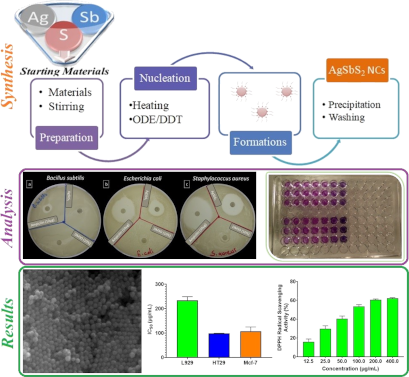
- from antibacterial activity to tumor therapy activity [5][6][7]. The escalating global concern regarding antimicrobial resistance presents a considerable threat to public health. Researchers are persistently exploring alternative strategies to address this pressing issue and the critical demand for


Enhancing the therapeutical potential of metalloantibiotics using nano-based delivery systems
Beilstein J. Nanotechnol. 2025, 16, 1350–1366, doi:10.3762/bjnano.16.98
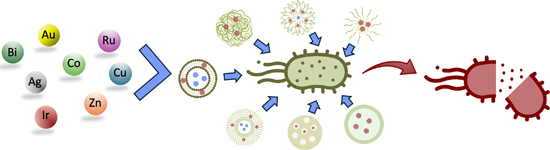
- : antimicrobial resistance; biocompatibility; metalloantibiotics; nanocarriers; targeted delivery; Introduction Antimicrobial resistance (AMR), the condition that bacteria no longer respond to drugs used to treat infections, has become one of the biggest public health challenges of the 21st century. According to
- a study by Antimicrobial Resistance Collaborators, AMR was associated with 4.95 million deaths globally in 2019, highlighting its immense impact on public health. Without immediate and sustained efforts to improve treatment of infections, it is estimated that, by 2050, antimicrobial resistance could
- cause 1.91 million deaths each year, and that a further 8.22 million people will die from illnesses associated with resistance [1]. Different reviews further highlight the evolving complexity of antimicrobial resistance and underscore the need for multidisciplinary strategies to overcome it [2][3]. This


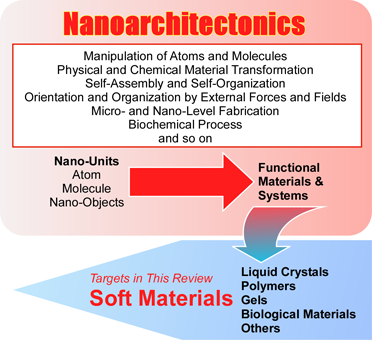
Soft materials nanoarchitectonics: liquid crystals, polymers, gels, biomaterials, and others
Beilstein J. Nanotechnol. 2025, 16, 1025–1067, doi:10.3762/bjnano.16.77






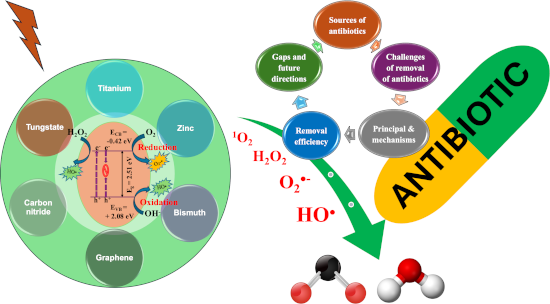
Emerging strategies in the sustainable removal of antibiotics using semiconductor-based photocatalysts
Beilstein J. Nanotechnol. 2025, 16, 264–285, doi:10.3762/bjnano.16.21
- health and ecological systems [11][12][13][14][15][16]. Alarming projections in the USA anticipated that antimicrobial resistance-related deaths exceeding the combined toll of cancer and diabetes, with approximately 23,000 deaths annually [17]. For the mitigation of environmental hazards caused by



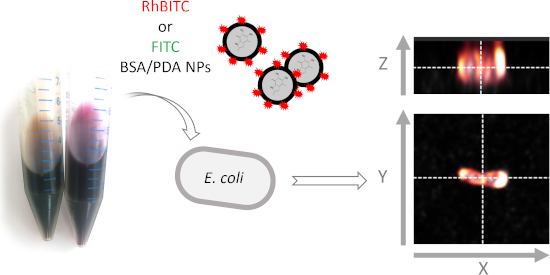
Fluorescent bioinspired albumin/polydopamine nanoparticles and their interactions with Escherichia coli cells
Beilstein J. Nanotechnol. 2023, 14, 1208–1224, doi:10.3762/bjnano.14.100
- of antimicrobial resistance of bacteria [5], this appears as a promising route to deliver antimicrobials while reducing the drug doses and subsequent harmful side effects in antibacterial applications. To this end, different types of ONPs have been used, such as liposomes [6] and nanoparticles (NPs



Metal-organic framework-based nanomaterials as opto-electrochemical sensors for the detection of antibiotics and hormones: A review
Beilstein J. Nanotechnol. 2023, 14, 631–673, doi:10.3762/bjnano.14.52
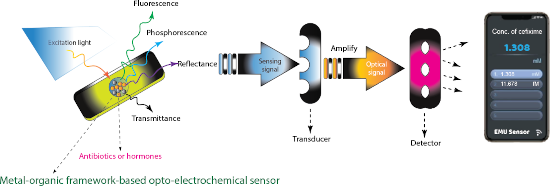
- substances such as antibiotics and hormones are considered emerging pollutants. Antibiotic overuse and misuse that leads to antimicrobial resistance pose an urgent threat to global public health, killing more than 36,000 people in the United States and being linked to over five million deaths globally in


Supramolecular assembly of pentamidine and polymeric cyclodextrin bimetallic core–shell nanoarchitectures
Beilstein J. Nanotechnol. 2022, 13, 1361–1369, doi:10.3762/bjnano.13.112
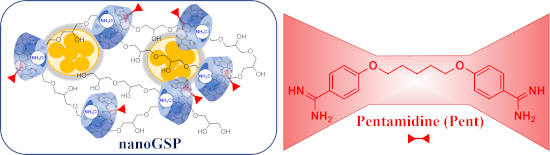
- public health threat of antimicrobial resistance [11]. Au/Ag BMNPs with different structural motifs and biological properties have been produced via eco-friendly synthesis using natural extracts or natural compounds which act as both reducing and capping agents [2]. When these green methods are used to


Silver nanoparticles nucleated in NaOH-treated halloysite: a potential antimicrobial material
Beilstein J. Nanotechnol. 2021, 12, 798–807, doi:10.3762/bjnano.12.63
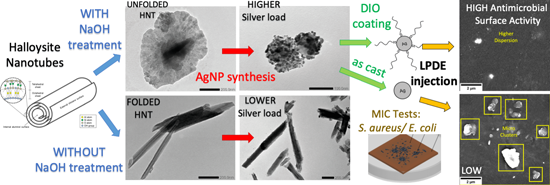
- the emergence of antibiotics, but some bacterial diseases are still amongst the most dangerous to human life. In addition, as antibiotics become more popular, bacteria are evolving to become resistant, a phenomenon known as “antimicrobial resistance” and listed by the World Health Organization as one




A review on nanostructured silver as a basic ingredient in medicine: physicochemical parameters and characterization
Beilstein J. Nanotechnol. 2021, 12, 440–461, doi:10.3762/bjnano.12.36
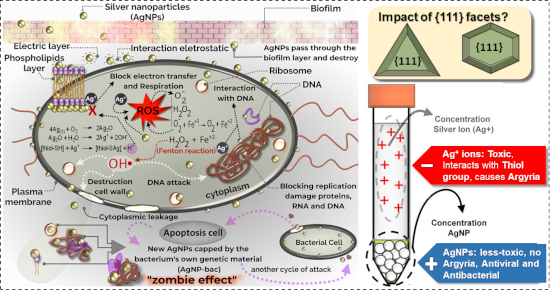
- limit antimicrobial resistance [22]. Antibacterial, antifouling, and antibiofilm effects of AgNPs have been extensively studied and reveal that they are lethal to bacteria and effectively prevent the formation of biofilms [23]. This suggests that AgNPs can be incorporated into matrices or materials used


Other Beilstein-Institut Open Science Activities



