


Search results
Search for "bioadhesion" in Full Text gives 13 result(s) in Beilstein Journal of Nanotechnology.
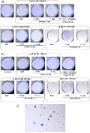
Nanocarrier-integrated multilayer films produced by 3D printing for improved skin adhesion and curcumin photostability
Beilstein J. Nanotechnol. 2026, 17, 440–453, doi:10.3762/bjnano.17.30
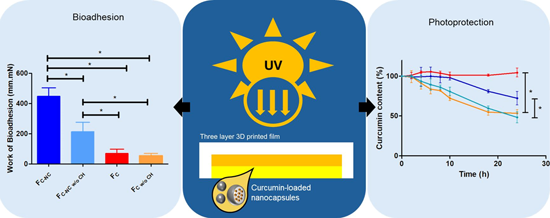
- , Brazil 10.3762/bjnano.17.30 Abstract This proof-of-concept study evaluated whether semi-solid extrusion (SSE) 3D printing could be used to fabricate multilayer topical films that simultaneously enhance skin bioadhesion and photoprotection of curcumin, a highly photolabile anti-inflammatory and
- produced by SSE could address these limitations. To overcome its poor solubility and enhance bioadhesion, curcumin was encapsulated in polymeric nanocapsules (C-NCs), yielding a mean particle size of 218 ± 5 nm, a polydispersity index of 0.10 ± 0.02, a zeta potential of −11 ± 4 mV, and 100% encapsulation
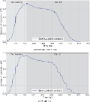
- intermediate layers contained C-NC or curcumin. The final films (15 × 15 × 1.5 mm) contained 282.20 ± 7.75 µg and 246.80 ± 6.70 µg of curcumin in FC-NC and FC, respectively. Films containing the bottom chitosan layer exhibited the highest bioadhesion, while the presence of a TiO2 top layer effectively


Micro- and nanoscale effects in biological and bioinspired materials and surfaces
Beilstein J. Nanotechnol. 2026, 17, 214–217, doi:10.3762/bjnano.17.14

- the medium in which adhesives need to properly function. Two studies on different proteinaceous invertebrate adhesives exemplify recent advances in the field of marine bioadhesion. Duthoo et al. [14] studied the complex composite cement of a tube-dwelling annelid in regard to the ultrastructure and
Molecular and mechanical insights into gecko seta adhesion: multiscale simulations combining molecular dynamics and the finite element method
Beilstein J. Nanotechnol. 2025, 16, 2055–2076, doi:10.3762/bjnano.16.141
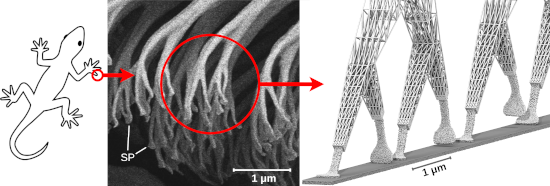
- structures on their feet [1][2]. This bioadhesion mechanism has been studied extensively, especially for biomimetic adhesive applications [3][4][5][6][7][8][9]. Understanding these interactions presents a formidable challenge in biophysics and materials science due to the extremely small length and time






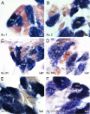
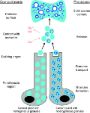
The cement of the tube-dwelling polychaete Sabellaria alveolata: a complex composite adhesive material
Beilstein J. Nanotechnol. 2025, 16, 1998–2014, doi:10.3762/bjnano.16.138
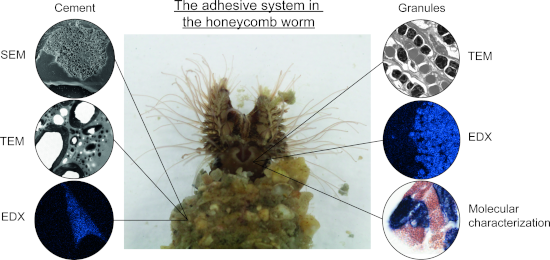
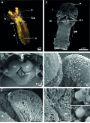
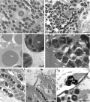
- of inspiration for developing biomimetic adhesives. However, a thorough understanding of their composition and operating mechanism is essential for advancing such applications. Sabellariid tubeworms are model organisms in bioadhesion research, and their adhesive system has been characterized in



Self-assembly and adhesive properties of Pollicipes pollicipes barnacle cement protein cp19k: influence of pH and ionic strength
Beilstein J. Nanotechnol. 2025, 16, 1863–1872, doi:10.3762/bjnano.16.129
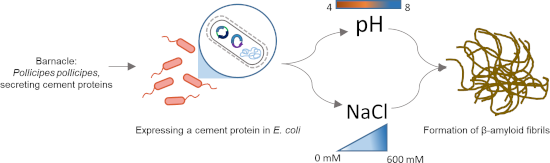
- underwater curing in barnacle bioadhesion. While monomeric cp19k exhibited apparently stronger surface adhesion than fibrillar protein, differences in structure, β-amyloid composition, and adhesive properties between the monomeric and the fibrillar protein, as well as between fibrils assembled under


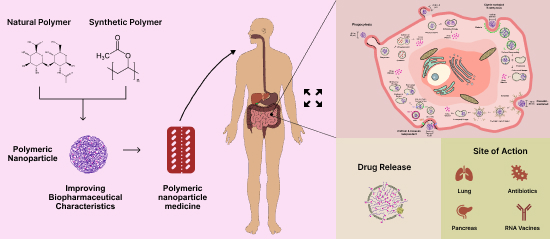
Exploring the potential of polymers: advancements in oral nanocarrier technology
Beilstein J. Nanotechnol. 2025, 16, 1751–1793, doi:10.3762/bjnano.16.122


Enhancing the therapeutical potential of metalloantibiotics using nano-based delivery systems
Beilstein J. Nanotechnol. 2025, 16, 1350–1366, doi:10.3762/bjnano.16.98
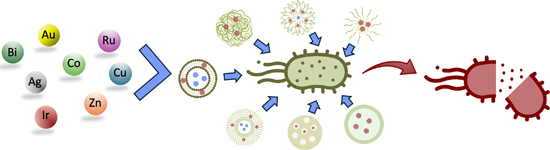
- coatings also exhibited excellent biocompatibility, elasticity, hydration, and bioadhesion properties [106]. Encapsulation into SLNs was also used to enhance antibacterial activity and achieve sustained release of the silver–furosemide (FSE) complex 8 (Figure 3) [107]. Although the free complex showed


Bioselectivity of silk protein-based materials and their bio-inspired applications
Beilstein J. Nanotechnol. 2022, 13, 902–921, doi:10.3762/bjnano.13.81
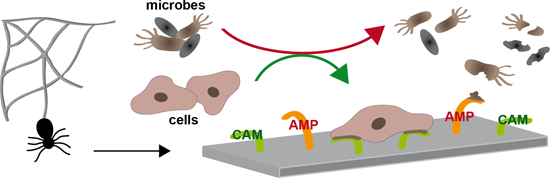
- , natural biological adhesives are complex materials that have evolved to meet the various functional demands. Bioadhesion can be found in the range of the micro- to the macroscale [7]. Adhesion principles include contact mechanical principles such as capillary interactions, viscous forces, non-covalent


Micro- and nanotechnology in biomedical engineering for cartilage tissue regeneration in osteoarthritis
Beilstein J. Nanotechnol. 2022, 13, 363–389, doi:10.3762/bjnano.13.31
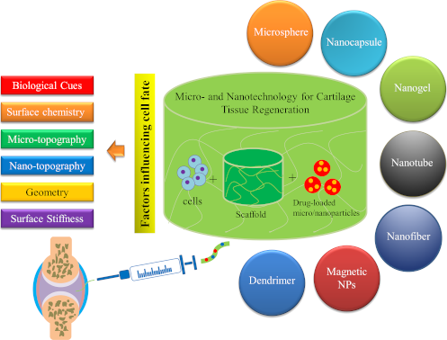
- example, to modify the surface of nanofiber polymers, plasma treatment has been used to provide them with hydroxy, carboxyl, or amine polar groups to improve physical properties such as wettability, polarity, and bioadhesion [102]. As a result, surface-modified nanofibers will more likely absorb bioactive


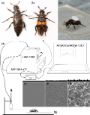
A comparison of tarsal morphology and traction force in the two burying beetles Nicrophorus nepalensis and Nicrophorus vespilloides (Coleoptera, Silphidae)
Beilstein J. Nanotechnol. 2019, 10, 47–61, doi:10.3762/bjnano.10.5
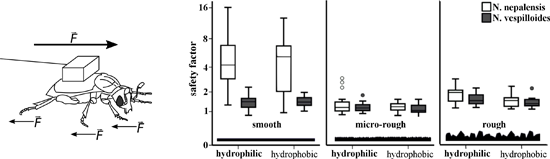
- the genus Nicrophorus have recently awakened the interest of scientists in the field of bioadhesion with regard to their tarsal secretion [2][3]. So far, the measurement of the physical strength and the description of the morphological traits of the attachment devices of various insects in the context



The structural and chemical basis of temporary adhesion in the sea star Asterina gibbosa
Beilstein J. Nanotechnol. 2018, 9, 2071–2086, doi:10.3762/bjnano.9.196
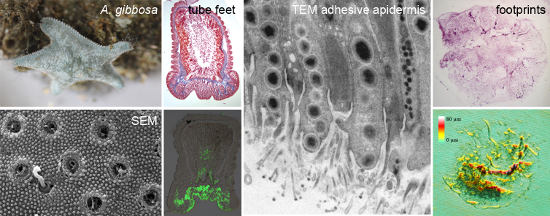
- by the “Communauté française de Belgique—Actions de Recherche Concertées” [ARC-17/21 UMONS 3]. BL, EH, MB, ML, PL, PhL and PF are members of the COST Action “European Network of Bioadhesion Expertise” (CA15216).


From sticky to slippery: Biological and biologically-inspired adhesion and friction
Beilstein J. Nanotechnol. 2014, 5, 1450–1451, doi:10.3762/bjnano.5.157
- large number of studies have been published which focus on the biotribology and the bioadhesion in various biological systems. The research on frictional and adhesive properties of very diverse biological surfaces and interfaces became a broad research field at the boundary between physics and biology

Molecular biology approaches in bioadhesion research
Beilstein J. Nanotechnol. 2014, 5, 983–993, doi:10.3762/bjnano.5.112
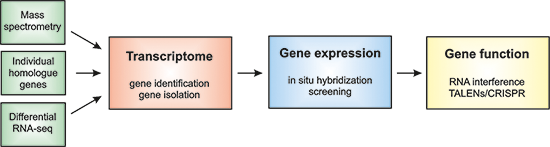
- bioadhesion is still in its infancy. For new research groups who are considering taking a molecular approach, the techniques presented here are essential to unravelling the sequence of a gene, its expression and its biological function. Here we provide an outline for addressing adhesion-related genes in
- function of adhesion-related genes can be studied in most organisms. These tools will improve our understanding of the diversity of molecules used for adhesion in different organisms and these findings will help to develop innovative bio-inspired adhesives. Keywords: bioadhesion; differential gene
- expression; in situ hybridization; RNA interference; transcriptome; Introduction The capability of an organism to attach to a surface, either temporarily or permanently, is referred to as “bioadhesion”. Bioadhesion occurs in many living organisms that have designed ways to adhere to a range of surfaces [1





